How to Roast Garlic? Easy Guide
Roasted garlic is one of the easiest ways to make ordinary food taste richer, sweeter, and more comforting.
When raw garlic is roasted, its sharp bite softens into a creamy, mellow, slightly sweet spread that can be used in everything from bread and pasta to mashed potatoes, soups, sauces, and roasted vegetables.
The best part is that it takes very little effort. Once you know how to roast garlic properly, you can make a batch anytime and keep it ready for quick meals during the week.
This guide will show you exactly how to do it, what temperature works best, how long to roast it, how to tell when it is done, and what mistakes to avoid.
If you have ever wondered how to roast garlic so it turns soft, golden, and flavorful instead of dry or bitter, this is the method to follow.
Table of Contents
Why Roasting Garlic Is Worth It?
Raw garlic has a strong, spicy flavor that works well in many dishes, but roasted garlic is completely different. The oven brings out its natural sweetness and gives it a smooth, buttery texture.
Here is why so many home cooks love it:
- Milder flavor than raw garlic
- Soft, spreadable texture
- Easy to add to many dishes
- Makes simple meals taste more special
- Can be prepared ahead and stored
You can spread roasted garlic on toast, mix it into butter, stir it into pasta, mash it into potatoes, blend it into dips, or add it to salad dressings for deeper flavor.
How to Roast Garlic in the Oven?
This is the easiest and most reliable method for roasting a whole head of garlic.
Ingredients
- 1 or more whole garlic heads
- 1 to 2 teaspoons olive oil per head
- A small pinch of salt (optional)
- Black pepper (optional)
What You Need
- Knife
- Aluminum foil
- Baking dish or tray
Step-by-Step Method
- Preheat the oven to 400°F (200°C).
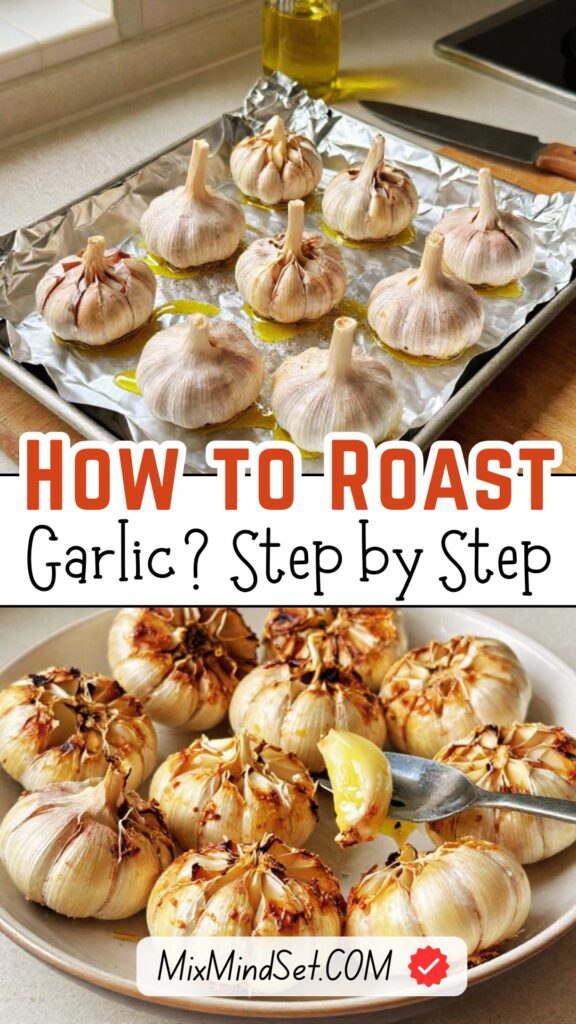
- Remove any loose, papery outer layers from the garlic head, but keep the head whole and intact.
- Use a knife to cut about 1/4 to 1/2 inch off the top of the garlic head. This exposes the tops of the cloves.
- Place the garlic on a piece of foil, cut side facing up.
- Drizzle olive oil over the exposed cloves, making sure the oil gets into the cut surfaces.
- Add a tiny pinch of salt if you like.
- Wrap the garlic tightly in foil.
- Place it on a baking tray or in a small baking dish.
- Roast for 35 to 45 minutes, depending on the size of the garlic.
- Let it cool slightly, then squeeze the soft cloves out of their skins.
Video Guide 📺
When done properly, the cloves should be golden, very soft, and easy to press out.
Roasting Garlic Time and Temperature Guide
The exact roasting time can vary depending on the size of the garlic heads and your oven, so this quick guide helps.
| Oven Temperature | Approximate Time | Result |
|---|---|---|
| 375°F (190°C) | 40 to 50 minutes | Soft, gentle roasting |
| 400°F (200°C) | 35 to 45 minutes | Best balance of color and flavor |
| 425°F (220°C) | 30 to 40 minutes | Faster roasting, watch carefully |
How to Know When Garlic Is Roasted
Look for these signs:
- The cloves feel soft when pressed
- The tops are light golden to caramel-colored
- The garlic smells sweet and rich, not sharp
- A knife can slide into a clove easily
If the garlic still feels firm in the center, roast it for another 5 to 10 minutes.
Best Tips for Perfect Roasted Garlic:
A few small details make a big difference when roasting garlic.
1. Do Not Peel the Cloves
Leave the garlic head whole. The skin protects the cloves while they roast and keeps them from drying out.
2. Use Enough Oil
A light drizzle of olive oil helps the exposed cloves roast evenly and become soft. Too little oil can leave the garlic dry.
3. Wrap It Well
Foil traps the heat and moisture, which is what gives roasted garlic its creamy texture.
4. Do Not Over-Roast It
Garlic should become soft and golden, not dark brown and bitter. If it gets too dark, the flavor can turn harsh.
5. Roast Extra
Since roasted garlic stores well, it is smart to roast 2 to 4 heads at once. It takes almost the same effort and gives you more to use later.
Common Mistakes to Avoid:
If roasted garlic ever turned out dry, burnt, or bland, one of these issues may be the reason.
- Cutting off too much of the top
This can expose too much of each clove and cause drying. - Skipping the oil
Without oil, the cloves may roast unevenly. - Not wrapping the garlic properly
Loose foil lets steam escape and can dry out the garlic. - Using very high heat without checking
High temperature can brown the garlic too quickly before the inside becomes soft. - Not letting it cool slightly before squeezing
Fresh-from-the-oven garlic is very hot and can be messy to handle.
How to Use Roasted Garlic?
Once you roast garlic, you will find many ways to use it. The soft cloves mash easily with a fork and blend beautifully into both simple and rich dishes.
Here are some of the best ideas:
- Spread on toast or crusty bread
- Mix into mashed potatoes
- Stir into pasta sauce
- Blend into soups
- Add to salad dressing
- Mix with butter for garlic butter
- Stir into hummus or dips
- Add to roasted vegetables or chicken
A little roasted garlic can add a lot of flavor without being overpowering.
FAQ About How to Roast Garlic
How long does it take to roast garlic?
At 400°F (200°C), a whole head of garlic usually takes 35 to 45 minutes. Smaller heads may finish sooner, while large heads may need a few extra minutes.
Do I need foil to roast garlic?
Foil is the easiest option because it helps trap moisture and keeps the garlic soft. You can also roast garlic in a covered baking dish if you prefer not to use foil.
Can I roast peeled garlic cloves?
Yes, but the method is slightly different. Peeled cloves roast faster and can dry out more easily. It is usually best to roast them in a small covered dish with olive oil.
How do I store roasted garlic?
Store roasted garlic in an airtight container in the refrigerator for up to 3 to 4 days. You can also mash it and freeze small portions for longer storage.
Can I eat roasted garlic by itself?
Yes. Roasted garlic becomes soft, sweet, and mild enough to spread on bread or crackers by itself.
Why is my roasted garlic bitter?
Garlic usually tastes bitter when it is overcooked or burnt. Try lowering the oven temperature slightly or checking it earlier next time.
Final Thoughts
Learning how to roast garlic is one of those simple kitchen skills that pays off again and again. With just a head of garlic, a little oil, and some oven time, you get a rich, soft, flavorful ingredient that can improve many everyday meals.
The key is simple: trim the top, add oil, wrap it well, and roast until soft and golden. Once you try it, you may start keeping roasted garlic on hand regularly because it makes cooking easier and adds deep flavor without much effort.