Chocolate Icing Recipe
There’s something magical about a thick, silky chocolate icing swirled onto a warm cupcake or layered between soft cake rounds. Store-bought frostings often taste waxy or overly sweet, but homemade chocolate icing?
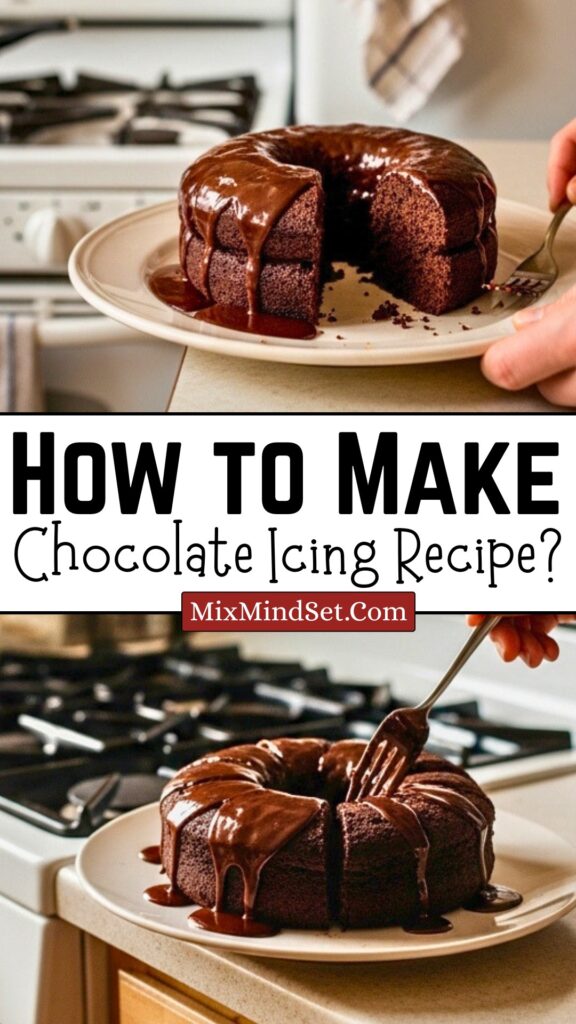
It’s a game-changer. With just a handful of ingredients and a few simple techniques, you can create a frosting that’s deeply chocolatey, perfectly spreadable, and infinitely adaptable.
This recipe comes from years of testing in my own kitchen. Whether you’re topping a birthday cake, filling sandwich cookies, or just eating it by the spoonful (no judgment), you’ll find everything you need right here. Let’s get started.
Table of Contents
What You’ll Need – Ingredients
This chocolate icing uses basic pantry staples. For the richest flavor, use high-quality cocoa powder and real butter. Below is the exact ingredient list for a standard batch—enough to generously frost 12–15 cupcakes or a two-layer 8-inch cake.
| Ingredient | Amount | Notes |
|---|---|---|
| Unsalted butter (room temperature) | 1 cup (226g) | Softened, not melted |
| Powdered sugar (sifted) | 3½ cups (440g) | Sifting removes lumps |
| Unsweetened cocoa powder | ¾ cup (75g) | Dutch-process or natural |
| Whole milk or heavy cream | ¼ cup (60ml) | Room temperature |
| Pure vanilla extract | 2 teaspoons | Avoid imitation vanilla |
| Salt | ¼ teaspoon | Balances sweetness |
| Optional: melted dark chocolate | 2 oz (56g) | For extra richness |
Pro tip: For a dairy-free version, use plant-based butter and full-fat coconut milk.
Step-by-Step Instructions for Perfect Chocolate Icing
Making chocolate icing isn’t complicated, but the order of steps matters. Follow this method for a smooth, lump-free result every time.
- Beat the butter – In a large bowl (or stand mixer with paddle attachment), beat the softened butter on medium speed for 2–3 minutes until pale and creamy. Scrape down the sides.
- Sift dry ingredients – In a separate bowl, sift together the powdered sugar, cocoa powder, and salt. Sifting prevents those annoying chocolate specks.
- Combine slowly – With the mixer on low, add the dry mixture in three additions, alternating with splashes of milk. Start and end with the dry ingredients.
- Add vanilla – Once incorporated, pour in the vanilla extract and turn the mixer to medium-high. Beat for 60 seconds until light and fluffy.
- Adjust consistency – For thinner icing (drizzling over bundt cakes), add more milk one teaspoon at a time. For stiffer icing (piping rosettes), add extra powdered sugar.
- Use immediately – This icing holds its shape best when fresh. If it sits too long, re-whip for 30 seconds before using.
Video Guide 📺
Pro tip: If you’re adding melted chocolate (the optional ingredient), let it cool to lukewarm before beating into the finished icing. Hot chocolate will melt the butter.
Pro Tips for the Best Consistency and Flavor:
Small tweaks turn a good icing into an unforgettable one. Here’s what I’ve learned after hundreds of batches.
- Room temperature is non-negotiable – Cold butter won’t cream properly, and cold milk can cause curdling. Set everything on the counter 1 hour before starting.
- Use Dutch-process cocoa – It has a smoother, less acidic taste than natural cocoa. For a deeper “oreo-like” flavor, try black cocoa powder (use 50/50 with regular cocoa).
- Don’t over-beat after adding sugar – Over-mixing incorporates too much air, leading to a gritty, bubbly texture. Stop as soon as the icing looks fluffy and uniform.
- Fix grainy icing – If yours feels gritty, warm 2 tablespoons of the icing in the microwave for 5 seconds, then beat back into the batch. The heat dissolves sugar crystals.
- Make it ahead – Store in an airtight container in the fridge for up to 1 week. Bring to room temperature and re-whip for 5 minutes before using.
Common Mistakes to Avoid:
Even simple recipes have pitfalls. Skip these and your chocolate icing will turn out perfect.
- Using melted butter – Melted butter makes runny, greasy icing. Always cream softened butter (it should hold a finger indent but still be cool).
- Adding all the milk at once – You lose control of consistency. Add slowly, and you might not even need the full ¼ cup.
- Skipping the salt – Salt doesn’t make it salty; it amplifies the chocolate flavor. Without it, icing tastes flat.
- Icing a warm cake – The heat will melt your beautiful swirls. Let cakes cool completely (at least 1 hour) before frosting.
- Using old cocoa powder – Cocoa loses potency after 6 months. If yours smells faint or musty, buy fresh.
Nutritional Information (Per Serving)
*Serving size = 2 tablespoons (enough for one cupcake). Values are estimates based on this recipe.*
| Nutrient | Amount |
|---|---|
| Calories | 210 kcal |
| Total Fat | 12g |
| Saturated Fat | 7g |
| Cholesterol | 30mg |
| Sodium | 45mg |
| Total Carbohydrates | 27g |
| Dietary Fiber | 1.5g |
| Sugars | 25g |
| Protein | 1g |
Note: Using heavy cream or melted chocolate will increase fat and calories slightly.
Frequently Asked Questions
Can I use this recipe for piping intricate designs?
Yes. For stiff, pipe-able icing (like rosettes or borders), reduce milk to 2 tablespoons and add an extra ½ cup of powdered sugar. Chill the icing for 10 minutes before loading into a piping bag.
How do I make a chocolate ganache-style icing instead?
This recipe is buttercream-based. For a ganache (shiny, pourable icing), heat 1 cup heavy cream until steaming, pour over 8 oz chopped dark chocolate, let sit 2 minutes, then stir until smooth. Cool until spreadable.
Why is my icing separating or curdling?
Two main causes: ingredients were different temperatures (cold milk + room temperature butter), or you over-mixed after adding liquid. Fix by warming the bowl slightly (run a spatula under hot water, dry it, then stir gently).
Can I freeze leftover chocolate icing?
Absolutely. Scoop into a freezer-safe bag or container, press out air, and freeze for up to 3 months. Thaw overnight in the fridge, then bring to room temperature and re-whip for 3–5 minutes.
How do I make this less sweet?
Reduce powdered sugar to 2½ cups and add 2 tablespoons of cornstarch (to maintain structure). Or swap half the powdered sugar for allulose or erythritol if you prefer low-sugar alternatives.
A Final Word from Fatima
This chocolate icing recipe has been my go-to for everything from last-minute birthday cakes to holiday cookie sandwiches. It’s forgiving enough for beginners but yields results that impress even seasoned bakers. The real secret? Trust your senses. If it looks too thick, add a drop of milk. If it tastes flat, add a pinch more salt. You’ve got this.
Now go make something delicious. And if you’re feeling generous, save me a swirled cupcake.