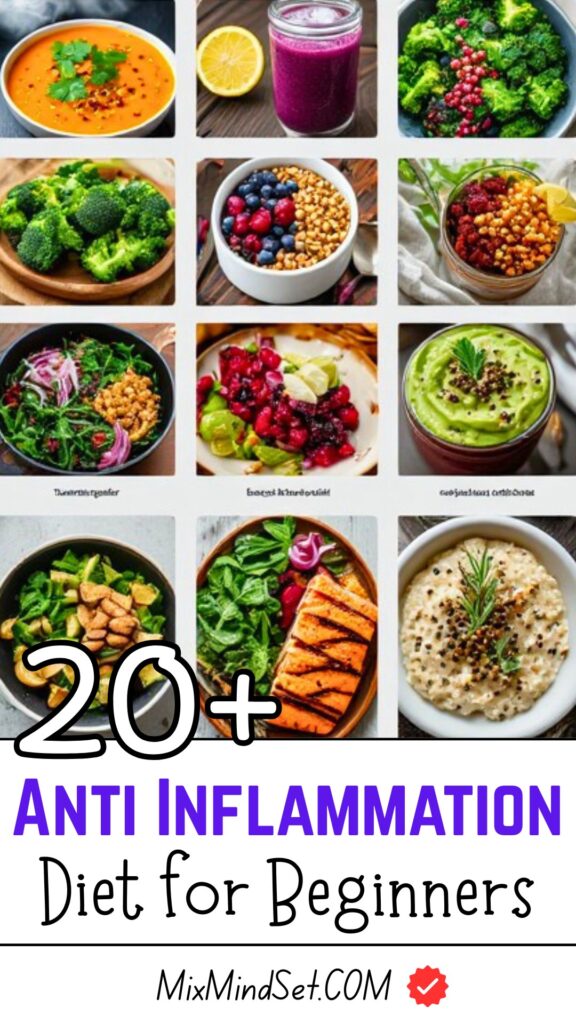
20+ Anti Inflammation Diet for Beginners
If you’ve been dealing with constant joint pain, brain fog, digestive issues, or stubborn fatigue, you’ve probably heard the term “anti-inflammatory diet.” But let’s be real—starting another “diet” feels overwhelming.
Do you need to cut out everything you love? Buy expensive superfoods? Spend hours meal prepping?
Here’s the good news: reducing inflammation is simpler than you think. It’s not about deprivation. It’s about adding more of the right foods—colorful vegetables, healthy fats, and spices—while gently reducing the processed stuff that triggers your body’s fire alarm.
I’ve helped dozens of beginners make this shift without feeling lost. In this guide, you’ll learn exactly what inflammation is (in plain English), 20+ powerful anti-inflammatory foods to eat regularly, a sample day of eating, common mistakes to avoid, and a simple 7-day starter plan. No rigid rules. No guilt. Just practical steps that work.
Let’s calm the fire inside.
Table of Contents
What Is Chronic Inflammation (And Why Should You Care)?
We all know acute inflammation—the redness and swelling after a cut or sprain. That’s your body healing itself. Chronic inflammation is different. It’s a low-level, persistent immune response that never turns off.
Over time, it damages healthy cells and is linked to arthritis, heart disease, diabetes, gut disorders, and even depression.
The food you eat either fuels that fire or puts it out.
- Pro-inflammatory foods (refined sugar, vegetable oils, processed meats, white flour) trigger your immune system.
- Anti-inflammatory foods (leafy greens, berries, fatty fish, turmeric) calm the response.
The best part? You’ll likely notice changes within two to four weeks—less stiffness, clearer skin, better sleep, and more stable energy.
Common Mistakes Beginners Make
- ❌ Going cold turkey on everything – Cutting out coffee, dairy, gluten, and sugar all at once is stressful. Stress itself causes inflammation. Start with one change at a time.
- ❌ Obsessing over “perfect” ingredients – You don’t need goji berries or maca powder. Regular kale, canned sardines, and frozen broccoli work beautifully.
- ❌ Forgetting about lifestyle – Poor sleep and chronic stress are powerful inflammatory drivers. Diet alone can’t fix everything.
- ❌ Drinking “healthy” smoothies loaded with sugar – Three bananas, honey, and dates can spike blood sugar, which promotes inflammation.
20+ Anti-Inflammatory Foods to Eat Every Week
This is your core shopping list. Most are affordable and easy to find at any grocery store.
Fruits (Nature’s Anti-Inflammatory Powerhouses)
- Berries (blueberries, strawberries, raspberries, blackberries) – High in anthocyanins. Frozen are just as good and cheaper.
- Cherries – Tart cherry juice or fresh cherries lower uric acid and muscle soreness.
- Oranges & Grapefruit – Vitamin C fights oxidative stress. Eat the whole fruit, not just juice.
- Pineapple – Contains bromelain, an enzyme that reduces swelling.
- Avocado – Rich in monounsaturated fats and vitamin E. A quarter avocado counts.
Vegetables (Eat the Rainbow, Especially Greens)
- Leafy Greens – Spinach, kale, Swiss chard, arugula. Packed with vitamin K and antioxidants.
- Broccoli & Cauliflower – Cruciferous veggies contain sulforaphane, a powerful anti-inflammatory compound.
- Beets – Betalains give beets their red color and help lower inflammatory markers.
- Bell Peppers (especially red and yellow) – High in vitamin C and quercetin.
- Carrots & Sweet Potatoes – Beta-carotene reduces inflammation in the body.
- Onions & Garlic – Quercetin and allicin have natural anti-inflammatory effects.
Healthy Fats & Proteins
- Fatty Fish – Salmon, mackerel, sardines, anchovies. Aim for 2–3 servings per week. Canned sardines are cheap and sustainable.
- Walnuts – One of the best plant sources of omega-3s. A small handful (1 oz) is plenty.
- Flaxseeds & Chia Seeds – Grind flaxseeds to absorb nutrients. Add to oatmeal or smoothies.
- Extra Virgin Olive Oil – Use for salads and low-heat cooking. Contains oleocanthal, which works like ibuprofen.
- Turmeric – The golden spice. Always pair with black pepper to increase absorption by 2000%.
- Ginger – Fresh or dried. Great in tea, stir-fries, or smoothies.
Legumes & Whole Grains (Fiber Feeds Good Gut Bacteria)
- Lentils & Chickpeas – Fiber-rich and full of polyphenols.
- Oats – Choose steel-cut or rolled. Avoid instant packets with added sugar.
- Quinoa & Brown Rice – Gluten-free whole grains that don’t spike blood sugar.
Herbs & Spices (Tiny Amounts, Big Impact)
- Green Tea – Rich in EGCG, a potent anti-inflammatory catechin.
- Cinnamon & Cloves – Sprinkle on oatmeal or coffee.
- Rosemary & Oregano – Fresh or dried; add to roasted veggies and meats.
Pro tip: Aim for at least 5–7 servings of colorful vegetables and fruits daily. That’s easier than it sounds—a side salad, a handful of berries, roasted broccoli with dinner.
Anti-Inflammatory Kitchen Staples Table
Keep these on hand for easy, no-stress meals.
| Category | Best Choices | What to Limit or Avoid |
|---|---|---|
| Oils | Extra virgin olive oil, avocado oil, coconut oil | Vegetable oil, canola oil, soybean oil, margarine |
| Grains | Oats, quinoa, brown rice, buckwheat | White bread, white rice, pastries, crackers |
| Protein | Fatty fish, lentils, chickpeas, tofu, eggs (pasture-raised if possible) | Processed meats (bacon, sausage, deli meat), fried chicken, conventional beef (eat grass-fed occasionally) |
| Dairy | Plain Greek yogurt (small amounts), unsweetened plant milks | Flavored yogurts, processed cheese, cream-based sauces |
| Sweeteners | Small amounts of honey or maple syrup, stevia | High-fructose corn syrup, white sugar, artificial sweeteners |
| Beverages | Green tea, ginger tea, water, black coffee (moderate) | Soda, sweetened juices, energy drinks, excess alcohol |
Sample Day of Eating (Anti-Inflammatory & Delicious)
This is not a rigid meal plan—just a realistic example.
- Breakfast (approx. 350 cal): Oatmeal made with ½ cup rolled oats, 1 cup unsweetened almond milk, topped with ½ cup frozen blueberries, 1 tbsp ground flaxseed, and a sprinkle of cinnamon.
- Lunch (approx. 400 cal): Big salad with 2 cups mixed greens, ½ cup canned chickpeas, ¼ avocado, ½ cup roasted sweet potato cubes, 2 tbsp walnuts, and a dressing of olive oil + lemon juice.
- Snack (approx. 150 cal): ¼ cup plain Greek yogurt with ¼ cup raspberries.
- Dinner (approx. 500 cal): Baked salmon fillet (or canned sardines on toast), 1 cup steamed broccoli, ½ cup quinoa cooked with turmeric and black pepper.
- Dessert (optional): 1 cup ginger tea or a few squares of 70% dark chocolate (approx. 50 cal).
Total calories: ~1450, but adjust portions to your needs. The key is the pattern—not perfection.
Nutritional Facts for 5 Key Anti-Inflammatory Foods
| Food (1 serving) | Calories | Omega-3s (mg) | Fiber (g) | Key Antioxidant | Anti-Inflammatory Benefit |
|---|---|---|---|---|---|
| Salmon (3 oz cooked) | 175 | 1,500 | 0 | Astaxanthin | Reduces joint pain & heart disease risk |
| Blueberries (1 cup) | 85 | 0 | 3.6 | Anthocyanins | Lowers oxidative stress |
| Turmeric (1 tsp) | 9 | 0 | 0.3 | Curcumin | Blocks inflammatory enzymes (like ibuprofen) |
| Kale (1 cup raw) | 33 | 0 | 2.5 | Vitamin K | Reduces inflammatory markers in blood |
| Walnuts (1 oz, 14 halves) | 185 | 2,500 | 2 | Ellagic acid | Improves vascular function |
7-Day Starter Meal Ideas (20+ Anti-Inflammatory Meals)
Here’s a week of simple meals. Mix and match based on what you have.
| Day | Breakfast | Lunch | Dinner |
|---|---|---|---|
| Mon | Berry spinach smoothie (spinach, frozen berries, flax, almond milk) | Lentil & veggie soup | Baked cod with roasted Brussels sprouts & sweet potato |
| Tue | Scrambled eggs with sautéed spinach & garlic | Quinoa tabbouleh (parsley, tomato, cucumber, lemon) | Turmeric chicken thighs with cauliflower rice |
| Wed | Overnight oats with chia, cinnamon & cherries | Leftover chicken & cauliflower rice | Chickpea & sweet potato curry (coconut milk optional) |
| Thu | Greek yogurt with walnuts & berries | Sardines on whole-grain toast with avocado | Zucchini noodles with pesto & shrimp |
| Fri | Green tea + apple slices with peanut butter | Leftover curry | Grilled mackerel (or canned) with roasted beets & greens |
| Sat | Oatmeal with grated apple, cinnamon & flax | Black bean & corn salad with lime-cilantro dressing | Turkey & lentil “meatballs” with tomato sauce & broccoli |
| Sun | Frittata with mushrooms, onions & spinach | Leftover turkey meatballs & broccoli | Big baked potato topped with Greek yogurt, chives & roasted chickpeas |
Note: Drink water throughout the day. Herbal teas (ginger, peppermint, rooibos) are excellent choices.
Frequently Asked Questions
How long does it take to see results on an anti-inflammatory diet?
Most people notice less bloating and better energy within 1–2 weeks. Joint pain and skin issues often improve in 3–4 weeks. Chronic conditions like arthritis may take 2–3 months of consistent eating. Be patient and track how you feel.
Do I have to give up gluten and dairy?
Not unless you have a known sensitivity. For most people, whole grains and plain yogurt are anti-inflammatory. The problem is highly processed versions (white bread, sugary yogurts). Start by reducing processed foods. If symptoms persist, try eliminating gluten or dairy for 3 weeks and reintroduce.
Is coffee allowed?
Yes, in moderation (1–2 cups daily). Black coffee contains polyphenols that reduce inflammation. Problems start when you add cream, sugar, and syrups. If coffee bothers your stomach, switch to green tea.
What about nightshades (tomatoes, peppers, eggplant)?
This is a myth for most people. Nightshades are packed with antioxidants and rarely cause inflammation unless you have a specific autoimmune condition. Unless you’ve tested positive for nightshade sensitivity, enjoy them freely.
Can I still eat out on an anti-inflammatory diet?
Absolutely. Choose grilled fish or chicken, ask for olive oil and vinegar instead of creamy dressings, order steamed vegetables instead of fries, and skip the bread basket. Most restaurants will accommodate simple requests.
What’s the #1 worst food for inflammation?
Added sugar – especially in sodas, pastries, candy, and sweetened yogurts. Sugar spikes insulin and triggers inflammatory messengers called cytokines. Reducing sugar alone makes a massive difference.
Final Thoughts
You don’t need a perfect anti-inflammatory diet overnight. Start with one change this week:
- Swap your cooking oil to extra virgin olive oil.
- Add a handful of spinach to your eggs or smoothie.
- Replace your afternoon soda with green tea.
- Eat fatty fish (even canned sardines) twice this week.
Once that feels easy, add another. Within a month, you’ll have built a sustainable way of eating that lowers inflammation, boosts energy, and reduces pain—without feeling like you’re on a “diet.”
Your body knows how to heal. Give it the right fuel, and it will.
— Fatima