Mexican Flour Tortilla Recipe
There is nothing quite like a warm, freshly made flour tortilla straight off the comal. Soft, pliable, with those beautiful brown spots and a slight chew—it turns any taco, burrito, or quesadilla into something extraordinary.
Store‑bought tortillas are convenient, but they often taste like cardboard and crack when you fold them. Homemade is a different world.
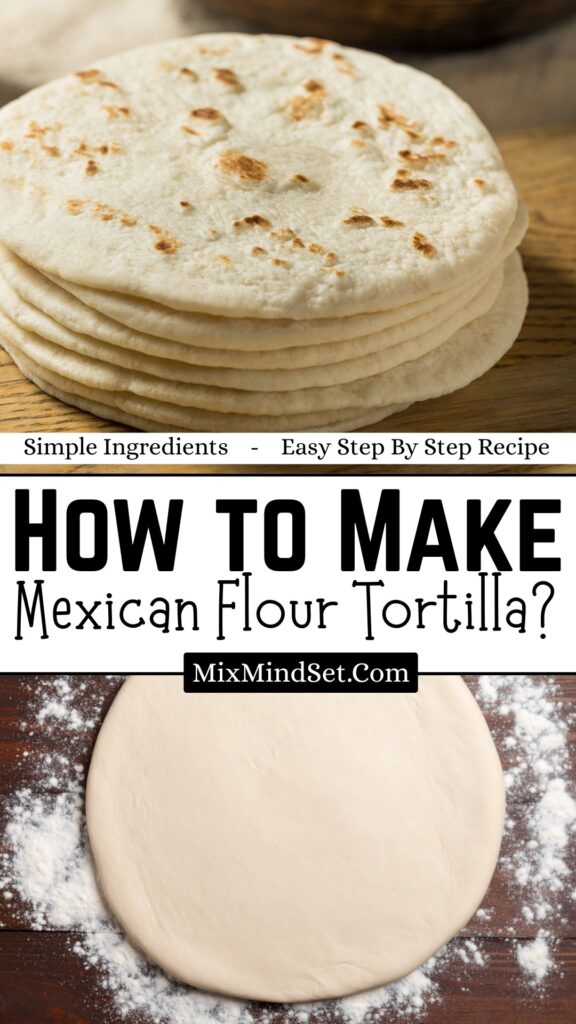
This Mexican flour tortilla recipe is simple, uses basic pantry ingredients, and yields tortillas that are soft, flexible, and flavorful. No lard required (though you can use it). No special equipment. Just a bowl, a rolling pin, and a hot skillet. Once you make your own, you’ll never go back.
Why Make Your Own Flour Tortillas?
- Taste – The slight tang of baking powder, the richness of fat, and the toasty flavor from the skillet.
- Texture – Soft, pliable, and strong enough to hold a heavy filling without cracking.
- Control – Adjust the size, thickness, and fat type (butter, oil, or traditional lard).
- Freshness – Made in 30 minutes, no preservatives.
- Cost – Pennies per tortilla versus a dollar or more at the store.
Ingredients You’ll Need
This recipe makes 8–10 medium flour tortillas (about 8 inches) or 12–14 small taco‑sized ones.
| Ingredient | Amount | Notes |
|---|---|---|
| All‑purpose flour | 2 cups (240g) | Unbleached is fine |
| Baking powder | 1 ½ tsp | For softness and slight lift |
| Salt | 1 tsp | Fine sea salt |
| Fat (lard, butter, or vegetable oil) | 1/4 cup (55g) | Lard is traditional, butter adds flavor, oil works |
| Warm water | 3/4 cup (180ml) | About 110°F – adjust as needed |
Fat options:
- Lard – Most authentic, gives the softest, most pliable tortilla.
- Butter – Adds rich flavor; use unsalted or reduce salt slightly.
- Vegetable oil – Neutral flavor, works well for dairy‑free/vegan.
How to Make Mexican Flour Tortillas? (Step by Step)
Step 1: Mix Dry Ingredients
In a large bowl, whisk together the flour, baking powder, and salt.
Step 2: Cut in the Fat
Add the fat (lard, butter, or oil). If using solid fat (lard or butter), use your fingertips or a pastry blender to work it into the flour until the mixture looks like coarse crumbs with pea‑sized bits. If using oil, stir it in with a fork until evenly distributed.
Step 3: Add Warm Water
Gradually add the warm water, stirring with a fork or your hand until a shaggy dough forms. The dough should come together easily but not be sticky. Add water a tablespoon at a time if too dry; add a little flour if too sticky.
Step 4: Knead Briefly
Turn the dough onto a lightly floured surface. Knead for 2–3 minutes until smooth and slightly elastic. Do not over‑knead (unlike bread, tortilla dough needs just enough to come together).
Step 5: Rest the Dough
Place the dough back in the bowl, cover with a damp cloth or plastic wrap, and let it rest for 15–30 minutes at room temperature. Resting relaxes the gluten, making the dough much easier to roll out thin.
Step 6: Divide and Shape
Divide the dough into 8–10 equal balls (about 45–50g each for 8‑inch tortillas). Roll each ball smooth between your palms. Keep covered with plastic wrap or a damp towel while you work.
Step 7: Roll Out Thin
On a lightly floured surface, flatten a dough ball with your palm. Roll with a rolling pin from the center outward, turning the dough a quarter turn after each roll, until you have a very thin circle (about 1/16 inch thick). A thin tortilla is key for softness and flexibility. Don’t worry about perfect circles—rustic is fine.
Step 8: Heat Your Skillet
Preheat a dry cast‑iron skillet, comal, or non‑stick pan over medium‑high heat.
Step 9: Cook the Tortilla
Carefully place the rolled tortilla onto the hot skillet. Cook for 30–45 seconds until small bubbles appear and the underside has light brown spots. Flip. Cook the other side for another 30–45 seconds until it puffs slightly and gets more brown spots. Do not overcook—it will become crispy.
Step 10: Keep Warm
Transfer the cooked tortilla to a clean kitchen towel or a tortilla warmer. Stack them as they come off the skillet, covering with the towel to trap steam and keep them soft and flexible.
Pro tip: For extra‑soft tortillas, stack them in a covered container immediately after cooking. The trapped steam moistens them beautifully.
Video Guide 📺
Tips for the Best Flour Tortillas (And Mistakes to Avoid)
✅ Do This for Perfect Results
- Use warm water – Helps the fat blend and makes the dough pliable.
- Rest the dough – Non‑negotiable for easy rolling.
- Roll very thin – Thick tortillas are doughy and heavy. You should almost see the counter through them.
- Don’t flip more than twice – Each flip dries them out.
- Keep cooked tortillas covered – Uncovered tortillas become stiff and brittle within minutes.
❌ Common Mistakes
| Mistake | Why It Happens | Fix |
|---|---|---|
| Tortilla cracks when folding | Dough too dry or rolled too thick | Add a little more water; roll thinner |
| Hard, stiff tortilla | Overcooked or too much flour | Reduce cooking time; cover while warm |
| Dough is sticky | Too much water or not enough flour | Add flour 1 tbsp at a time until manageable |
| Tortillas don’t puff | Heat too low or dough too thick | Increase heat; roll thinner |
| Tough, rubbery texture | Over‑kneaded or too much gluten development | Knead just until smooth; use a light touch |
Pro tip: If your tortillas come out too crispy, stack them under a damp paper towel for 30 seconds after cooking. The steam will soften them.
Frequently Asked Questions
Can I use whole wheat flour instead of all‑purpose?
Yes. Use whole wheat flour but increase the warm water by 2–3 tablespoons (whole wheat absorbs more liquid). The tortillas will be heartier, nuttier, and less pliable. For a blend, try half all‑purpose, half whole wheat.
Can I make these tortillas vegan?
Absolutely. Use vegetable or coconut oil (solid coconut oil works great) and skip any dairy. The water‑oil method yields soft, pliable tortillas.
How do I store homemade tortillas?
- Room temperature – In a sealed bag or container for up to 3 days.
- Refrigerator – Up to 1 week.
- Freezer – Stack with parchment paper between each tortilla, seal in a freezer bag, freeze for up to 3 months.
Reheat frozen or refrigerated tortillas directly on a hot skillet for 15–20 seconds per side, or wrap in a damp paper towel and microwave for 20 seconds.
Why is lard traditional?
Lard (rendered pork fat) creates the most tender, pliable, and flavorful flour tortillas. It also gives that signature slight “snap” when you fold a burrito. However, butter or oil produce excellent results for home cooks.
Can I make larger tortillas for burritos?
Yes. Use a larger dough ball (80–100g) and roll it very thin. You may need a larger skillet or griddle. A 12‑inch burrito tortilla requires a very large cooking surface.
How do I know when the skillet is hot enough?
Sprinkle a few drops of water on the skillet. If they dance and evaporate immediately, it’s ready. If the water sizzles gently, the skillet needs another minute. If it smokes, it’s too hot – reduce heat.
Why do my tortillas puff up?
Puffing is a good sign! It means steam is trapped between layers of dough, creating that soft pocket. If you want them to puff more, gently press the center with a spatula while cooking.
Can I add flavorings to the dough?
Yes. Add dried herbs (oregano, cilantro) , chili powder, or even a spoonful of tomato paste for red tortillas. For sweet tortillas, add 1 tbsp sugar and a pinch of cinnamon.
Nutritional Information
Per medium flour tortilla (8 inches, made with vegetable oil)
| Nutrient | Amount |
|---|---|
| Calories | 160 |
| Protein | 4g |
| Fat | 6g |
| Saturated Fat | 1g |
| Carbohydrates | 24g |
| Fiber | 1g |
| Sugar | 0g |
| Sodium | 280mg |
Conclusion
Once you’ve tasted a warm, homemade flour tortilla fresh off the comal, you’ll understand. It’s soft, pliable, and has that subtle toasty flavor that no store‑bought version can match.
This Mexican flour tortilla recipe is the foundation of so many beloved dishes—burritos, quesadillas, wraps, and simple tacos with butter and salt.
Make a batch today. Use them tonight. And when someone asks, “Did you make these yourself?” you can smile and say, “It’s easy. Let me show you.”
Now go heat that comal.
— Fatima