8 Greenhouse Projects You Can Build at Home
Build your own greenhouse at home? You can do it, even on a tight budget and in a small space. This guide covers eight simple projects, from a mini hoop house under $20 to a recycled window greenhouse and more. #DIYGreenhouse #BackyardGardening #GreenhouseProjects #HomeGrown #GardeningOnABudget
I remember the first time I tried to grow tomatoes. I planted them in spring, and a late frost killed every single one. That was the day I decided I needed a greenhouse. But the big, fancy ones cost thousands.
So I started building my own small ones. And guess what? They worked. Over the years, I have built eight different greenhouses for my yard, my balcony, and even my kitchen counter. I am going to show you each one, step by step, using simple words and cheap materials.
Why Build Your Own Greenhouse?
Before we get to the projects, let me tell you why this is worth your time. A greenhouse acts like a warm bubble. It traps heat from the sun and holds it inside. This does a few very helpful things:
- It stops frost from killing your plants. You can start your seeds weeks earlier in spring and keep them growing longer into fall.
- It keeps bugs and animals away. Your tomatoes and lettuce stay safe inside.
- It holds in moisture. Your plants do not dry out as fast, so you water less often.
- It saves you money. Growing your own food costs less than buying it at the store.
You do not need a big backyard or a fat wallet. My first greenhouse cost me less than $20 and took two hours to build. Let me show you how.
1. DIY Hoop House Greenhouse (Best for Beginners)
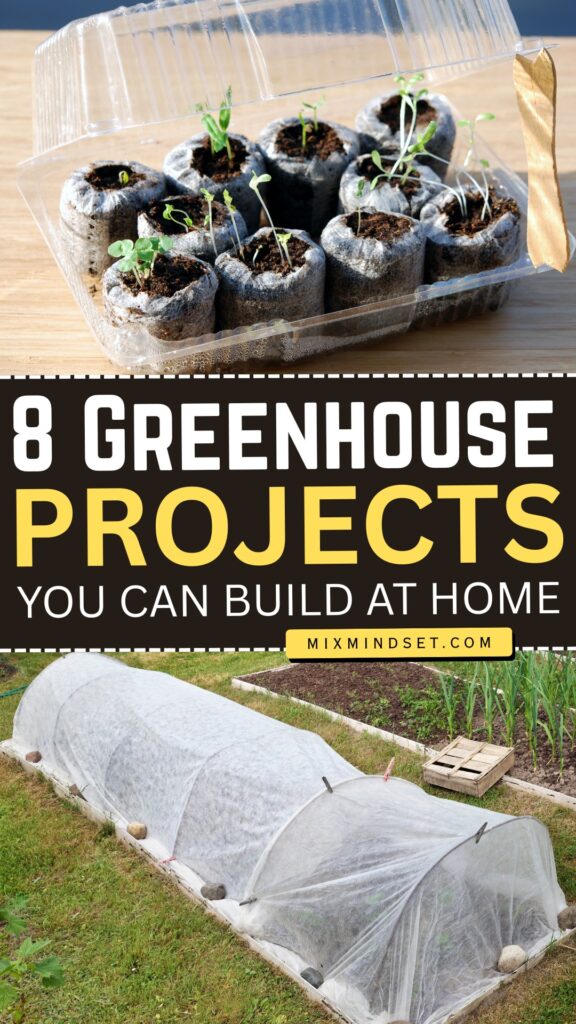
This was my very first greenhouse. I made it using PVC pipes and plastic sheeting. It is called a hoop house because the pipes bend into hoops that look like a tunnel. It is the cheapest and fastest project on this list.
What it is good for: Covering one raised bed or a row of plants. Great for tomatoes, peppers, and greens.
What you need:
| Material | Amount | Approx. Cost |
|---|---|---|
| PVC pipes (½ or ¾ inch) | 4 to 6 pieces, each 5 feet long | $10 to $15 |
| Rebar stakes or wooden dowels | 8 to 12 pieces | $5 to $10 |
| Clear plastic sheeting (4 mil or thicker) | 1 roll | $10 to $20 |
| Zip ties or garden clips | 1 small pack | $3 to $5 |
| Tape or clamps | 1 roll | $3 |
Here is how I built mine in one afternoon:
Step 1: I measured my garden bed. My bed was 4 feet wide. That is the perfect size for a hoop house.
Step 2: I drove rebar stakes into the ground on both sides of the bed, spacing them about 3 feet apart. I left 6 inches of rebar sticking out of the ground.
Step 3: I slid one end of a PVC pipe over a stake on one side, then gently bent it into an arch and slid the other end over the stake on the opposite side.
Step 4: I did this for every pair of stakes until I had four or five hoops lined up in a row.
Step 5: I draped clear plastic sheeting over the hoops. I made sure the plastic touched the ground on both sides.
Step 6: I put bricks, rocks, or boards along the edges of the plastic to hold it down. I also used zip ties to attach the plastic to the hoop at the top.
Step 7: On warm days, I rolled up one side of the plastic and tied it open so air could flow through. This stops the plants from getting too hot.
🥬 My Personal Experience: The first time I used my hoop house, I started my lettuce seeds two weeks earlier than normal. The seeds sprouted fast and grew strong. My neighbor planted the same seeds outside in the ground at the same time, and his did nothing for three weeks. My lettuce was ready to eat a full month before his. I was hooked.
2. Cold Frame from Old Windows (Best for Free Materials)
A cold frame is like a mini greenhouse that sits low to the ground. It has a clear lid that you prop open on warm days. I built mine using old wooden windows that someone was throwing away. This project cost me almost nothing.
What it is good for: Growing greens like kale, spinach, and lettuce through fall and winter.
What you need:
| Material | Amount | Approx. Cost |
|---|---|---|
| Old window (with glass) | 1 | Free to $10 |
| Wooden boards (untreated) | 4 pieces | $0 to $15 if you buy new |
| Hinges | 2 | $3 to $5 |
| Screws | 1 small pack | $3 |
| Straw or leaves (for insulation) | As needed | Free |
Follow these steps to build one exactly like mine:
Step 1: I found a south-facing spot in my yard that gets good sun. South-facing means the side where the sun shines most of the day.
Step 2: I built a rectangular box out of wooden boards. I made the back of the box taller than the front. This makes the lid slope down. The slope helps rain run off and lets more sunlight hit the plants. My box was 3 feet wide by 4 feet long.
Step 3: I set the box on the ground and pushed it down a little so it sat firmly.
Step 4: I attached my old window to the back edge of the box using hinges. Now I could lift the window open like a door.
Step 5: I filled the inside with potted plants or planted seeds directly into the soil if the box had no bottom.
Step 6: On sunny days, I propped the window open a few inches with a stick. This lets hot air escape so the plants do not cook.
Step 7: When cold nights came, I stuffed straw or dry leaves around the outside edges of the box for extra insulation.
🥬 My Personal Experience: I picked kale and spinach from my cold frame in January. The snow was piled up around the box, but inside, the greens were still growing. The temperature inside stayed about 15 to 20 degrees warmer than the outside air. That simple box of boards and an old window saved my winter garden.
3. PVC Pipe Mini Greenhouse (Best for Indoors)
This is the perfect project if you live in an apartment or have no yard. I keep one of these on my kitchen counter. It is small, lightweight, and easy to move.
What it is good for: Starting seeds, rooting cuttings, and growing herbs like basil, parsley, and mint.
What you need:
| Material | Amount | Approx. Cost |
|---|---|---|
| Small PVC pipes (½ inch) | 8 to 10 pieces, each 2 to 3 feet long | $5 to $10 |
| PVC corner connectors | 8 pieces | $3 to $5 |
| Clear plastic sheet or shower curtain | 1 | $5 to $10 |
| Tape or zip ties | As needed | $3 |
This build is like playing with building blocks. Here is how you do it:
Step 1: I measured my shelf or counter space. I wanted my mini greenhouse to fit on top of a small table.
Step 2: I cut my PVC pipes into lengths that matched my space. For the base, I made a rectangle 24 inches wide by 18 inches deep.
Step 3: I snapped the pipes together using corner connectors. No glue needed. The connectors hold everything tightly.
Step 4: I added four vertical pipes for the corners, then connected the top frame the same way as the base.
Step 5: I wrapped clear plastic sheeting over the whole frame. I used tape and zip ties to hold the plastic tight against the pipes.
Step 6: I left one side open like a flap. I taped the top edge of that flap to the frame so I could roll it up to water the plants.
Step 7: I placed the whole thing on my sunny kitchen window counter. Inside I put trays of seedling pots.
🥬 My Personal Experience: This little indoor greenhouse saved my tomato seedlings one year. I had started them too early, and a cold snap hit in April. I brought them inside and put them in this PVC tent. They kept growing strong while everyone else’s tomatoes outside froze. I harvested tomatoes three weeks earlier than normal that summer.
4. Upcycled Window Frame Greenhouse (Best for Looks)
This project takes more time, but it looks beautiful. I built one in my backyard using six old window frames. The glass lets in tons of light, and the old wood gives it a rustic, charming look.
What it is good for: Protecting small plants and seedlings. Also looks great as a decorative piece.
What you need:
| Material | Amount | Approx. Cost |
|---|---|---|
| Old window frames (with glass) | 4 to 6 | Free to $20 each |
| Screws and brackets | 1 pack | $5 to $10 |
| Wood glue or caulk | 1 tube | $5 |
| Hinges (for the roof) | 2 | $5 |
| Weather stripping (optional) | 1 roll | $5 to $10 |
This project takes patience but the reward is worth it. Here is the step-by-step process I followed:
Step 1: I collected old windows from garage sales and a building recycling center. I made sure the glass was not cracked.
Step 2: I washed each window with soap and water. I let them dry completely in the sun.
Step 3: I laid four windows on their sides to form a square or rectangle. I screwed them together at the corners using metal brackets.
Step 4: For the roof, I used two windows. I attached them together along one long edge using hinges. This created a pitched roof that can open like a book.
Step 5: I set the roof on top of the four walls. I used small brackets to attach the roof to the walls, but I kept it removable so I could lift it off to water.
Step 6: I added weather stripping around the edges to keep warmth in and drafts out.
Step 7: I placed the whole greenhouse on a wooden table in my yard. I put my seedling trays inside.
🥬 My Personal Experience: This greenhouse is the prettiest thing in my yard. My neighbor thought I bought it from a fancy store. When I told her I built it from old windows, she did not believe me. The sunlight pours through the old glass and makes the whole thing glow. Every spring, I start my tomatoes and peppers in there, and they grow like crazy.
5. Pallet Cold Frame (Best for Upcycling)
Wood pallets are everywhere. Grocery stores give them away for free. I used three pallets to build this cold frame in one afternoon. It is rugged, simple, and costs nothing.
What it is good for: Same as a cold frame. Protects greens and starts seeds in early spring.
What you need:
| Material | Amount | Approx. Cost |
|---|---|---|
| Wood pallets | 3 | Free |
| Clear plastic sheet or old window | 1 | Free to $10 |
| Screws or nails | 1 pack | $3 to $5 |
| Hinges | 2 | $3 to $5 |
Follow these steps to turn trash into a garden tool:
Step 1: I found three pallets that were not broken. I chose ones with solid boards.
Step 2: I cut one pallet in half using a hand saw. These two halves became the front and back walls.
Step 3: I stood the other two pallets upright as the side walls. I screwed them together to form a box.
Step 4: The box naturally had slats with gaps between the boards. I left those gaps for airflow.
Step 5: For the lid, I used a fourth piece of pallet wood to build a simple frame. I stapled clear plastic sheeting to the frame.
Step 6: I attached the lid to the back of the box using hinges.
Step 7: I placed the whole cold frame over my garden bed. The open bottom sat right on the soil.
🥬 My Personal Experience: I built this on a Saturday morning while drinking coffee. By lunchtime, I had a working cold frame. I started my spinach seeds in it that same day. Two weeks later, I had baby spinach leaves ready to eat. The pallets are rough and ugly, but the plants do not care. They just want the warmth.
6. Plastic Bottle Mini Greenhouse (Best for Kids)
This is a fun, tiny project. I made it with my nephew, and he loved it. Each dome is made from a single 2-liter soda bottle. It fits right over a small pot.
What it is good for: Starting individual seeds or rooting small cuttings.
What you need:
| Material | Amount | Approx. Cost |
|---|---|---|
| Empty 2-liter plastic bottle | 1 per dome | Free |
| Scissors | 1 pair | Already have |
| Small pot with soil | 1 | $1 to $2 |
| Seeds or cuttings | As needed | $1 to $3 |
This project is so simple, a child can do it with a little help:
Step 1: I washed out the soda bottle and peeled off the label.
Step 2: I cut the bottle in half horizontally, right around the middle.
Step 3: I took the bottom half and drilled or poked a few small holes in the bottom for drainage.
Step 4: I filled the bottom half with potting soil and planted a seed or a small cutting.
Step 5: I took the top half of the bottle, removed the cap, and placed it upside down over the bottom half. The neck of the bottle rests inside the soil.
Step 6: The cap hole acts as a vent. For more airflow, I left the cap off entirely.
Step 7: I set the mini greenhouse on a sunny windowsill and waited.
🥬 My Personal Experience: My nephew planted a bean seed in one of these soda bottle domes. He checked it every single day. On day four, he saw a tiny sprout pushing up through the soil. He screamed with excitement and ran to show his mom. That little soda bottle turned a bored kid into a proud gardener.
7. Raised Bed Greenhouse Cover (Best for Existing Garden)
If you already have a raised garden bed, you can turn it into a greenhouse with a simple cover. I added this to my main vegetable bed, and it doubled my growing season.
What it is good for: Protecting a whole raised bed of vegetables, greens, or herbs.
What you need:
| Material | Amount | Approx. Cost |
|---|---|---|
| PVC pipes (½ or ¾ inch) | 4 to 6 pieces | $10 to $15 |
| Pipe straps or brackets | 4 to 6 | $5 to $10 |
| Clear plastic sheeting | 1 roll | $10 to $20 |
| Zip ties | 1 pack | $3 to $5 |
This is an easy upgrade for your existing garden bed. Here is how you attach it:
Step 1: I measured my raised bed. Mine was 4 feet wide and 8 feet long.
Step 2: I attached pipe straps to the inside walls of the bed. I put them every 3 feet along both long sides.
Step 3: I slid PVC pipes into the straps on one side, bent them into arches, and secured them into the straps on the opposite side.
Step 4: I draped clear plastic over the arches. I made sure the plastic hung down past the edges of the bed.
Step 5: I used bricks and boards to weigh down the plastic along the ground. For extra hold, I screwed the plastic directly to the wood frame of the bed.
Step 6: For ventilation, I rolled up the plastic on one end and tied it with garden twine.
Step 7: On warm days, I opened both ends and let air flow straight through.
🥬 My Personal Experience: Before I added this cover, my raised bed produced vegetables for about 4 months of the year. After I added the hoop cover, I got 7 months of harvest. That is almost double the food from the exact same space. I planted kale in September and picked it all the way through December. The cover paid for itself in the first season.
8. Scrap Wood Mini Greenhouse (Best for Tight Budget)
This is the project for when you have almost no money but plenty of scrap materials. I built this one using leftover wood from other projects and a clear piece of plastic from an old shower curtain.
What it is good for: A small portable greenhouse that sits on a table, patio, or balcony.
What you need:
| Material | Amount | Approx. Cost |
|---|---|---|
| Scrap wood (any size) | 4 to 6 pieces | Free |
| Clear plastic or old shower curtain | 1 | Free to $5 |
| Screws or nails | A few | Already have |
| Hinges (optional) | 2 | $3 if you buy them, or use tape |
| Staple gun or tacks | 1 | Already have |
Use whatever wood you can find. Here is the process:
Step 1: I gathered all the scrap wood from my garage. Some pieces were long, some were short. I did not care.
Step 2: I built a simple rectangular box using the longest pieces I had. The size of the box depended on what wood was available. Mine ended up being 2 feet wide by 3 feet long.
Step 3: I did not worry about gaps between the boards. Gaps let air flow, which is actually good.
Step 4: I built a second frame the same size as the box. This became the lid.
Step 5: I laid the lid frame on top of the clear plastic sheet. I cut the plastic so it was a few inches bigger than the frame on all sides.
Step 6: I wrapped the plastic over the frame and stapled it tight underneath. I pulled the plastic so it was smooth and tight like a drum.
Step 7: I set the lid on top of the box. On warm days, I just lifted the lid off completely and set it aside.
🥬 My Personal Experience: This is the ugliest greenhouse I own. The wood is different colors. The plastic is cloudy. But it works exactly as well as the fancy ones. I used it to start my basil and parsley one spring, and both grew into beautiful, healthy plants. Pretty does not matter to plants. Warmth does.
Quick Reference Table: Which Greenhouse Should You Build?
Use this table to pick the right project for your situation.
| Project | Best For | Cost | Time | Skill Level |
|---|---|---|---|---|
| Hoop House | Covering garden rows | $20 to $50 | 1 to 2 hours | Beginner |
| Cold Frame (Windows) | Winter greens | Free to $30 | 2 to 3 hours | Beginner |
| PVC Mini | Indoor seed starting | $15 to $30 | 1 hour | Beginner |
| Window Frame | Decorative display | $20 to $80 | 1 to 2 days | Intermediate |
| Pallet Cold Frame | Free upcycling | Free | 2 to 3 hours | Beginner |
| Plastic Bottle Dome | Kids and small cuttings | Free | 15 minutes | Very easy |
| Raised Bed Cover | Existing garden beds | $20 to $50 | 1 hour | Beginner |
| Scrap Wood | Zero budget | Free | 2 hours | Beginner |
Tips from My Greenhouse Journey
After building all of these, I learned a few things that apply to every project:
🌡️ Let air in, or your plants will cook. A closed greenhouse on a sunny day can reach 100 degrees or higher. Even on cold days, crack the lid or roll up a side. The plants need fresh air.
💧 Water less often than you think. Inside a greenhouse, water does not evaporate as fast as outside. The soil stays damp longer. I check my soil with my finger. If it is wet one inch down, I wait.
🧹 Keep it clean. Old leaves and dead plants inside the greenhouse can grow mold and attract bugs. Every few weeks, I wipe the glass or plastic and sweep out any debris.
📍 Put it in the right spot. A greenhouse needs sun. I place all of mine facing south or southeast. If you put it in the shade, nothing grows.
📏 Start small. Do not build a giant greenhouse your first time. Build one mini project first. Learn from it. Then go bigger.
The Bottom Line
You do not need to spend thousands of dollars or hire a contractor to have a greenhouse. I have built eight of them using PVC pipes, old windows, pallets, and even soda bottles. Every single one worked. They kept my plants warm, protected them from frost, and gave me fresh food for months longer than I had before.
Pick one project from this list. Gather the materials. Set aside a weekend afternoon. Build it. Then watch your seeds sprout and your greens grow, even when the weather outside says no.
Your garden is waiting. Go build something.