How to Make Buttermilk at Home?
One of those items that causes you to pause when it unexpectedly appears in a recipe is buttermilk. You open the refrigerator.
You take another look, not with buttermilk. That moment irritates a lot of people. It shouldn’t.
The reality is straightforward. Making buttermilk at home is quite simple. Rare substances or specialized expertise are not required. You don’t have to prepare ahead of time. You’re set if you have ordinary milk and tiny extras.
I’ll walk you through simple, straightforward methods for making buttermilk at home in this post.
We will discuss what it is, why it functions, and how to confidently use it. When a recipe calls for buttermilk, you won’t ever feel stuck again.
Table of Contents
What Is Buttermilk, Really?
Gently soured milk is called buttermilk. Instead of being harsh or strong, that sour sensation is nice and moderate.
Buttermilk used to be the liquid that remained after butter and cream were churned. The majority of store-bought buttermilk is now cultured. In order to give milk a thick body and a light tang, beneficial microorganisms are added.
Suggestion: You may replicate the effect with a simple acid while making buttermilk at home. In baking and cooking, the outcome is the same.
Why Do People Love Cooking With Buttermilk?
Here’s why a lot of home cooks use it:
- Pancakes get fluffy as a result.
- Cakes stay moist thanks to it.
- It makes meat more soft.
- It counteracts sweet tastes.
- It gives a subtle tang without being overpowering.
Buttermilk is essential to many traditional American dishes. biscuits. Fried chicken. bread made with corn. ranch dressing. It makes them all glow.
Ingredients You Need to Make Buttermilk at Home:
The simplicity of this is the finest part. Most likely, you already have everything.
Basic ingredients:
- Milk: The best milk is whole milk. Low-fat is also effective.
- One acidic ingredient: Cream of tartar, apple cider vinegar, white vinegar, or lemon juice
That’s it. Not a machine. Not heated. Don’t worry.
The Most Common Methods:
1. Milk and Lemon Juice:
The majority of people employ this strategy. It is dependable and quick.
What you need:
- 1 cup milk
- 1 tablespoon fresh lemon juice
Method:
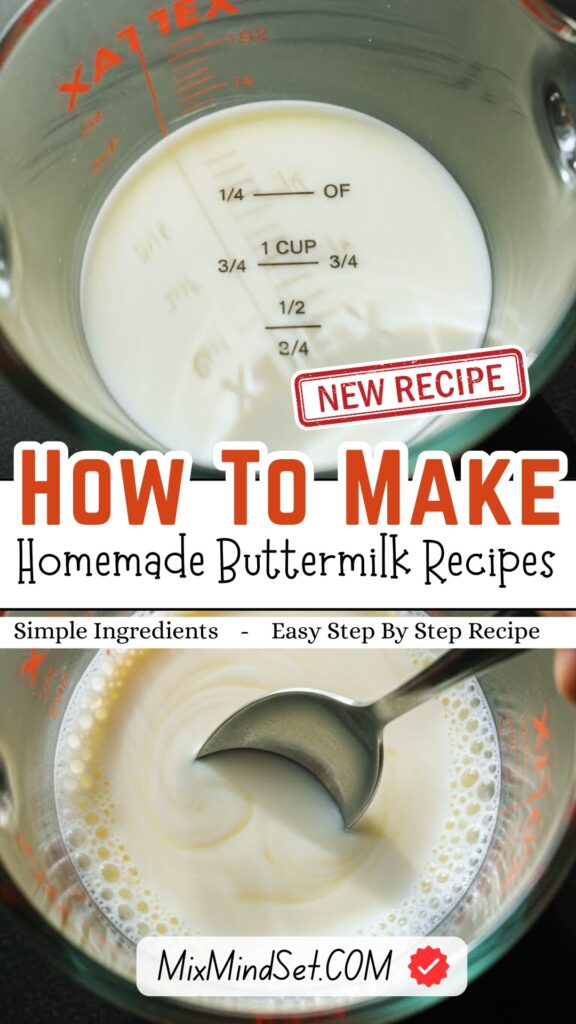
- Fill a glass or bowl with one cup of milk.
- Pour in one tablespoon of lemon juice.
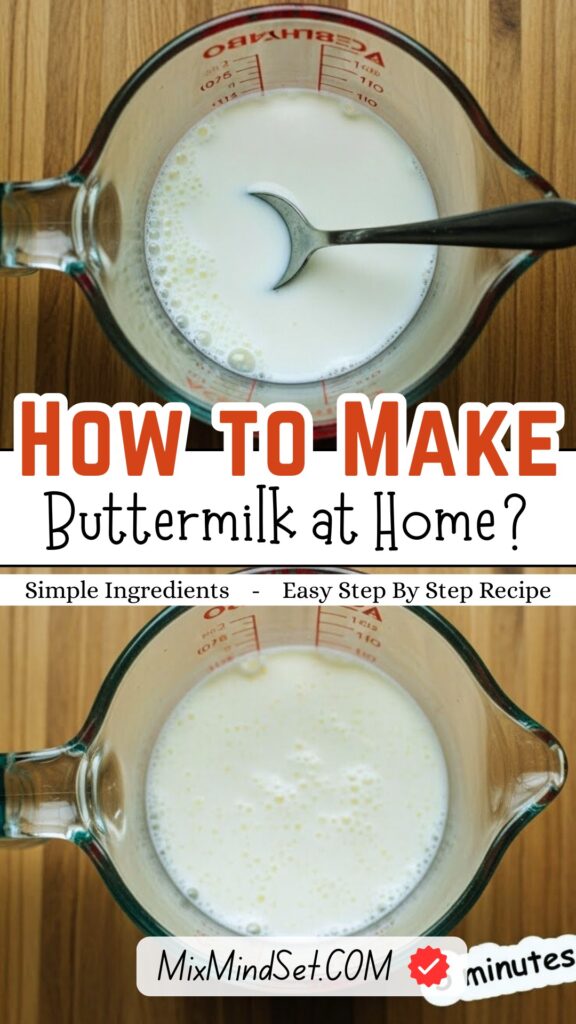
- For a few seconds, gently stir.
- Give it five to ten minutes to sit.
- Look for little curdles and a modest thickness.
- Before using, stir again.
- That buttermilk is prepared at home.
Suggestion: The milk won’t appear frightening. It will appear rather uneven and thicker. That’s ideal.
2. Milk and Vinegar Method:
Vinegar is equally effective if you don’t have lemon juice.
What you need:
- 1 cup milk
- 1 tablespoon white vinegar or apple cider vinegar
Method:
The procedures are the same.
- Pour.
- Pour in some vinegar.
- Mix.
- Hold on.
Recipes incorporate the flavor. Baked items won’t taste like vinegar.
Other Easy Ways to Make Buttermilk:
The kitchen has multiple paths. Here are some further choices.
1. Using Cream of Tartar:
When you bake frequently, this works wonderfully.
- To one cup of milk, add one and three-quarters tablespoons of cream of tartar.
- Mix thoroughly.
- Give it five minutes to rest.
2. Using Yogurt:
Thickness is provided by plain yogurt.
- Combine one quarter cup plain yogurt with three quarters of milk.
- Stir until smooth.
3. Using Sour Cream:
This is smooth and rich.
- Combine one-third cup sour cream with two-thirds cup milk.
A slightly different feel is produced by each procedure. They all function well.
“Video Guide”
Which Milk Works Best?
Milk choice matters a little.
| Milk Type | Result |
| Whole milk | Thick and rich |
| 2 percent milk | Good balance |
| Low fat milk | Thin but usable |
| Skim milk | Very thin |
| Almond milk | Works with lemon |
| Soy milk | Works with vinegar |
| Oat milk | Mild thickness |
Suggestion: Whole milk works best for baking. Plant milk can be used for marinades or beverages.
How Long to Wait Before Using Buttermilk?
It’s easy to rush this section. Try not to.
- Give it at least five minutes.
- Best outcomes after ten minutes
Point: The acid works when you wait. The proteins in milk are altered. Buttermilk is useful in recipes because of this modification.
How Homemade Buttermilk Looks and Feels?
For the first time, a lot of people worry.
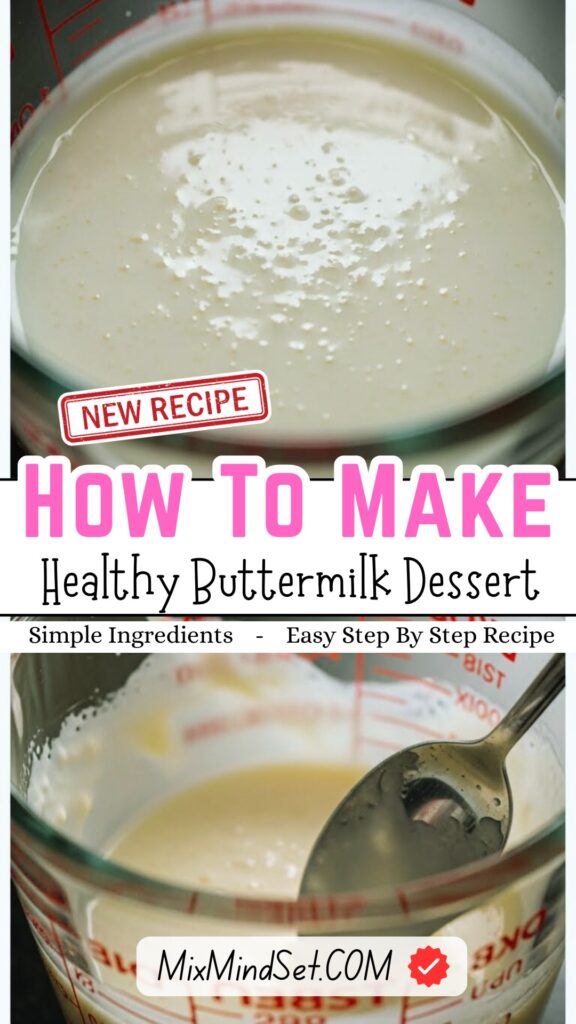
- It could appear a little bumpy.
- It could have a faintly sour smell.
- It might feel more substantial than milk.
That’s typical. Have faith in the process.
Common Mistakes and How to Avoid Them:
These few pointers prevent frustration.
- Avoid using heated milk.
- Don’t skip the rest period.
- Avoid stirring too much.
- Don’t expect it to resemble store-bought buttermilk.
- Don’t panic after tasting it alone.
- It is intended for use in cooking.
How to Use Homemade Buttermilk?
This is the exciting part. Anywhere a recipe calls for buttermilk, you can use it.
1. Baking ideas:
- Pancakes
- Biscuits
- Waffles
- Muffins
- Cakes
2. Cooking ideas:
- Fried chicken soak
- Marinades
- Salad dressings
- Mashed potatoes
3. Drinks and sauces:
- Smoothies
- Coleslaw sauce
- Ranch dressing
Substituting Buttermilk in Recipes:
When a recipe calls for buttermilk, you can substitute your homemade buttermilk cup for cup, meaning that the quantity remains unchanged.
The slightly sour buttermilk makes the recipe function better if baking soda is also used. Because of the tiny air bubbles this produces during baking, the food becomes fluffy, light, and soft rather than flat.
Can You Drink Homemade Buttermilk?
Yes, you can. It is so refreshing and light. Because of its sour, tangy taste it is a superb choice for breakfast. Most people enjoy it with a pinch of salt.
Fun Fact: You can make it sweet as well and also enjoy it with a blend of herbs.
How Long Does Homemade Buttermilk Last?
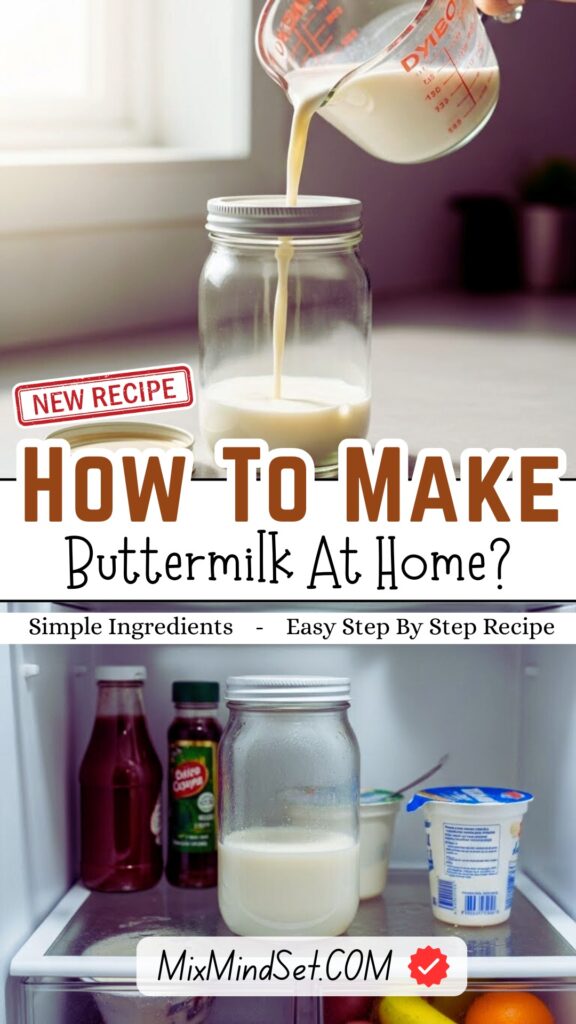
It’s preferable to utilize homemade buttermilk immediately.
If you must store it:
- Store it in the refrigerator.
- Use within a day.
- The taste then shifts.
Store-Bought vs Homemade Buttermilk:
Here is a quick look.
| Feature | Homemade | Store-Bought |
| Time | 5 to 10 minutes | Ready |
| Cost | Very low | Higher |
| Thickness | Light | Thick |
| Flavor | Mild | Tangy |
| Freshness | Immediate | Longer shelf |
Both have a place. Homemade wins for speed.
Why Does This Method Work So Well?
When vinegar or lemon juice are added to milk, its microscopic components change. This little adjustment improves cooking. It gives cakes and pancakes a fluffy, airy, and delicate texture.
You don’t have to comprehend how it operates. All you have to do is appreciate how delicious the food is.
Pro Tips Blended Right Into Your Cooking Flow:
- When making pancakes, combine the buttermilk first and set it aside while you gather the remaining ingredients. It is prepared by the time you require it.
- Soak the meat for a few hours before frying it. It is made softer and more flavorful by the buttermilk.
- Before adding acid, let the milk lie on the counter for a few minutes if it is extremely cold. That facilitates the response.
FAQs – Frequently Asked Questions
Can I make buttermilk with lactose-free milk?
Indeed, it functions in the same manner.
Will vinegar taste strong in baked goods?
No, while cooking, the flavor fades.
Is homemade buttermilk safe?
Yes, as long as it’s made fresh and used quickly.
Final Thoughts:
You have more freedom in the kitchen when you know how to produce buttermilk. One missing ingredient no longer causes you to stop cooking. You remain at ease.
You continue to move. This little ability enhances your cuisine while saving time and money. Smile the next time a recipe asks for buttermilk. You already know what to do.