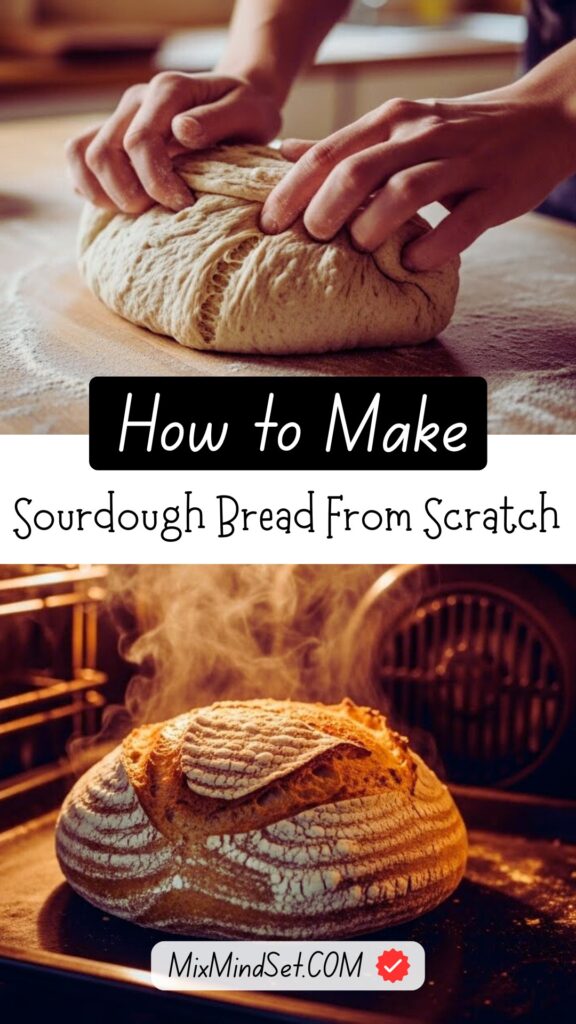
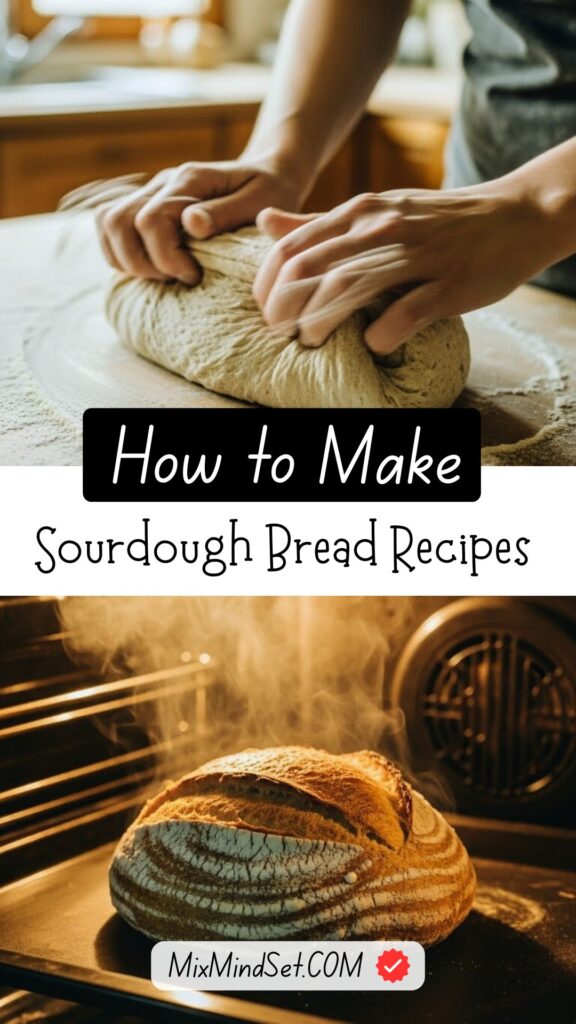
How to Make Sourdough Bread at Home?
You all know that I love making bread, but it wasn’t until less than a month ago that I stopped making excuses and decided to get down to work; I looked for some videos on YouTube and learned how to make sourdough bread.
For years, this method of making bread intimidated me, but I don’t know what came over me this time—I decided to try it. It’s actually easier than I thought. You just need patience and to plan ahead. This isn’t the kind of bread you can start and finish in about three hours, like my whole wheat loaf, but it’s absolutely worth the wait.
This sourdough bread doesn’t require much preparation time itself, but there are many hours of resting time between several of the steps before baking. So, if you want to eat bread on a Sunday, for example:
- Feed your sourdough starter on Friday night
- Feed it again on Saturday morning
- By midday, depending on how warm your kitchen is, your starter will have doubled in volume
- On Saturday, work the dough and let it rest
- On Sunday, the bread will be ready to bake
You probably already know someone who bakes sourdough bread. Ask that person to give you about 50 to 75 grams of sourdough starter to get started. If you don’t know anyone who bakes sourdough bread (like I didn’t), you can buy it online.
So go ahead and make this delicious bread. You won’t regret it.
Table of Contents
Why you’ll love making rustic sourdough bread
Firstly, because—as my dear Irlib Taylor, the baker behind The Artisan Loaf, who taught me how to make sourdough and shared this recipe with me, says—this is the best bread in the world.
Secondly, slow fermentation with natural sourdough (instead of baker’s yeast) not only imparts a more complex and slightly acidic flavor, but also makes the bread more nutritious and easier to digest.
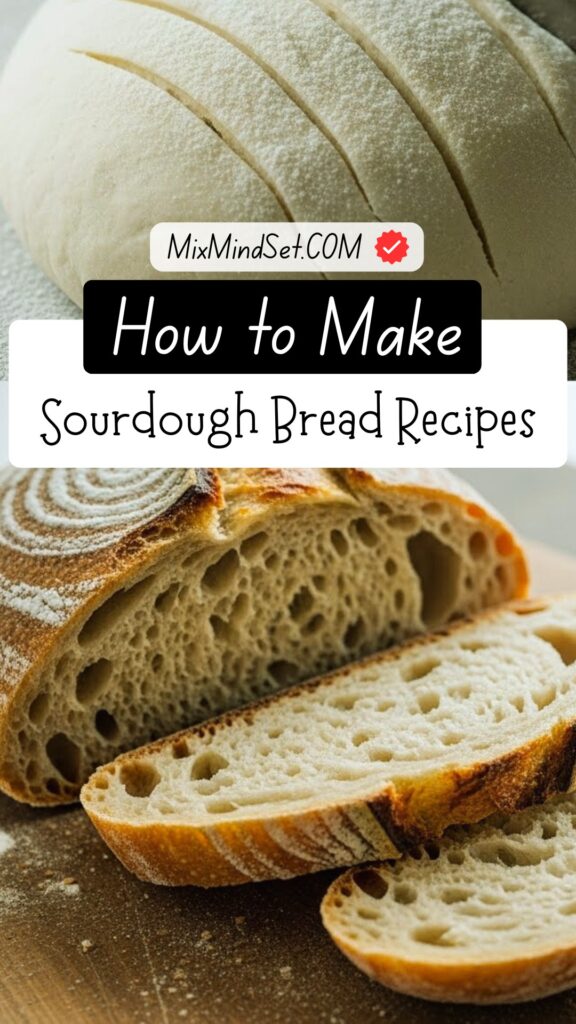
Thirdly, unlike industrial bread found in supermarkets, rustic sourdough bread is characterized by:
- Its artisanal appearance
- A thick and crispy crust
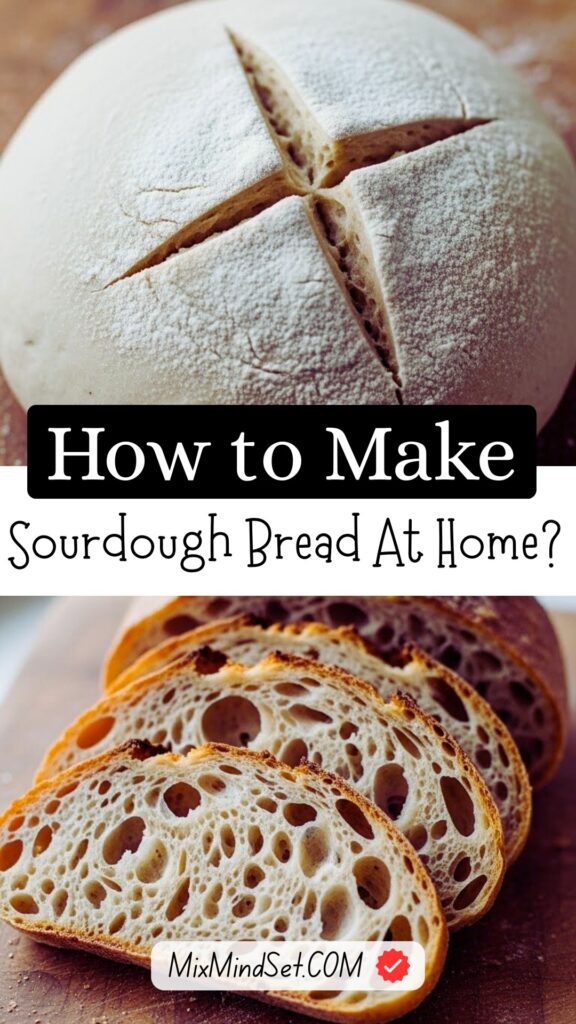
- A soft crumb with irregular air pockets
Its high hydration percentage (between 65% and 75% in relation to 100% flour) contributes to that characteristic and much-appreciated internal texture.
Don’t worry if these terms sound very technical. At the end of the day, what matters is that you’ll be creating delicious bread with simple, honest ingredients. So let yourself be seduced by the wonders of sourdough and let’s get started—or should I say, knead the dough?
Recipe Information
- Servings: 2 loaves of bread
- Preparation time: 2 days 7 hours 5 minutes
- Cooking time: 35 minutes
- Total time: 1 hour 30 minutes
What Ingredients Do I Need to Make Rustic Sourdough Bread?
Ingredients table
| Ingredient | Notes |
|---|---|
| Room temperature water | Tap water works well |
| Active sourdough starter | Must be bubbly and active |
| Extra virgin olive oil | Adds flavor |
| Bread flour | Strong flour recommended |
| Sea salt | Fine or medium grain |
| Rice flour | Prevents sticking during fermentation |
When I started making sourdough breads seriously, I replaced King Arthur’s bread flour with Sir Lancelot, a strong flour rich in gluten from the same brand, sold in 50-pound bags.
What Equipment Do I Need?
The beauty of making rustic bread is that you don’t need specialized equipment. The basics include:
- A scale for weighing ingredients
- A large mixing bowl
- A Danish pastry blender, wooden spoon, or hands
- A stand mixer (optional, helpful for large batches)
- A banneton, colander, or basket with a cotton towel
- A silicone baking mat or parchment paper
- A cast iron pot with lid, pizza stone, or baking tray
- A baker’s knife (lame) or sharp knife
How to Make Rustic Sourdough Bread in 6 Steps
Step 1: Mixing and autolysis
In a large bowl, combine the water with the active sourdough starter and olive oil. Add the flour and salt, then mix until incorporated.
At first, the dough will feel lumpy—don’t worry. Cover and let it rest for one hour. This autolysis process allows enzymes to hydrate the flour and develop gluten naturally. After resting, the dough will be softer and easier to handle.
Read Also: How to Make Cheese Sauce?
Step 2: Folds and bulk fermentation
After the first rest:
- Stretch and fold the dough
- Cover and rest for 45 minutes
- Repeat this process 3–4 times
Bulk fermentation lasts 4 to 6 hours, depending on temperature:
- Warmer kitchens: 2–4 hours
- Cooler kitchens: 6+ hours
These folds build strength and elasticity in the dough.
Step 3: Shaping and rounding
When the dough has risen more than half its size and shows air bubbles, gently turn it onto a floured surface. Stretch, fold toward the center, and repeat until round.
Turn it over and shape into a tight ball, creating surface tension until smooth and firm.
Step 4: Cold fermentation
Prepare the banneton with rice flour or a lined towel. Place the dough seam-side up, seal gently, dust with rice flour, and cover.
Refrigerate for 12 to 36 hours. I usually ferment for 18–24 hours. The longer the fermentation, the more complex the flavor.
Step 5: Baking preparation
Preheat the oven and cast iron pot to 450°F (232°C) for at least 45–60 minutes. Have parchment or a silicone mat ready for transferring the dough.
Step 6: Scoring and baking
Turn the dough out, score a 4-inch cut, and carefully place it in the hot pot.
- Bake covered: 20 minutes
- Uncover and bake: 20 minutes
- Optional: 10–20 extra minutes for deeper color
The bread is ready when it reaches 195°F (90°C) internally. Let it cool completely before slicing—preferably until the next day.
Video Guide 📽️
Troubleshooting Sourdough Bread
If your first loaf isn’t perfect, celebrate anyway. Common issues include:
- Dough too sticky: Reduce water slightly next time
- Flat bread: Starter may not be active enough
- Soft crust: Ensure high oven heat and steam
Read Also: Crispy Fried Chicken Sandwich Recipe
Substitutes and Variations
- Replace bread flour with whole wheat at an 8:2 ratio
- Add rye flour for deeper flavor
- Add oats and honey for a soft, slightly sweet crumb
- Add chocolate chips for an irresistible snack
Common Questions About Sourdough
Can I use any type of flour?
Yes. Stronger flours stay active longer, but wheat, rye, spelt, semolina, and whole wheat all work.
What does 100% hydration mean?
It means the starter contains equal parts water and flour.
What does feeding 1:1:1 mean?
Equal parts starter, water, and flour. Ratios like 1:3:3 mean slower fermentation and more control.
My starter has brown liquid on top. Is it dead?
No. It’s simply hungry. Discard most of it, feed what remains, and it will recover.
My starter is runny and weak?
It lacks nutrients. Feed it properly and it will strengthen.
My starter got moldy?
Discard it and start again in a clean container.
I won’t use my starter for months?
Feed it and refrigerate it, or dehydrate it for long-term storage.
Read Also: Mexican Beef Tacos Recipe
Final thoughts
So far, we know how to work with dough and manage preferments. Flour choice may seem confusing, but the truth is simple: use what you enjoy and feel comfortable working with. That confidence matters just as much as technique.