31+ Healthy Juice Recipes
Fresh juice is one of the fastest ways to flood your body with vitamins, minerals, and antioxidants.
But not all juices are created equal. Store‑bought versions often contain added sugar, preservatives, and very little actual produce.
Homemade juice lets you control exactly what goes in – and you can turn it into a delicious, nutrient‑dense habit.
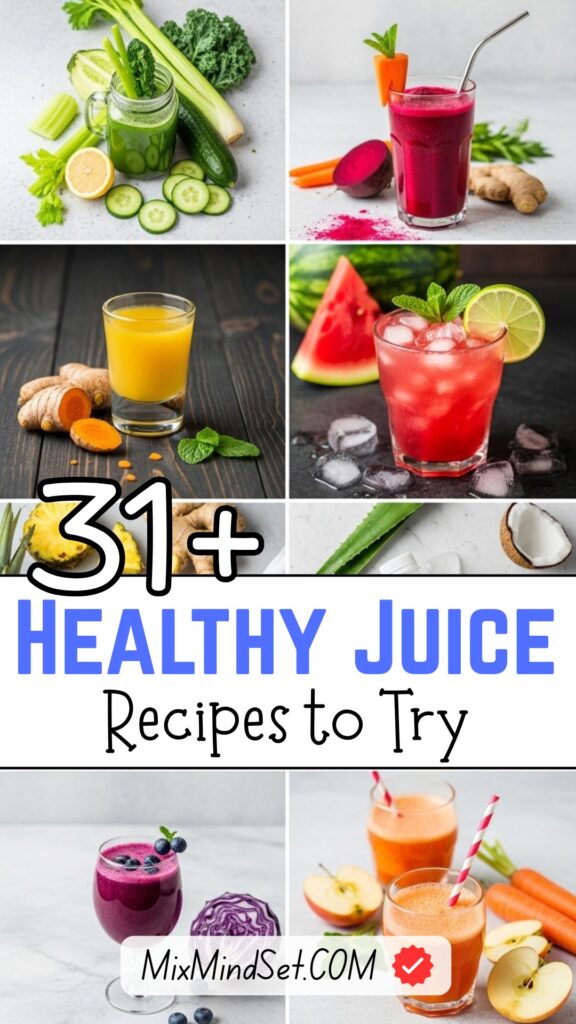
This guide gives you over 31 healthy juice recipes using affordable fruits, vegetables, and herbs. You’ll find green juices, root juices, citrus blends, and even low‑sugar options.
Each recipe is designed to be balanced – not too sweet, not too earthy. Plus, you’ll get full nutritional breakdowns for three featured recipes, a handy troubleshooting table, and answers to common juicing questions.
Why Make Your Own Juice?
When you juice at home, you get:
| Benefit | What It Means |
|---|---|
| No added sugar | You control the sweetness – no high‑fructose corn syrup. |
| Fresh nutrients | Enzymes and vitamins degrade quickly. Fresh juice is at its peak. |
| Vegetable variety | It’s easy to sneak in kale, celery, or beets when they’re juiced. |
| Customizable | Adjust flavors to your taste and health needs. |
| Waste reduction | Use slightly wilted produce that would otherwise be tossed. |
A note on fiber: Juicing removes most insoluble fiber. For blood sugar balance and fullness, eat whole fruits and vegetables too. Think of juice as a supplement, not a meal replacement.
Juicing 101: What You Need to Know
Essential Equipment
- Centrifugal juicer – Faster, good for hard produce (apples, carrots). Less efficient with leafy greens.
- Masticating (slow) juicer – Better for leafy greens, produces higher yield, preserves more nutrients. Quieter but slower.
- Blender + nut milk bag – Blend produce with a little water, then strain. Works in a pinch.
Best Produce for Juicing
| Category | Best Choices |
|---|---|
| Base (mild, watery) | Cucumber, celery, zucchini, coconut water |
| Sweet fruit | Apple, pear, pineapple, orange, grapes, mango |
| Leafy greens | Kale, spinach, Swiss chard, romaine, wheatgrass |
| Root vegetables | Carrot, beet, sweet potato, ginger, turmeric |
| Herbs & aromatics | Mint, basil, parsley, cilantro, lemon, lime |
Flavor Balancing Formula
Aim for this ratio when creating your own:
- 50‑60% mild base (cucumber, celery, zucchini) – adds volume without overpowering.
- 20‑30% sweet fruit (apple, pear, pineapple) – makes it drinkable.
- 10‑20% leafy greens or roots (spinach, kale, carrot, beet) – boosts nutrients.
- Small amounts of herbs & citrus – brightens flavor.
31+ Healthy Juice Recipes
I’ve organised these by color and flavor profile. The first three recipes include full ingredient tables and nutritional facts. The rest are quick summaries you can adapt.
Green Juices (8 Recipes)
Recipe 1: Classic Green Lemonade
Ingredients:
| Ingredient | Amount |
|---|---|
| Cucumber | 1 medium |
| Green apple | 1 |
| Celery stalks | 2 |
| Kale leaves (stems removed) | 2 cups |
| Lemon (peeled) | ½ |
| Fresh ginger (small piece) | 1 inch |
Instructions:
- Wash all produce well.
- Cut to fit your juicer’s feed chute.
- Juice in order: kale (compress well), then cucumber, celery, apple, lemon, ginger.
- Stir and serve immediately over ice.
Nutritional Facts (per 12 oz serving):
| Nutrient | Amount |
|---|---|
| Calories | 95 |
| Protein | 3g |
| Carbohydrates | 22g |
| Fiber (removed) | ~4g |
| Sugar (natural) | 15g |
| Vitamin K | 400% DV |
Recipe 2: Spinach & Pineapple Zinger
Ingredients:
| Ingredient | Amount |
|---|---|
| Fresh spinach | 2 cups |
| Pineapple (cubed) | 1 cup |
| Cucumber | ½ |
| Lime (peeled) | ½ |
| Fresh mint | ¼ cup |
Instructions:
- Juice spinach and mint first (slow juicer preferred).
- Then juice pineapple, cucumber, and lime.
- Stir well. Serve chilled.
Nutritional Facts (per 10 oz serving):
| Nutrient | Amount |
|---|---|
| Calories | 110 |
| Protein | 2g |
| Carbohydrates | 27g |
| Vitamin C | 90% DV |
| Manganese | 30% DV |
Recipe 3: Celery & Cucumber Hydrator
Ingredients:
| Ingredient | Amount |
|---|---|
| Celery stalks | 4 |
| Cucumber | 1 |
| Lemon (peeled) | ½ |
| Fresh parsley | ½ cup |
| Green apple (optional) | ½ |
Instructions:
- Juice celery, cucumber, and apple (if using).
- Follow with parsley and lemon.
- Serve over ice. This is very low in sugar – ideal for afternoon hydration.
Nutritional Facts (per 12 oz serving, without apple):
| Nutrient | Amount |
|---|---|
| Calories | 55 |
| Protein | 2g |
| Carbohydrates | 12g |
| Sugar | 6g |
| Sodium | 160mg (from celery) |
| Potassium | 500mg |
More Green Juices (quick ideas):
- Kale Apple Mint – 2 cups kale + 1 green apple + ½ cucumber + handful mint.
- Cucumber Basil Cooler – 1 cucumber + ½ honeydew melon + handful basil + lime.
- Swiss Chard & Pear – 2 cups Swiss chard + 1 pear + 1 celery stalk + lemon.
- Zucchini & Lime Refresher – 1 zucchini + 1 green apple + ½ lime + small ginger.
- Wheatgrass Shot – 1 oz wheatgrass + 1 green apple (for palatability).
Orange & Red Juices (Roots & Citrus) (7 Recipes)
- Carrot Orange Ginger – 4 carrots + 2 oranges (peeled) + 1 inch ginger.
- Beet & Apple Energizer – 1 small beet (peeled) + 2 apples + ½ lemon + 1 celery stalk.
- Tomato & Celery Bloody Mary (no vodka) – 3 tomatoes + 2 celery stalks + ½ lemon + dash of black pepper.
- Sweet Potato & Carrot – 1 small sweet potato (scrubbed) + 3 carrots + 1 orange (peeled).
- Red Cabbage & Apple – 1 cup red cabbage + 2 apples + ½ lemon.
- Watermelon & Lime – 2 cups watermelon (seeds removed) + 1 lime (peeled) + fresh mint.
- Pink Beet & Grapefruit – 1 small beet + 1 pink grapefruit (peeled) + 1 apple.
Yellow & Tropical Juices (6 Recipes)
- Pineapple Turmeric Tonic – 1 cup pineapple + 1 inch turmeric root + ½ orange + ¼ lemon.
- Mango Lime Smoothie Juice – 1 mango (peeled, pit removed) + ½ cucumber + 1 lime + small handful cilantro.
- Peach & Basil – 2 ripe peaches (pits removed) + ½ cucumber + fresh basil.
- Golden Milk Juice (turmeric + coconut) – 2 carrots + 1 inch turmeric + ½ fresh coconut water + dash of black pepper (juice carrots and turmeric, then stir in coconut water).
- Yellow Bell Pepper & Orange – 1 yellow bell pepper + 2 oranges + ½ lemon.
- Passion Fruit Green Tea Juice – Juice of 2 passion fruits + 1 green apple + 1 cup brewed green tea (cooled).
Low‑Sugar & Savory Juices (5 Recipes)
These are great for people monitoring blood sugar.
- Cucumber Celery Lemon – 1 cucumber + 3 celery stalks + ½ lemon + handful parsley.
- Fennel & Pear – 1 fennel bulb (fronds included) + 1 pear + ½ lime.
- Zucchini & Mint – 1 zucchini + 1 celery stalk + ¼ lemon + fresh mint.
- Tomato Basil – 2 tomatoes + ½ red bell pepper + fresh basil + pinch of salt.
- Radish & Cucumber – 5 radishes + 1 cucumber + ½ apple + ½ lemon.
Herbal & Spiced Juices (5 Recipes)
- Ginger Lemon Cayenne – 2 lemons (peeled) + 2 inch ginger + ½ cucumber + pinch cayenne.
- Cilantro Lime Detox – 1 bunch cilantro + 2 limes (peeled) + 1 green apple + 1 celery stalk.
- Menthol Mint – 1 cucumber + ½ honeydew + handful peppermint + ½ lime.
- Parsley & Celery – 1 bunch parsley + 4 celery stalks + ½ lemon + 1 green apple.
- Rosemary & Pear – 1 pear + 1 celery stalk + small sprig fresh rosemary + ¼ lemon.
- Turmeric & Orange Immunity – 1 inch turmeric + 2 oranges + 1 carrot + black pepper.
5 Common Juicing Mistakes
1. Juicing only fruit.
Fruit juice without vegetables spikes blood sugar. A 12 oz apple juice has 40g sugar – same as soda.
Solution: Use at least 50% vegetables. Start with cucumber or celery as a base.
2. Not washing produce well.
Dirt and bacteria can end up in your glass.
Solution: Scrub root vegetables, rinse leafy greens thoroughly, and consider organic for thin‑skinned produce (apples, celery, bell peppers).
3. Juicing too far in advance.
Fresh juice loses nutrients quickly – up to 40% of vitamin C in 24 hours.
Solution: Drink within 20‑30 minutes for maximum benefit. If storing, fill a glass jar to the brim (reduces oxidation), seal tightly, refrigerate up to 2 days.
4. Ignoring calories.
Juice is not calorie‑free. A 16 oz vegetable‑fruit juice can have 150‑250 calories.
Solution: Treat juice as a snack or part of a meal, not an unlimited drink.
5. Throwing away the pulp.
Pulp contains valuable fiber.
Solution: Use leftover pulp in muffins, veggie burgers, or compost it. Some juicers allow you to reintegrate a little pulp for texture.
Frequently Asked Questions
Is juicing healthier than eating whole fruits and vegetables?
No – whole produce contains fiber that slows sugar absorption and helps with satiety. Juicing provides concentrated nutrients quickly but lacks fiber. Use both: eat whole most of the time, juice as a supplement.
Can I juice without a juicer?
Yes. Use a blender: blend fruits/veggies with a little water until smooth, then strain through a nut milk bag or fine‑mesh sieve. You’ll lose some yield, but it works.
What are the best low‑sugar vegetables for juicing?
Cucumber, celery, zucchini, kale, spinach, broccoli stems, bell peppers, fennel, radishes. These add volume and nutrients without spiking blood sugar.
How often should I drink fresh juice?
For most people, 4‑8 oz per day is a healthy addition. Those with diabetes or insulin resistance should limit to vegetable‑dominant juices and monitor their glucose response.
Can I freeze fresh juice?
Yes, but expect some separation and nutrient loss. Freeze in ice cube trays or small jars, leaving headspace for expansion. Thaw in the refrigerator overnight and shake well.
Do I need to peel citrus fruits?
The white pith contains bioflavonoids, so it’s beneficial. Remove only the thick outer colored peel (sour, bitter). Leave the white pith on. For ginger and turmeric, scrub but don’t peel.
Nutritional Comparison Table (Per 8 oz serving)
| Juice | Calories | Sugar | Key Nutrients |
|---|---|---|---|
| Classic Green Lemonade | 65 | 10g | Vitamin K, C, potassium |
| Carrot Orange Ginger | 85 | 16g | Vitamin A, C, antioxidants |
| Celery Cucumber Hydrator | 35 | 5g | Potassium, sodium (natural) |
| Beet Apple Energizer | 110 | 24g | Folate, nitrates, vitamin C |
| Spinach Pineapple Zinger | 75 | 15g | Iron, vitamin C, manganese |
| Watermelon Lime | 70 | 16g | Lycopene, vitamin C |
Your 3‑Day Juice Cleanse (Gentle Version)
If you want to reset your eating habits, try this for one day per week.
- Morning (8 oz): Classic Green Lemonade
- Mid‑morning snack: Handful of almonds
- Lunch (12 oz): Carrot Orange Ginger + a small salad
- Afternoon (8 oz): Cucumber Celery Lemon
- Dinner (12 oz): Beet Apple Energizer + steamed vegetables
- Evening: Herbal tea
This is not a fast – you’re still eating solid food. Never replace all meals with juice for more than a day without medical supervision.
Final Thoughts
Fresh juice is a wonderful way to increase your vegetable intake, hydrate, and enjoy vibrant flavors. But it works best as part of a balanced diet – not as a replacement for meals or a “detox” miracle. Keep your recipes vegetable‑forward, drink soon after making, and listen to how your body feels.
Start with the three featured juices. Experiment with herbs and roots. And remember – the best juice is the one you actually enjoy drinking.
Cheers to your health – one fresh‑pressed glass at a time.
Disclaimer: This article is for informational purposes only. Consult a healthcare provider before making significant dietary changes, especially if you have diabetes, kidney disease, or are taking blood thinners (vitamin K from greens can interact).