How to Make a Smoothie?
If you have been wondering how to make a smoothie?, you are in the right kitchen, friend. A good homemade smoothie is fresh, creamy, easy to customize, and perfect for busy mornings, quick snacks, or a light breakfast when you want something simple but still satisfying.
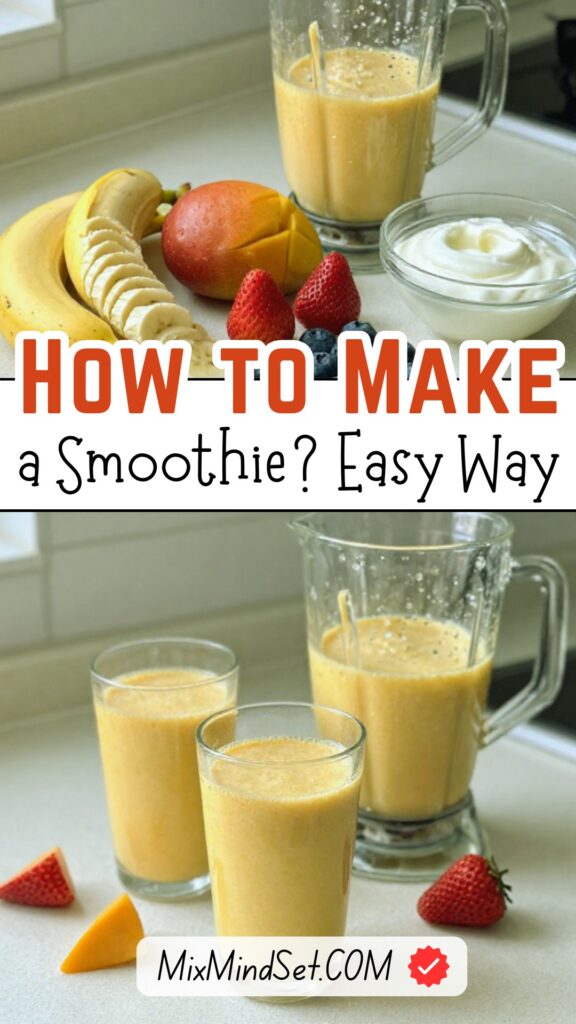
What makes a smoothie so useful is how little effort it takes to make one well. With the right mix of fruit, liquid, and a creamy base, you get a drink that tastes bright, smooth, and naturally sweet.
Frozen fruit is especially helpful because it gives smoothies a thicker, frostier texture than using only fresh fruit, and many basic smoothie recipes come together in just a few minutes.
About the Recipe
This is a basic fruit smoothie recipe made with frozen berries, banana, yogurt, and milk. It has a creamy texture, a cold and frosty finish, and a fresh fruit flavor that feels light but filling.
It is a great beginner recipe because the method is simple and flexible. Once you know the basic balance, you can make a berry smoothie, banana smoothie, yogurt smoothie, or even a mixed fruit smoothie without changing the process very much.
The banana helps the texture stay smooth and creamy, while the frozen fruit gives the drink body without needing too much ice. That is why so many smoothie recipes lean on frozen fruit and banana as the base.
This recipe is especially nice when:
- Breakfast needs to happen fast
- You want a cool afternoon snack
- You have ripe bananas to use up
- You need something beginner-friendly and hard to mess up
Table of Contents
How to Make a Smoothie?
Recipe Information
- Recipe Name: Easy Mixed Berry Banana Smoothie
- Author: Fatima
- Cuisine: American / International
- Course / Recipe Type: Breakfast, Snack, Drink
- Difficulty Level: Easy
- Prep Time: 5 minutes
- Cook Time: 0 minutes
- Total Time: 5 minutes
- Servings: 2
- Calories Per Serving: About 210
- Cooking Method: Blending
- Best Occasion: Quick breakfast, afternoon snack, post-school snack, warm-weather refreshment
- Diet Type: Vegetarian
- Flavor Profile: Fruity, creamy, lightly tangy, naturally sweet
Why You’ll Love This Recipe
- Very easy to make: just add everything to the blender and blend until smooth
- Beginner-friendly: no cooking, no special technique, and easy to adjust
- Creamy texture: frozen fruit and banana help make it thick and frosty
- Family-friendly: the flavor is mild, fruity, and easy to enjoy
- Simple ingredients: you only need a few common smoothie basics
- Flexible: you can swap berries, milk, or yogurt without changing the whole recipe
- Great for busy days: it takes about 5 minutes from start to finish, which matches common quick smoothie methods.
- Good way to use fruit: especially ripe bananas and frozen berries sitting in the freezer
Ingredients
A simple smoothie works best when each ingredient has a job. The fruit gives flavor, the milk helps everything blend, and the yogurt makes the drink creamy and a little richer.
| Ingredient | Amount | Notes |
|---|---|---|
| Frozen mixed berries | 1 1/2 cups | Use strawberries, blueberries, raspberries, or a mix |
| Ripe banana | 1 medium | Fresh or frozen; frozen makes it thicker |
| Plain or vanilla yogurt | 3/4 cup | Greek yogurt makes it thicker; regular yogurt gives a lighter texture |
| Milk | 3/4 to 1 cup | Use dairy milk or almond milk; start with less for a thicker smoothie |
| Honey or maple syrup | 1 to 2 teaspoons | Optional, only if your fruit is not sweet enough |
| Ice cubes | 2 to 4 | Optional; use only if your fruit is not fully frozen |
| Vanilla extract | 1/4 teaspoon | Optional, but nice for a rounder flavor |
Optional Add-Ins and Substitutions
- Use mango instead of berries: gives a sweeter, softer tropical flavor
- Swap yogurt for kefir: this makes the smoothie a bit looser and tangier, which is a common approach in simple smoothie recipes.
- Use spinach: add a small handful for a green smoothie style; baby spinach is mild and blends in easily.
- Try peanut butter: 1 tablespoon makes the smoothie richer and more filling
- Use oat milk or almond milk: good dairy-free options, though the smoothie may be a little lighter
- Skip banana: the smoothie will still work, but it may be less creamy and a little less naturally sweet
- Add chia seeds or flaxseed: 1 teaspoon is enough if you want a little extra texture
Step-by-Step Guide
- Add the liquid first.
Pour 3/4 cup milk into the blender jar. Adding the liquid first helps the blades catch better and blend more smoothly, which is a common tip across smoothie methods. - Add the soft ingredients.
Add the yogurt and banana. If your banana is very ripe with a few brown spots, that is perfect. It will taste sweeter and blend more easily. - Add the frozen fruit.
Put the frozen berries on top. If you are using ice, add it last. Keeping the heavy frozen ingredients on top often helps the blender move things down into the blades better. - Blend on low, then increase the speed.
Start on low for a few seconds, then slowly increase the speed until the smoothie looks creamy and evenly mixed. This helps the blender work without straining, especially with frozen fruit. - Pause and check the texture.
If the smoothie looks too thick or the blender is struggling, add a small splash of milk and blend again. Do not pour in too much at once, or the smoothie can turn thin very fast. - Taste and adjust.
Taste the smoothie. If the fruit is tart, add 1 to 2 teaspoons honey or maple syrup and blend for a few more seconds. If you want it colder and thicker, add a couple more ice cubes. - Serve right away.
Pour into glasses and serve while it is still cold and frosty. Smoothies taste best right after blending, when the texture is thick and airy.
Expert Tips for Best Results
- Use frozen fruit for the thickest, creamiest smoothie texture. Smoothies made with only fresh fruit can be more watery.
- A ripe banana gives better sweetness and a smoother texture than an underripe one.
- Start with less milk, then add more only if needed. It is much easier to thin a smoothie than to thicken one.
- If your blender struggles, stop once, stir, and add a small splash of liquid instead of forcing it.
- Greek yogurt makes a smoothie thicker and creamier, while regular yogurt keeps it a bit lighter.
- Do not overload the blender with too much ice. Ice can water down the flavor if you use a lot.
- Taste before sweetening. Very ripe banana and sweet berries often make extra sweetener unnecessary.
- For a smoother drink, blend just a little longer after the visible fruit pieces disappear. The sound of the blender usually gets softer once the mixture is fully smooth.
Nutritional Facts
These values are approximate and can change depending on the yogurt, milk, and fruit you use.
| Nutrient | Amount Per Serving |
|---|---|
| Calories | 210 |
| Protein | 7 g |
| Carbohydrates | 38 g |
| Fat | 4 g |
| Fiber | 5 g |
| Sugar | 25 g |
| Sodium | 75 mg |
Serving Suggestions
This smoothie is easy to serve on its own, but it also works nicely with a few simple extras.
- Pair it with toast and peanut butter for a quick breakfast
- Serve with boiled eggs or a simple sandwich if you want something more filling
- Top with sliced fruit, granola, or chia seeds if you pour it into a bowl
- Add a few extra berries on the side for a pretty, fresh finish
- Serve in a chilled glass on warm days for the best texture
Storage and Reheating Tips
Smoothies are best served fresh, but you can store leftovers if needed.
- Fridge: Keep in a covered jar or bottle for up to 24 hours
- Before serving again: shake well or stir well, because some separation is normal
- Freezer: Freeze in a freezer-safe jar or ice cube tray for up to 1 month
- To use from frozen: thaw slightly, then re-blend with a splash of milk until smooth again
Because smoothies contain fruit and dairy or dairy alternatives, keep them chilled and do not leave them sitting at room temperature for long. The texture may become thinner after storage, which is normal.
Quick Making Tips
- Freeze peeled banana pieces ahead of time in small bags
- Keep frozen fruit in ready-to-use portions
- Measure yogurt the night before if mornings are busy
- Add liquid first every time to help blending go more smoothly.
- Use a little less liquid for smoothie bowls and a little more for drinkable smoothies
- Clean the blender right after pouring, and the job is much easier
FAQs
Can I make a smoothie without yogurt?
Yes. You can use more milk, kefir, or even a little extra banana instead. The smoothie may be a bit lighter and less creamy, but it will still work well.
What is the best fruit for a beginner smoothie?
Banana and berries are a great place to start. Banana gives creaminess, and berries add bright flavor and color without much extra work.
How do I make a smoothie thicker?
Use more frozen fruit, a frozen banana, or Greek yogurt. Start with less milk and only add more if the blender needs help.
Why is my smoothie too thin?
Usually this happens when there is too much liquid or too much ice melting into the mix. Next time, begin with less milk and use more frozen fruit.
Can I use fresh fruit instead of frozen fruit?
Yes, but the smoothie will usually be thinner. You may want to add a few ice cubes or freeze part of the fruit first. Frozen fruit is widely used for a thicker texture.
Do I put ice in every smoothie?
Not always. If your fruit is already frozen, you may not need ice at all. Too much ice can dull the fruit flavor.
What liquid is best for smoothies?
Milk is a very common base, and many recipes also use yogurt or kefir for creaminess. Almond milk, oat milk, and other dairy-free options work too, depending on the flavor you want.
How long does it take to make a smoothie?
Most simple smoothies take about 5 minutes or less, including adding ingredients and blending.
Conclusion
This easy smoothie recipe is one of those simple kitchen basics that is always worth knowing. Once you learn the balance of fruit, liquid, and a creamy base, it becomes very easy to make your own version at home.
So grab your blender, use the fruit you have, and keep it simple. A good smoothie does not need to be fussy to taste fresh and satisfying. Happy blending!