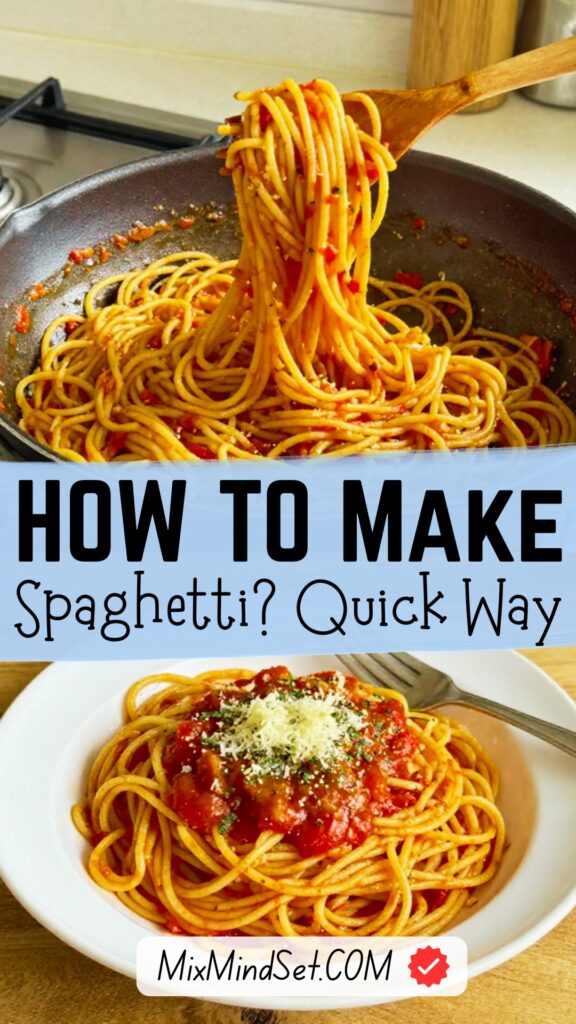
How to Make Spaghetti?
If you are wondering how to make spaghetti, you are in the right kitchen. This is one of those simple, comforting meals that feels easy enough for a busy weekday but still cozy enough for a relaxed family dinner.
With tender pasta, a rich tomato sauce, and a few basic ingredients, homemade spaghetti gives you a warm, flavorful plate of food without making the cooking process feel hard or fussy.
A good spaghetti recipe is all about balance. You want the noodles cooked just right, the sauce thick enough to cling to the pasta, and plenty of flavor in every bite.
The nice thing is that this easy spaghetti recipe is beginner-friendly, practical, and made with ingredients many home cooks already keep on hand. Let’s make this easy and delicious.
About the Recipe
Spaghetti is a classic pasta dish made with long noodles and a savory sauce, most often tomato-based.
It is loved because it is filling, familiar, and easy to adjust based on what you have in the kitchen. Some versions are very simple with garlic, olive oil, and tomatoes, while others include ground beef, onions, herbs, and Parmesan.
This version is a classic homemade spaghetti with a tomato and beef sauce. It has a rich, hearty flavor, a soft but not mushy pasta texture, and a sauce that tastes even better after a few minutes of simmering.
The onions turn sweet and soft, the garlic becomes fragrant, and the tomatoes cook down into a smooth, cozy sauce. It is the kind of meal that works well for lunch, dinner, meal prep, or a casual weekend gathering.
Table of Contents
How to Make Spaghetti?
Recipe Information
- Recipe Name: Homemade Spaghetti
- Author: Fatima
- Cuisine: Italian-American
- Course / Recipe Type: Main Course
- Difficulty Level: Easy
- Prep Time: 15 minutes
- Cook Time: 30 minutes
- Total Time: 45 minutes
- Servings: 4
- Calories Per Serving: About 520
- Cooking Method: Stovetop
- Best Occasion: Family dinner, weeknight meal, casual lunch
- Diet Type: Contains meat, dairy optional
- Flavor Profile: Savory, tomato-rich, hearty, lightly herby
Why You’ll Love This Recipe
- It uses simple pantry and fridge ingredients.
- The method is easy to follow, even for beginners.
- The sauce tastes rich and comforting without needing hours on the stove.
- It is a family-friendly meal that most people happily eat.
- You can adjust the seasoning, meat, or herbs to suit your taste.
- It works well for meal prep because leftovers reheat nicely.
- The pasta and sauce come together in one smooth, practical cooking flow.
- It feels homemade and satisfying without being complicated.
Ingredients: You do not need anything fancy here. A few basic ingredients work together to make a flavorful spaghetti dinner that tastes warm, hearty, and well-balanced.
| Ingredient | Amount | Notes |
|---|---|---|
| Spaghetti | 12 ounces | Regular dried spaghetti |
| Olive oil | 2 tablespoons | For sautéing |
| Ground beef | 1 pound | Lean ground beef works well |
| Onion | 1 medium, finely chopped | Yellow or white onion |
| Garlic | 3 cloves, minced | Fresh garlic gives the best flavor |
| Crushed tomatoes | 1 can (28 ounces) | Forms the main sauce base |
| Tomato paste | 2 tablespoons | Adds depth and thickness |
| Water or pasta water | 1/2 cup | Helps loosen the sauce if needed |
| Dried oregano | 1 teaspoon | Classic pasta sauce flavor |
| Dried basil | 1 teaspoon | Or use a little more to taste |
| Salt | 1 to 1 1/2 teaspoons | Divide between pasta water and sauce |
| Black pepper | 1/2 teaspoon | Adjust to taste |
| Red pepper flakes | 1/4 teaspoon | Optional for gentle heat |
| Sugar | 1/2 teaspoon | Optional, only if tomatoes taste too sharp |
| Parmesan cheese | For serving | Optional but lovely on top |
| Fresh parsley or basil | 1 to 2 tablespoons | Optional garnish |
Optional Add-Ins and Substitutions
- Ground turkey instead of beef: A lighter option, though the sauce may be a little less rich.
- Italian seasoning instead of separate basil and oregano: Use about 1 to 1 1/2 teaspoons.
- Mushrooms: Add sliced mushrooms with the onions for extra texture and savory flavor.
- Bell peppers: A small chopped pepper can add sweetness and color.
- No meat: Leave out the beef for a simple tomato spaghetti sauce. You may want a little extra olive oil for fullness.
- Fresh herbs: Stir in chopped basil at the end for a fresher finish.
- Parmesan alternative: Pecorino can be used if you want a saltier, sharper topping.
Step-by-Step Guide
- Boil the pasta water.
Fill a large pot with water and bring it to a boil. Add enough salt so the water tastes lightly seasoned. This is your first chance to flavor the pasta, so do not skip it. - Cook the spaghetti.
Add the spaghetti and stir for the first minute so the strands do not stick together. Cook according to the package directions until al dente, which means tender with a slight bite in the center. Before draining, save about 1 cup of pasta water. Then drain the pasta and set it aside. - Cook the beef.
While the pasta cooks, heat the olive oil in a large skillet or pot over medium heat. Add the ground beef and break it up with a spoon. Cook until it is browned and no longer pink. You want small crumbles and a little browning for better flavor, not gray steamed meat. If there is too much grease, spoon off the extra. - Add the onion.
Stir in the chopped onion and cook for 4 to 5 minutes, until it looks soft and glossy. The onion should lose its raw sharpness and smell sweet. - Add the garlic and seasonings.
Add the minced garlic, oregano, basil, black pepper, and red pepper flakes if using. Cook for about 30 seconds, just until the garlic smells fragrant. Do not let it brown too much, because burnt garlic can make the sauce taste bitter. - Build the sauce.
Stir in the tomato paste and cook for 1 minute to deepen its flavor. Then add the crushed tomatoes and 1/2 cup water or pasta water. Mix well so the tomato paste fully blends into the sauce. - Simmer gently.
Bring the sauce to a gentle simmer, then lower the heat. Let it cook for 15 to 20 minutes, stirring now and then. The sauce should thicken slightly and look smoother as it cooks. If it gets too thick, add a splash of pasta water. Taste and add salt as needed. If the tomatoes taste too sharp, stir in the small amount of sugar. - Combine pasta and sauce.
Add the drained spaghetti to the sauce and toss until the noodles are well coated. If the sauce feels too tight, add a little reserved pasta water, a few tablespoons at a time, until it loosens and clings nicely to the pasta. - Serve warm.
Spoon the spaghetti into bowls and top with Parmesan cheese and chopped parsley or basil if you like. Serve right away while the pasta is hot and the sauce is at its best.
Expert Tips for Best Results
- Salt the pasta water well. Plain pasta can taste flat even with a good sauce.
- Cook the spaghetti just to al dente, especially if you will toss it in hot sauce after draining.
- Let the tomato paste cook briefly before adding liquids. This gives the sauce a fuller flavor.
- Simmer the sauce gently, not at a hard boil. A steady gentle bubble gives better texture.
- Save pasta water before draining. It helps the sauce cling to the noodles without making it watery.
- Taste near the end. Tomato brands vary, so the salt level and sharpness may need a small adjustment.
- Do not drown the pasta in sauce at first. Toss, check, and add more as needed.
- Fresh Parmesan added at serving gives a cleaner, nuttier finish than adding too much cheese into the pot.
Nutritional Facts
These values are approximate and can change based on ingredient brands and portion size.
| Nutrient | Amount Per Serving |
|---|---|
| Calories | 520 |
| Protein | 26 g |
| Carbohydrates | 53 g |
| Fat | 21 g |
| Fiber | 6 g |
| Sugar | 8 g |
| Sodium | 680 mg |
Serving Suggestions
Spaghetti is lovely on its own, but a few simple sides can round out the meal nicely.
- Serve it with garlic bread or warm toasted bread for soaking up extra sauce.
- Add a green salad with a light dressing for a fresh contrast.
- Spoon extra Parmesan on top and finish with black pepper.
- Pair it with roasted vegetables if you want a fuller dinner.
- A few fresh basil leaves on top can make the plate feel bright and fresh.
- For a cozy family table, serve with sautéed green beans or a simple cucumber salad.
Storage and Reheating Tips
Store leftover spaghetti in an airtight container in the fridge for up to 3 days. If possible, store the sauce and pasta separately for the best texture, though mixed leftovers are still perfectly fine.
To reheat, warm it in a skillet or saucepan over low to medium heat with a splash of water. This helps loosen the sauce and keeps the pasta from drying out. You can also use the microwave in short bursts, stirring in between.
The sauce can be frozen for up to 2 months. Let it cool first, then place it in a freezer-safe container. The pasta is best made fresh, since frozen cooked spaghetti can become soft after thawing.
Quick Making Tips
- Chop the onion and garlic before you start cooking to make the process smoother.
- Start the sauce while the pasta water comes to a boil to save time.
- Use pre-minced garlic only if needed, but fresh garlic gives better flavor.
- Double the sauce and freeze half for another busy day.
- Grate the Parmesan while the sauce simmers so everything is ready at serving time.
- Keep a mug near the stove to scoop out pasta water before draining.
FAQs
Can I make spaghetti without meat?
Yes. You can skip the ground beef and make a simple tomato spaghetti sauce instead. You may want to add a little extra olive oil or some mushrooms for more depth.
How do I keep spaghetti from sticking together?
Use a large pot of boiling water, stir the pasta well during the first minute, and avoid letting drained pasta sit too long without sauce.
Should I rinse spaghetti after cooking?
No. Rinsing removes the light starch on the pasta, and that starch helps the sauce cling better.
What is the best sauce for spaghetti?
A tomato-based sauce is the most classic choice, especially one made with onion, garlic, herbs, and crushed tomatoes. Meat sauce is also very popular because it adds richness and makes the meal more filling.
How do I know when spaghetti is done?
Taste a strand. It should be tender but still have a slight bite in the middle. Overcooked spaghetti turns too soft and does not hold sauce as well.
Can I use jarred pasta sauce?
Yes. It is a practical shortcut for busy days. You can improve the flavor by cooking onion, garlic, or browned beef first, then adding the jarred sauce.
Why is my spaghetti sauce too watery?
The sauce may need more simmering time, or the pasta may have been added before the sauce thickened enough. Let it cook a little longer and stir gently. Tomato paste can also help add body.
Can I make spaghetti ahead of time?
Yes. The sauce can be made ahead and reheated when needed. Freshly cooked pasta gives the best texture, so that part is nicest when made close to serving.
Conclusion
A good plate of spaghetti does not need to be complicated to taste comforting and satisfying. With a handful of basic ingredients and a few simple cooking cues, you can make a homemade spaghetti dinner that feels warm, hearty, and very doable, even on a busy day.
I hope this recipe makes dinner feel a little easier and a lot more delicious. Grab your pot, give it a try, and enjoy every saucy bite.