How to Prevent Apples From Browning?
You’ve just cut an apple, and within minutes, it starts to turn black. It’s not bad, it’s not rotting—it’s simply oxidizing. This oxidation is a natural and very common process in the plant world.
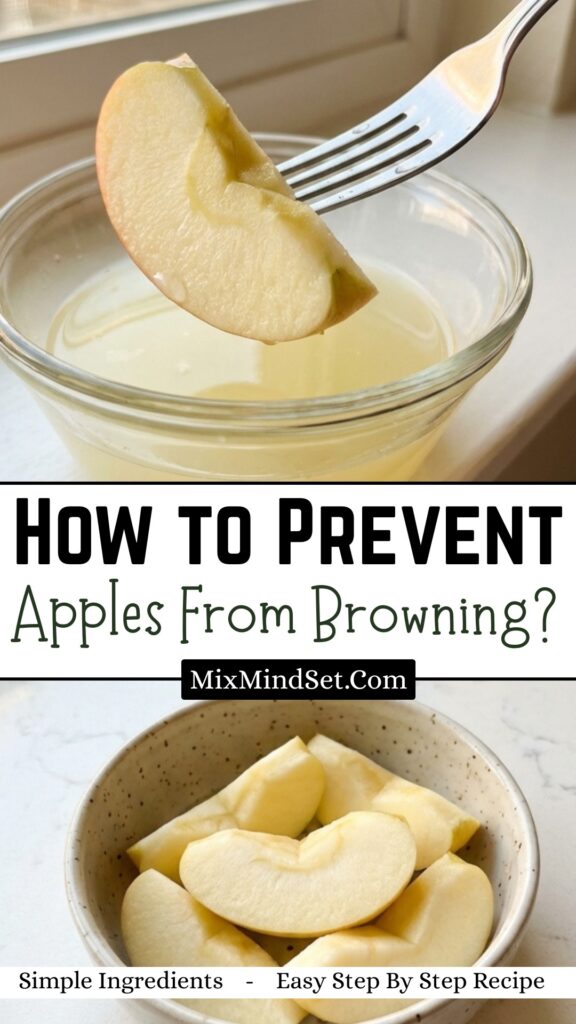
Luckily, we humans have some simple tricks to avoid ending up eating an oxidized apple.
Table of Contents
Why Fruits and Vegetables Oxidize?
The reason an apple oxidizes shortly after being cut is in the air—literally.
While the apple is whole, the skin protects the pulp (flesh) inside. This flesh is full of water, vitamins, minerals, and phytochemicals such as phenols. When you peel or cut it, that protective barrier disappears.
The internal tissues are exposed, and phenolic compounds react with oxygen through enzymes naturally present in some fruits and vegetables, such as polyphenol oxidase.
Alfonso Rojas, director of the F&V Department at ALDI Spain, explains it clearly:
When they come into contact with oxygen in the air, oxidizable substances—such as phenolic compounds—are transformed into other substances that naturally acquire shades ranging from brown to reddish, or even black.
Read Also: Healthy Scrambled Egg Recipe
Not all fruits oxidize the same way
Phenolic compounds are bioactive substances with important health benefits. Plants produce them as a defense mechanism against free radicals—compounds present in the atmosphere that can cause cellular damage.
The degree of browning depends on:
- The amount of oxidizable compounds in the fruit.
- The species and even the variety of the fruit.
- The time the fruit remains cut and exposed to air.
The longer the exposure, the stronger the oxidation effect.
Read Also: How to Cook Fresh Green Beans?
What to do to prevent an apple from oxidizing?
If you need apples for cooking or want to eat them later while keeping a fresh appearance, these effective tricks work well.
Practical methods to slow oxidation
- Salt water
Dissolve half a tablespoon of salt in one liter of water. Submerge apple pieces for 5 minutes, rinse with cold water, and store. - Honey solution
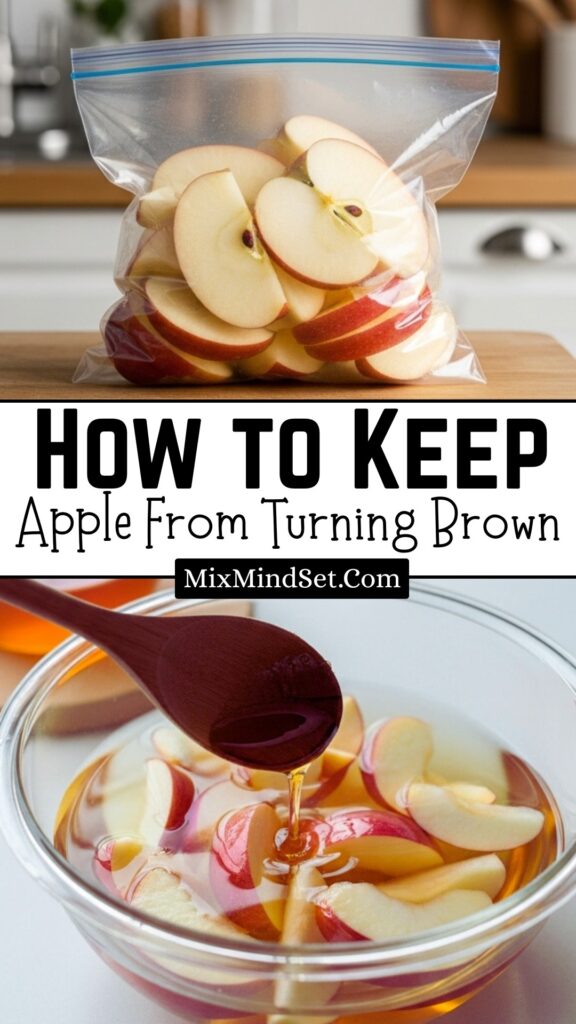
Mix two tablespoons of honey with water and soak apple slices for 1 minute. This keeps them fresh for up to 8 hours. - Cold water
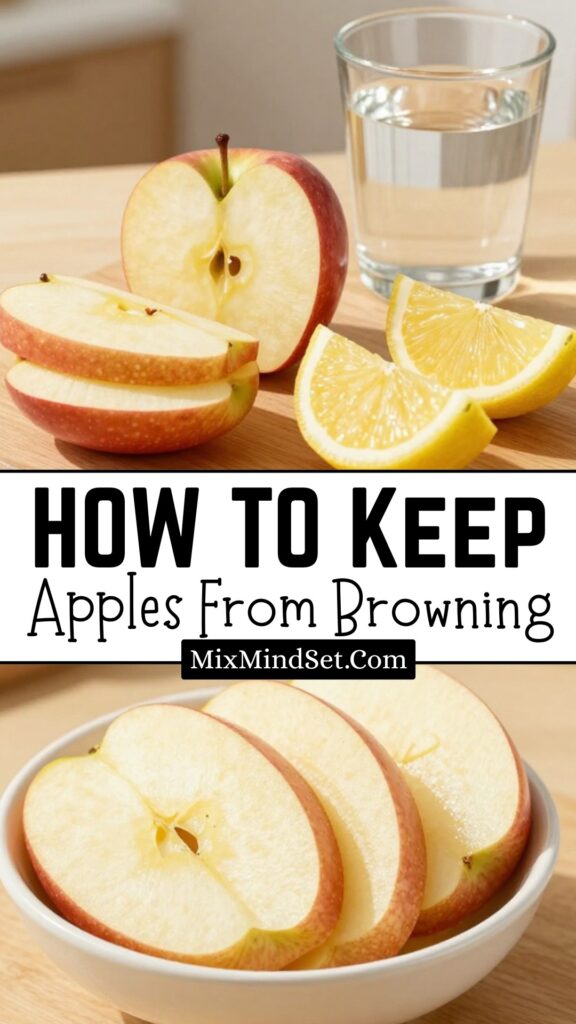
Place peeled and cut apples in a bowl of cold water for 5 minutes, covered to prevent air exposure. - Citrus juice or soft drinks
Submerge slices briefly in lemon juice, pineapple juice, or a carbonated drink. These contain citric acid, which slows oxidation. - Cling film or vacuum bags
Wrap slices tightly or use vacuum storage to block contact with air. - Reassemble the apple
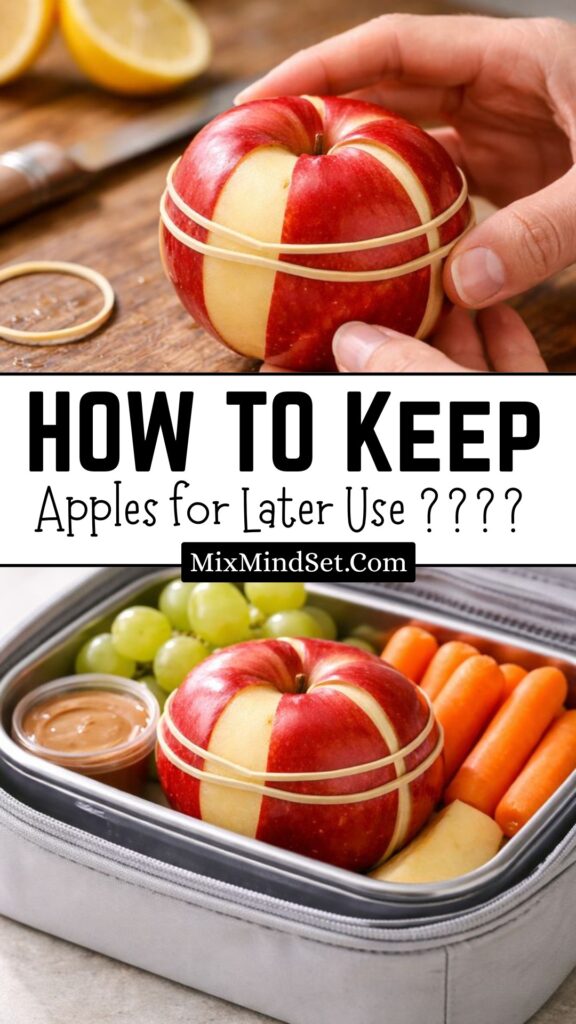
Fit the pieces back together like a puzzle and secure them with a rubber band. This limits exposed surfaces.
Video Guide 📽️
Oxidation-Prevention Ingredients Table
| Ingredient / Method | Quantity Used | Main Function |
|---|---|---|
| Salt | ½ tablespoon per liter | Slows enzymatic oxidation |
| Honey | 2 tablespoons | Inhibits oxidation |
| Lemon / Citrus juice | A few drops | Provides citric acid |
| Cold water | Enough to cover | Limits oxygen exposure |
| Vinegar | Splash | Stops oxidation in salads |
Read Also: Homemade Spaghetti Sauce Recipe
Is it safe to eat an oxidized apple
Although oxidized fruit may look unappealing, it is safe to eat. Oxidation does not pose a food safety risk, and the fruit remains suitable for consumption.
The nutritional value stays almost entirely intact. However, oxidation can slightly reduce:
- Vitamin C
- Carotenes
- Some phenolic compounds
The more surface area exposed to air, the greater the nutrient loss. For example, a peach cut into 6–8 pieces oxidizes faster than a peeled whole one.
Read Also: Gluten-Free Pita Bread Recipe
Nutritional impact of oxidation
| Nutrient | Sensitivity to Oxidation | Effect |
|---|---|---|
| Vitamin C | High | Partial loss |
| Carotenes | Moderate | Slight reduction |
| Phenolic compounds | High | Reduced antioxidant activity |
| Minerals | Low | Mostly unaffected |
Even so, while safe, an oxidized apple will be less attractive, softer, and slightly less pleasant in texture.
Keep peeled apples fresh: effective strategies
Sliced apples are a perfect snack for school, parks, or quick meals. The challenge is the time gap between preparation and eating.
The simplest solution is to:
- Lightly coat the cut surfaces with a few drops of lemon or lime juice.
- Leave the skin untouched, as it still acts as a natural barrier.
- Add citrus fruits like orange or mandarin segments to dishes.
For salads, stopping oxidation is easy—just add a splash of vinegar when dressing.
Read Also: How to Make Salisbury Steak?
Preventing avocado oxidation
Lemon or lime juice is added to guacamole not just for flavor, but to prevent oxidation. Since avocados are often used in small amounts, leftovers are common.
The best method:
- Fill a container with water.
- Add a few drops of lemon juice.
- Submerge the avocado with the cut side facing down.
- Seal and refrigerate.
Goodbye to oxidized artichokes
Artichokes oxidize very quickly. A common solution is rubbing them with lemon, though this may affect flavor.
The most effective method is to:
- Peel them.
- Cook them immediately.
Heat deactivates the enzymes responsible for oxidation, preventing browning entirely.
Frequently Asked Questions (FAQs)
Why does an apple turn brown so fast after cutting?
Apples turn brown because oxygen reacts with phenolic compounds in the fruit through natural enzymes. This reaction starts almost immediately once the flesh is exposed to air.
Does oxidation mean the fruit is spoiled
No. Oxidation is not spoilage. The fruit is still safe to eat and has nearly the same nutritional value, although its appearance and texture may change slightly.
Which fruits oxidize the fastest
Fruits rich in phenolic compounds oxidize faster. Common examples include apples, pears, bananas, avocados, peaches, and artichokes.
Conclusion
Fruit oxidation is a natural process that happens when cut surfaces meet oxygen. While it may affect appearance, color, and texture, it does not make fruit unsafe to eat.
Understanding why oxidation occurs allows us to use simple, effective techniques—like citrus juice, cold water, or airtight storage—to keep fruits looking fresh for longer.
Whether you’re packing a snack, preparing a salad, or saving leftovers, these easy strategies help maintain both the visual appeal and quality of fruits and vegetables without compromising their nutritional value.