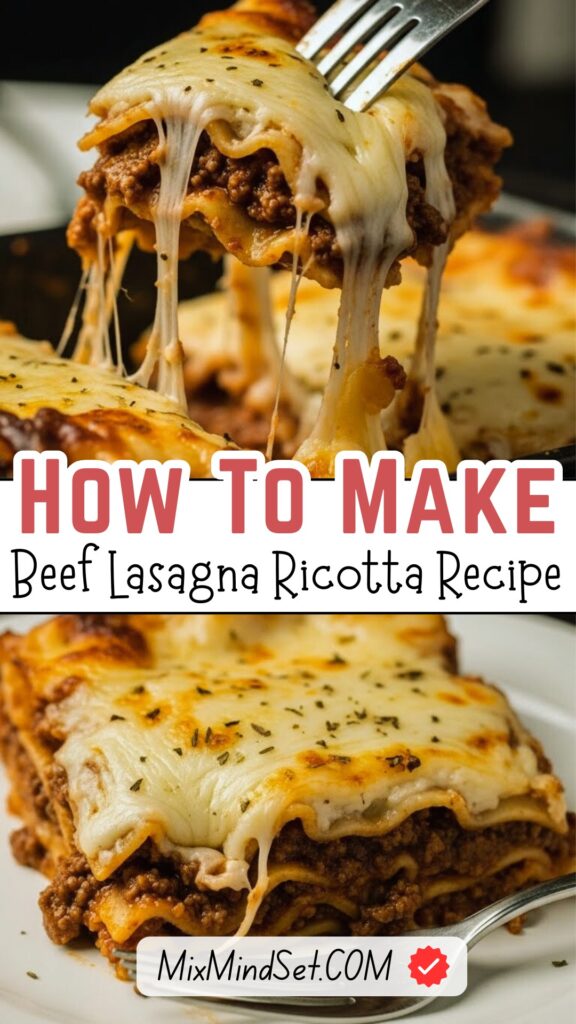
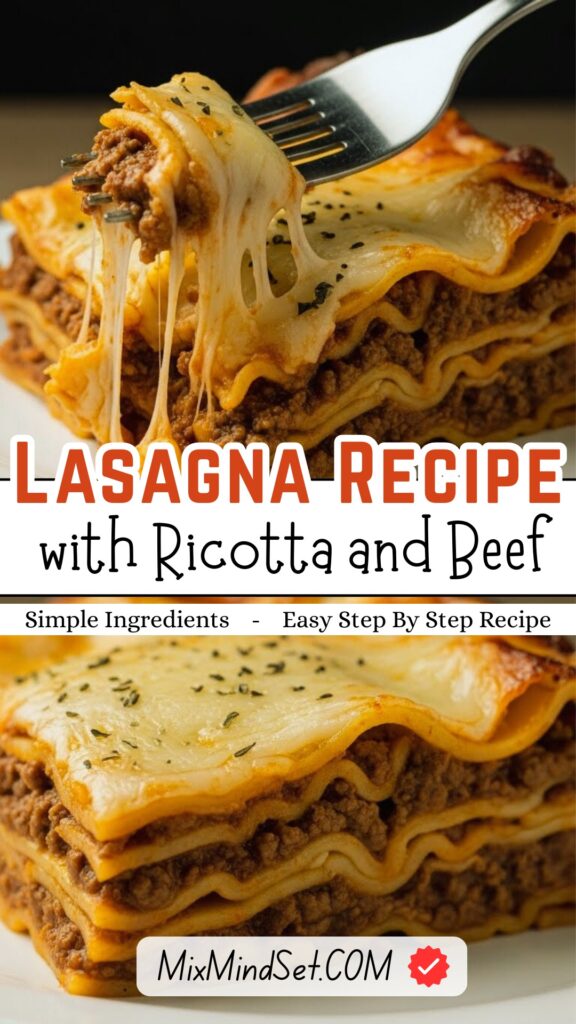
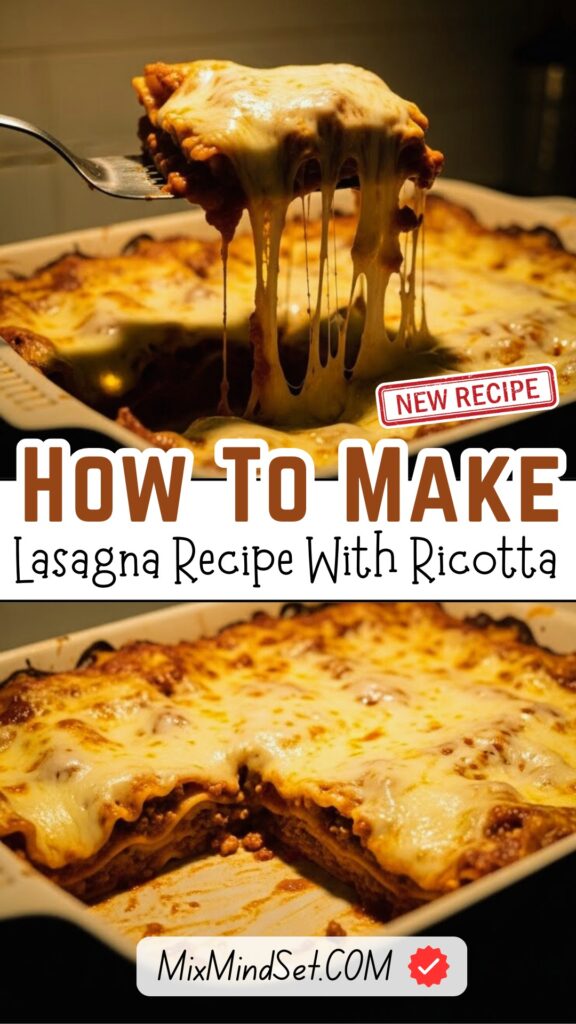
Lasagna Recipe with Ricotta and Beef
One of those traditional comfort foods that is always in trend is lasagna made with meat and ricotta. It’s rich, filling, and ideal for both casual family dinners and special occasions.
Layers of soft pasta, rich beef sauce, creamy ricotta, and melting cheese come together in this dish to create a cozy, homey lunch.
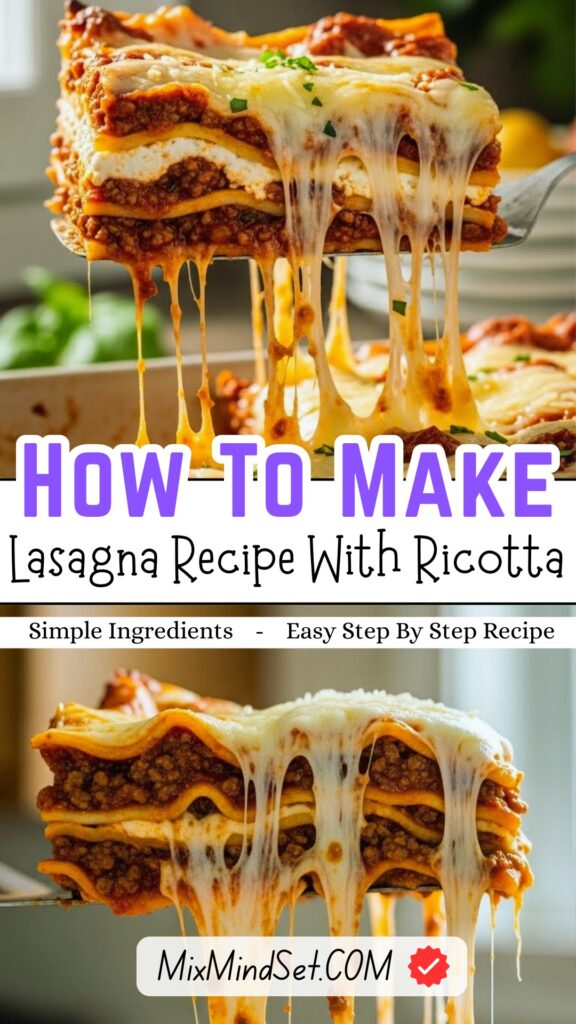
The balance is what sets this version apart. The ricotta gives a smooth, subtle creaminess that prevents the lasagna from seeming overly heavy, while the meat adds depth and delicious richness.
All the layers blend together when the dish is baked slowly, creating a beautifully sliced meal that tastes even better the following day.
Everything you need to know to make the ideal ricotta and beef lasagna will be covered in this article, including ingredient selections, layering methods, baking instructions, storage suggestions, and serving suggestions.
Table of Contents
Why Is Lasagna with Ricotta and Beef a Classic?
Reason 1: Blend Easily:
Because it blends basic ingredients in a way that feels opulent and cozy, lasagna has been cherished for generations.
Because it offers the best of both worlds—rich meat flavor and creamy texture—the ricotta and beef version is particularly well-liked.
Reason 2: Lighter and Filling:
Ricotta-based lasagna is more filling but has a lighter feeling than variants made solely with bechamel sauce.
This meal is perfect for feeding families or guests since the beef sauce gives it structure and heartiness.
Additionally, you can change the amount of cheese, seasoning, or thickness of the sauce without sacrificing the flavor of the dish.
Reason 3: Versatility:
The adaptability of this lasagna is what makes it so popular. It is equally effective for meal preparation, potlucks, get-togethers, and weeknight dinners. It tastes great whether prepared in advance, frozen, or reheated.
Read Also: 25+ Best Healthy Salad Recipes
Ingredients for Lasagna Recipe with Ricotta and Beef:
The quality of your lasagna is greatly influenced by the ingredients you choose. Freshness and balance are important, but high-quality ingredients don’t have to be costly.
1. For the Beef Sauce:
- Olive oil
- Garlic, minced
- Onion, finely chopped
- Tomato paste
- Salt and black pepper
- Tomato sauce or crushed tomatoes
- Dried oregano, basil, or Italian seasoning
- Ground beef (preferably 80/20 for flavor)
Optional: Red chili flakes for mild heat are completely optional.
2. For the Ricotta Layer:
- Ricotta cheese (whole milk for best texture)
- Salt and black pepper
- Grated Parmesan cheese
Optional: Fresh parsley or basil, and an egg are optional but recommended for structure.
3. For Assembly:
- Shredded mozzarella cheese
- Lasagna noodles (boiled or oven-ready)
Step-by-Step Instructions to Make Lasagna:
Step 1: Make the Beef Sauce
- In a big pan, warm the olive oil over medium heat.
- Cook the chopped onion until it becomes transparent and tender.
- Add the garlic and stir until fragrant, about 30 seconds.
- Add the ground beef and sauté, breaking it into small pieces, until browned.
Suggestion: If needed, drain extra fat from the cooked beef.
- Add tomato paste, tomato sauce, herbs, salt, and pepper and stir.
- After lowering the heat, simmer the sauce for 20 to 30 minutes.
Point: This step is crucial because it prevents watery lasagna later on by thickening the sauce and enhancing its flavor.
Step 2: Prepare the Ricotta Mixture
- Add the ricotta cheese, egg, grated Parmesan, herbs, salt, and pepper to a mixing bowl.
- Blend till creamy and smooth.
Fact: The lasagna has neat, stable layers because the egg aids in the ricotta layer’s setting during baking.
Step 3: Cook the Lasagna Noodles
- If you’re using regular noodles, cook them until they’re just al dente, as directed on the package.
- To avoid sticking, drain and place them flat on a sanitized surface.
Point: Boiling is not necessary when using oven-ready noodles.
Step 4: Assemble the Lasagna
- Set the oven temperature to 180°C (350°F).
- Cover the bottom of a baking dish with a thin layer of beef sauce.
- After adding a layer of noodles, evenly cover the noodles with the ricotta mixture.
- Add mozzarella cheese and meat sauce on top.
- Continue layering until all the ingredients are utilized.
- Now top with a liberal amount of mozzarella and beef sauce.
Step 5: Bake the Lasagna
- Bake the dish for 35 to 40 minutes while covered with foil.
- After taking off the foil, bake for a further ten to fifteen minutes.
Suggestion: Bake until the top is melted, bubbling, and slightly golden.
Step 6: Rest Before Serving:
Before slicing, give the lasagna at least ten to fifteen minutes to rest. This facilitates serving by allowing the layers to solidify.
Video Guide
Tips for the Best Lasagna with Ricotta and Beef:
- Simmer the sauce long enough to get rid of any extra moisture.
- For improved flavor and texture, use whole-milk ricotta.
- Avoid adding too many layers; balance is essential.
- Before slicing, always let the lasagna rest.
- Pre-shredded cheese does not melt as well as freshly grated cheese.
Common Mistakes to Avoid:
1. Too Much Sauce:
Rushing the sauce is one of the most frequent errors. Soggy lasagna is the result of a thin sauce.
2. Ignoring the Resting Period:
It is another error that results in the layers sliding apart when served.
3. Imbalance of Meat and Ricotta:
The balance of the meat and ricotta might potentially be overpowered by using too much cheese.
Variations You Can Try at Home:
1. Mushroom-Enhanced Beef Lasagna:
For added taste and nutrition, add sautéed mushrooms to the beef sauce. To prevent too much moisture, always cook the mushrooms completely before adding them to the sauce.
Warning: The lasagna may get watery if the mushrooms are raw or undercooked.
2. Spinach and Beef Ricotta Lasagna:
For extra vitamins, incorporate frozen or fresh spinach into the ricotta or meat sauce layer. Before adding frozen spinach, make sure to wring out any extra water.
Suggestion: To avoid boring layers, lightly season spinach separately.
3. Extra-Creamy Ricotta–Mozzarella Lasagna:
For a richer, creamier texture, blend the ricotta mixture with shredded mozzarella. To preserve appropriate structure, use low-moisture mozzarella.
Warning: An excessive amount of cheese may overshadow the flavor of the steak and interfere with layering.
4. Rich Ricotta Cream Lasagna:
For a smoother texture, incorporate a tiny bit of heavy cream into the ricotta mixture. The lasagna may not set correctly if there is too much cream.
“Less is more—just a few tablespoons will do”
5. Lighter Turkey Lasagna:
For a leaner version, use ground turkey instead of ground beef. Because turkey is milder than beef, season it liberally.
Note: To keep the turkey moist when cooking, use a tiny bit of olive oil.
Serving Suggestions for Lasagna:
1. Fresh Green Salad:
The richness of the lasagna is counterbalanced with a crisp salad with a mild vinaigrette.
2. Garlic Bread or Breadsticks:
Ideal for providing crunch and absorbing the excess sauce.
3. Roasted Vegetables:
Bell peppers, carrots, and zucchini that have been roasted provide color and nourishment.
4. Simple Tomato or Cucumber Salad:
Gives the cheesy layers a clear contrast and a hint of freshness.
5. Extra Parmesan on the Side:
For those who prefer a cheesier, sharper finish.
Read Also: Copycat Recipe: Dutch Bros Golden Eagle
Storage and Reheating for Lasagna:
1. Storage:
- Refrigerator: Lasagna leftovers can be kept for up to three days in an airtight container.
- Freezer: Freeze the lasagna for up to three months after carefully wrapping it in foil or freezer-safe packaging.
- Important Tip: To avoid condensation and sogginess, let the lasagna cool fully before storing.
2. Reheating:
- Oven: To keep the lasagna wet and uniformly heated, reheat it at 180°C (350°F) while covered with foil.
- Microwave: Individual portions should be heated in brief bursts while being lightly covered to prevent drying.
- Frozen Lasagna: For optimal texture, thaw in the fridge overnight before reheating.
Why Is This Recipe Perfect for Families?
Both adults and children enjoy this rich, reasonably priced lasagna recipe with meat and ricotta. It creates great leftovers and is simple to duplicate for larger parties.
It is a safe and delicious option for practically every occasion because of the well-known flavors.
Frequently Asked Questions
Can I make lasagna with ricotta and beef ahead of time?
Yes, put everything together ahead of time and bake it as needed.
Is ricotta better than béchamel for lasagna?
Béchamel is richer than ricotta, which is lighter and creamier.
Do I have to use an egg in ricotta?
No, however, it improves the cohesiveness of the layers.
How do I stop lasagna from being watery?
Avoid adding too much liquid to the sauce and simmer it thoroughly.
Final Thoughts:
This beef and ricotta lasagna recipe is more than simply a meal; it’s a dish that combines flavor, warmth, and tradition.
This recipe consistently produces dependable results with its creamy ricotta filling, flawlessly baked layers, and well-seasoned beef sauce.
This lasagna is a dish you can rely on whether you’re preparing it for a special occasion, a weekend dinner, or meal prep.
You’ll be rewarded with a cooked supper that genuinely fulfills you if you take your time and enjoy the process.