Mac and Cheese Recipe
There are few dishes in the world that offer the same level of comfort as a perfectly baked Mac and Cheese. It is the star of holiday tables, the ultimate weeknight indulgence, and the dish that both kids and adults fight over for the crispy corner pieces.
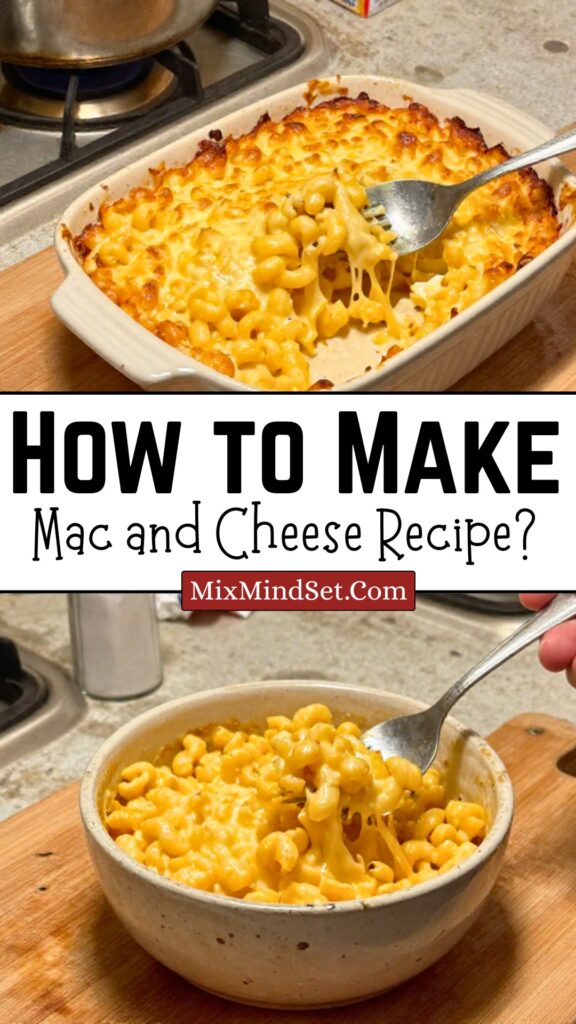
But achieving that ideal balance—a silky, creamy sauce clinging to tender pasta, topped with a golden, crunchy crust—can feel elusive. Too often, we end up with grainy sauce or a dry, clumpy casserole.
As someone who has tested every roux-to-cheese ratio imaginable, I’m here to show you that the best Mac and Cheese is not about expensive ingredients or complicated techniques.
It is about understanding a few key principles. This recipe is my gold standard: rich, flavorful, and structured enough to hold up to baking without losing its soul.
Table of Contents
The Science of the Sauce: Why Roux Matters
The foundation of any great stovetop-to-oven Mac and Cheese is a stable béchamel sauce. Many recipes skip this step in favor of heavy cream, but a roux (butter and flour cooked together) is your insurance policy against a greasy, separated mess.
The Binding Trinity
To achieve a sauce that is thick enough to coat the pasta but remains creamy after baking, we rely on three components:
- Butter and Flour (Roux): Cook these together for at least 2 minutes to eliminate the raw flour taste. This creates the base that holds the dairy together.
- Whole Milk: Avoid skim milk. The fat content is crucial for texture and flavor.
- Freshly Grated Cheese: Pre-shredded cheeses are convenient, but they are coated in anti-caking agents like cellulose and potato starch. These additives prevent the cheese from melting smoothly, resulting in a gritty texture. Grate your own cheese. It takes three minutes and is the single most important step for a velvety result.
The Best Cheese Blend
Using a single type of cheese often yields a one-dimensional flavor. I recommend a blend that offers sharpness, meltability, and a slight tang.
| Cheese Type | Role in the Dish | Best Practice |
|---|---|---|
| Sharp Cheddar | Primary flavor; provides tang and color. | Use aged white or yellow cheddar. Do not use pre-shredded. |
| Gruyère | Creaminess and nuttiness; melts like a dream. | A classic choice for fondue—it prevents graininess. |
| Monterey Jack | Richness and elasticity; gives that classic “cheese pull.” | High moisture content helps keep the sauce fluid. |
| Parmesan | Salty, savory umami boost. | Grate finely so it dissolves into the sauce. |
How to Make a Mac and Cheese Recipe?
This recipe serves 6 to 8 people as a main course or 10 to 12 as a side. It requires about 20 minutes of active prep and 25 minutes of baking.
Ingredients
- 1 lb (16 oz) elbow macaroni (or cavatappi for better sauce grip)
- 6 tbsp unsalted butter, divided
- 1/3 cup all-purpose flour
- 3 ½ cups whole milk
- 1 cup heavy cream (optional, but adds luxury)
- 1 tsp salt
- 1 tsp garlic powder
- ½ tsp smoked paprika (adds depth without spice)
- ¼ tsp nutmeg (secret ingredient for cream sauces)
- 3 cups sharp cheddar cheese, freshly grated
- 2 cups Gruyère cheese, freshly grated
- 1 cup Monterey Jack cheese, freshly grated
- ½ cup panko breadcrumbs
Instructions
- Preheat and Prep: Preheat your oven to 375°F (190°C). Grease a 9×13-inch baking dish. Bring a large pot of salted water to a boil.
- Cook the Pasta: Cook the macaroni 1 to 2 minutes less than the package instructions. It will continue to cook in the oven. Overcooked pasta becomes mushy in a casserole. Drain and set aside.
- Make the Roux: In a large Dutch oven or heavy-bottomed pot, melt 4 tablespoons of butter over medium heat. Add the flour and whisk constantly for about 2 minutes, until the mixture smells nutty and turns a light tan color.
- Build the Sauce: Slowly pour in the milk and heavy cream while whisking vigorously to prevent lumps. Bring the mixture to a gentle simmer, whisking often, until it thickens enough to coat the back of a spoon (about 5 minutes).
- Melt the Cheese: Remove the pot from the heat. This is crucial. If the heat is too high, the cheese will “break” and turn oily. Add the salt, garlic powder, paprika, and nutmeg. Gradually add the shredded cheddar, Gruyère, and Monterey Jack, stirring until completely melted and smooth.
- Combine: Add the drained pasta to the cheese sauce and stir until every piece is coated. Pour the mixture into the prepared baking dish.
- Top and Bake: Melt the remaining 2 tablespoons of butter and toss it with the panko breadcrumbs. Sprinkle this evenly over the mac and cheese.
- Bake: Bake uncovered for 20 to 25 minutes, or until the edges are bubbling and the top is golden brown. For an extra crispy top, switch the oven to broil for the final 2 minutes—watch it closely to prevent burning.
- Rest: Let the dish rest for 10 minutes before serving. This allows the sauce to set slightly, making it easier to serve without it running all over the plate.
Video Guide 📺
3 Common Mistakes to Avoid
Even with a great recipe, small missteps can derail your dish. Here are the most common pitfalls I see, and how to fix them.
1. Using Pre-Shredded Cheese
As mentioned earlier, the anti-caking agents in bagged cheese ruin the texture. You will end up with a sauce that feels gritty or sandy.
Fix: Buy blocks of cheese and grate them yourself. It melts uniformly and tastes significantly better.
2. Overcooking the Pasta
If you cook the pasta to al dente (fully cooked) before baking, it will absorb the sauce during the oven time and turn into a swollen, mushy mass.
Fix: Cook the pasta until it is just shy of al dente. It should still have a noticeable bite in the center.
3. Over-Baking
Leaving the casserole in the oven too long is the fastest way to dry it out. You are not cooking the ingredients again; you are simply melting the topping and heating it through.
Fix: Bake only until the edges bubble and the top is golden. If it looks like the sauce is bubbling vigorously for more than 5 minutes, it’s likely starting to break.
Frequently Asked Questions
Can I make Mac and Cheese ahead of time?
Absolutely. Assemble the dish completely (including the breadcrumb topping) but do not bake it. Cover tightly with foil and refrigerate for up to 48 hours. When you are ready to bake, add about 10 to 15 minutes to the cooking time to account for the cold starting temperature, or let it sit on the counter for 30 minutes before baking.
Why is my cheese sauce grainy?
Graininess is usually caused by two factors: high heat or using pre-shredded cheese. Always melt your cheese off the heat. If the milk mixture is boiling when you add the cheese, the proteins seize up and separate, leaving you with a curdled look.
What is the best pasta shape for Mac and Cheese?
While elbows are classic, cavatappi (corkscrew) is arguably superior. Its twisted shape and hollow center capture more sauce than a standard elbow. Shells and fusilli also work very well. Avoid long, thin noodles like spaghetti or fettuccine for this style of baked casserole.
How do I reheat leftovers without drying them out?
Microwaving often makes the pasta greasy. For the best results, reheat in a skillet over medium-low heat. Add a splash of milk (about 1 tablespoon per serving) and stir frequently. The milk will revive the creaminess of the sauce without making it tough.
Conclusion
The perfect Mac and Cheese is not about following a rigid set of rules; it’s about respecting the process. By taking the time to grate your own cheese, cooking your pasta with care, and mastering a simple roux, you transform a humble boxed dinner into a dish worthy of any celebration.
Whether you serve it alongside a holiday ham or as a solo act on a quiet Friday night, this recipe is designed to deliver that nostalgic, creamy, and golden perfection every single time. I hope it becomes a staple in your kitchen as it has in mine.
Happy cooking!