Panna Cotta Recipe
There is something quietly elegant about a perfectly made panna cotta. Unlike elaborate layer cakes or temperamental soufflés, this classic Italian dessert relies on simplicity.
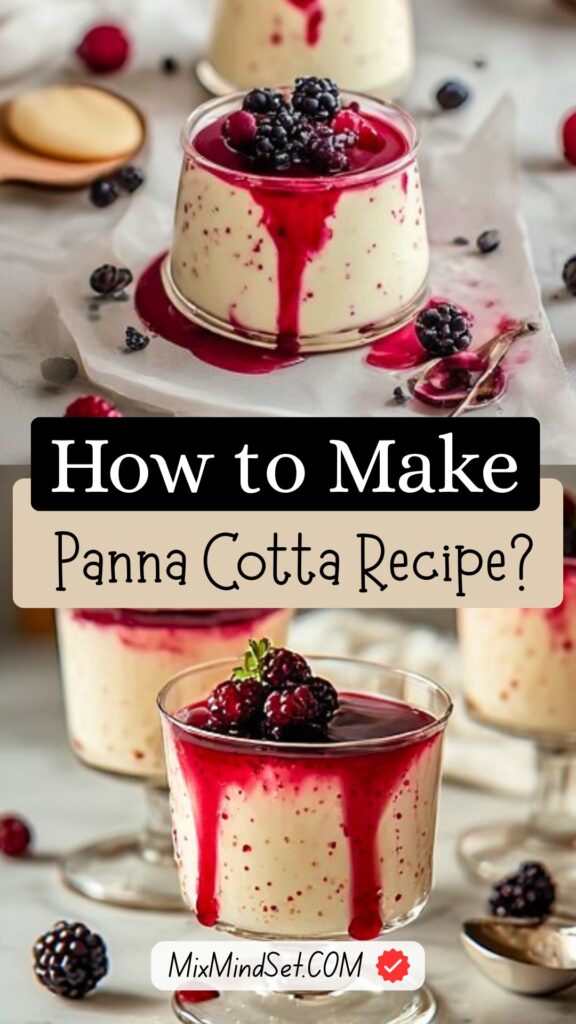
It is a delicate balance of cream, sugar, vanilla, and gelatin—transformed into a silky, custard-like creation that feels luxurious without demanding hours in the kitchen.
However, despite its short ingredient list, panna cotta can be surprisingly tricky. One batch might turn out rubbery, another soupy. Some recipes leave a greasy film on your tongue, while others lack that signature clean wobble.
If you have been searching for a reliable panna cotta recipe that yields consistent, restaurant-quality results every time, you are in the right place.
This guide strips away the guesswork, offering practical techniques, common pitfalls to avoid, and a versatile base that you can adapt to any season or occasion.
What Makes a Perfect Panna Cotta?
Before diving into the ingredients, it helps to understand what separates a mediocre panna cotta from an unforgettable one.
The ideal texture should be firm enough to hold its shape when unmolded, yet soft enough to tremble like a gentle wave when you tap the plate. It should melt on the tongue, releasing clean dairy notes without tasting heavy or overly sweet.
The key lies in three critical elements: the ratio of cream to milk, the precise amount of gelatin, and the way you incorporate it.
Ingredient Breakdown
| Ingredient | Quantity (for 6 servings) | Purpose & Notes |
|---|---|---|
| Heavy Cream | 2 cups (480 ml) | Provides richness and structure. Avoid ultra-pasteurized if possible for a cleaner taste. |
| Whole Milk | 1 cup (240 ml) | Lightens the texture. Using all cream makes the dessert too heavy. |
| Granulated Sugar | ½ cup (100 g) | Balances the richness. Do not reduce drastically, or the gelatin may set too stiffly. |
| Unflavored Powdered Gelatin | 2 ¼ teaspoons (1 packet) | The structural backbone. Blooming is mandatory. |
| Cold Water | 3 tablespoons (45 ml) | For blooming the gelatin. |
| Vanilla Bean or Paste | 1 bean (or 2 tsp paste) | The star flavor. Use real vanilla, never imitation, for depth. |
Step-by-Step
This method focuses on temperature control—the single most overlooked factor in panna cotta failures. If you master the heat management here, your dessert will set beautifully every time.
1. Bloom the Gelatin
In a small bowl, sprinkle the powdered gelatin evenly over the cold water. Do not stir immediately. Let it sit undisturbed for 5 to 10 minutes. It will transform into a solid, wobbly mass. This step is non-negotiable. Skipping blooming leads to grainy, uneven setting.
2. Infuse the Dairy
In a medium saucepan, combine the heavy cream, whole milk, and sugar. If you are using a vanilla bean, split it lengthwise, scrape the seeds into the pan, and toss the pod in as well.
Warm the mixture over medium heat, stirring occasionally, until it is steaming hot but not boiling. You should see small bubbles forming around the edges of the pan. Boiling will denature the gelatin later and create a tough skin.
3. Temper the Gelatin
Remove the saucepan from the heat. Remove the vanilla pod (rinse and save it for vanilla sugar). Add the bloomed gelatin to the warm cream mixture. Stir gently with a whisk until the gelatin is completely dissolved.
This usually takes 1 to 2 minutes. If you see any undissolved specks, your mixture may have cooled too much; briefly return it to low heat, stirring constantly, until clear.
4. Strain for Perfection
This is a professional step that elevates your result. Pour the entire mixture through a fine-mesh strainer into a large liquid measuring cup or a bowl with a spout. This removes any bits of undissolved gelatin, vanilla pod fibers, or accidental clumps. It guarantees a glass-smooth finish.
5. Cool Before Molding
Allow the mixture to cool for about 10 to 15 minutes at room temperature. Pour it into your chosen molds—traditional ramekins, glass cups, or silicone molds if you plan to unmold.
Refrigerate uncovered for at least 4 hours, though overnight is ideal. Covering them before they are fully set can cause condensation to drip onto the surface, creating an uneven top.
Video Guide 📺
5 Common Panna Cotta Mistakes (And How to Avoid Them)
Even experienced home cooks encounter these issues. Here is how to troubleshoot before problems start.
- Using too much gelatin: This results in a rubbery, springy texture that feels more like Jell-O than a delicate Italian dessert. Stick to 2 ¼ teaspoons per 3 cups of liquid for a standard set.
- Skipping the straining step: No matter how careful you are, sometimes gelatin forms tiny clumps. Straining is your insurance policy against a gritty texture.
- Adding gelatin to boiling liquid: High heat kills gelatin’s setting power. Always let the cream mixture cool slightly off the heat before adding the bloomed gelatin.
- Unmolding too early: If you plan to invert the panna cotta onto a plate, patience is critical. Chill for at least 6 hours, and briefly dip the mold in hot water for 5 seconds before inverting. Any longer, and you risk melting the edges.
- Overlooking the fat content: Low-fat milk or half-and-half will not provide the same stable structure. For a traditional texture, whole milk and heavy cream are essential.
Flavor Variations to Elevate Your Dessert
Once you have mastered the classic vanilla version, the base recipe becomes a canvas. These variations are simple swaps that yield dramatically different results.
Citrus & Berry
Reduce the milk by ¼ cup and replace it with freshly squeezed lemon or orange juice. Add the zest of one lemon to the cream while it heats. Serve with a vibrant berry coulis to cut through the richness.
Coffee or Espresso
Infuse the cream with 2 tablespoons of high-quality espresso beans (whole) during the heating process. Strain them out before adding the gelatin. This creates a sophisticated, subtly bitter contrast.
Caramel or Dulce de Leche
Replace ¼ cup of the granulated sugar with store-bought or homemade dulce de leche. Whisk it into the warm cream until fully incorporated. Top with flaky sea salt for a salted caramel twist.
Coconut (Dairy-Free Adaptable)
Substitute the heavy cream and whole milk with one can of full-fat coconut milk and 1 cup of coconut cream. Use agar-agar instead of gelatin if you need a vegetarian version (note that agar sets more firmly, so adjust quantities accordingly).
Serving & Presentation Tips
Panna cotta is inherently elegant, so you do not need to overcomplicate the plating. The goal is to complement, not overshadow, its delicate flavor.
- If unmolding: Run a thin knife around the edge of the ramekin. Dip the bottom of the mold into hot water for exactly 5 seconds. Invert onto a chilled plate with a confident, swift motion.
- If serving in glasses: Layer the panna cotta with a fruit compote or chocolate shavings at the bottom of the glass for a beautiful gradient effect.
- Sauce pairings: A simple berry coulis (simmered berries with sugar and lemon), salted caramel, or even a balsamic reduction pairs beautifully.
- Garnishes: Fresh berries, mint leaves, crushed amaretti cookies, or candied nuts add texture and visual appeal.
Nutritional Information
Approximate values per serving (based on 6 servings, classic vanilla recipe)
| Nutrient | Amount |
|---|---|
| Calories | 320 kcal |
| Fat | 26 g |
| Saturated Fat | 16 g |
| Carbohydrates | 18 g |
| Sugar | 16 g |
| Protein | 4 g |
| Calcium | 8% DV |
Frequently Asked Questions
Can I make panna cotta ahead of time?
Absolutely. This dessert is ideal for entertaining because it needs to set for hours anyway. Prepare it up to 2 days in advance and keep it tightly covered in the refrigerator. Add sauces and garnishes just before serving to maintain presentation.
Why did my panna cotta not set?
The most common reasons are insufficient gelatin, not blooming the gelatin properly, or adding it to liquid that was too hot. Ensure you are measuring precisely and allowing the gelatin to sit in cold water for the full 10 minutes before incorporating it into the warm (not boiling) cream mixture.
Can I use leaf gelatin instead of powdered?
Yes. Leaf gelatin (or sheet gelatin) often produces an even cleaner texture. Substitute 4 to 5 sheets of leaf gelatin for the 2 ¼ teaspoons of powdered. Soak the sheets in cold water for 5 to 10 minutes, then squeeze out excess water and stir into the warm cream mixture until dissolved.
Is panna cotta gluten-free?
The traditional recipe is naturally gluten-free, as it contains only dairy, sugar, and gelatin. However, always check your specific gelatin brand, as some may contain additives. If you add cookies or crumbles for garnish, ensure those are gluten-free.
Conclusion
A truly great panna cotta is a lesson in restraint. It does not rely on complex techniques or obscure ingredients. Instead, it asks you to pay attention to small details—blooming the gelatin properly, avoiding a boil, and giving it the time it needs to set.
Whether you serve it in classic ramekins with a sharp berry sauce or experiment with espresso and caramel flavors, this recipe provides a dependable foundation.
Once you understand the mechanics of temperature and ratio, you will find yourself returning to this dessert again and again, not because it is difficult, but because it is effortlessly impressive.
Now, all that is left is to chill your molds and give it a try. Your silkiest, most elegant panna cotta is just four hours away.