Pico De Gallo Recipe
There is a world of difference between a watery, bland tomato salsa and a vibrant, crisp pico de gallo. Often overshadowed by its smoother, cooked cousins, this Mexican classic—also known as salsa fresca—relies on one simple principle: fresh ingredients, chopped by hand, served immediately.
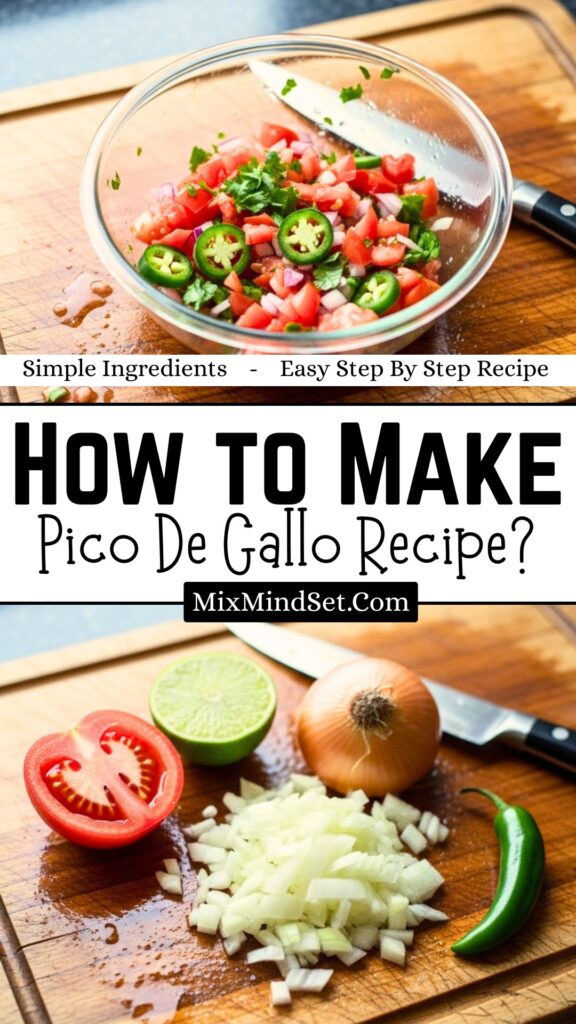
If you have ever been disappointed by a mushy, flavorless version at a restaurant or in your own kitchen, this guide is for you. We are stripping this recipe down to its essentials, focusing on the technique that gives you bright, acidic, and perfectly balanced results every time.
Whether you are piling it onto tacos, scooping it up with tortilla chips, or spooning it over grilled chicken, this is the definitive pico de gallo recipe.
How to Make Pico De Gallo?
Unlike complex sauces that hide behind layers of cooking, pico de gallo is naked cooking. There is nowhere to hide. Every ingredient must be at its peak. The classic recipe uses only five core components.
Below is the exact breakdown of what you need for approximately 3 cups of salsa (serves 4-6).
| Ingredient | Quantity | Selection Criteria |
|---|---|---|
| Roma Tomatoes | 6 medium (approx. 1.5 lbs) | Firm, slightly under-ripe. Avoid soft or mealy tomatoes. |
| White Onion | ½ medium (¾ cup diced) | Sharp and crisp. Red onion can be substituted for a milder bite. |
| Fresh Jalapeño | 1-2 peppers | Look for firm, smooth skin. Remove seeds for less heat. |
| Fresh Cilantro | ½ cup (packed), finely chopped | Bright green leaves with no sliminess. Stems are fine to include if tender. |
| Lime Juice | 2-3 limes (approx. ¼ cup) | Freshly squeezed only. Bottled lime juice will ruin the flavor. |
| Kosher Salt | 1 teaspoon (or to taste) | Use kosher or sea salt; it dissolves better than table salt. |
Why Roma Tomatoes? This is the most common pitfall. Roma (plum) tomatoes are essential for authentic pico de gallo. They have a lower water content and firmer flesh compared to beefsteak or heirloom varieties. Using juicy tomatoes will result in a watery pool at the bottom of your bowl within minutes.
Step-by-Step: Perfect Pico De Gallo
This recipe takes 10 minutes of active work. The secret lies in the cut, not the cooking. Consistency in knife work ensures that every bite contains a little bit of everything.
1. The Prep
Start by dicing your ingredients. Aim for a ¼-inch dice. This is small enough to fit on a chip but large enough to retain texture.
- Tomatoes: Cut the Roma tomatoes in half lengthwise. Scoop out the gelatinous seeds and juice with your finger or a small spoon. This step is crucial for preventing sogginess. Dice the firm flesh.
- Onion: Finely dice the white onion. If you find raw onion too harsh, soak the diced pieces in ice water for 5 minutes, then drain and pat dry.
- Jalapeño: Slice the pepper lengthwise. Use the back of your knife to scrape away the white membrane and seeds (where most of the heat resides). Dice finely.
- Cilantro: Gather the leaves and tender stems into a bundle and rock a sharp knife back and forth until finely chopped.
2. The Assembly
Combine the diced tomatoes, onion, jalapeño, and cilantro in a non-reactive bowl. Glass, ceramic, or stainless steel works best. Avoid aluminum, as the acidity from the lime can react and give the salsa a metallic taste.
3. The Seasoning
Add the fresh lime juice and kosher salt. Do not over-stir. Toss gently to combine.
Pro Tip: Salt is a flavor enhancer, but it also draws out moisture. For the best texture, add salt right before serving. If you need to make this ahead of time, prepare the chopped ingredients but hold the salt and lime until the last 15 minutes.
4. Rest (Optional but Recommended)
If you can wait 15 minutes, let the pico de gallo sit at room temperature before serving. This allows the flavors to “marry” together without the vegetables breaking down into mush.
Video Guide 📺
5 Common Mistakes to Avoid
Even a simple recipe has its pitfalls. Here is how to ensure your salsa fresca stays restaurant-quality.
- Using a Food Processor: Do not do it. A food processor will pulverize the tomatoes into a watery soup. The beauty of pico de gallo is the textural contrast achieved only by hand-chopping.
- Skipping the Seed Removal: If you skip deseeding the Roma tomatoes, you will end up with a watery mess. The gel surrounding tomato seeds holds a lot of moisture. Removing it ensures the salsa stays chunky.
- Substituting Dried Herbs: Fresh cilantro is non-negotiable. Dried cilantro tastes like dusty hay. If you are one of the people who have the genetic aversion to cilantro (where it tastes like soap), substitute with flat-leaf parsley for color, though it will alter the authenticity.
- Using Bottled Lime Juice: Bottled lime juice often has a bitter, metallic aftertaste. Fresh limes provide a bright, floral acidity that balances the sharpness of the onion.
- Over-Chilling: Pico de gallo tastes best served chilled but not ice-cold. Extreme cold numbs the taste buds. Remove it from the refrigerator 10 minutes before serving to allow the flavors to open up.
Nutritional Facts
Pico de gallo is often called a “free food” in nutritional circles because it is incredibly low in calories but high in flavor. Here is the estimated breakdown per serving (approximately ¾ cup).
| Nutrient | Amount |
|---|---|
| Calories | 25 kcal |
| Carbohydrates | 5g |
| Fiber | 1g |
| Sugar | 3g (naturally occurring) |
| Sodium | 290mg |
| Vitamin C | 22% DV |
| Vitamin A | 15% DV |
Frequently Asked Questions
How long does pico de gallo last in the fridge?
When stored in an airtight container, fresh pico de gallo will last for 3 to 4 days. However, it is at its peak within the first 24 hours. After day two, the texture will soften significantly as the salt and lime juice continue to break down the vegetables. If storing, you can drain off excess liquid that accumulates before serving.
How do I make pico de gallo spicier or milder?
Heat control is entirely in your hands.
- Milder: Remove all seeds and the white pith (placenta) from the jalapeño. You can also substitute the jalapeño for a pickled jalapeño, which adds flavor without the raw spice kick.
- Spicier: Leave the seeds in. Alternatively, add a serrano pepper (finely diced) alongside the jalapeño, or include a pinch of crushed red pepper flakes or cayenne during seasoning.
Can I substitute the onions?
Yes. While white onion is traditional for its sharp, authentic bite, red onion is a popular substitute that offers a slightly milder, sweeter flavor. Shallots can also work in a pinch, though they provide a more delicate, garlicky note that strays from the classic profile.
Is pico de gallo the same as salsa?
Technically, yes. Pico de gallo is a type of salsa. The main distinction lies in texture and preparation. Salsa (often referred to as salsa roja or salsa verde) is usually cooked, pureed, or blended to a saucy consistency. Pico de gallo is a salsa cruda (raw salsa), characterized by its chunky, chopped texture and the fact that it is never cooked or blended.
Conclusion: The Versatile Kitchen Staple
Once you master this pico de gallo recipe, you will find yourself reaching for it constantly. It is more than just a dip for chips. Use it to top fish tacos, mix it into black beans for a quick salad, spoon it over scrambled eggs for a breakfast boost, or serve it alongside grilled steak for a fresh counterpoint to rich meat.
Because the recipe relies on technique rather than cooking, it is a perfect entry point for new cooks to practice their knife skills and understand the power of fresh, quality ingredients. With a sharp knife, a few ripe vegetables, and this guide, you are 10 minutes away from the best pico de gallo you have ever tasted.