Simple & Easy Tahini Recipe
If you’ve ever opened a jar of store-bought tahini only to find a stiff, oil-separated paste at the bottom, you know the frustration. But homemade tahini is a different story—silky, nutty, deeply aromatic, and ready in under 10 minutes. Plus, you control the roast level and the texture.
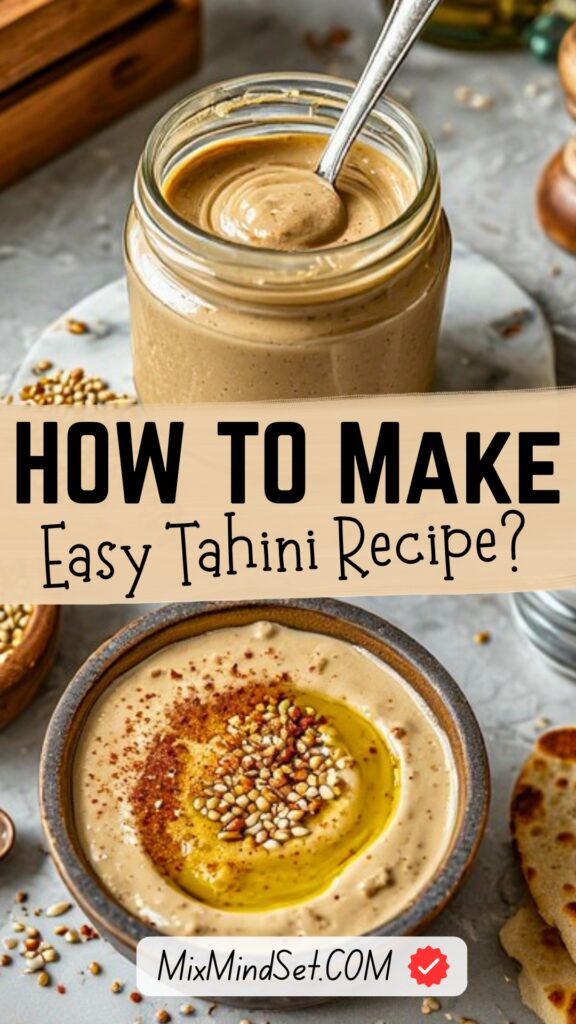
Tahini is simply ground sesame seeds. But the magic happens when you toast them just right and blend with the right amount of oil.
This recipe gives you a versatile, all-purpose tahini that works for hummus, salad dressings, halva, or drizzled over roasted vegetables.
Why Make Your Own Tahini?
Store-bought tahini can be bitter, over-processed, or grainy. When you make it at home, you get:
- Fresh, sweet, nutty flavor – No metallic aftertaste.
- Customizable consistency – Thin for dressings, thick for spreads.
- Better value – Sesame seeds are inexpensive compared to premium tahini jars.
- No preservatives or stabilizers – Just seeds and oil.
The process is shockingly simple. You toast, cool, blend, and drizzle in oil until creamy. That’s it.
Tahini Recipe (Complete Guide)
Use the highest-quality sesame seeds you can find. Hulled white sesame seeds produce a smooth, light tahini. Unhulled seeds yield a darker, more bitter, and nutrient-dense version (higher in calcium but grainier).
| Ingredient | Amount | Notes |
|---|---|---|
| Hulled white sesame seeds | 2 cups | Raw, not pre-toasted |
| Neutral oil (grapeseed or light olive oil) | 3–4 tbsp | More for thinner consistency |
| Salt (optional) | ¼ tsp | Enhances nuttiness |
No oil needed if you prefer a paste-like tahini, but blending will take longer.
Step-by-Step Method
1. Toast the sesame seeds. Place the seeds in a dry skillet over medium heat. Stir constantly with a wooden spoon or spatula. Within 3–5 minutes, they’ll turn light golden and smell intensely nutty. Watch carefully—sesame seeds go from toasted to burnt in seconds. Burnt seeds make bitter tahini that no amount of oil can fix.
2. Cool completely. Transfer the toasted seeds to a large plate or baking sheet. Spread them out and let cool for at least 10 minutes.
If you blend warm seeds, the oils become too thin and the tahini may separate later.
3. Blend the seeds. Pour the cooled seeds into a high-speed blender or food processor. Blend on medium-high for 1–2 minutes. The seeds will go from whole to a fine powder, then clump into a dry ball. Do not add oil yet—let the seeds release their natural oils first.
4. Add oil slowly. Once the mixture looks like a crumbly paste, stop the machine. Scrape down the sides. Add 2 tablespoons of oil and continue blending. The paste will slowly loosen. Add remaining oil 1 tablespoon at a time until you reach a smooth, pourable consistency (like runny peanut butter).
5. Season and store. Add salt if desired, then blend for 10 seconds. Transfer tahini to a clean glass jar. It will keep in the refrigerator for up to 3 months (or 1 month at cool room temperature).
| Equipment | Blending Time | Final Texture |
|---|---|---|
| High-speed blender (Vitamix) | 3–4 minutes | Ultra-smooth, no grit |
| Food processor | 5–7 minutes | Smooth, slightly thicker |
| Regular blender | May struggle | Likely grainy—use processor instead |
Video Guide 📺
Nutritional Information
Per 1 tablespoon (15g) of homemade tahini made with hulled seeds and 1 tsp oil.
| Nutrient | Amount |
|---|---|
| Calories | 89 |
| Protein | 3g |
| Fat | 8g |
| Saturated Fat | 1g |
| Carbohydrates | 3g |
| Fiber | 1.5g |
| Sugars | 0g |
| Calcium | 64mg |
| Iron | 1.2mg |
5 Common Mistakes to Avoid:
- Skipping the toasting step – Raw tahini tastes flat and doughy. Toasting unlocks the nutty depth.
- Over-toasting – Burnt seeds ruin the batch. Stop when seeds are pale gold, not brown.
- Adding oil too early – Seeds need to break down dry first. Oil too soon = gritty tahini.
- Using a weak blender – A standard blender will overheat and fail. A food processor works fine; just be patient.
- Not scraping down the sides – Tahini loves to climb up the sides. Scrape every minute to ensure even blending.
Ways to Use Homemade Tahini
Once you have a jar of this liquid gold, you’ll find endless uses:
- Classic Hummus – The star ingredient. Use ⅓ cup tahini per can of chickpeas.
- Tahini Sauce – Whisk with lemon juice, garlic, water, and parsley. Drizzle over falafel, grilled chicken, or roasted cauliflower.
- Salad Dressing – Blend tahini with olive oil, apple cider vinegar, maple syrup, and water for a creamy, dairy-free dressing.
- Cookies & Halva – Swap peanut butter for tahini in cookies, or make traditional sesame halva with honey and cardamom.
- Smoothies – Add 1 tablespoon for a nutty protein boost.
Frequently Asked Questions
Can I make tahini without added oil?
Yes, but it takes longer and requires a powerful blender. Continue blending the toasted seeds for 5–7 minutes. The heat and friction will eventually release the seeds’ natural oils, creating a thick paste. The result is more concentrated and intensely sesame-flavored.
What’s the difference between hulled and unhulled sesame seeds?
- Hulled seeds (white or beige) have the outer husk removed. They produce a smooth, mild, creamy tahini—standard for Middle Eastern cooking.
- Unhulled seeds (brown or black) keep the husk, which adds fiber, calcium, and a slightly bitter, earthy taste. Unhulled tahini is thicker and grittier. For beginners, start with hulled.
My tahini is too thick. How do I thin it?
Add warm water, 1 teaspoon at a time, while stirring vigorously. Water works better than oil for thinning dressings. For hummus, use ice water—it emulsifies perfectly. For a jar that’s separated, stir in a teaspoon of oil at room temperature.
How long does homemade tahini last?
Stored in an airtight jar in the refrigerator, homemade tahini lasts 3 months. It may naturally separate (oil on top, solids below). Just stir well before each use. If it smells rancid or bitter, discard it.
Can I use black sesame seeds?
Absolutely. Black sesame tahini has a bolder, earthier flavor and dramatic dark color. Use the same method. It’s stunning drizzled over white hummus or vanilla ice cream.
Final Thoughts
Homemade tahini is one of those kitchen skills that feels like a secret weapon. Once you taste the creamy, toasted richness, you’ll never settle for a gritty store-bought jar again. And the best part? You can make it in batches, keep it in the fridge, and pull it out whenever you need a flavor boost—from breakfast toast to dinner bowls.
Don’t be intimidated by the blending step. Even if your first batch is a little thick, just add more oil or water. You’re in control. And that’s the beauty of making it yourself.
So grab a bag of sesame seeds, heat up a skillet, and toast your way to the best tahini you’ve ever had.