Tuna Salad Recipe
There are few dishes as universally loved—or as frequently botched—as tuna salad. Too often, it’s a sad, watery mess from a deli counter or a bland paste with too much mayonnaise.
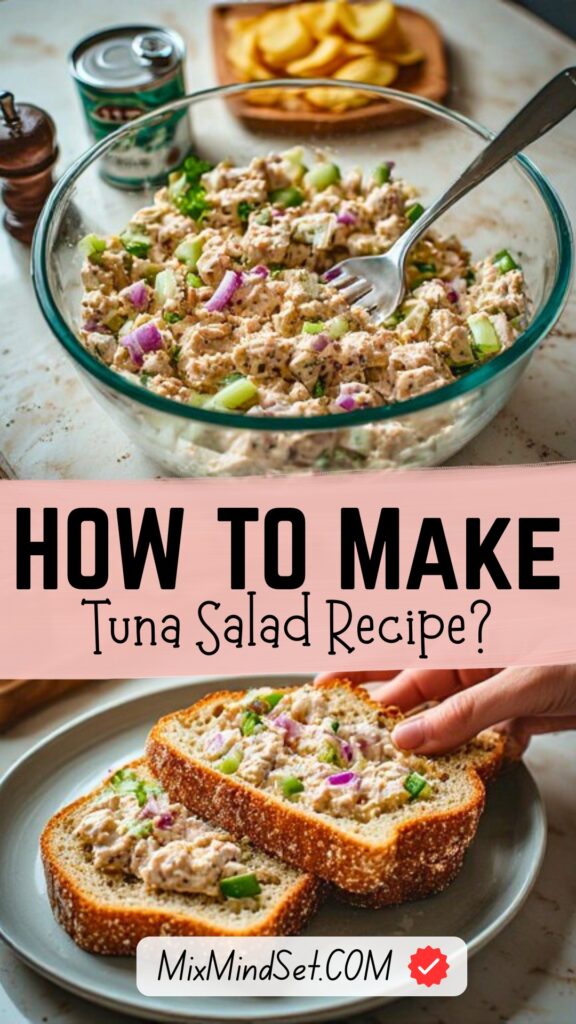
But when made correctly, tuna salad is a culinary workhorse: it’s the perfect protein-packed lunch, a satisfying high-protein snack with crackers, or a delicious sandwich filler that actually tastes like quality ingredients.
I’m Fatima, and I believe that the best recipes are simple, flexible, and made with intention. This guide will walk you through how to make the best tuna salad using a few key techniques to ensure it is flavorful, textured, and never dry. Whether you are meal-prepping for the week or hosting a casual lunch, this recipe is your new go-to.
Table of Contents
How to make a Tuna Salad Recipe?
The secret to an exceptional tuna salad lies not in fancy techniques, but in the quality of the ingredients you start with. Since the ingredient list is short, every component matters.
The Ingredient List
To achieve the perfect balance of creamy, salty, crunchy, and fresh, here is what you will need. I recommend using the notes column to customize based on your dietary needs or pantry staples.
| Ingredient | Quantity | Notes & Substitutions |
|---|---|---|
| Canned Tuna | 2 (5 oz) cans | Best choice: Solid white albacore in olive oil or spring water. |
| Mayonnaise | ⅓ cup | Use full-fat for creaminess; Greek yogurt works for a tangier, lighter version. |
| Celery | ½ cup | Finely diced. Essential for crunch. |
| Red Onion | ¼ cup | Finely diced. Soak in cold water for 5 mins to remove sharpness if desired. |
| Dijon Mustard | 1 tsp | Adds a subtle tang and depth. Whole grain also works well. |
| Fresh Lemon Juice | 1 tbsp | Do not skip this—it brightens the entire dish. |
| Fresh Dill | 1 tbsp | Chopped. Parsley or chives are great alternatives. |
| Salt & Black Pepper | To taste | Freshly cracked pepper is best. |
The Step-by-Step Method:
Many people simply dump a can of tuna into a bowl, add mayo, and stir. To elevate your tuna salad, follow this method which focuses on texture and moisture control.
1. Drain (But Don’t Over-Drain)
If you are using tuna packed in water, drain it thoroughly. Press the lid of the can firmly against the tuna to squeeze out excess liquid. Watery tuna is the number one culprit for bland salad.
Pro Tip: If you have the option, choose tuna packed in olive oil. It adds a layer of richness and buttery flavor that water-packed tuna lacks.
2. Flake, Don’t Mash
Place the drained tuna in a medium mixing bowl. Use a fork to gently flake the tuna into small, bite-sized pieces. Avoid mashing it into a fine paste; we want texture. Large chunks of tuna create a more satisfying bite.
3. Build the Base
Add the diced celery and red onion to the bowl. These ingredients not only add crunch but also release moisture that balances the creaminess of the dressing.
4. The Dressing
In a separate small bowl, whisk together the mayonnaise, Dijon mustard, fresh lemon juice, salt, and pepper. Mix the dressing separately before adding it to the tuna. This ensures the mustard and lemon are evenly distributed so you don’t get a pocket of sourness in your final bite.
5. Combine and Chill
Pour the dressing over the tuna mixture. Add the fresh dill. Fold everything together gently with a spatula until just combined. Taste and adjust seasoning.
Crucial Step: Cover and refrigerate for at least 30 minutes. Tuna salad tastes significantly better when the flavors have had time to meld and chill.
Video Guide ❤️
Nutritional Information
Understanding the nutritional profile helps you fit this delicious meal into your daily goals. The values below are calculated for one serving (approximately ½ cup) of the base recipe using full-fat mayonnaise.
| Nutrient | Amount Per Serving |
|---|---|
| Calories | 220 kcal |
| Protein | 18 g |
| Fat | 14 g |
| Carbohydrates | 3 g |
| Fiber | 0.5 g |
| Sodium | 480 mg |
| Omega-3 Fatty Acids | 0.3 g |
Note: Nutritional values will vary based on the brand of tuna and mayonnaise used.
Flavor Variations and Mix-Ins
One of the best things about this recipe is how adaptable it is. You can transform this base recipe into completely different meals by changing the add-ins.
Use this table to switch up your flavor profile based on what you are craving:
| Style | Key Add-Ins | Best Way to Serve |
|---|---|---|
| Mediterranean | Chopped kalamata olives, diced cucumber, crumbled feta cheese, oregano. | Stuffed in a pita with lettuce and tomato. |
| Spicy Sriracha | 1 tbsp Sriracha, 1 tsp soy sauce, chopped green onions, sesame seeds. | Served over a bed of sushi rice with nori strips. |
| Protein-Packed | 1 chopped hard-boiled egg, ¼ cup cottage cheese (instead of half the mayo). | Scooped into half an avocado or on whole-grain crackers. |
| Apple & Walnut | 1 diced Granny Smith apple, ¼ cup toasted walnuts, 1 tbsp honey. | Perfect for a fall-inspired sandwich or wrap. |
Common Mistakes to Avoid:
Even a simple dish like tuna salad can go wrong. Here are the pitfalls to watch out for to ensure your salad is a success.
- Using the Wrong Tuna: Chunk light tuna packed in vegetable broth or soy often has a strong, “fishy” odor and a mushy texture. Solid white albacore is worth the slightly higher price for its firm texture and mild flavor.
- Skipping the Acid: Without lemon juice or vinegar, tuna salad tastes flat and heavy. The acid cuts through the fat of the mayonnaise, creating a balanced, craveable flavor.
- Forgetting the Crunch: If you skip the celery or onion, you end up with a uniform paste. Texture contrast is key to preventing the “mushy sandwich” syndrome.
- Serving Immediately: Tuna salad needs time to settle. If you serve it right after mixing, it will taste like raw onion and cold fish. Patience yields a cohesive dish.
Frequently Asked Questions
How long does homemade tuna salad last?
Stored in an airtight container in the refrigerator, tuna salad will stay fresh for 3 to 5 days. I do not recommend freezing it, as the mayonnaise will separate and the texture of the celery will become mushy upon thawing.
Is tuna salad healthy?
It depends on the ingredients. Using full-fat mayonnaise adds calories, but it also provides satiety. For a lighter version, you can substitute half the mayo with plain Greek yogurt. Tuna itself is an excellent source of lean protein, omega-3 fatty acids, and vitamin D.
Can I make this dairy-free?
Absolutely. This base recipe is naturally dairy-free as written, provided you use a dairy-free mayonnaise (most commercial mayos are dairy-free). Just double-check your mustard label to be safe.
What is the best bread for a tuna sandwich?
For a classic experience, toasted sourdough or a soft brioche bun works wonders. Toasting the bread is non-negotiable; it creates a barrier that prevents the sandwich from becoming soggy from the moisture in the salad.
Conclusion
A great tuna salad is more than just a quick lunch; it’s a foundational recipe that every home cook should feel confident mastering. By focusing on high-quality tuna, balancing the creaminess with acid and crunch, and allowing the flavors to meld, you can turn a humble can of fish into something truly satisfying.
I hope this guide helps you create the perfect batch for your next lunch or gathering. Remember, the best recipes are the ones you make your own, so feel free to experiment with the mix-ins and serving styles listed above.
Happy cooking!