How to Cut Cheese for Charcuterie?
Hellooo, cheese board lovers — if you want your spread to look beautiful and be easy for guests to eat, learning how to cut cheese for charcuterie makes a big difference.
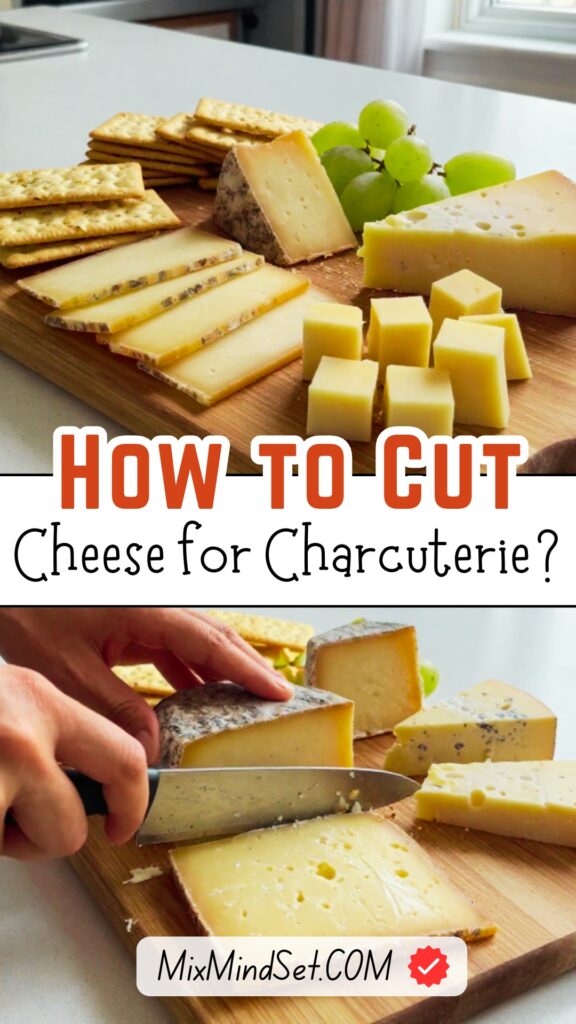
The best charcuterie boards usually include a mix of soft, semi-soft, firm, and crumbly cheeses, and each type cuts a little differently for the cleanest look and easiest serving.
Cheese is also best served cool-to-room temperature for flavor, but perishable foods should not sit out longer than about 2 hours at room temperature, or 1 hour above 90°F.
I like to think of cheese cutting as part style, part practicality. A good board should not make guests struggle with a giant wedge of cheddar or a squashed wheel of brie.
When the cheese is cut the right way, people can grab a piece easily, the texture stays attractive, and the board looks much more polished. Guides from Murray’s Cheese and Wisconsin Cheese both emphasize cutting by cheese type and shape, not just slicing everything the same way.
Table of Contents
Why cheese cutting matters on a charcuterie board?
Cutting cheese properly helps with three things: presentation, texture, and serving. Soft cheeses can smear if handled roughly, firm cheeses can look heavy if left in big chunks, and crumbly cheeses are often better broken into rustic bite-size pieces instead of forced into neat slices.
That is why experienced cheese-board guides recommend using different cuts for rounds, wedges, blocks, and aged cheeses.
It also helps guests serve themselves faster. On a busy board, people usually prefer pieces that are already cut, loosened, or partially portioned so they do not need to wrestle with a knife while everyone waits.
Pre-cutting at least part of each cheese is one of the easiest ways to make the board feel beginner-friendly and party-friendly. This is a practical hosting tip supported by cheese-board guides that focus on ease of serving as much as appearance.
The basic tools you need
You do not need a giant expensive cheese set, but a few tools help a lot:
- a sharp chef’s knife for firm and semi-firm cheeses
- a small cheese knife or thin-bladed knife for softer cheeses
- a fork or serving knife for crumbly cheeses
- a cheese wire or thin knife for very soft rounds if available
- a small spreader for creamy cheeses
Soft cheeses tend to cut more neatly with thin blades or perforated cheese knives, while harder aged cheeses often need a sturdier knife or chisel-style tool. Even so, a regular sharp kitchen knife works for many home boards.
Before you start cutting
1. Pick a variety of cheese textures
A balanced charcuterie board usually includes a few different styles, often a soft cheese, a semi-firm cheese, and a firm or aged cheese. This mix gives the board better contrast in taste, texture, and appearance.
2. Let the cheese warm slightly
Cheese tastes better when it is not fridge-cold. Letting it sit out a bit before serving improves flavor and texture, but remember the food-safety rule: do not leave perishable food out for more than 2 hours at room temperature.
Keep the rind in mind: For many wedges and rounds, cutting in a way that gives each piece some rind and some paste creates a more balanced bite. Cheese experts specifically recommend thinking about rind distribution when portioning wedges and rounds.
How to cut cheese for charcuterie by cheese type?
1) How to cut soft cheese
Soft cheeses include brie, camembert, and other creamy-ripened rounds.
The easiest way to cut a soft round is like a cake. Start by cutting it in half, then slice from the center outward into wedges. If the cheese is very soft, use a thin knife, warm knife, or cheese wire so the cheese does not squash. Some hosts also leave a soft cheese whole with a knife beside it, but for larger gatherings, pre-cut wedges are easier for guests.
Best cuts for soft cheese:
- small wedges
- half-moon slices
- leave whole with a spreader for very creamy cheeses
Helpful tip: wipe the knife between cuts if the cheese starts sticking.
2) How to cut semi-soft cheese?
Semi-soft cheeses include gouda, havarti, fontina, and young manchego.
If the cheese comes in a wedge, cut it into thinner triangle-shaped pieces. For gouda-style wedges, some guides suggest trimming off wax first, then halving the wedge and slicing into long, thin triangles. If the cheese is in a rectangular block, cut it into slim slices or batons that are easy to pick up.
Best cuts for semi-soft cheese:
- thin triangles
- rectangles
- long slices
- batons or sticks
These cheeses are ideal for neat, snackable pieces because they hold their shape well without crumbling.
3) How to cut firm cheese?
Firm cheeses include cheddar, alpine styles, aged gouda, and manchego.
For blocks, cut into slices, cubes, or thin rectangles. For wedges, cut into slim triangles. Some hosts love cubes because they are easy to grab, but thin slices often look a little more elegant on the board and pair more easily with crackers. A simple guide from Murray’s and other cheese resources shows that block cheeses can be cut into planks, sticks, or cubes depending on the look you want.
Best cuts for firm cheese:
- cubes
- planks
- thin slices
- triangles
My practical tip: do not make the pieces too thick. Thick chunks can feel heavy and are harder to eat neatly on a cracker.
How to cut hard or aged cheese?
Hard aged cheeses include parmesan, pecorino, and extra-aged cheddar.
These are often better broken into rustic chunks or shards instead of cut into perfect slices. Aged cheeses have a natural brittle texture, so forcing them into clean slices can make them crack awkwardly. Cheese-board guides often recommend using a sturdy knife or hard-cheese tool to break off bite-size pieces.
Best cuts for hard cheese:
- shards
- rough chunks
- crumbles
- small broken pieces
This style looks beautiful on a board because it adds texture and makes the board feel less flat.
How to cut crumbly cheese?
Crumbly cheeses include blue cheese, stilton, feta-style blocks, and very aged cheddars.
These are usually best portioned into rustic chunks, uneven cubes, or small crumble-friendly pieces. Do not fight for perfect slices. Let the natural texture guide the cut. Murray’s cut guide specifically highlights crumbly cheese as its own category because it behaves differently from smoother cheeses.
Best cuts for crumbly cheese:
- rough chunks
- bite-size broken pieces
- small wedges for firmer blue cheese
You can also leave part of a blue cheese wedge intact and break off a few starter pieces so guests know how to serve it.
Best cheese shapes for a charcuterie board
A pretty board usually looks better when every cheese is not cut the same way. Mixing shapes makes the board feel more natural and interesting.
Try combining:
- wedges for brie or camembert
- triangles for gouda or manchego
- slices or cubes for cheddar
- shards for parmesan
- rustic chunks for blue cheese
This variety is one reason cheese-board experts recommend choosing cheeses with different textures and forms.
A simple step-by-step method:
Step 1: Choose 3 to 5 cheeses
Pick a mix of textures, such as one soft, one semi-soft, one firm, and one aged or crumbly cheese. That gives the board visual contrast and better flavor balance.
Step 2: Unwrap and inspect each cheese
Check for wax rinds, natural rinds, or very soft centers before cutting. This helps you decide whether the cheese should be sliced, wedged, or broken into chunks. Gouda wedges, for example, may need the wax removed first.
Step 3: Cut at least part of every cheese before serving
Do not place every cheese on the board as a whole unopened block. Give guests a starting point by pre-slicing a few pieces from each one. That makes the board more inviting and easier to eat.
Step 4: Keep pieces bite-size
Aim for pieces that can be picked up easily and eaten in one or two bites. Oversized chunks make the board clumsy.
Step 5: Add the right knife or spreader
If you leave some cheese partly whole, place the proper knife next to it so guests can continue serving without damaging the board or other foods. Cheese experts often pair soft cheeses with spreaders and hard cheeses with sturdier knives.
Mistakes to avoid:
Cutting everything into cubes
Cubes work for some firm cheeses, but not for every style. Soft and crumbly cheeses often look and serve better in wedges or rough pieces.
Slicing soft cheese with a thick dull knife
That usually squishes the cheese instead of cutting it cleanly. Thin or warm blades work better.
Ignoring the rind balance
For wedges and rounds, center-out cuts help give each guest a more even bite of rind and paste.
Leaving the board out too long
Cheese and other perishable board items should not sit at room temperature past the recommended safety window. Refrigerate leftovers promptly.
Serving and storage tips
If you are building the board ahead of time, you can prep many of the components in advance and keep them chilled until close to serving. Some hosting tips also suggest storing ingredients in separate containers until assembly time for freshness and easier transport.
For leftovers, wrap cheese well and refrigerate it promptly. Hard cheeses generally keep better than very soft, high-moisture cheeses, but leftovers still should not be left out too long after serving.
FAQ
What is the best way to cut brie for a charcuterie board?
Cut brie like a cake, slicing from the center outward into wedges. For a crowd, pre-cut a few wedges so guests can serve themselves more easily.
Should I cut cheese before putting it on the board?
Yes, at least partially. Pre-cutting some of each cheese makes the board look more inviting and helps guests serve themselves without struggling.
How many cheeses should be on a charcuterie board?
A simple board often works well with about 3 cheeses in different textures, while larger boards can include more variety. A soft, a semi-firm, and a firm or aged cheese is a common starting point.
Is it better to cube or slice cheddar for charcuterie?
Either can work, but thin slices or slim rectangles often look more polished and pair more easily with crackers. Cubes are practical if you want easy grab-and-go pieces. Guidance for block cheeses commonly includes both cubes and slices.
How long can cheese sit out on a charcuterie board?
In general, do not leave perishable foods out for more than 2 hours at room temperature, or more than 1 hour if the temperature is above 90°F.
Conclusion
Once you know how to cut cheese for charcuterie, building a gorgeous board gets much easier. The real trick is simple: match the cut to the cheese.
Soft rounds do well in wedges, semi-soft wedges look great in triangles, block cheeses can be sliced or cubed, and hard aged cheeses usually shine in rough shards and chunks.
That little bit of attention makes the board prettier, easier to serve, and much more enjoyable to eat.