How to Remove Gel X Nails at Home?
Gel X nails are beautiful. They are lightweight, flexible, and look incredibly natural. But when they start to lift, grow out, or simply need a change, the removal process can feel scary. You have probably heard horror stories about damaged, thin, painful natural nails.
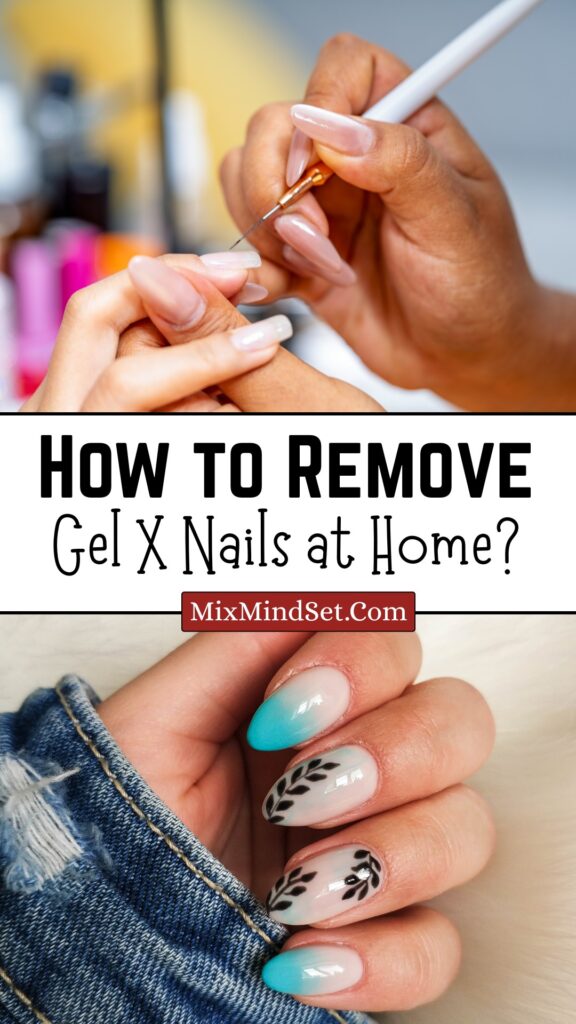
Here is the good news: Removing Gel X nails at home is completely safe if you do it correctly. You do not need to rush to a salon or spend $20+ on removal. With the right tools and a little patience, you can take them off without destroying your real nails underneath.
This guide will walk you through everything – from the tools you need, to the soak‑off method, to aftercare that leaves your nails healthy and strong. No prying, no peeling, no shortcuts that hurt.
Quick Navigation
1. What Are Gel X Nails? (Why Removal Is Different)
Gel X is a brand of soft gel extensions. Unlike hard gel or acrylic, Gel X tips are pre‑shaped and flexible. They are adhered to your natural nail using a gel glue (usually a builder gel) that is cured under a UV or LED lamp.
Because the bond is so strong – and because the material is gel‑based – you cannot simply pop them off or clip them. 🚫
| Property | Gel X | Acrylic | Hard gel |
|---|---|---|---|
| Material | Soft gel | Liquid powder + monomer | Hard gel |
| Removal method | Acetone soak only | Acetone soak or file off | File off (cannot soak) |
| Flexibility | High | Low | Medium |
| Damage risk if removed wrong | Moderate | High | High |
✅ The key difference: Gel X soaks off in acetone. Hard gel does not. So never try to file off Gel X completely – you will file into your natural nail.
2. Tools You Need (Drugstore Items, Under $15)
You probably already have most of these at home. Do not start without everything on this list. 🧰
| Tool | Purpose | Approx. cost |
|---|---|---|
| 100% pure acetone (not nail polish remover) | Dissolves the gel extension | $5–8 |
| Coarse nail file (100/180 grit) | To break the top seal | $2–4 |
| Buffer block (240+ grit) | For smoothing after removal | $2–3 |
| Cotton balls or pads | To hold acetone against the nail | $1–2 |
| Aluminum foil (cut into 3″ squares) | To wrap and trap heat | $1 (kitchen foil) |
| Cuticle pusher (metal or wooden orange stick) | To gently scrape softened gel | $2–3 |
| Bowl of warm water or a towel | To warm the acetone wraps | free |
| Nail oil or thick hand cream | For aftercare | $4–6 |
✅ Pro tip: Do not use “acetone‑free” nail polish remover. It will not work on Gel X. You need 100% pure acetone, sold near paint thinners or in the beauty section.
3. What NOT to Do (Dangerous Mistakes)
These mistakes cause 90% of the damage people blame on Gel X. Read this section twice. ⚠️
| Mistake | Why it is dangerous | What to do instead |
|---|---|---|
| Peeling or prying off the extension | Tears off layers of your natural nail. Leads to red, thin, painful nails for months. | Always soak off with acetone. |
| Using a metal file aggressively | Over‑filing can permanently thin your nail plate. | Use a gentle hand. Stop when you see a thin layer of gel remaining. |
| Skipping the top coat filing | Acetone cannot penetrate the shiny top coat. You will soak forever with no results. | Always file the shine off first. |
| Rushing the soak | Pulling off half‑dissolved gel rips your nail. | Be patient. Soak for 15–20 minutes. |
| Using non‑acetone remover | It will not dissolve gel. You will waste hours. | Buy 100% pure acetone. |
🧠 Remember: Your natural nails are not tools. Treat them like delicate fabric, not like wood.
4. Step 1 – Prepare Your Nails & Workspace
Before you touch the acetone, set up your space. A good setup saves time and frustration.
Prepare your workspace:
- Sit at a table with good lighting. 💡
- Lay down an old towel or paper towels (acetone can damage furniture).
- Open a window or work near ventilation (acetone fumes are strong).
- Have a small bowl of warm water ready – you will rest your wrapped fingers in it.
Prepare your nails:
- Wash your hands with soap and water. Dry thoroughly.
- Remove any rings or jewelry (acetone can damage some metals and plastics).
- If your Gel X nails are very long, clip them down to about ¼ inch above your fingertip. This reduces the amount of gel you need to soak off. ✂️
5. Step 2 – File the Top Coat (Critical Step)
This is the step most people skip. Do not skip it.
How to file properly:
- Take your coarse file (100/180 grit).
- Gently buff the entire surface of each Gel X nail until it looks dull and matte. You are removing the shiny top coat.
- Do not press hard. You only need to scratch the surface, not dig into the gel.
- Pay extra attention to the area near your cuticle and the free edge (tip).
✅ How to know you are done: The nail should no longer reflect light. It should look cloudy and scratched, not glossy.
⚠️ Do not file down to your natural nail. You are only breaking the seal, not removing the whole extension.
6. Step 3 – The Acetone Soak (Cotton + Foil Method)
This is the heart of the removal process. The acetone dissolves the gel, turning it into a soft, rubbery paste that you can gently push off.
Step‑by‑step:
- Cut or tear 10 squares of aluminum foil, each about 3″ x 3″. Set them aside.
- Soak a cotton ball or small cotton pad in 100% pure acetone. It should be wet but not dripping.
- Place the wet cotton directly on top of a filed Gel X nail, covering the entire surface.
- Wrap the foil around your fingertip, over the cotton, to hold it snugly in place. The foil traps heat, which speeds up the reaction.
- Repeat for all 10 fingers.
- Rest your foil‑wrapped fingers in the bowl of warm water or wrap them in a warm towel. Heat makes acetone work 2–3 times faster. 🔥
How long to wait:
- First check after 15 minutes.
- Remove one foil wrap and gently test the gel with a cuticle pusher.
- If the gel feels soft, rubbery, and lifts easily, proceed to the next step.
- If it is still hard, rewrap and wait another 5–10 minutes.
🕐 Total soak time is usually 20–30 minutes. Do not rush. If you feel burning or irritation, remove the wraps immediately and rinse with water.
7. Step 4 – Gently Remove the Softened Gel
Now the gel should be soft enough to push off. Be extremely gentle.
How to remove:
- Unwrap one finger at a time.
- Using a cuticle pusher (metal or wooden), gently scrape the softened gel off your nail. Push from the cuticle toward the free edge.
- The gel should come off in small, soft flakes or sheets. Do not force it. If it resists, rewrap and soak for another 5 minutes.
- For stubborn spots near the sidewalls, use an orange stick at a shallow angle.
- Repeat for all fingers.
✅ What you should see underneath: A thin, cloudy, slightly rough layer of gel may remain. That is fine. Do not try to scrape off every last speck – that is when you damage your nail.
🧠 Important: If your natural nail feels hot, sensitive, or looks red, stop. You have filed or scraped too deep. Switch to soaking only and let the acetone do the work.
8. Step 5 – Buff, Hydrate, and Rest
You are almost done. The remaining thin layer of gel can be gently buffed away, or you can leave it and let it grow out.
Buffing (optional but recommended):
- Use a fine buffer block (240 grit or higher).
- Lightly buff the surface of your natural nail in one direction.
- Stop as soon as the nail looks smooth and matte. Do not buff until shiny – that means you are removing nail plate.
Hydrate immediately:
- Acetone is extremely drying. Your nails and cuticles will look white and dehydrated. 💧
- Wash your hands with mild soap. Pat dry.
- Apply cuticle oil to every nail and massage it in.
- Follow with a thick hand cream or shea butter.
Rest your nails:
- Do not apply new Gel X or gel polish for at least 2–3 days. Let your nails breathe and rehydrate.
- If you must have color, use regular nail polish (not gel) for a week.
9. Aftercare – Healing Thin Nails
Even with perfect removal, your nails may feel thinner or more flexible for a few days. That is normal. Here is how to help them recover. 🌱
| Do this | Avoid this |
|---|---|
| Apply cuticle oil 2–3 times daily | Peeling or biting your nails |
| Wear gloves when washing dishes | Using nails as tools (opening cans, scratching stickers) |
| Take a biotin supplement (optional) | Applying new gel extensions immediately |
| Keep nails short for 1–2 weeks | Filing the nail surface any further |
Signs you need a longer break:
- Your nails bend easily or feel “papery.”
- You see white spots or ridges.
- Your fingertips are sensitive to touch.
If you notice any of these, wait at least two weeks before reapplying any gel product.
10. Printable Checklist & Troubleshooting Table 📋
Copy these tables into your notes app or print them for your next removal.
Removal checklist
| Step | Task |
|---|---|
| 1 | Gather all tools (acetone, foil, file, cotton, pusher) |
| 2 | Clip long extensions down |
| 3 | File off the shiny top coat on every nail |
| 4 | Soak cotton in 100% acetone |
| 5 | Wrap each finger with foil + cotton |
| 6 | Rest fingers in warm water for 15–20 min |
| 7 | Gently push off softened gel |
| 8 | Buff remaining thin layer (optional) |
| 9 | Wash hands and apply cuticle oil |
| 10 | Rest nails for 2–3 days |
Troubleshooting common problems
| Problem | Likely cause | Solution |
|---|---|---|
| Gel is not softening after 30 minutes | Forgot to file top coat | File the shine off and rewrap |
| Acetone burns or irritates skin | Acetone touching cuticles or broken skin | Use less acetone; apply petroleum jelly around nails before soaking |
| Gel comes off in hard chunks, not soft | Not enough soak time | Soak another 10 minutes |
| Natural nail looks rough or pitted | Over‑filed or scraped too hard | Stop. Use only acetone next time. Apply nail strengthener. |
| White spots on nails after removal | Dehydration or minor trauma | Oil and rest. They will grow out. |
Final Truth – Patience Is the Secret Ingredient
Removing Gel X nails at home is not hard. But it does require patience. 🧡
The moment you feel tempted to peel or pry – stop. Take a deep breath. Rewrap and wait an extra five minutes. That five minutes of waiting can save you two months of thin, painful, peeling natural nails.
Your nails are not disposable. They grow slowly, and damage takes weeks to grow out. Treat them like the valuable, living tissue they are.
Follow this guide exactly once, and you will never fear removal again. You will save money, save time, and keep your natural nails healthy and happy. ✨