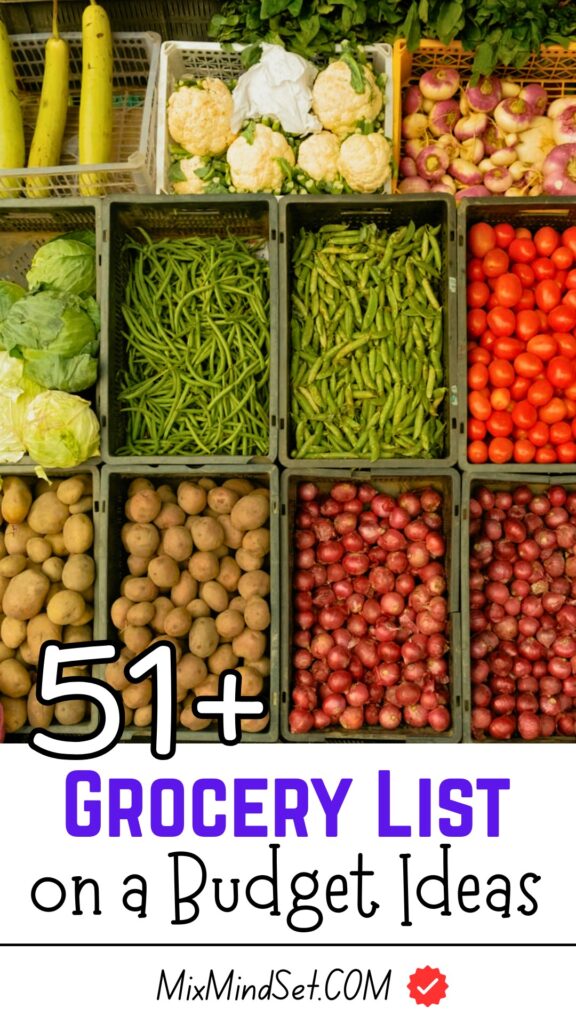
51+ Grocery List on a Budget
Let’s be real for a second. If you’ve opened your pantry lately and felt a tiny panic attack coming on, you’re not alone. Food prices are climbing, and that weekly grocery run has turned into a budget-busting ordeal.
I remember a time when I walked out of the store with two full bags for under $40. Now? I blink and the total hits $80 before I’ve even grabbed eggs.
But here’s the good news: eating well on a tight budget isn’t about surviving on ramen and peanut butter sandwiches (though nothing wrong with either). It’s about having a smart grocery list—one that stretches every dollar, minimizes waste, and still lets you cook food you actually want to eat.
I’ve put together a massive list of 51+ budget-friendly grocery items, broken down by category. These are the workhorses of frugal kitchens. Along the way, I’ll share real-life tips I’ve learned from years of coupon clipping, bulk bin hunting, and making “what’s in the fridge?” into a delicious game.
Why a Budget Grocery List Works (When Done Right)?
A list alone won’t save you money. You need the right list—one built around versatile, low-cost, long-lasting ingredients. The items below share three things in common:
- Low cost per serving (think rice, beans, seasonal produce)
- High versatility (can be used in multiple meals)
- Good shelf life (fresh or frozen, they won’t rot in a week)
Keep this list on your phone or tacked to the fridge. Before you shop, check what you already have. Then stick to the list like it’s the law. Impulse buys are the enemy.
The Ultimate 51+ Budget Grocery List
🥫 Pantry Staples (The Foundation)
These are your “never run out” items. Buy them in bulk when on sale, and you’ll always have the start of a meal.
- Long-grain white rice – 5-pound bag costs around $3–$4. Feeds an army.
- Dried lentils – Red, brown, or green. Protein-packed and cooks fast (no soaking needed).
- Dried pinto or black beans – $1.50 per pound dry = about 6 servings. Soak overnight, then freeze leftovers.
- Oats (old-fashioned or quick) – Not the sugary instant packets. A big canister makes breakfast for weeks.
- Pasta (spaghetti, penne, elbows) – Store brands are $1 or less per box. Stock up.
- Canned crushed tomatoes – Base for sauces, soups, chili. Look for sales (often 3 for $5).
- Tomato paste – Small can, big flavor. Freeze extra in tablespoon portions.
- Canned tuna or sardines – In water, not oil. Great for sandwiches, salads, or pasta.
- Peanut butter (plain, no sugar added) – Cheap protein. Stir into oatmeal or make satay sauce.
- Chicken or vegetable bouillon cubes – Pennies per cube. Better than buying boxed broth.
- Vegetable oil or canola oil – Cheap, neutral, lasts forever.
- White vinegar – Cleaning and cooking. Use for dressings, pickling, or deglazing.
- Soy sauce – A little goes a long way for umami. Buy the largest bottle (store brand).
- Onions (yellow or red) – Buy a 3–5 pound bag. They last weeks in a cool, dark place.
- Garlic (whole heads) – Cheaper than pre-minced. Roast whole cloves for sweetness.
🥬 Produce That Won’t Break the Bank
Fresh fruits and veggies can be pricey, but some are almost always cheap. Buy what’s in season, and don’t fear frozen.
- Carrots (whole, not baby-cut) – A 2-pound bag is $1–$2. Roast, soup, or snack raw.
- Russet potatoes – The ultimate budget carb. Mashed, baked, fried, or in stews.
- Cabbage – Green cabbage costs around $0.50–$1 per pound. Lasts for weeks in the fridge.
- Frozen spinach – 1-pound bag for $1.50. Thaw and toss into eggs, pasta, or rice.
- Frozen mixed vegetables – Peas, carrots, corn, green beans. No waste, always ready.
- Bananas – Usually under $0.60 per pound. Overripe? Freeze for smoothies or banana bread.
- Apples (on sale) – Look for “ugly” or smaller apples. They taste the same.
- Sweet potatoes – More nutrients than white potatoes, often same price.
- Zucchini or summer squash – Cheap in summer, but even off-season they’re reasonable.
- Frozen broccoli florets – Fresh broccoli goes bad fast. Frozen is flash-frozen at peak.
- Celery – A whole head is cheap. Use the leaves for broth, stalks for snacking or stir-fries.
🍗 Affordable Proteins (Meat, Eggs & Plant-Based)
Meat is often the budget killer. Shift your mindset: meat becomes a flavoring, not the main event.
- Eggs – Still one of the cheapest complete proteins. Buy large, not cage-free organic unless on sale.
- Chicken thighs (bone-in, skin-on) – Cheaper than breasts, more flavorful. $1.50–$2 per pound.
- Ground turkey or pork – Often cheaper than ground beef. Watch for family packs.
- Canned chickpeas – About $1 per can. Rinse and roast for snacks, mash for sandwiches.
- Tofu (extra firm) – Under $2 per block. Press, cube, and bake or stir-fry. Takes on any sauce.
- Pork shoulder (or “picnic roast”) – Can be under $2 per pound. Slow cook for pulled pork or carnitas.
- Frozen fish fillets (tilapia or pollock) – Cheaper than fresh. Season heavily.
- TVP (textured vegetable protein) – Dried soy crumbles. Rehydrate in broth for taco “meat.”
🥛 Dairy & Dairy Alternatives
Skip the fancy brands. Plain, full-fat versions often cost less and taste better.
- Milk (gallon) – Whole or 2%. Buy the store brand.
- Plain yogurt (large tub) – Avoid single-serve cups. Use for smoothies, sauces, or substitute for sour cream.
- Cottage cheese (large curd) – Cheap protein. Eat with fruit or on toast.
- Block cheese (cheddar or mozzarella) – Never pre-shredded (it costs more and has anti-caking agents). Shred yourself.
- Butter (salted, sticks) – Buy on sale and freeze extra.
🌾 Baking & Spices (Small Investment, Big Flavor)
Spices from bulk bins are a lifesaver. You only need a few to transform boring meals.
- All-purpose flour – 5-pound bag for $2. Make bread, pancakes, or gravy.
- Granulated sugar – Cheap sweetness for baking or coffee.
- Baking soda & baking powder – Buy the small boxes. They last for months.
- Salt (table or kosher) – Don’t overpay for pink Himalayan nonsense.
- Black pepper (whole or ground) – Buy a small container; it’s potent.
- Paprika (sweet or smoked) – Adds warmth to eggs, chicken, or potatoes.
- Dried oregano – Works in Italian, Mexican, and Greek dishes.
- Red pepper flakes – A little heat goes a long way.
🍿 Snacks & Beverages (Without the Markup)
Snacks can destroy a budget. Stick to simple, make-at-home options.
- Popcorn kernels – A $2 bag makes 50 servings. Air-pop or stovetop with oil.
- Store-brand cereal (corn flakes or rice squares) – Compare ingredients; they’re often identical to name brands.
- Tea bags (black or green) – 100-count box for $3–$4. Skip bottled tea.
- Powdered drink mix (lemonade or iced tea) – Mix your own. Pennies per glass.
Bonus items to push you past 51:
- Canned pumpkin puree – Not pie filling. Add to oatmeal, soups, or make budget dog treats.
- Cornmeal – For polenta, cornbread, or coating fish.
- Frozen orange juice concentrate – Cheaper than bottled. Mix with water.
- Panko breadcrumbs – Stretch meatloaf or coat chicken.
- Dried parsley – Makes any dish look “fancy” for pennies.
7 Real-World Strategies to Make This List Work
Having the items is only half the battle. Here’s how to shop, cook, and save like a pro.
1. Shop Your Pantry First (Seriously)
Before you even look at this list, open your cabinets. Half an onion? A third of a bag of rice? Use it. I keep a “use-me-first” bin in my pantry. It cuts waste by at least 30%.
2. The Unit Price is Your Best Friend
Stores show a small number under the big price: price per ounce or pound. That’s the real deal. A $5.99 bag of rice might seem cheap, but the $12.99 20-pound bag is actually half the price per serving. Buy bigger if you have storage space.
3. Don’t Fear the Discount Rack
Most stores have a clearance shelf for dented cans, day-old bread, or nearly-expired items. I once got 12 cans of beans for $0.10 each. Bread freezes beautifully. Meat with today’s date? Cook it tonight or freeze immediately.
4. Meatless Mondays (or Tuesdays… or Thursdays)
Replace meat with beans, lentils, or eggs just one or two nights a week. A lentil soup costs about $0.75 per serving. A beef stew? $2.50 or more. The savings add up fast.
5. Cook in Batches, Freeze in Portions
Sunday afternoon: make a giant pot of chili, a batch of rice, and roasted veggies. Portion into containers. Now you have 5–6 meals ready to go. No takeout temptation when you’re tired.
6. Buy Frozen When Fresh is Expensive
In winter, fresh berries cost $5 for a tiny box. Frozen berries? $2 for a pound. Same for peas, spinach, and mixed vegetables. They’re picked at peak ripeness and flash-frozen, often more nutritious than fresh that’s been sitting on a truck.
7. Use a Price Book (Old School but Gold)
Grab a small notebook. Write down the lowest price you’ve seen for items you buy often (e.g., “canned tomatoes – $0.89/can”). When you see that price, stock up. When it’s higher, wait or buy a substitute. This one habit saved me over $50 a month.
Sample Weekly Meal Plan Using This Budget List
Let me show you how these 51+ items come together for real meals. No weird ingredients, no $20 “specialty” items.
Breakfasts
- Oatmeal with sliced banana and a spoonful of peanut butter
- Scrambled eggs with frozen spinach and a side of toast
- Yogurt with a drizzle of honey (or cheap jam) and leftover berries
Lunches
- Lentil soup made with carrots, celery, and bouillon (make a big pot Sunday)
- Tuna salad sandwich on homemade bread (flour, yeast, water – dirt cheap)
- Leftover rice bowl with canned chickpeas, cabbage slaw, and soy sauce
Dinners
- Bean and cheese burritos (canned beans, rice, shredded cheddar, cheap tortillas)
- Roasted chicken thighs with potatoes and frozen broccoli
- Pasta with crushed tomato sauce, garlic, and a sprinkle of oregano
- Pork shoulder carnitas (slow cook all day) served over rice with pickled onions (vinegar + onion)
Snacks
- Popcorn (stovetop with a little oil and salt)
- Apple slices with peanut butter
- Hard-boiled eggs
Notice how ingredients repeat? That’s the secret. A bag of carrots goes into soup, salad, and snacking. A block of cheese tops pasta, burritos, and eggs. No single-use ingredients.
Common Budget Grocery Mistakes (And How to Fix Them)
Even with a great list, it’s easy to slip up. Here’s what to watch for.
- ❌ Buying “budget” processed foods – Frozen pizza, boxed mac & cheese, and instant noodles seem cheap per box, but they’re expensive per calorie and nutrition. You’ll be hungry again in an hour.
- ✅ Fix: Spend that same $2 on a bag of rice and a can of beans. You’ll get four meals instead of one.
- ❌ Shopping when hungry – Everything looks good. You’ll grab chips, cookies, and that fancy cheese you don’t need.
- ✅ Fix: Eat a snack before you go. An apple or a handful of nuts works wonders.
- ❌ Ignoring store loyalty cards – I hate giving my data too, but most stores offer real discounts with free cards. Some even clip digital coupons automatically.
- ✅ Fix: Sign up with a junk email address. Use it only for grocery savings.
- ❌ Buying pre-cut produce – A bag of chopped onions costs three times more than whole onions. Same for shredded lettuce, sliced mushrooms, or “stir fry mix.”
- ✅ Fix: Spend 10 minutes with a knife. Your wallet will thank you.
Final Thoughts
This list of 51+ items isn’t a rigid command. It’s a starting point. Maybe you hate lentils (try split peas instead). Maybe you live somewhere with cheap avocados or expensive potatoes. Adjust for your tastes and local sales.
The real win comes from consistency. Every time you shop with a list, check unit prices, and cook from scratch, you’re building a skill that pays you back for life. I’ve gone from stressed at the register to actually enjoying the challenge of making $50 feed me for a week.
Print this list. Cross off what you don’t like. Add your own cheap favorites (tortillas? canned sardines? frozen edamame?). And next time you’re at the store, hold your head high while you walk past the overpriced “convenience” items. You’ve got a plan. And that’s worth more than any coupon.
Happy frugal shopping!