How to Look Good in Pictures?
You know the feeling. A friend pulls out a phone. Everyone gathers for a group photo.
And you think: Please let this be the one where I don’t look awkward, shiny, or like I have three chins.
Then you see the picture. And your heart sinks.
Here is the truth: Looking good in photos is not about being conventionally beautiful. It is about understanding light, angles, posture, and a few simple tricks that professional photographers use every day. The good news? Anyone can learn them.
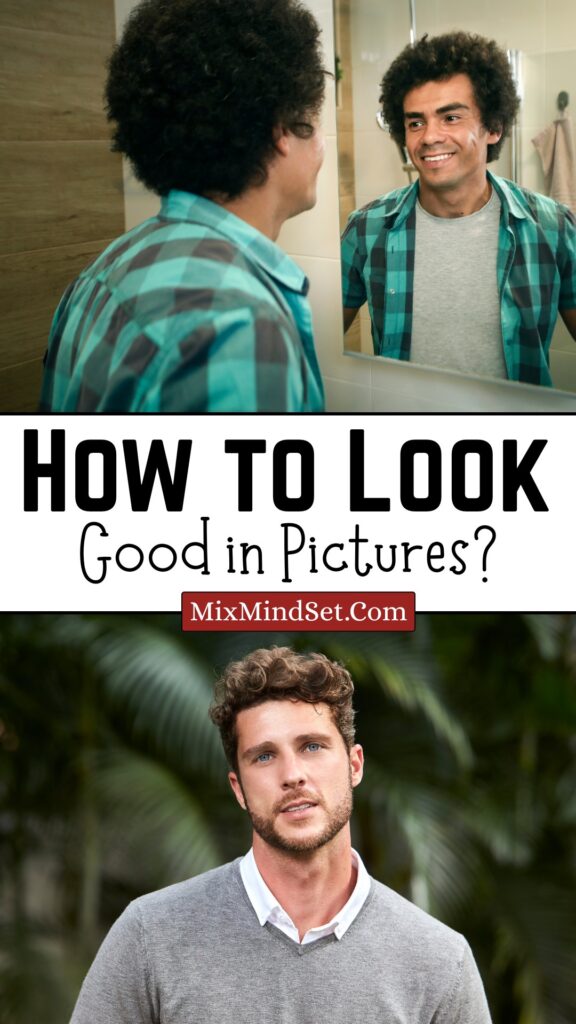
This guide will teach you everything – from how to stand, where to look, what to wear, and how to relax your face. No more deleted photos. No more hiding in the back. You will finally love how you look in pictures. 📸
Quick Navigation
1. Why You Look Different in Photos Than in the Mirror
First, let’s address the big question: Why do I look good in the mirror but terrible in photos? You are not imagining it. There are real reasons.
| Reason | Explanation |
|---|---|
| Lens distortion | Phone cameras use wide‑angle lenses. They stretch the center of the image (your nose) and shrink the edges. This makes features look different than in a mirror. |
| Mirror reversal | You are used to seeing your face flipped. A photo shows you as others see you – which feels “wrong” to your brain, even if it looks fine to everyone else. |
| Frozen moment | In real life, your face is constantly moving. A photo freezes one micro‑expression that you would normally blink past. |
| Lighting | Bathroom mirrors often have flattering overhead light. Camera flash or bad room light creates unflattering shadows. |
✅ The takeaway: You are not ugly. You are just not used to the version of you that exists outside your mirror. And with a few tweaks, you can look great in both.
2. The Best Lighting – Natural Light Is Your Friend 💡
Lighting is 50% of a good photo. Bad lighting can ruin even the most beautiful face. Good lighting can make anyone look like a model.
Lighting ranked from best to worst
| Lighting type | Why it works | When to use it |
|---|---|---|
| Soft natural light (near a window, cloudy day) | Diffused, even, no harsh shadows | Any time, especially indoors |
| Golden hour (hour after sunrise or before sunset) | Warm, soft, glowy | Outdoor portraits |
| Overcast sky | Natural softbox – no squinting | Outdoor group photos |
| Ring light | Even, shadow‑free, makes eyes sparkle | Selfies, video calls |
| Direct sunlight (noon) | Harsh shadows, squinting, unflattering | Avoid if possible |
| Flash (direct, on‑camera) | Washes out skin, creates red eyes, flat look | Only as last resort |
The one rule to remember: Never face a window with the sun directly behind you. That puts your face in shadow. Instead, face the window or stand at a 45‑degree angle to it. 🌞
Quick lighting test: Hold your hand in front of your face. If you see sharp, dark shadows, the light is too harsh. If the shadows are soft and blurry, you have good light.
3. Camera Angles – Where to Place the Lens 📐
The height and angle of the camera change your entire appearance. Here is the cheat sheet.
| Camera position | Effect on your face | Best for |
|---|---|---|
| Slightly above eye level (camera held at forehead height) | Slims the face, opens eyes, reduces double chin | Almost everyone |
| At eye level | Neutral, natural | Casual portraits |
| Below eye level (camera held at chest height) | Emphasizes chin, nostrils, neck | Avoid unless you want a dramatic, powerful look |
| Too high (arm fully extended up) | Makes forehead and nose look larger | Avoid |
The magic angle: Hold the camera so the lens is at your forehead level (about 4–6 inches above your eyes). Then tilt your chin slightly down and forward toward the lens. This stretches your neck and defines your jawline. 🦢
For full‑body photos: The photographer should kneel or crouch so the camera is at your waist level. Shooting from below makes legs look longer. Shooting from above makes you look shorter.
4. Posing Your Body – No More Stiff, Awkward Stances 🧍
Most people stand like a soldier in photos: feet together, arms glued to sides, facing the camera straight on. That is the least flattering pose possible.
The 5 core body posing rules
| Rule | How to do it | Why it works |
|---|---|---|
| Turn your body | Stand at a 45‑degree angle to the camera, not straight on | Creates a slimmer silhouette |
| Pop your front knee | Bend the knee closest to the camera, point toe toward lens | Adds length and movement |
| Create space between arm and body | Place hand on hip or gently hold something (purse, jacket) | Prevents “squished” arm look |
| Shift your weight | Put weight on back leg, front leg relaxed | Creates natural curves |
| Relax your shoulders | Roll them back and down, away from your ears | Opens chest, improves posture |
Standing pose for women (classic):
- Angle body 45° to camera.
- Put weight on back leg.
- Front knee slightly bent, toe pointing at camera.
- Front hand on hip (fingers relaxed, not clawed).
- Back arm slightly away from body.
- Chin forward and slightly down.
Standing pose for men (natural and confident):
- Face camera slightly angled (not full front).
- Feet shoulder‑width apart.
- Hands loosely in pockets or crossed lightly (not tight).
- Shoulders back, chest open.
- Avoid “tough guy” crossed arms – looks defensive.
Sitting pose:
- Sit at the edge of the chair (not slouched back).
- Cross your legs at the ankle, not the knee.
- Lean slightly forward toward the camera.
- Place one hand on your knee, the other relaxed.
5. Posing Your Face – Smile Without Looking Forced 😁
Forced smiles look fake. Real smiles look warm. The difference is in your eyes.
The genuine smile formula
| Element | What to do |
|---|---|
| Eyes | Squeeze them slightly so the corners crinkle (called “smizing”). |
| Mouth | Part your lips just slightly, or show teeth naturally – do not stretch wide. |
| Cheeks | Let them lift naturally. Do not puff or suck them in. |
| Tongue | Press your tongue gently against the roof of your mouth behind your front teeth. This tightens the under‑chin area. |
The “say something funny” trick: Instead of saying “cheese,” think of something that genuinely makes you happy – your pet, a vacation memory, a silly joke. Your smile will reach your eyes. 😊
Alternative expressions (if you do not want to smile)
| Expression | How to do it | Best for |
|---|---|---|
| Soft look | Relax face, part lips slightly, look just above the lens | Romantic, serious portraits |
| Confident | Slight smirk, chin lifted, eyes direct | Professional headshots |
| Candid | Look away from camera, laugh, or talk | Group photos, lifestyle shots |
What to avoid with your face:
- ❌ Tipping your head back (exposes nostrils and double chin).
- ❌ Tucking your chin straight down (creates a neck roll).
- ❌ Raising your eyebrows too high (adds forehead wrinkles).
- ❌ Pressing your lips together tightly (looks angry or stressed).
✅ The perfect chin position: Stretch your neck slightly long, then push your chin forward and slightly down toward the camera. Think of a turtle poking its head out. It feels strange but looks amazing.
6. What to Wear – Colors, Patterns, Necklines 👗
Your outfit can make or break a photo. Here is what works and what does not.
Best colors for photos
| Skin tone | Flattering colors | Avoid |
|---|---|---|
| Fair / cool undertones | Jewel tones (emerald, sapphire, ruby), pastels, navy | Neon, pure white, beige |
| Medium / warm undertones | Earth tones (olive, rust, mustard), cream, teal | Black, bright white |
| Dark / deep skin | Bright colors (fuchsia, royal blue, orange), white, metallics | Pastels, muddy browns |
| All skin tones | Deep jewel tones (burgundy, forest green, navy) | Fluorescent, tiny busy prints |
Necklines – what slims and lengthens
| Neckline | Effect | Best for |
|---|---|---|
| V‑neck | Lengthens neck, slims face | Almost everyone |
| Scoop neck | Soft, flattering | Larger busts |
| Boat neck / off‑shoulder | Highlights collarbone, elegant | Long necks, narrow shoulders |
| Turtleneck | Shortens neck, adds volume to face | Avoid unless you have a very long neck |
| High crew neck | Can make face look wider | Slim faces only |
Patterns and fabrics:
- ✅ Solid colors photograph best.
- ✅ Small, subtle patterns (thin stripes, tiny dots) work well.
- ❌ Large, busy patterns (big logos, huge florals) distract from your face.
- ❌ Super shiny or reflective fabrics (satin, sequins) catch flash and create glare.
- ✅ Textured fabrics (linen, knit, denim) add interest without distraction.
The “pop of color” rule: If you wear a neutral outfit (black, gray, beige), add one bright accessory – a scarf, statement earrings, or a handbag. It draws the eye to your face. 🧣
7. How to Prepare Your Skin and Hair 💆
Five minutes of prep before a photo can save you hours of editing later.
Skin prep (for natural, non‑shiny photos):
| Step | What to do |
|---|---|
| 1 | Wash face with gentle cleanser. |
| 2 | Apply light moisturizer (not heavy cream). |
| 3 | Blot away excess oil with a tissue – especially on nose, forehead, chin. |
| 4 | Use a mattifying powder or blotting papers if you have oily skin. |
| 5 | Avoid heavy SPF or foundation with flashback (check labels for “non‑flashback”). |
Makeup tips for photos:
- Go slightly heavier than you think you need. Cameras wash out color.
- Avoid lip gloss – it reflects flash. Use matte or satin lipstick. 💄
- Define your brows – they frame your face.
- Use a little more blush than usual. It fades in photos.
- Set everything with translucent powder to kill shine.
Hair tips:
- Clean, day‑old hair often photographs better than freshly washed (more texture).
- Avoid slicked‑back styles – they can make your face look wider.
- Leave a few soft strands around your face to soften features.
- If you have fine hair, add a little dry shampoo for volume.
- For outdoor photos, bring a brush – wind is unpredictable. 🌬️
8. Group Photo Survival Guide 👥
Group photos are the hardest. You cannot control everyone else, but you can control yourself.
Where to stand:
- The middle of the group is the most distorted by wide lenses. Stand near the center but slightly offset – second from the left or right.
- Tall people should stand in the back row. Short people in the front.
- If you are self‑conscious about your arms, stand on the end – you can angle your body slightly away.
How to pose in a group:
- Do not stand perfectly straight. Lean slightly toward the center of the group.
- Put one hand on the shoulder of the person next to you (creates connection and gives your arm something to do).
- If you are in the front row, bend one knee slightly and lean back on your heels.
- Do not lock your arms straight down – tuck your hands into pockets or hold a purse.
The “look at the lens” rule: In group photos, look directly at the camera lens (not the person holding it). And for the love of good photos, do not close your eyes right as the shutter clicks. Blink on “two” and open on “three.” 😅
9. Selfie Secrets – Angles, Arms, Background 🤳
Selfies have their own rules because you are both photographer and subject.
The classic selfie angle:
- Hold the phone slightly above eye level (forehead height).
- Tilt your chin down and forward.
- Extend your arm fully – do not hold the phone close to your face.
- Use the back camera (it has less distortion) if you can see yourself in a mirror.
- Tap your face on the screen to lock focus and exposure.
Arm placement:
- The arm holding the phone should be relaxed, not locked straight.
- The other arm? Bring it across your body or rest your hand lightly on your collarbone.
- Avoid the “floating arm” that looks disconnected.
Background matters:
- A messy room behind you is distracting. Stand in front of a blank wall, a window, or nature. 🌿
- Avoid having a bright window or lamp directly behind your head – it creates a dark silhouette.
- Check behind you for strangers, clutter, or anything embarrassing.
The “no selfie” situations: Direct overhead lighting (gas station, office), extreme backlighting (sun behind you), or very low light (restaurant at night) – just skip the selfie.
10. Printable Posing Cheat Sheet 📋
Keep this table on your phone for quick reference before any photo.
Quick pose checklist (body)
| Body part | Do this |
|---|---|
| Feet | One foot slightly forward, weight on back leg |
| Knees | Front knee soft, not locked |
| Hips | Angle 45° to camera |
| Torso | Lean slightly forward from the waist |
| Shoulders | Roll back and down |
| Arms | Create space between arm and body (hand on hip or in pocket) |
| Hands | Relaxed, not clenched |
Quick pose checklist (face)
| Face part | Do this |
|---|---|
| Chin | Push forward and slightly down |
| Jaw | Relax, do not clench |
| Eyes | Squeeze slightly (smize) |
| Eyebrows | Relaxed, not raised |
| Mouth | Part lips slightly or natural smile |
| Tongue | Press lightly against roof of mouth |
Lighting & angle cheat sheet
| Situation | Best action |
|---|---|
| Indoor day | Stand facing a window |
| Outdoor sunny | Find shade or shoot during golden hour |
| Outdoor cloudy | Perfect – go anywhere |
| Night with flash | Avoid. Use a friend’s phone light as fill instead. |
| Camera height | At your forehead level |
| Distance | Arm’s length for selfies, 6–10 feet for portraits |
Conclusion
Here is what no one tells you: The most beautiful people in photos are not the ones with perfect faces. They are the ones who are comfortable.
When you are relaxed, confident, and having a genuine moment, it shows. Your eyes soften. Your smile reaches your ears. Your body looks natural, not posed like a mannequin.
So before your next photo, take a deep breath. Roll your shoulders. Think of something that makes you laugh.
And remember: You are your own harshest critic. Everyone else just sees someone they are happy to be with. 📸💛
Now go practice in front of a mirror for five minutes. Find your angle. Then own it.