How to Make Powdered Sugar?
Powdered sugar is one of those simple kitchen staples that feels small until you suddenly need it. Maybe you are making icing for cookies, dusting a cake, whipping up glaze for cinnamon rolls, or finishing brownies with that soft snowy topping. Then you check the pantry and realize the box is empty.
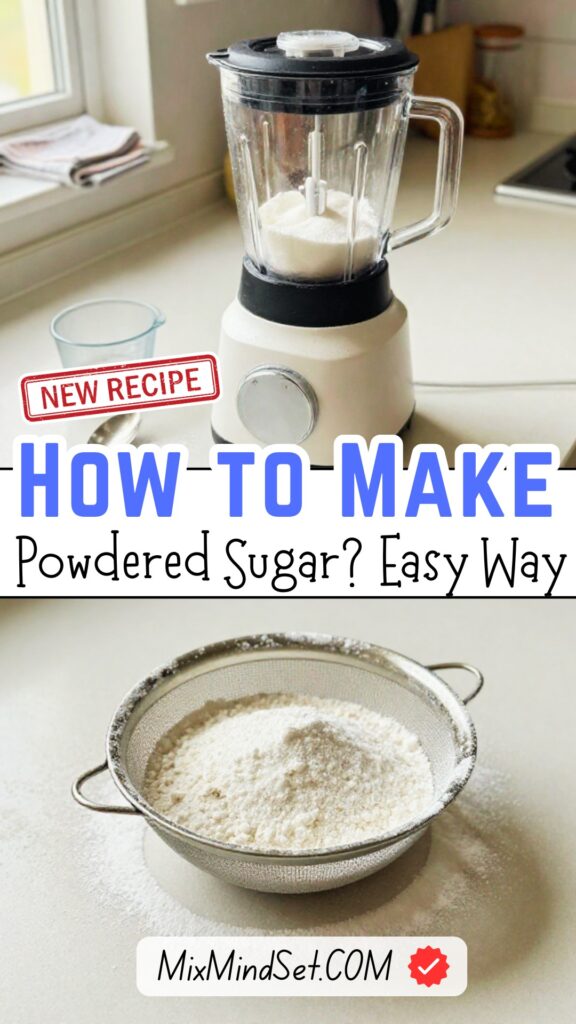
The good news is that making powdered sugar at home is very easy. You only need granulated sugar and a blender, food processor, or spice grinder. In just a few minutes, you can turn regular sugar into a fine, soft powder that works for frosting, glaze, dusting, and many dessert recipes.
This guide will show you how to make powdered sugar, what tools work best, whether you need cornstarch, and how to store it so it stays smooth and usable. It is simple, practical, and worth knowing because once you do it once, you will probably never feel stuck without powdered sugar again.
Table of Contents
What Is Powdered Sugar?
Powdered sugar is simply sugar that has been ground into a very fine powder. It is also often called:
- Confectioners’ sugar
- Icing sugar
- 10X sugar in some baking contexts
Store-bought powdered sugar usually contains a small amount of cornstarch to prevent clumping. Homemade powdered sugar can be made with just sugar, but adding a little cornstarch can help if you want a texture that feels closer to the packaged version.
Here is a quick look at the basic difference:
| Type | What It Is | Best For |
|---|---|---|
| Granulated sugar | Regular white sugar with visible crystals | General baking, sweetening drinks |
| Powdered sugar | Finely blended sugar, often with a little cornstarch | Frosting, glaze, dusting desserts |
| Homemade powdered sugar | Blended granulated sugar, with or without cornstarch | Quick substitute for most recipes |
How to Make Powdered Sugar at Home?
Making powdered sugar is mostly about using the right ratio and blending long enough to get a fine texture.
Ingredients
You only need:
- 1 cup granulated sugar
- 1 tablespoon cornstarch (optional)
The cornstarch is not required for every recipe, but it can help reduce clumping and give the sugar a more classic powdered texture.
Best Tools to Use
The easiest tools for making powdered sugar are:
- High-speed blender
- Food processor
- Coffee grinder or spice grinder
A spice grinder usually gives the finest result in small batches. A blender works well for larger amounts. A food processor can work too, although it may take a bit longer to get the sugar truly powdery.
Step-by-Step Method
- Add the granulated sugar to your blender, grinder, or food processor.
- Add cornstarch if you want to include it.
- Blend on high until the sugar turns into a fine powder. This usually takes about 30 seconds to 2 minutes, depending on your machine.
- Let the sugar settle for a few seconds before opening the lid so the dust does not puff out.
- Check the texture by rubbing a little between your fingers. It should feel soft and very fine, not gritty.
- Use right away or store in an airtight container.
Video Guide 🎥
NOTE: If the sugar still feels coarse, blend it a little longer.
Best Ratio, Texture, and Storage Tips
Homemade powdered sugar is easy, but a few small details make a big difference.
Simple Powdered Sugar Ratio
Use this quick guide when you need more or less:
| Granulated Sugar | Cornstarch (Optional) | Approximate Result |
|---|---|---|
| 1 cup | 1 tablespoon | About 1 cup powdered sugar |
| 2 cups | 2 tablespoons | About 2 cups powdered sugar |
| 3 cups | 3 tablespoons | About 3 cups powdered sugar |
For most home use, 1 cup at a time is the easiest amount to blend evenly.
What the Texture Should Look Like
Good powdered sugar should be:
- Soft and light
- Fine, not sandy
- Easy to sift
- Free of large sugar crystals
If it still looks sparkly or gritty, it needs more blending.
How to Store Homemade Powdered Sugar
To keep it fresh and lump-free:
- Store it in an airtight container
- Keep it in a cool, dry place
- Avoid moisture and steam from the stove
- Sift before using if it sits for a while
Homemade powdered sugar is best when used fairly soon, especially if you do not add cornstarch.
Common Uses and Mistakes to Avoid:
Homemade powdered sugar works in many of the same ways as store-bought, especially for quick baking needs.
Best Ways to Use It
You can use it for:
- Buttercream frosting
- Simple glaze
- Cream cheese icing
- Dusting cakes, brownies, pancakes, and waffles
- Sweetening whipped cream
- No-bake dessert fillings
It is especially handy when you only need a little and do not want to run to the store.
Mistakes to Avoid
A few common mistakes can affect the result:
- Using a weak machine
Some blenders do not grind sugar finely enough. If the sugar stays gritty, try a spice grinder. - Opening the lid too quickly
Freshly blended sugar creates a powder cloud. Let it settle first. - Skipping cornstarch when long storage matters
It is optional, but it helps prevent clumping. - Using coarse sugar without enough blending time
Larger crystals take longer to turn powdery. - Storing it in a damp container
Even a little moisture can cause lumps.
Helpful Tip for Better Results: For the smoothest icing or glaze, sift the homemade powdered sugar before mixing. This removes any tiny lumps and gives a more even texture.
FAQ About How to Make Powdered Sugar
Can I make powdered sugar without cornstarch?
Yes. You can make it with just granulated sugar. Cornstarch is optional and mainly helps with texture and storage.
Can I use brown sugar to make powdered sugar?
You can blend brown sugar into a powder, but it will not behave exactly like regular powdered sugar because of the moisture in molasses. It may clump more and work better in specific recipes rather than as a full substitute.
How long does homemade powdered sugar last?
If stored in an airtight container in a dry place, it can last for quite a while. Still, for the best texture, it is smart to use it within a reasonable time and sift it if needed before using.
Is homemade powdered sugar the same as store-bought?
It is very similar, especially for everyday baking use. Store-bought powdered sugar is usually more uniform and often includes anti-caking ingredients, but homemade works very well in most recipes.
What kind of sugar should I use?
Use regular white granulated sugar for the best result. It blends into a fine, neutral powdered sugar that works in frosting, glaze, and dessert toppings.
Conclusion
Learning how to make powdered sugar is one of those simple kitchen tricks that saves time and solves a problem fast. With just granulated sugar and a blender or grinder, you can make a smooth, sweet powder in minutes and use it for frosting, glaze, dusting, and more.
It is easy, practical, and useful for any home baker. Whether you ran out unexpectedly or just prefer making pantry basics yourself, homemade powdered sugar is a reliable shortcut that really works. Once you know how simple it is, regular sugar becomes a quick backup for all kinds of sweet recipes.