Easy Homemade Cannoli Recipe
Cannoli are one of those desserts that look impressively fancy—but they’re surprisingly simple to make at home. A crisp, golden shell. A cool, creamy ricotta filling studded with chocolate chips. A dusting of powdered sugar. That first bite? Pure Italian bliss.
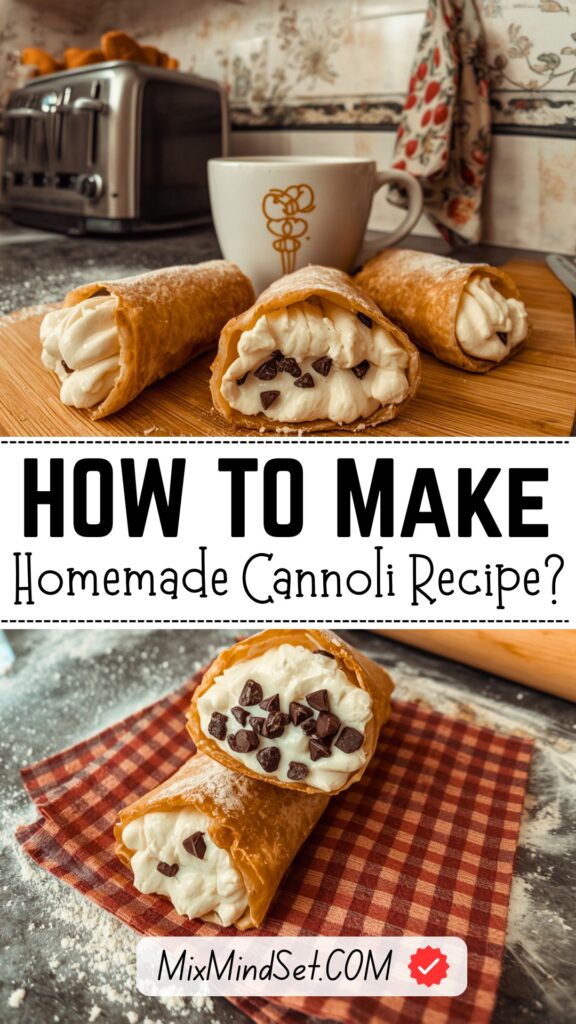
This easy homemade cannoli recipe skips the deep‑fryer fuss and uses a simple dough that rolls out like a dream. No special cannoli forms? No problem—you can use metal tubes or even wooden dowels. Let’s make bakery‑worthy cannoli in your own kitchen.
Ingredients You’ll Need
You’ll find most of these ingredients at any grocery store. The star is full‑fat ricotta—draining it well is the secret to a thick, pipeable filling.
For the Cannoli Shells
| Ingredient | Amount | Notes |
|---|---|---|
| All‑purpose flour | 2 cups (240g) | |
| Granulated sugar | 3 tbsp | |
| Unsalted butter | 2 tbsp | Cold, cut into small pieces |
| Egg yolk | 1 large | |
| White wine (or Marsala) | 1/2 cup | Traditional; use milk + 1 tsp vinegar for non‑alcoholic |
| Vanilla extract | 1/2 tsp | |
| Salt | 1/4 tsp | |
| Vegetable or canola oil | For frying | About 4 cups |
For the Ricotta Filling
| Ingredient | Amount | Notes |
|---|---|---|
| Whole milk ricotta cheese | 2 cups (16 oz) | Drain overnight if watery |
| Powdered sugar | 3/4 cup (90g) | Sifted |
| Vanilla extract | 1 tsp | |
| Mini chocolate chips | 1/3 cup | Plus more for garnish |
| Orange zest (optional) | 1 tsp | Adds brightness |
| Cinnamon | 1/4 tsp | Optional |
For Finishing
| Ingredient | Amount |
|---|---|
| Powdered sugar | For dusting |
| Chopped pistachios or chocolate chips | For ends (optional) |
No white wine? Substitute with whole milk plus 1 tsp of white vinegar. Let sit for 5 minutes before using.
How to Make Homemade Cannoli? (Step by Step)
Make the dough first, then let it rest while you prepare the filling and heat the oil.
1. Make the Dough
In a large bowl, whisk together flour, sugar, and salt. Cut in the cold butter using a pastry blender or your fingertips until the mixture looks like coarse crumbs. In a small bowl, whisk egg yolk, wine (or milk mixture), and vanilla.
Pour into the flour mixture and stir until a shaggy dough forms. Turn onto a lightly floured surface and knead gently for 2–3 minutes until smooth. Wrap in plastic and refrigerate for at least 30 minutes (or up to 2 hours).
2. Prepare the Ricotta Filling
Important: If your ricotta looks wet, line a fine‑mesh sieve with cheesecloth or a coffee filter, add the ricotta, and let it drain over a bowl in the refrigerator for 4 hours or overnight. Skip this step and your filling will be runny.
In a medium bowl, combine drained ricotta, sifted powdered sugar, vanilla, orange zest (if using), and cinnamon. Stir until smooth. Fold in mini chocolate chips. Cover and refrigerate until ready to use.
3. Roll and Cut the Dough
On a lightly floured surface, roll the dough very thin—about 1/8 inch thick. Using a 4‑inch round cutter (or a glass), cut out circles. Stretch each circle slightly into an oval shape.
Wrap each oval around a cannoli tube (or a metal tube, wooden dowel, or even a thick marker wrapped in foil). Seal the overlapping edge with a dab of water or egg white.
4. Fry the Shells
Heat oil in a deep pot to 350°F (175°C). Carefully lower 2–3 wrapped tubes into the oil. Fry for 1–2 minutes until golden brown, turning once. Remove with tongs and drain on paper towels.
Let cool for 1–2 minutes, then gently slide the shell off the tube (use a kitchen towel to hold the hot tube). Repeat with remaining dough. Let shells cool completely before filling.
Pro tip: Fry shells in batches so the oil temperature doesn’t drop. Keep finished shells on a wire rack—not paper towels—to stay crisp.
5. Fill the Cannoli
Transfer the chilled ricotta filling to a piping bag (or a zip‑top bag with the corner snipped off). Pipe filling into one end of a cooled shell, then the other end, until the filling just peeks out of both sides. Dip the exposed filling into mini chocolate chips or chopped pistachios if desired.
6. Serve Immediately
Dust generously with powdered sugar. Cannoli are best eaten within 1–2 hours of filling, or the shells soften.
Pro tip: Fill cannoli just before serving. Keep unfilled shells in an airtight container at room temperature for up to 3 days. Keep filling refrigerated separately.
Video Guide 📺
Tips for Perfect Cannoli (And Mistakes to Avoid)
Cannoli have a few non‑negotiable steps. Follow these and you’ll nail it.
✅ Do This for Crispy, Authentic Shells
- Roll the dough paper‑thin – Thick dough = heavy, doughy shells. You should almost see through it.
- Use a neutral oil with a high smoke point – Vegetable, canola, or peanut oil. Olive oil will burn.
- Drain the ricotta thoroughly – This is the #1 rule. Wet ricotta = runny filling that leaks out.
- Fill just before serving – Filled cannoli become soggy after a few hours. Keep shells and filling separate until the last minute.
❌ Common Mistakes
| Mistake | Why It Happens | Fix |
|---|---|---|
| Shells are tough, not crisp | Dough rolled too thick | Roll to 1/8 inch or thinner |
| Bubbles on shells | Air trapped in dough | Prick dough with a fork before frying |
| Shells fall off tubes | Not sealed well | Use egg white as “glue” on the overlap |
| Filling is watery | Ricotta not drained | Drain overnight in the fridge |
| Shells absorb oil and get greasy | Oil not hot enough | Maintain 350°F; don’t overcrowd |
Pro tip: For extra flavor, add 1 tbsp cocoa powder to the dough for chocolate cannoli shells. Reduce flour by 1 tbsp to balance.
Frequently Asked Questions
Can I make cannoli without cannoli tubes?
Yes. Use metal or wooden dowels about 1 inch in diameter. Wrap foil around a thick marker as a last resort. Or roll dough into a cylinder shape and fry without a tube—but the shape won’t be classic.
Can I bake cannoli shells instead of frying?
Baked shells are possible but not traditional. Brush rolled dough with oil, wrap around tubes, and bake at 375°F (190°C) for 10–12 minutes. They’ll be crisp but more like cookies than fried pastry.
What’s the best ricotta for cannoli?
Full‑fat, whole milk ricotta is essential. Avoid part‑skim or “light” ricotta—they’re too watery. If you can find sheep’s milk ricotta, it’s even better.
How long do homemade cannoli shells last?
Unfilled shells stored in an airtight container at room temperature stay crisp for up to 3 days. Do not refrigerate unfilled shells—they absorb moisture and soften.
Can I freeze cannoli shells?
Yes. Cool fried shells completely, then freeze in a single layer on a baking sheet. Transfer to a freezer bag for up to 2 months. Thaw at room temperature before filling. Do not freeze filled cannoli.
Can I use mascarpone instead of ricotta?
You can do a half ricotta, half mascarpone blend for an extra creamy filling. But pure mascarpone is too heavy and fatty. Stick with drained ricotta for authentic texture.
Why did my shells crack when frying?
The dough was too dry or not rested enough. Make sure to knead until smooth and rest for at least 30 minutes. Also, roll gently without stretching the dough too aggressively.
Conclusion
Cannoli look like they require a trip to a fancy Italian bakery. But this easy homemade cannoli recipe proves otherwise. The dough comes together in minutes, the filling is just stirred together, and the frying takes less time than you’d think.
Make them for a holiday gathering, a birthday, or just because you deserve something crispy, creamy, and completely irresistible. Just don’t forget the powdered sugar cloud on top.
Now go roll, fry, and fill.
— Fatima