41+ Cardiac Diet Recipes | Heart Healthy Food
If you or someone you love has been diagnosed with heart disease, high cholesterol, or high blood pressure, the word “diet” can feel overwhelming.
But here’s the truth: eating for your heart doesn’t mean eating boring, bland, or depriving meals. In fact, a cardiac diet is one of the most delicious and satisfying ways to eat — when you know what to put on your plate.
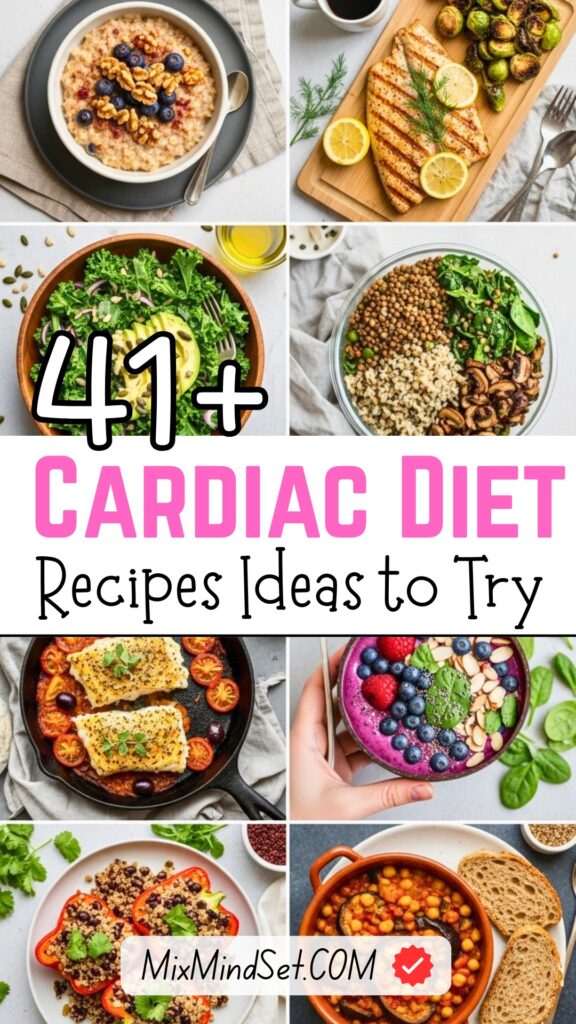
A heart-healthy diet focuses on whole foods: colorful vegetables, fiber-rich fruits, lean proteins, whole grains, and healthy fats like olive oil and avocados. At the same time, you’ll reduce saturated fat, trans fat, sodium, and added sugars.
This guide gives you over 41 practical recipe ideas plus three complete, kitchen-tested recipes to get you started. Whether you’re cooking for yourself or your whole family, these meals are easy, affordable, and proven to support heart health.
What Is a Cardiac Diet? (The 5 Simple Rules)
A cardiac diet isn’t a single meal plan. It’s a set of eating principles that work together to lower your risk of heart attack, stroke, and other cardiovascular diseases.
The 5 Golden Rules
- Limit saturated fats – Found in red meat, butter, full-fat dairy, coconut oil, and palm oil. Replace with unsaturated fats like olive oil, nuts, and avocados.
- Eliminate trans fats – Found in fried fast foods, commercial baked goods, and margarine. Read labels for “partially hydrogenated oil.”
- Reduce sodium – Aim for less than 2,300 mg per day (ideally 1,500 mg). Cook from scratch and avoid processed foods.
- Increase fiber – Soluble fiber (oats, beans, apples, barley) helps lower cholesterol. Aim for 25-30g daily.
- Choose lean protein – Fish (especially fatty fish like salmon), skinless poultry, beans, lentils, and tofu over red and processed meats.
Key fact: Following a heart-healthy diet can lower your risk of a second heart attack by up to 30% — as effective as many medications.
Heart-Healthy Foods: Quick Reference Table
| Category | Eat Freely | Limit or Avoid |
|---|---|---|
| Vegetables | All fresh or frozen: leafy greens, broccoli, carrots, bell peppers, zucchini, cauliflower | Canned vegetables with added salt, creamy sauces |
| Fruits | Whole fruits: berries, apples, oranges, bananas, pears | Canned fruit in syrup, fruit juices |
| Whole grains | Oats, quinoa, brown rice, barley, whole wheat bread, buckwheat | White bread, white rice, sugary cereals |
| Proteins | Salmon, sardines, chicken (skinless), turkey, beans, lentils, tofu, edamame | Fatty beef, pork, lamb, sausage, bacon, fried chicken |
| Dairy | Low-fat or fat-free milk, yogurt, cottage cheese | Full-fat cheese, cream, butter, whole milk |
| Fats & oils | Olive oil, avocado oil, nuts, seeds, avocado | Butter, lard, coconut oil, palm oil |
| Beverages | Water, unsweetened tea, black coffee (moderate) | Soda, sweetened drinks, excess alcohol |
| Snacks | Fresh fruit, raw veggies, nuts (unsalted), popcorn (air-popped) | Chips, cookies, pastries, salted nuts |
41+ Cardiac Diet Recipe Ideas (By Meal)
Here are over 41 simple, heart-healthy meal ideas you can rotate throughout your week. Each idea follows cardiac guidelines: low saturated fat, low sodium, high fiber.
Breakfast Ideas (8 Ideas)
- Oatmeal with Berries & Walnuts – ½ cup rolled oats, ½ cup berries, 1 tbsp walnuts, cinnamon.
- Spinach & Tomato Egg White Scramble – 3 egg whites, 1 cup spinach, ¼ cup diced tomatoes, 1 slice whole grain toast.
- Greek Yogurt Parfait – ¾ cup plain low-fat Greek yogurt, ½ cup mixed berries, 1 tbsp ground flaxseed.
- Chia Seed Pudding – 3 tbsp chia seeds + 1 cup unsweetened almond milk, refrigerated overnight. Top with sliced banana.
- Avocado Toast – 1 slice whole grain bread, ¼ mashed avocado, sprinkle of hemp seeds, side of orange slices.
- Green Smoothie – 1 cup spinach, ½ banana, ½ cup frozen mango, 1 tbsp flaxseed, unsweetened almond milk.
- Quinoa Breakfast Bowl – ½ cup cooked quinoa, ½ cup unsweetened almond milk, 1 tbsp chopped pecans, ½ cup blueberries.
- Low-Fat Cottage Cheese Bowl – ½ cup low-fat cottage cheese, ¼ cup sliced peaches (in juice, drained), 1 tbsp sunflower seeds.
Lunch Ideas (12 Ideas)
- Quinoa & Black Bean Salad – ¾ cup quinoa, ½ cup black beans (rinsed), corn, bell peppers, cilantro, lime juice.
- Turkey & Avocado Wrap – Whole wheat tortilla, 3 oz sliced turkey breast, ¼ avocado, spinach, mustard.
- Leftover Salmon & Roasted Vegetables – Flaked salmon over mixed greens with lemon vinaigrette.
- Lentil Soup – 1.5 cups homemade or low-sodium lentil soup, side of whole grain crackers.
- Tuna Salad Lettuce Wraps – 1 can tuna (in water) mixed with plain Greek yogurt and diced celery. Serve in butter lettuce cups.
- Mediterranean Chickpea Salad – Chickpeas, cucumber, tomatoes, red onion (small), parsley, olive oil, lemon juice.
- Egg Salad on Whole Grain Bread – 2 hard-boiled eggs mashed with 1 tbsp plain yogurt and mustard.
- Roasted Vegetable & Hummus Plate – Roasted zucchini, bell peppers, eggplant with ¼ cup hummus and ½ cup cooked barley.
- Black Bean & Corn Salsa Bowl – ½ cup black beans, ¼ cup corn, diced avocado, salsa, over ½ cup brown rice.
- Grilled Chicken Salad – 3 oz grilled chicken breast, mixed greens, cucumber, cherry tomatoes, balsamic vinaigrette.
- Vegetable & Tofu Stir-Fry – 4 oz tofu, broccoli, snap peas, carrots, low-sodium soy sauce, served over ½ cup brown rice.
- Baked Potato with Toppings – 1 medium baked potato, ¼ cup low-fat cottage cheese, chives, black pepper.
Dinner Ideas (13 Ideas)
- Baked Salmon with Roasted Brussels Sprouts – 5 oz salmon, 1 cup Brussels sprouts (halved), ½ cup quinoa.
- Turkey & Kale Meatballs – 4 meatballs over zucchini noodles with no-sugar-added marinara.
- Chicken & Vegetable Stir-Fry – 4 oz chicken breast, 1 cup broccoli, ½ cup snap peas, low-sodium tamari. Serve with ½ cup brown rice.
- Lentil Shepherd’s Pie – Lentil-mushroom filling topped with mashed cauliflower and sweet potato.
- Grilled Shrimp Skewers – 5 large shrimp, 1 cup grilled asparagus, ½ cup cooked farro.
- Black Bean & Sweet Potato Chili – 1 cup chili made with black beans, sweet potatoes, diced tomatoes, chili powder.
- Baked Cod with Lemon & Dill – 5 oz cod, 1 cup steamed green beans, ½ cup brown rice.
- Stuffed Bell Peppers – Bell pepper filled with ground turkey, brown rice, and diced tomatoes, baked.
- Tofu & Broccoli Sheet Pan – Cubed tofu, broccoli florets, sesame oil, baked. Serve with ½ cup quinoa.
- Hearty White Bean & Kale Soup – Cannellini beans, kale, carrots, celery, low-sodium vegetable broth.
- Grilled Portobello Mushroom Burger – Large portobello cap marinated in balsamic, grilled, served on whole wheat bun with avocado and spinach.
- Salmon Cakes – Canned salmon mixed with breadcrumbs, egg, dill, pan-fried in olive oil. Serve with roasted sweet potato wedges.
- Vegetable Curry with Chickpeas – Light coconut milk, curry paste, chickpeas, cauliflower, spinach. Serve with brown rice.
Snack Ideas (6 Ideas)
- Apple slices (½ medium) with 1 tbsp peanut butter
- Handful of almonds (12) + 1 small orange
- Hard-boiled egg sprinkled with paprika
- Low-fat cottage cheese (½ cup) with cucumber slices
- Baby carrots with 2 tbsp hummus
- Plain Greek yogurt (½ cup) with 5 strawberries
- Air-popped popcorn (3 cups) – no butter
Heart-Healthy Desserts (4 Ideas)
- Baked Apple – Core an apple, fill with cinnamon and 1 tsp walnuts, bake at 375°F for 20 minutes.
- Dark Chocolate & Berries – 1 square (70%+ cocoa) with ½ cup fresh raspberries.
- Frozen Banana Bites – Slice banana, dip in plain Greek yogurt, freeze on parchment paper.
- Chia Seed Pudding (sweet version) – Made with almond milk and topped with sliced peaches.
3 Complete Cardiac Diet Recipes (Numbered)
Recipe 1: Lemon Herb Salmon with Quinoa
A perfect omega-3 rich dinner that’s ready in 20 minutes.
Ingredients:
| Ingredient | Amount |
|---|---|
| Salmon fillet | 5 oz |
| Lemon juice | 2 tbsp |
| Fresh dill (or 1 tsp dried) | 1 tbsp |
| Garlic powder | ¼ tsp |
| Black pepper | To taste |
| Olive oil | 1 tsp |
| Quinoa (cooked) | ½ cup |
| Roasted asparagus | 1 cup |
Instructions:
- Preheat oven to 400°F (200°C). Line baking sheet with parchment.
- Place salmon on sheet. Drizzle with olive oil and lemon juice. Sprinkle with dill, garlic powder, and pepper.
- Bake for 12-15 minutes until salmon flakes easily.
- Serve with ½ cup cooked quinoa and 1 cup roasted asparagus.
Nutritional Facts (per serving):
| Nutrient | Amount |
|---|---|
| Calories | 470 |
| Protein | 38g |
| Carbohydrates | 30g |
| Fiber | 5g |
| Saturated Fat | 2g |
| Total Fat | 22g (mostly unsaturated) |
| Sodium | 75mg |
| Omega-3 fatty acids | ~2.2g |
Recipe 2: Turkey & Black Bean Chili
Rich in fiber and lean protein. Make a big batch for leftovers.
Ingredients (makes 4 servings):
| Ingredient | Amount |
|---|---|
| Ground turkey (93% lean) | 1 lb |
| Black beans (rinsed, no salt added) | 1 can (15 oz) |
| Diced tomatoes (no salt added) | 1 can (14.5 oz) |
| Low-sodium tomato sauce | 1 can (8 oz) |
| Onion (diced) | ½ medium |
| Bell pepper (diced) | 1 |
| Chili powder | 1 tbsp |
| Cumin | 1 tsp |
| Garlic powder | ½ tsp |
| Low-sodium vegetable broth | 1 cup |
| Olive oil | 1 tbsp |
Instructions:
- Heat olive oil in a large pot over medium heat. Add onion and bell pepper, cook 5 minutes.
- Add ground turkey, cook until browned (about 7 minutes).
- Stir in chili powder, cumin, and garlic powder. Cook 1 minute.
- Add black beans, diced tomatoes (with juice), tomato sauce, and vegetable broth.
- Bring to a simmer, then reduce heat and cook for 20 minutes.
- Serve hot. Top with a dollop of plain Greek yogurt if desired.
Nutritional Facts (per serving – 1.5 cups):
| Nutrient | Amount |
|---|---|
| Calories | 380 |
| Protein | 32g |
| Carbohydrates | 38g |
| Fiber | 14g |
| Saturated Fat | 1.5g |
| Total Fat | 12g |
| Sodium | 240mg |
Recipe 3: Berry & Flaxseed Oatmeal
A heart-healthy breakfast that lowers cholesterol with soluble fiber.
Ingredients:
| Ingredient | Amount |
|---|---|
| Rolled oats | ½ cup |
| Low-fat milk or unsweetened almond milk | 1 cup |
| Ground flaxseed | 1 tbsp |
| Fresh or frozen berries | ½ cup |
| Walnuts (chopped) | 1 tbsp |
| Cinnamon | ¼ tsp |
Instructions:
- In a small saucepan, combine oats and milk. Bring to a simmer over medium heat.
- Reduce heat to low and cook for 5 minutes, stirring occasionally.
- Remove from heat. Stir in ground flaxseed and cinnamon.
- Top with berries and walnuts. Serve warm.
Nutritional Facts (per serving):
| Nutrient | Amount |
|---|---|
| Calories | 390 |
| Protein | 15g |
| Carbohydrates | 52g |
| Fiber | 13g |
| Saturated Fat | 1.5g |
| Total Fat | 15g |
| Sodium | 75mg |
5 Common Mistakes on a Cardiac Diet
1. Cutting out all fats.
Healthy unsaturated fats (olive oil, nuts, avocado, fatty fish) are essential for heart health. They lower bad cholesterol and reduce inflammation. Solution: Include a small serving of healthy fat at every meal.
2. Relying on processed “low-fat” foods.
Low-fat cookies, frozen dinners, and crackers often replace fat with sugar, sodium, and refined flour — all bad for your heart. Solution: Eat whole foods. Low-fat dairy is fine; low-fat processed snacks are not.
3. Ignoring portion sizes of heart-healthy foods.
Nuts, avocado, and whole grains are healthy, but calories still count. Overeating leads to weight gain, which strains the heart. Solution: Use measuring cups for grains and nuts until you learn portion sizes.
4. Not reading sodium labels on “healthy” foods.
Canned beans, broths, and even bread can be surprisingly high in sodium. Solution: Choose “no salt added” or “low sodium” versions. Rinse canned beans.
5. Drinking your calories.
Fruit juice, sweetened coffee drinks, soda, and alcohol add sugar and empty calories. Solution: Stick to water, unsweetened tea, and black coffee. If you drink alcohol, limit to 1 drink daily (women) or 2 (men).
Frequently Asked Questions
Can I ever eat red meat on a cardiac diet?
Yes, but rarely and in small portions. Choose lean cuts (sirloin, tenderloin, 93% lean ground beef) and limit to 3-4 oz, no more than once or twice per week. Better yet, replace red meat with fish or beans most days.
Is coffee allowed?
Moderate coffee (1-2 cups daily) is fine for most people with heart disease. Avoid adding cream, sugar, or flavored syrups. If you have high blood pressure, monitor your response — some people see a temporary spike.
What about eggs? Are they bad for cholesterol?
For most people, dietary cholesterol in eggs has a small effect on blood cholesterol. The bigger concern is what you eat with eggs (butter, bacon, cheese). Solution: Enjoy 1 whole egg daily or use 2 egg whites for every whole egg.
Can I still eat out at restaurants?
Yes, but choose wisely. Look for grilled, baked, steamed, or broiled dishes. Ask for sauces and dressings on the side. Request no added salt. Avoid fried foods, creamy sauces, and large portions.
How long until I see results in my cholesterol or blood pressure?
Many people see improvements in 4-6 weeks of consistent eating. Cholesterol levels can drop 10-20%, and blood pressure can decrease by 5-10 mmHg. For best results, combine diet with regular physical activity (150 minutes of moderate exercise weekly).
Do I need to take fish oil supplements?
Eating fatty fish (salmon, mackerel, sardines) twice a week provides enough omega-3s for most people. If you don’t eat fish, talk to your doctor about a supplement. High doses of fish oil can interact with blood thinners.
Sample 1-Day Cardiac Diet Meal Plan
| Meal | Food | Sodium (approx) |
|---|---|---|
| Breakfast | Berry & flaxseed oatmeal (no added salt) | 75 mg |
| Morning snack | 1 apple + 1 tbsp peanut butter | 5 mg |
| Lunch | Quinoa & black bean salad (homemade) | 120 mg |
| Afternoon snack | Handful of almonds + 1 orange | 5 mg |
| Dinner | Lemon herb salmon with quinoa and asparagus | 75 mg |
| Evening snack | ½ cup plain Greek yogurt with berries | 60 mg |
| Total | ~340 mg (well below 1,500 mg target) |
Final Thoughts: Small Changes, Big Heart Protection
You don’t need to overhaul your kitchen overnight. Start with one cardiac-friendly meal each day. Swap butter for olive oil. Replace white rice with quinoa. Add a serving of beans to your soup. Eat an apple instead of a cookie.
Your heart has been beating for you every second of your life. It’s time to return the favor — not with drastic restrictions, but with delicious, nourishing foods that make you feel good.
Every heart-healthy bite is an investment in more years, more energy, and more life.
Disclaimer: This article is for informational purposes only and does not constitute medical advice. If you have heart disease, high cholesterol, high blood pressure, or take medications (including blood thinners), consult your doctor or a registered dietitian before making significant dietary changes.