How to Get Dried Paint Out of Clothes?
Remove dried paint from clothes using simple household items like rubbing alcohol, vinegar, and dish soap. This guide covers easy methods for water-based and oil-based paints so you can save your favorite shirt. #LaundryHacks #StainRemoval #DIYCleaning #PaintStains #SaveYourClothes
I still remember the day I ruined my favorite shirt with a blob of dried paint. I thought it was a lost cause. I tossed it in the back of my closet, convinced there was no way to fix it.
But years later, I learned that dried paint is not permanent. You just need the right approach. Now I know exactly how to tackle those stubborn stains, and I want to share what I have learned.
First, Know What Kind of Paint You Are Dealing With
Before you start cleaning, you need to know what type of paint you are dealing with. Different paints need different methods. Paint is either water-based or oil-based.
If you are not sure, check the paint can label. It will tell you if it is water-based or oil-based.
The General Approach (Works for Both Types)
No matter what type of paint you are dealing with, these steps are a good starting point.
Step 1: Scrape Off the Excess
Use a dull knife, a spoon, or an old credit card to gently scrape away as much dried paint as possible. Do not press too hard. You do not want to damage the fabric. Be patient and take your time.
Step 2: Test First
Always test your cleaning solution on a small, hidden spot on the garment first. This makes sure the cleaner does not damage or discolor the fabric.
Step 3: Never Use Heat
This is the golden rule. Do not put the garment in the dryer until you are absolutely sure the stain is gone. Heat will set the stain permanently. Air dry the garment and check the stain before you even think about using the dryer.
Method 1: For Water-Based Paint (Acrylic, Latex, Craft Paint)
Water-based paints are the easiest to remove because they dissolve in water. Here is how I do it.
What You Need
Step-by-Step
Step 1: Use a dull knife or spoon to scrape off any loose, dried paint flakes.
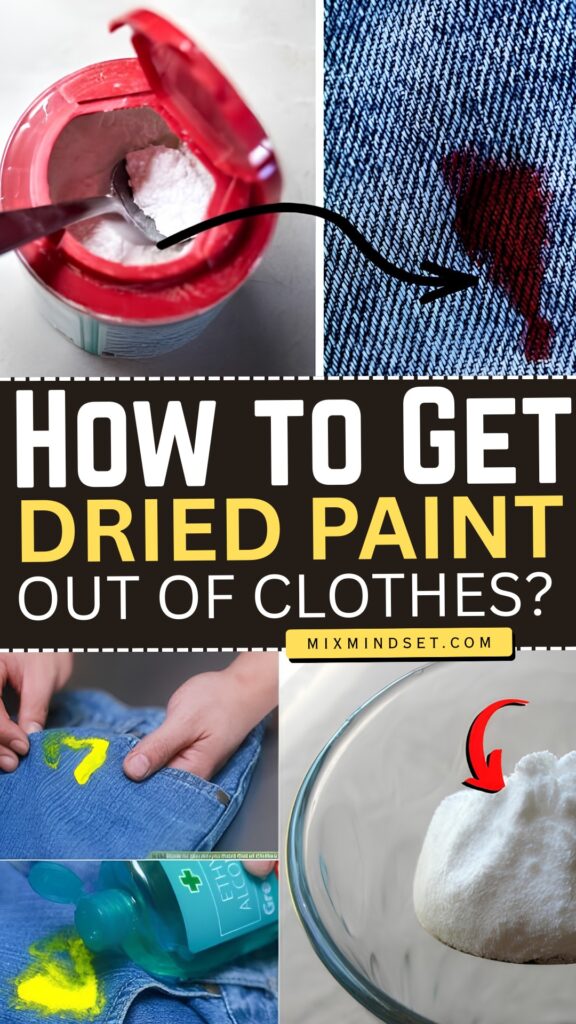
Step 2: Pour rubbing alcohol directly onto the paint stain. Make sure the stain is completely saturated. You can also use hairspray or hand sanitizer if you do not have rubbing alcohol.
Step 3: Let it sit for 5 to 10 minutes. The alcohol will start to break down the paint.
Step 4: Use a soft toothbrush to gently scrub the stain. You will see the paint starting to lift off the fabric.
Step 5: Rinse the area with warm water.
Step 6: Apply a little dish soap or laundry detergent to the stain and work it in with your fingers.
Step 7: Wash the garment in the washing machine on the warmest setting the fabric can handle.
Step 8: Air dry and check if the stain is gone. If it is still there, repeat the process.
My personal experience: The first time I used rubbing alcohol on a dried acrylic paint stain, I was shocked at how well it worked. The paint literally crumbled off as I scrubbed. Now I always keep rubbing alcohol in my laundry room.
Alternative: Rubbing Alcohol and Baking Soda Paste
For stubborn stains, mix rubbing alcohol, baking soda, and water to form a thick paste. Apply the paste to the stain and let it dry for 10 to 15 minutes. Rinse with warm water and wash as usual. The baking soda helps lift the paint without damaging the fabric.
Alternative: Vinegar Soak
White vinegar can also soften dried paint. Soak the stained area in white vinegar for 15 to 20 minutes, then scrub gently with a soft brush. You can also add a cup of white vinegar to the wash cycle for extra stain-fighting power.
Method 2: For Oil-Based Paint (Gloss Paint, Enamel)
Oil-based paints are tougher to remove. They need a stronger solvent.
What You Need
Step-by-Step
Step 1: Work in a well-ventilated area. Open a window or go outside.
Step 2: Put on rubber gloves to protect your hands.
Step 3: Turn the garment inside out and place it on clean rags or paper towels.
Step 4: Apply a small amount of turpentine or paint thinner to the back of the stain.
Step 5: Blot the stain with a clean rag. Do not rub. Rubbing can spread the paint. Keep blotting until no more paint lifts.
Step 6: Rinse the area with warm water.
Step 7: Apply dish soap or laundry detergent directly to the stain and let it soak in hot, soapy water overnight.
Step 8: The next day, rinse thoroughly and wash the garment in the washing machine.
Step 9: Air dry and check if the stain is gone.
Important: Never pour solvents directly into the washing machine. It is not safe.
Quick Reference Table: Which Method to Use
Important Tips to Remember
- Do not rub the stain. Rubbing spreads the paint and pushes it deeper into the fibers.
- Check the care label. Always follow the washing instructions on your garment.
- Do not use hot water on fresh stains. Heat can set the stain. Use cold water for rinsing.
- Do not put the garment in the dryer until the stain is completely gone. Heat will set the stain permanently.
- Test on a hidden spot first. This prevents damage or discoloration.
- Be patient. Dried paint stains may need more than one treatment.
My Personal Stain Removal Routine
Here is what I actually do when I find dried paint on my clothes. You can copy this.
Step 1: I check the paint type. If it is water-based, I grab the rubbing alcohol. If it is oil-based, I grab the turpentine.
Step 2: I scrape off as much dried paint as I can with a dull knife.
Step 3: I apply the right solvent and let it sit.
Step 4: I scrub gently with a toothbrush.
Step 5: I rinse and wash the garment.
Step 6: I air dry and check the stain. If it is still there, I repeat the process.
Since I started doing this, I have saved several shirts that I thought were ruined. It takes a little patience, but it is worth it.
The Bottom Line
Dried paint does not have to ruin your clothes. Water-based paints come out with rubbing alcohol and a little scrubbing. Oil-based paints need turpentine or paint thinner. The key is to identify the paint type, act carefully, and never use heat until the stain is completely gone.
I used to think dried paint was permanent. Now I know better. Your clothes can be saved. Try these methods and see the difference for yourself.