How to Save Marigold Seeds the Right Way?
Save marigold seeds the right way with this simple, step-by-step guide. From choosing open-pollinated varieties to drying and storing, this covers everything you need to grow free flowers year after year. #SaveMarigoldSeeds #SeedSaving #FlowerGarden #GardeningTips #DIYGarden
Marigolds are one of the easiest and most rewarding flowers to grow, and they are also among the simplest seeds to save. A single dried flower head can hold dozens of seeds, which means one healthy plant can give you enough seeds to fill your entire garden next year, plus plenty to share with friends.
The first time I tried saving marigold seeds, I made the classic beginner mistake—I harvested them too early.
The seeds were pale and soft, and none of them germinated the following spring. I was so disappointed. Then I learned the golden rule of seed saving: let the flower dry completely on the plant before you pick it.
The next year, I waited until the petals were brown and crispy, the seed heads were dry and brittle, and the seeds inside had turned dark. Those seeds grew into the most beautiful marigolds I had ever grown. Now I save seeds every year and never buy marigold packets again.
Why Save Marigold Seeds?
Saving your own seeds has some real advantages:
- Saves money. You never have to buy marigold seeds again.
- Preserves your favorites. If you have a marigold with a color or size you love, you can keep it going year after year.
- Adapts to your garden. Over time, seeds from plants grown in your climate become better suited to your local conditions.
- Sustainable. It reduces waste and reliance on commercial seed suppliers.
What Type of Marigold Do You Have?
Before you start, it helps to know what you’re growing:
| Type | Scientific Name | Characteristics |
|---|---|---|
| African Marigold | Tagetes erecta | Tall plants (up to 3 feet), large round blooms |
| French Marigold | Tagetes patula | Compact plants (6-18 inches), smaller flowers |
| Signet Marigold | Tagetes tenuifolia | Delicate, lacy leaves; edible flowers |
The seed-saving process is the same for all types.
Heirloom vs. Hybrid
If you grow heirloom or open-pollinated marigolds, the seeds will produce plants that look just like the parent.
If you grow hybrid marigolds, the seeds may produce plants that look different—they can revert to one of the parent varieties. You’ll still get marigolds, but they might not look exactly like what you planted. If you don’t mind a little surprise, go ahead and save them anyway.
How to Save Marigold Seeds: Step-by-Step
Step 1: Choose the Best Plants
Select your healthiest, most vigorous marigold plants. Look for strong growth, abundant blooms, and the colors or traits you love. Avoid saving seeds from weak, diseased, or stunted plants, as those traits can carry over to next year’s flowers.
Step 2: Stop Deadheading
This is the hardest part for many gardeners. Instead of removing spent flowers, leave them on the plant. The flowers need to stay on the plant until they have completely dried out and the seeds have fully matured.
Step 3: Wait for the Right Time
This is the most important step. The seeds are ready when:
- The petals have turned brown, dry, and shriveled.
- The flower head feels crispy and brittle to the touch.
- The base of the flower (the seed pod) has turned brown.
- The seeds inside have gone dark (not pale).
In late summer or fall, this usually happens about 2-3 weeks after the flower has faded. If you live in a rainy area, you may need to harvest the seed heads while they’re still slightly green on the bottom to prevent them from molding.
My advice: I made the mistake of harvesting too early for two seasons in a row. Now I use a simple test—I gently squeeze the flower head. If it feels dry and crumbly, it’s ready. If there’s any moisture or flexibility, I wait another week.
Step 4: Harvest the Seed Heads
On a dry, sunny day, use clean scissors or your fingers to snip off the dried flower heads. Place them in a bowl, paper bag, or envelope. Avoid harvesting after rain or early morning dew, as moisture can cause mold.
Step 5: Separate the Seeds from the Pod
Now it’s time to extract the seeds:
- Pull off the dried petals and set them aside for composting.
- Split or peel the seed pod open with your fingers. When the pods are dry, this is very easy.
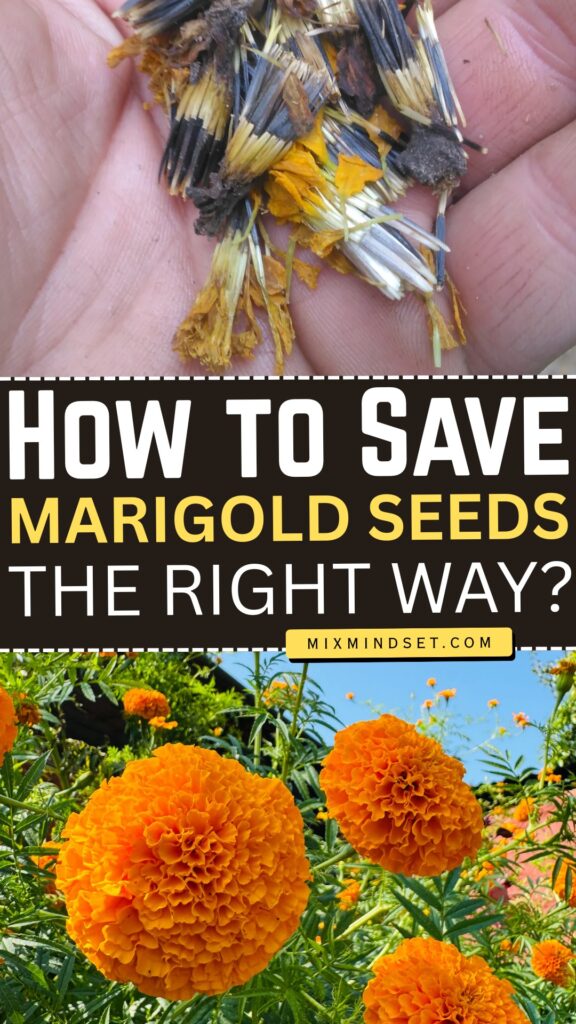
- Remove the seeds. Marigold seeds are long and thin, almost like porcupine quills. They have a dark or black tip and a cream or white top.
- Pick out any leftover pieces of petals or pod.
Step 6: Dry the Seeds Thoroughly
This step is critical. Even if the seeds feel dry, they still have internal moisture that can cause them to mold in storage.
Spread the seeds in a single layer on a plate, paper towel, or cloth. Leave them in a warm, dry, well-ventilated area out of direct sunlight for 1 to 2 weeks.
How to test if they’re dry: Try to snap a seed in half. If it breaks cleanly, it’s dry enough. If it bends, it needs more time.
My advice: I once rushed the drying process and stored seeds that still had moisture in them. A few weeks later, I opened the jar and found mold. Now I always let them dry for at least two weeks, no exceptions.
Step 7: Store the Seeds Properly
Once the seeds are completely dry, it’s time to store them.
| Storage Container | Pros | Cons |
|---|---|---|
| Paper envelope or brown paper bag | Allows airflow, prevents moisture buildup | Not rodent-proof |
| Glass canning jar with lid | Airtight, protects from pests | Must be completely dry to prevent mold |
| Airtight plastic container | Good for long-term storage | Must be completely dry |
Do not store seeds in plastic baggies unless they are completely dry—trapped moisture can cause mold.
Label your container with the variety (if known) and the date you collected them. Marigold seeds typically remain viable for up to 2 years when stored properly.
Store in a cool, dark, dry place—a pantry, closet, or cupboard works well. Avoid areas that get hot, humid, or fluctuate in temperature. Check the seeds every month or so to make sure they’re still dry.
Quick Reference Table: Marigold Seed Saving at a Glance
| Step | What to Do | When |
|---|---|---|
| 1. Choose plants | Pick healthiest, most vigorous marigolds | Throughout growing season |
| 2. Stop deadheading | Leave spent flowers on the plant | Late summer to fall |
| 3. Wait for maturity | Petals brown, flower heads crispy, seeds dark | Late summer to fall |
| 4. Harvest | Snip dry flower heads on a dry day | After flowers are fully dry |
| 5. Separate | Remove petals, split pods, extract seeds | After harvesting |
| 6. Dry | Spread seeds in single layer for 1-2 weeks | After separating |
| 7. Store | Label and keep in cool, dark, dry place | After drying |
Common Mistakes to Avoid
My Personal Marigold Seed Saving Routine
Here is what I actually do in my garden. You can copy this.
Late summer:
- I stop deadheading my marigolds.
- I let several flowers on each plant go to seed.
- I watch for the petals to turn brown and the seed heads to become crispy.
Early fall:
- On a dry day, I snip off the dried flower heads.
- I bring them inside and pull out the seeds.
- I spread the seeds on a paper plate and leave them on my kitchen counter for two weeks.
Winter:
- I store the seeds in labeled paper envelopes in a cool, dark cupboard.
- I check them once a month to make sure they’re still dry.
Spring:
- I sow my saved marigold seeds indoors 4-6 weeks before the last frost.
- I enjoy hundreds of free marigolds all summer long.
Since I started this routine, I have not bought marigold seeds in years. My garden is full of beautiful, healthy marigolds that come back every year, and I have enough seeds to share with everyone I know.
The Bottom Line
Saving marigold seeds is one of the easiest and most rewarding seed-saving projects you can try.
The process is simple: let the flowers dry completely on the plant, harvest the crispy brown heads, separate the dark-tipped seeds, dry them thoroughly for a couple of weeks, and store them in a cool, dark place in a labeled container.
The most important step is patience—waiting until the seeds are fully mature before harvesting. Once you get the timing right, you will never need to buy marigold seeds again.
Your garden will be filled with beautiful, free flowers year after year, and you will have the satisfaction of knowing you grew them from seeds you saved yourself.