How to Grow Perfect Dahlias from Start to Finish?
Grow stunning dahlias that bloom from midsummer until the first frost with this complete start-to-finish guide. From choosing the right tubers and planting in spring to staking, deadheading, and winter storage, this covers everything you need for a spectacular display. #DahliaGrowing #FlowerGarden #GardeningTips #CutFlowers #SummerBlooms
A few summers ago, I was determined to grow dahlias. I planted a few tubers in my garden, watered them religiously, and waited. And waited.
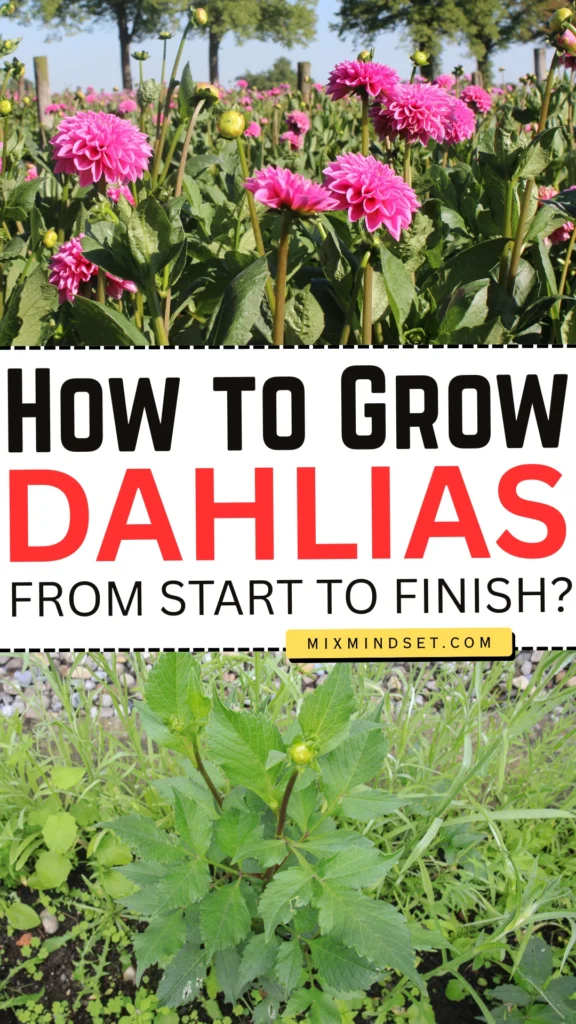
By August, my plants were tall and leafy, but there wasn’t a single flower in sight. I was so frustrated.
Then a fellow gardener showed me the secret: dahlias need time, and they need the right care at the right time. Once I started feeding them properly and deadheading regularly, the blooms exploded. That first big dahlia flower made all the waiting worthwhile.
Now I grow dahlias every year, and I want to share everything I’ve learned so you can avoid my mistakes and grow perfect blooms from start to finish.
Why Grow Dahlias?
Dahlias are one of the most rewarding flowers you can grow. They produce show-stopping blooms in a staggering range of colors, sizes, and forms. From tiny pompons to giant “dinnerplate” blooms that can reach up to 30cm (1 foot) across, there is a dahlia for every garden. They flower from midsummer right through to the first frosts, lighting up borders when many other plants have faded. They are also excellent cut flowers, lasting beautifully in a vase. The most generous flowers in the summer garden—plant a single tuber in May, and by July it will be throwing out armfuls of blooms that keep coming until the frost cuts them down.
What You Will Need
Choosing the Right Dahlias
With so many varieties available, choosing can feel overwhelming. Here are the main flower forms to consider:
For beginners: Start with a reliable variety like ‘Bishop of Llandaff’ (small scarlet flowers, dark foliage, about 3 feet tall) or ‘Bonne Esperance’ (a compact dwarf variety, about 1 foot tall, perfect for containers). If you want show-stopping blooms, try a dinnerplate variety like ‘Kidd’s Climax’.
Step 1: When to Plant
Dahlias are tender perennials from Central America and Mexico. They cannot survive frost and will die at the first freeze.
The simple rule: Plant your dahlias after all danger of frost has passed and the soil has warmed to at least 60°F (15°C). This is usually around the same time you would plant tomatoes.
The Two Planting Approaches
Starting indoors: Plant tubers in large pots filled with free-draining potting compost, placing them about halfway down with the buds (eyes) only lightly covered. Keep them on a windowsill or in a frost-free greenhouse. Keep the compost moist but not wet. This gives them a head start and encourages earlier flowering. Plant outdoors in late May or early June when it’s safe.
Step 2: How to Plant
Choosing the Right Spot
Dahlias need full sun—at least 6 hours of direct sunlight daily. A south or west-facing border is ideal. Morning sun is especially important as it helps dry dew from leaves and prevents fungal problems. Plants grown in partial shade will produce fewer flowers. They also need well-drained soil; poor drainage will cause the tubers to rot. If your soil is heavy clay, work in compost or aged manure to improve drainage, or consider raised beds or containers.
Planting Step-by-Step
- Dig a hole. Dig a hole that is 4 to 8 inches deep and wide enough to accommodate the tuber.
- Prepare the soil. Mix compost or well-rotted manure into the soil at the bottom of the hole. Add a balanced fertilizer (like 10-10-10) at planting.
- Place the tuber. Lay the tuber horizontally in the hole with the “eye” (the growing point) facing upward. The tuber should be about 2 inches from the stake.
- Plant at the right depth. Cover the tuber with 3 to 5 inches of soil. Plant 12 to 16 inches apart for smaller varieties, and 18 to 24 inches for larger varieties.
- Insert stakes at planting time. This is crucial. Insert stakes at planting time to avoid damaging the tubers later.
- Water. Water thoroughly at planting. However, do not water again until growth appears. Overwatering before shoots emerge can cause the tubers to rot.
Step 3: Water and Feed for Spectacular Blooms
Watering
Once your dahlias are established, provide consistent moisture. The general rule is to water deeply once or twice a week, rather than giving them a daily light sprinkle. Deep watering encourages deep root growth, making plants more resilient. Aim for about 1-2 inches of water per week, including rainfall. Always water at soil level, not overhead, to prevent leaf diseases. Container-grown plants may need more frequent watering. Apply mulch around the plants to help retain moisture and keep roots cool.
Fertilizing
Dahlias are heavy feeders and need regular fertilization.
Fertilize container plants more frequently—every 2 to 3 weeks—as nutrients leach out more quickly.
Step 4: Stake and Support
Tall dahlia varieties can easily topple over in wind or under the weight of their blooms. Stake them early—preferably at planting time. Insert stakes next to the crown when you plant the tuber. As the plant grows, gently tie the stems to the stakes using soft material. Tie them at 12-inch intervals to keep them upright. This prevents damage to the tubers and keeps your plants looking their best.
Step 5: Pinch and Prune for More Blooms
Pinching (For Tall Varieties)
When the plant has reached 10 to 16 inches tall, pinch out the growing tip by cutting back to just above the 4th set of leaves. This encourages the plant to branch out, producing more stems and many more flowers. “Pot dahlias” (compact varieties) are naturally well-branched and do not require pinching.
Deadheading
Regular deadheading is essential for continuous blooming. Snip off fading flowers weekly—or more often during peak season. Unlike some flowers, you should cut each dahlia stem all the way back to the main branch. While you’ll sacrifice some flower buds in the process, this encourages the plant to produce nice, long stems with large blooms. This keeps the plant putting energy into producing new flower buds rather than seeds. Expect dahlias to take 90 to 100 days to start blooming from planting, which is mid-summer for many of us.
Step 6: Harvesting for the Vase
Dahlias make superb cut flowers. To harvest:
- Cut stems in the early morning when the flowers are fully hydrated.
- Use sharp secateurs and cut at a 45-degree angle.
- Cut stems long—the plant will produce more. Cut back to a side shoot or leaf node.
- Remove the lower leaves that would sit below the waterline in your vase.
- Place cut stems in warm water immediately.
- Change the vase water every 2-3 days. Dahlias can last 5-7 days in a vase.
Step 7: Overwintering—Protecting Tubers for Next Year
Dahlias are not hardy in most climates. In cold winter areas (zones 3-7), the tubers will not survive the ground and must be dug up and stored. In warmer zones (8-10), they may overwinter in the ground with a thick layer of mulch. Here’s how to store them:
Step 7.1: When to Lift
Wait for the first proper frost to blacken the foliage. Cut the stems down to about 4 inches (10cm) above ground level and leave the short stumps as handles. Act promptly—don’t leave the cut stems sitting in the ground for weeks, as water runs down the hollow stems and into the crown, causing rot. Lift within a few days of the frost.
Step 7.2: How to Lift
Use a garden fork rather than a spade—it’s less likely to slice through a tuber. Push the fork in about 30cm (12 inches) out from the stem stump, going straight down. Lever gently and work your way around the clump, loosening on all sides. Then lift the whole thing out. Don’t pull by the stem stumps—they snap off, and you lose the crown, where next year’s growth buds are. Shake off as much soil as you can.
Step 7.3: Cleaning and Drying
Wash off the remaining soil with a gentle spray of water. Allow the tubers to dry for a few days in a well-ventilated space—a shed or greenhouse bench works perfectly. Good air circulation is key! Remove any damaged or rotten tubers.
Step 7.4: Storing
Store the tubers in a cool, dark, frost-free place. The ideal temperature is 40°F to 50°F (5°C to 10°C). If it’s too warm, tubers dry out and shrivel; too cold, they freeze; too damp, they rot. Place the tubers in shallow trays, crates, or boxes filled with dry potting compost, coir, vermiculite, or peat moss, keeping them separated to improve airflow. Avoid using plastic bags as they trap moisture and lead to rot. Check every few weeks, removing any rotting tubers. Lightly mist those that shrivel.
Quick Reference Table: Dahlia Care at a Glance
| Task | When | What to Do |
|---|---|---|
| Plant tubers | After last frost, soil 60°F | Horizontal, eyes up, 3-5″ deep. |
| Water | Established plants | Deeply 1-2 times per week at soil level. |
| Fertilize | At planting, then every 3-4 weeks | Balanced at planting; bloom-boosting later. |
| Stake | At planting time | Insert stakes next to crown. |
| Pinch | At 10-16″ tall | Cut above 4th set of leaves. |
| Deadhead | Weekly | Cut stem back to main branch. |
| Harvest | Mid-summer to frost | Cut stems in the morning. |
| Lift tubers | After first hard frost | Use a fork, dig 12″ out from stem. |
| Store tubers | Over winter | 40-50°F, dry, frost-free. |
Troubleshooting: Common Problems and How to Fix Them
My Personal Dahlia Routine
Here is what I actually do in my garden. You can copy this.
Spring:
- I wait until the soil has warmed to 60°F and all danger of frost has passed.
- I dig a wide hole, plant the tuber horizontally with eyes up, and insert a stake at the same time.
- I water thoroughly at planting and then wait for shoots to appear before watering again.
Summer:
- I water deeply once a week, at soil level, and feed with a bloom-boosting fertilizer every 3-4 weeks.
- I tie the stems to the stakes as they grow.
- I deadhead every week, cutting stems back to the main branch.
Autumn:
- After the first hard frost, I cut the stems back and lift the tubers with a garden fork.
- I dry them for a few days in a well-ventilated spot.
- I store them in dry vermiculite in a cool, dark, frost-free place.
Winter:
- I check my stored tubers every month, removing any that are rotting and lightly misting those that are shriveling.
The Bottom Line
Growing dahlias is not complicated, but it does require a few key steps at the right time. Plant the tubers after the last frost in well-drained soil with plenty of sun. Water deeply but infrequently, feed with a bloom-boosting fertilizer, stake tall varieties early, and deadhead weekly to keep the flowers coming. At the end of the season, lift and store the tubers in a cool, frost-free place. Follow these steps, and you will be rewarded with armfuls of spectacular blooms from midsummer until the first frost.
I started with a few tubers that produced nothing but leaves. Now I have a garden full of stunning dahlias that keep blooming for months. You can do this too. Just follow these steps, and you’ll be cutting armfuls of your own gorgeous dahlias in no time.