How to Cook Frozen Salmon?
You come home from work. You open the freezer. You see a beautiful piece of frozen salmon. But it is rock hard. You did not thaw it. Now what? Do you order pizza? No. You can cook frozen salmon directly with no thawing. It takes about 20 minutes and tastes just as good as fresh.
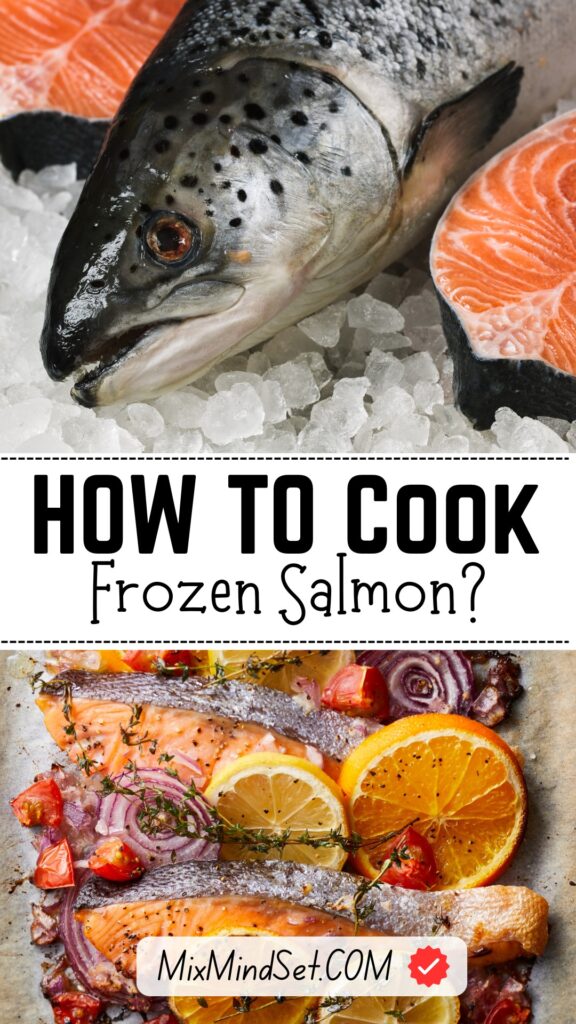
I’m Fatima. I used to think you had to thaw salmon first. Then I learned this simple method. Now I always keep frozen salmon in my freezer. It is healthy, fast, and so easy. Let me show you three ways to cook it perfectly.
Is It Safe to Cook Frozen Salmon Without Thawing?
Yes, it is completely safe. The USDA says you can cook fish straight from frozen. You just need to add a few extra minutes of cooking time. The salmon will be moist, flaky, and delicious. No need to plan ahead.
The only rule: do not cook frozen salmon in a slow cooker or microwave. Use the oven, stovetop, or air fryer.
Ingredients You’ll Need
| Ingredient | Amount (for 2 fillets) | Notes |
|---|---|---|
| Frozen salmon fillets | 2 (6 oz each) | Skin‑on or skin‑off – both work |
| Olive oil (or avocado oil) | 1‑2 tablespoons | Helps browning |
| Salt | ½ teaspoon | Kosher or sea salt |
| Black pepper | ¼ teaspoon | |
| Garlic powder (optional) | ½ teaspoon | Adds savory flavor |
| Paprika (optional) | ½ teaspoon | Adds color |
| Lemon wedges | For serving |
Pro tip: Buy vacuum‑sealed frozen salmon fillets without any ice crystals. Ice crystals mean the fish has thawed and refrozen, which hurts the texture.
How to Cook Frozen Salmon: 3 Easy Methods?
Method 1: Oven (Best for Even Cooking)
This is the most foolproof method. The gentle heat cooks the salmon evenly from frozen.
Step‑by‑Step:
- Preheat oven to 400°F (200°C). Line a baking sheet with foil or parchment paper.
- Rinse the frozen salmon under cold water for a few seconds. This removes any ice crystals. Pat dry with a paper towel.
- Brush or rub oil on both sides of each fillet. This stops sticking and helps browning.
- Season generously with salt, pepper, garlic powder, and paprika.
- Place on the baking sheet skin‑side down (if skin is on).
- Bake for 15‑20 minutes. At 15 minutes, check the thickest part. The salmon is done when it flakes easily with a fork and the inside is no longer translucent.
- Serve immediately with lemon wedges.
| Oven Temp | Time (frozen, 6 oz fillet) | Doneness Test |
|---|---|---|
| 400°F (200°C) | 15‑20 minutes | Flakes easily with a fork, internal temp 145°F |
Method 2: Pan‑Searing (Best for Crispy Skin)
This method gives you crispy, golden skin on the outside and tender inside. It works best with thinner fillets (1 inch or less).
Step‑by‑Step:
- Heat a non‑stick or cast‑iron skillet over medium‑high heat. Add 1 tablespoon of oil.
- Rinse and dry the frozen salmon. Season one side (the top) with salt and pepper.
- Place the salmon in the hot pan, seasoned‑side down. Do not move it.
- Cook for 6‑8 minutes on the first side. The bottom should become golden brown and crispy.
- Flip the salmon. Season the second side. Cook for another 5‑7 minutes until the thickest part flakes easily.
- Serve right away.
| Pan Heat | Time (first side) | Time (second side) | Total |
|---|---|---|---|
| Medium‑high | 6‑8 minutes | 5‑7 minutes | 11‑15 minutes |
Pro tip: Do not crowd the pan. Cook only 1‑2 fillets at a time so the pan stays hot.
Method 3: Air Fryer (Fastest, Crispiest)
The air fryer is the speed champion. It makes the outside crispy and the inside moist.
Step‑by‑Step:
- Preheat air fryer to 380°F (190°C).
- Rinse and dry the frozen salmon. Rub with oil and season.
- Place salmon in the air fryer basket in a single layer. Do not stack.
- Air fry for 10‑14 minutes, depending on thickness. No need to flip.
- Check for doneness – it should flake easily.
| Air Fryer Temp | Time (frozen) | Flip? |
|---|---|---|
| 380°F (190°C) | 10‑14 minutes | Not needed |
How to Tell When Frozen Salmon Is Done?
Do not guess. Use these methods.
The Fork Test (Easiest)
- Insert a fork into the thickest part of the salmon.
- Gently twist. The flesh should separate into big, moist flakes.
- If it looks raw and translucent inside, cook 2‑3 more minutes.
The Thermometer Test (Most Accurate)
- Insert a meat thermometer into the thickest part.
- 145°F (63°C) is the safe internal temperature.
- Remove from heat at 140°F – it will rise to 145°F while resting.
Pro Tips & Common Mistakes to Avoid
Do this ✅
- Rinse off ice crystals before cooking. Extra water makes the salmon steam, not sear.
- Pat dry with paper towels after rinsing. Dry surface = crispy skin.
- Cook to 145°F for safe, moist salmon. Overcooking makes it dry.
- Let it rest for 2‑3 minutes after cooking. The juices redistribute inside.
- Use a meat thermometer – it is the only way to be sure.
Avoid that ❌
- Thawing frozen salmon in warm water – it breeds bacteria.
- Cooking from frozen in a microwave – the texture becomes rubbery.
- Overcrowding the pan – the temperature drops, and the salmon steams.
- Forgetting to oil the pan – frozen salmon sticks more than fresh.
- Cooking skin‑side up first – for crispy skin, start with skin‑side down.
How to Season Frozen Salmon (Simple Ideas)
| Flavor | Seasoning Mix |
|---|---|
| Lemon Herb | Salt, pepper, garlic powder, dried dill, lemon zest |
| Spicy Cajun | Cajun seasoning, paprika, cayenne, garlic powder |
| Maple Mustard | Brush with mix of maple syrup + Dijon mustard before baking |
| Everything Bagel | Sprinkle with everything bagel seasoning |
Nutrition Facts (Per 6 oz frozen salmon fillet, cooked)
| Nutrient | Amount |
|---|---|
| Calories | ~310 kcal |
| Protein | ~39 g |
| Fat | ~16 g |
| Saturated Fat | ~3 g |
| Omega‑3 fatty acids | ~2 g |
| Carbohydrates | 0 g |
| Sodium | ~130 mg (without added salt) |
Frequently Asked Questions (FAQs)
Can I cook frozen salmon with skin on?
Yes. Skin‑on salmon is actually easier to cook from frozen. The skin acts as a barrier and helps keep the fish moist. For pan‑searing, start with skin‑side down to get it crispy.
How long does frozen salmon take to bake at 400°F?
About 15‑20 minutes for a 6 oz fillet. Thicker fillets (1.5 inches or more) may need 22‑25 minutes. Always check with a fork or thermometer.
Can I cook frozen salmon in a microwave?
You can, but the texture will be soft and rubbery, not flaky. Only use the microwave if you have no other option. Cover the salmon and cook in short bursts (2 minutes, then check).
Do I need to flip frozen salmon while baking?
No. When baking, you can leave it skin‑side down and not flip. The oven heat cooks it evenly. For pan‑searing, you must flip once.
Can I put frozen salmon directly into a hot pan?
Yes. That is how pan‑searing works. Do not add water to the pan. The high heat melts the ice quickly and starts browning the surface.
How do I store leftover cooked salmon?
Put leftovers in a sealed container in the fridge for up to 3 days. Eat cold on a salad, or reheat gently in a skillet with a splash of water. Do not microwave – it dries out.
Can I refreeze salmon after cooking it?
Yes, but the texture will suffer. Cool the cooked salmon completely, then freeze in an airtight container for up to 3 months. Thaw in the fridge overnight.
What to Serve with Frozen Salmon?
- Steamed rice or quinoa
- Roasted asparagus or broccoli
- Simple green salad with lemon vinaigrette
- Mashed potatoes
- Garlic butter noodles
Final Thoughts
Cooking frozen salmon without thawing is a lifesaver. You do not need to plan ahead. You do not need special skills. Just pick a method – oven, pan, or air fryer – season it, and cook for a few extra minutes. The result is moist, flaky, healthy salmon that tastes just like fresh.
The most important rules: rinse off ice, pat dry, use a thermometer, and do not overcook. Now you can keep frozen salmon in your freezer and have a delicious dinner ready in 20 minutes anytime.