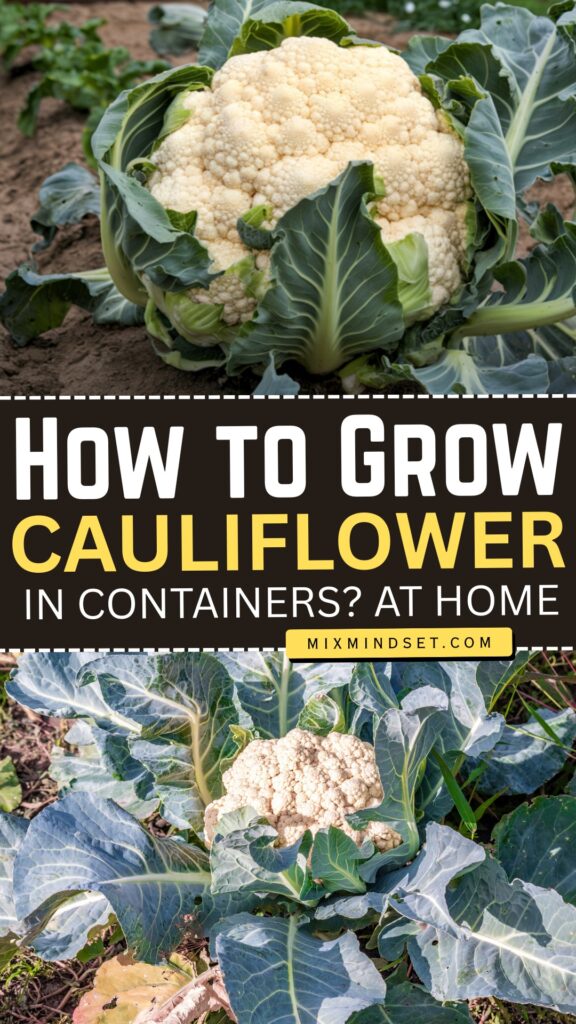
How to Grow Cauliflower in Containers?
Grow big, tasty cauliflower right on your patio or balcony. This beginner-friendly guide covers container size, soil, planting, watering, fertilizing, blanching, and harvesting—all in simple words. No garden bed needed. #ContainerGardening #GrowCauliflower #PatioVegetables #HomegrownFood #UrbanGardening
I remember the first time I tried to grow cauliflower. I planted it in a tiny pot, and the head came out smaller than my fist. I was so disappointed.
Then I learned that cauliflower needs more space than I thought, and the right care makes all the difference. Now I grow beautiful, big heads on my balcony every year. Let me show you how.
🧠 Can You Really Grow Cauliflower in a Pot?
Yes, you can. Cauliflower has a shallow root system, so deep pots are not necessary. You just need the right width and consistent care. When grown correctly, container cauliflower is often healthier than garden-grown plants because you have more control over the soil and pests.
Container gardening gives you a few big advantages:
- No garden bed needed. Perfect for balconies, patios, or small backyards.
- Better soil control. You can mix the perfect soil without worrying about what is already in your ground.
- Less disease. Soil-borne diseases stay in the ground. Fresh potting mix means a fresh start.
- Easy to move. If a heatwave hits, you can move your pots to a shaded spot.
📦 What You Will Need
Here is a quick shopping list before you start.
| Item | Details |
|---|---|
| Container | At least 12 inches deep and 18 inches wide. One plant per pot for standard varieties. |
| Potting mix | High-quality commercial potting mix (not garden soil). |
| Compost | For added nutrients and moisture retention. |
| Perlite or coarse sand | For drainage. |
| Cauliflower seeds or seedlings | Choose compact varieties for containers. |
| Fertilizer | Balanced liquid fertilizer (like 10-10-10) or organic options like fish emulsion. |
| Rubber bands or twine | For blanching later. |
| Watering can | With a gentle rose attachment. |
Step 1: Choose the Right Container
Do not guess on this. Size matters more than you think. A small pot will give you a small head.
| Container Size | Number of Plants | Best For |
|---|---|---|
| 18 inches wide x 12 inches deep | 1 plant | Standard varieties (e.g., Snowball) |
| 18–20 inches wide x 18 inches deep | 1 plant | Larger standard varieties |
| 24 inches wide x 12 inches deep | 1 plant | Bigger, more comfortable root space |
| 40 cm (about 16 inches) wide | Up to 3 plants | Compact varieties like Mini |
Most cauliflower varieties are reasonably large plants and need room to spread. I strongly recommend growing just one plant per container for standard types. For compact mini varieties, you can fit up to three in a larger 40 cm pot.
Material Matters Too
- Plastic and fabric pots: Hold moisture well. Lightweight and easy to move. Good for beginners.
- Terracotta or clay pots: Heavy and dry out very fast. I avoid these for cauliflower because the plant needs consistent moisture. If you use them, you will need to water much more often.
- Cement or stone pots: Heavy and hard to move. They hold moisture well but are permanent once placed.
Drainage Is Non‑Negotiable
Make sure your container has several drainage holes at the bottom. Without them, water pools at the bottom and causes root rot. If your pot does not have holes, drill some. I learned this after killing my first cauliflower by accident.
Step 2: Prepare the Right Soil Mix
Cauliflower is a heavy feeder. That means it eats a lot of nutrients. Your soil needs to be rich, loose, and well‑draining.
The Simple Soil Recipe
Here is the mix I use for every container cauliflower:
- 60% high-quality potting mix (not garden soil—garden soil is too heavy and can bring pests)
- 20% compost (for nutrients and moisture)
- 10% perlite (for drainage and air pockets)
- 10% vermiculite (to hold just enough moisture)
You can also add a handful of pelletised chicken manure mixed into the surface for an extra nutrient boost.
pH Level
Cauliflower prefers a slightly acidic to neutral pH, between 6.0 and 7.0. Most commercial potting mixes are already in this range. If you are mixing your own, you can buy a simple pH test kit to check.
Fill Your Container
Fill your pot to about 1 inch below the rim. This leaves room for watering without overflow. Gently pat down the soil so it is firm but not compacted.
Step 3: Choose the Best Cauliflower Variety for Containers
Not all cauliflowers are the same. Some grow huge, spreading leaves and need lots of space. For containers, you want compact or mini varieties.
| Variety | Days to Harvest | Special Features |
|---|---|---|
| Snowball Improved | 60–65 days | Classic white. Self-blanching leaves. Great for containers. |
| Mini / Tennis‑Ball | 50–60 days | Very compact. Perfect for small pots. Heads are small but tasty. |
| Cheddar | 70–75 days | Orange head. Sweeter flavor. No blanching needed. |
| Depurple | 70–80 days | Vibrant purple head. No blanching needed. Adds color to your plate. |
| Flame Star | 60 days | Orange head. Heat tolerant. Good for warmer climates. |
For beginners, I recommend Snowball Improved or any mini variety. They are forgiving and grow well in pots.
Step 4: Planting Your Cauliflower
You have two choices: start from seeds or buy seedlings from a nursery.
Option 1: Start from Seeds Indoors (Recommended)
Starting indoors gives you more control and a longer growing season.
When to start: Count backward from your last expected frost date. Start seeds 6 to 8 weeks before that date.
How to plant seeds indoors:
- Fill small seed trays or 3-inch pots with seed-starting mix.
- Plant seeds ¼ to ½ inch deep.
- Water gently and keep the soil moist but not soggy.
- Place in a warm spot. Seeds germinate best at around 70°F (21°C). You should see sprouts in 7 to 14 days.
- Once sprouts appear, move them to a sunny windowsill or under a grow light. They need at least 6 hours of light per day.
- When seedlings have 4 to 5 true leaves, they are ready to transplant into their permanent container.
Option 2: Buy Seedlings (Easiest)
If you do not want to start from seeds, buy healthy-looking seedlings from a garden center. Look for plants with dark green leaves and no yellowing or spots.
Transplanting into Your Container
- Fill your container with the soil mix, leaving room for the root ball.
- Dig a hole in the center as deep as the seedling’s root ball.
- Gently remove the seedling from its nursery pot. Be careful not to damage the roots.
- Place the seedling in the hole. The top of the root ball should be level with the soil surface. Do not bury the stem too deep.
- Fill in around the roots with more soil. Press down gently to remove air pockets.
- Water thoroughly until water runs out of the drainage holes.
🥬 My Personal Experience: The first time I transplanted a cauliflower seedling, I buried the stem too deep. The plant grew slowly and never formed a good head. Now I always make sure the soil line stays at the same level as it was in the nursery pot. That small change made a huge difference.
Step 5: Sunlight and Temperature
Cauliflower is a cool‑weather crop. It does not like heat. High temperatures will cause the plant to bolt, which means it flowers and stops growing a head.
Light Needs
Place your container where it receives 6 to 8 hours of sunlight per day. A spot with morning sun and afternoon shade is ideal.
Temperature Needs
- Ideal growing temperature: 60°F to 75°F (15°C to 24°C)
- If temperatures go above 75°F: Move your pots to a shaded spot during the hottest part of the day
- If temperatures go below 25°F (-4°C): Bring your pots indoors or cover them with frost cloth
Best Growing Seasons
- Spring planting: Start seeds indoors in late winter. Transplant outdoors in early spring after the last frost. Harvest in summer.
- Fall planting: Start seeds indoors in mid‑summer. Transplant outdoors in late summer. Harvest in late fall or early winter.
🥬 My Personal Experience: I once left my cauliflower pots in full sun during a heatwave. Within two days, the leaves wilted, and the tiny developing head turned yellow and bitter. I lost that plant. Now I watch the weather forecast and move my pots under a patio umbrella whenever temperatures climb above 80°F.
Step 6: Watering
Consistent watering is the secret to a good cauliflower head. The plant does not like dry soil, and it also does not like soggy soil.
How Often to Water
Check the soil every day during warm weather. Stick your finger 2 inches into the soil. If it feels dry, water. If it still feels moist, wait.
On hot days, you may need to water once a day. On cooler days, every 2 to 3 days might be enough.
How to Water
Water at the base of the plant, not over the leaves. Wet leaves can lead to fungal diseases. Water until you see it running out of the drainage holes. This ensures the whole root ball gets moisture.
⚠️ Important: Do not let the soil dry out completely between waterings. Cauliflower is sensitive to drought stress, and uneven watering can cause the head to become loose or bitter.
Step 7: Fertilizing
Cauliflower is a heavy feeder. Container plants rely entirely on what you give them because they cannot reach deep into the ground for nutrients.
Fertilizer Schedule
| Growth Stage | What to Use | How Often |
|---|---|---|
| At planting (mixed into soil) | Compost + slow‑release balanced fertilizer | Once |
| 2 weeks after transplant | Liquid balanced fertilizer (10-10-10) at half strength | Once |
| Vegetative growth (leafy stage) | Liquid seaweed extract or fish emulsion | Every 2 weeks |
| When head starts forming | Low‑nitrogen fertilizer (to focus energy on the head) | Every 2–3 weeks until harvest |
What Fertilizer to Use
- Liquid organic fertilizer (balanced): Feed every 2–3 weeks. This is my go‑to because it is easy and gentle.
- Seaweed extract: Packed with micronutrients like boron. If you see brown heads or dying leaf tips, your plant may need boron. Seaweed extract fixes this quickly.
- Compost tea: A gentle, natural option. You can buy it or make your own by steeping compost in water.
Signs of Over‑Fertilizing
- Leaves turn dark green and grow huge, but the head stays small
- Leaf edges turn brown and crispy (fertilizer burn)
If you see these signs, stop fertilizing for a few weeks and water more heavily to flush out excess nutrients.
Step 8: Blanching (Keeping the Head White)
White cauliflower turns yellow or green if exposed to too much sunlight. Blanching is the process of covering the developing head to protect it from the sun. This keeps it white and sweet.
When to Blanch
When the cauliflower head is about the size of a tennis ball or an egg (roughly 2 to 3 inches across), it is time to blanch.
How to Blanch
- Gather 3 to 4 of the largest outer leaves from around the head.
- Pull them up and over the head so they shade it completely.
- Secure the leaves in place with a rubber band, soft twine, or a piece of tape. Do not pull too tight. You want to cover the head, not crush it.
Do You Have to Blanch?
No. If you do not want to bother, you can plant self‑blanching varieties like Snowball Improved. These varieties have leaves that naturally curl over the head as it grows. Colored varieties like purple or orange also do not need blanching.
🥬 My Personal Experience: The first time I tried blanching, I used a rubber band that was too tight. The leaves snapped, and the head was still exposed. Now I use soft gardening twine and tie it loosely. It took a few tries to get right, but once you figure it out, it becomes automatic.
🐛 Troubleshooting: Common Problems and Fixes
Even with good care, things can go wrong. Here is what to look for and how to fix it.
| Problem | What You See | Likely Cause | How to Fix It |
|---|---|---|---|
| Small head | The head grows to the size of a golf ball and stops | Container too small or not enough fertilizer | Next time, use a larger pot and fertilize more consistently |
| Loose, ricey head | The florets start separating instead of staying tight | Harvested too late or temperature too hot | Harvest earlier next time. Move pots to shade in heat |
| Yellow or brown head | The head turns yellow or brown instead of white | Too much sun exposure | Blanch the head when it is small |
| Leaves turn yellow | Lower leaves turn yellow and wilt | Overwatering or nutrient deficiency | Let soil dry out between waterings. Fertilize if needed |
| Holes in leaves | Small holes or entire sections of leaf missing | Cabbage worms or caterpillars | Hand‑pick the green caterpillars. Use neem oil or BT spray |
| Plant bolts | The head opens up and flowers instead of forming a tight head | Temperature too hot | Plant in cooler seasons. Move pots to shade |
| White fuzz on leaves | Powdery white spots on leaves | Powdery mildew (common in humid conditions) | Improve air flow. Do not water leaves. Use a fungicide if severe |
🦟 Pests to Watch For
Container gardening reduces pest problems, but you still need to watch for a few common bugs.
Cabbage Worms
These are small, green caterpillars that eat holes in leaves. They are the most common pest for cauliflower.
How to spot them: Look for small green worms on the underside of leaves. Also look for tiny white eggs or green droppings.
How to fix it: Hand‑pick them off and drop them in soapy water. You can also use BT spray (Bacillus thuringiensis), which is an organic bacteria that kills caterpillars but is safe for people and pets.
Aphids
Tiny, soft-bodied insects that cluster on new growth and under leaves. They suck sap and can cause leaves to curl and turn yellow.
How to fix it: Spray them off with a strong stream of water. Or use insecticidal soap or neem oil.
Slugs and Snails
These come out at night and eat large holes in leaves.
How to fix it: Put a thin layer of diatomaceous earth around the base of your pot. Or hand‑pick them after dark.
🧑🌾 The Magic Trick for Cauliflower
Here is my best piece of advice for growing cauliflower in containers. You must never let the plant get stressed. Not even for a day. Cauliflower is pickier than tomatoes or peppers. If the soil dries out for too long, the head may not form properly. If the temperature spikes, the plant may bolt. If you forget to fertilize, the head may stay small.
So what does this mean for you?
- Water consistently. Check your pots every single day during warm weather.
- Watch the weather. Move pots to shade when heatwaves hit.
- Feed on a schedule. Set a reminder on your phone if you have to.
It sounds like a lot, but after a few weeks, it becomes a habit. And the reward—a big, beautiful, homegrown cauliflower—is worth every minute.
✂️ Harvesting Your Cauliflower
The moment you have been waiting for.
When to Harvest
Most cauliflower varieties are ready to harvest 50 to 100 days after planting, depending on the variety and your local weather. Spring‑planted cauliflower is usually ready in August or September. Fall crops are ready in November or December.
Here is how you know it is ready:
- The head is 6 to 8 inches across.
- The head is firm and compact. When you press it gently with your finger, it does not feel spongy.
- The color is uniform (white for white varieties, purple for purple varieties).
- The florets are still tight. If they start separating or look “ricey,” you waited too long.
How to Harvest
- Harvest in the morning when the head is cool and crisp.
- Use a sharp knife or pruning shears.
- Cut the main stem 3 to 4 inches below the head.
- Leave a few of the outer leaves attached. They help protect the head during handling.
- Bring the head inside immediately. If you leave it in the sun, it can wilt and lose flavor.
🥬 My Personal Experience: My first successful cauliflower head was a Snowball Improved. I waited until it was exactly 7 inches across, then cut it with a kitchen knife. I brought it inside and showed my family like it was a trophy. We ate it roasted with olive oil and salt. It was the sweetest cauliflower I had ever tasted. Store‑bought cauliflower never compares.
What If You Harvest Too Late?
If the head starts separating and looks loose or “ricey,” the cauliflower will be bitter and tough. You can still eat it, but it will not be as good. Use it in soups or curries where the flavor is masked.
🌿 After Harvest: Can You Get a Second Harvest?
No. Cauliflower produces one main head. Once you cut it, the plant will not produce another large head. You can pull the plant out and toss it in your compost pile.
You can also try growing side shoots. Some varieties will produce small, tender side shoots after the main head is cut. They will not be big enough for a full meal, but they are tasty in salads or stir‑fries.
📋 Quick Reference Card
Print this or save it on your phone for easy reference.
| Topic | Quick Answer |
|---|---|
| Container size | 12–18 inches deep x 18 inches wide (1 plant) |
| Soil mix | 60% potting mix + 20% compost + 10% perlite + 10% vermiculite |
| Sunlight | 6–8 hours per day (morning sun + afternoon shade) |
| Temperature range | 60°F to 75°F (15°C to 24°C) |
| Watering | When top 2 inches of soil feel dry |
| Fertilizing | Every 2–3 weeks with balanced liquid fertilizer |
| Blanching | When head is tennis‑ball size. Tie leaves over the head |
| Days to harvest | 50–100 days (depends on variety) |
| Harvest when | Head is 6–8 inches wide, firm, and compact |
🧾 My Weekly Cauliflower Checklist
Here is what I do every week for my container cauliflowers.
Every day during warm weather:
- Check soil moisture. Water if top 2 inches are dry.
- Look for pests on the undersides of leaves.
- Check the weather forecast. Move pots if heatwave is coming.
Every week:
- Fertilize with liquid fertilizer (every 2 weeks, not every week).
- Turn the pot slightly so all sides get even sunlight.
- Remove any yellow or damaged leaves.
- If the head is forming, check its size for blanching.
Once (at planting):
- Mix compost and slow‑release fertilizer into the soil.
- Water thoroughly after transplanting.
🏁 The Bottom Line
Growing cauliflower in containers is not hard, but it does require attention. You cannot just put a seed in a pot and forget it. You need to give it the right pot, rich soil, consistent water, regular food, and protection from heat.
But here is the good news. Once you give your cauliflower what it needs, it will reward you with a head that is sweeter, crisper, and more satisfying than anything you can buy at the store. I have been growing container cauliflower for years now, and every harvest still feels like a small miracle.
Start with one pot and one plant. Follow the steps in this guide. Watch it grow. And when you cut that first perfect head, you will understand why it is worth the effort.
Your balcony is waiting. Go plant something.