Punjabi Style Aloo Paratha Recipe
Few things in this world are as comforting as a hot, flaky aloo paratha fresh off the tawa. A crisp, golden whole wheat exterior. A soft, warmly spiced potato filling.
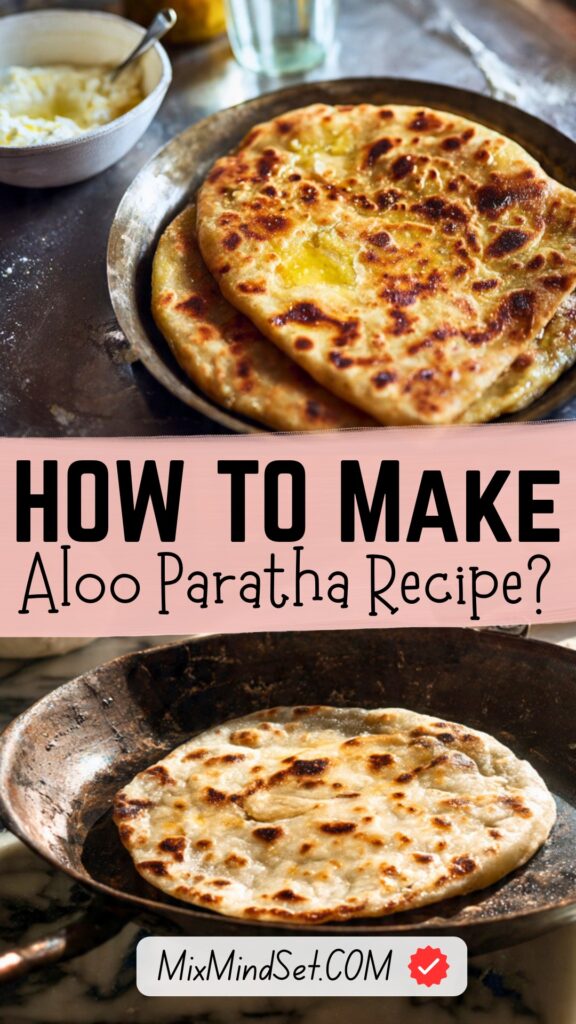
A generous slather of butter melting into every crevice. This is Punjabi comfort food at its finest—hearty, satisfying, and absolutely unforgettable.
This Punjabi style aloo paratha recipe teaches you the traditional way: a soft, pliable dough, a perfectly seasoned mashed potato stuffing, and the art of rolling without tearing.
No more cracked edges or leaking fillings. Just perfect parathas every time. Serve them with cool yogurt, tangy pickle, or a dollop of butter. Let’s make some magic.
Ingredients You’ll Need
Authentic Punjabi aloo parathas use simple, pantry‑friendly ingredients. The key is soft dough and dry, flavorful potato filling.
For the Dough
| Ingredient | Amount | Notes |
|---|---|---|
| Whole wheat flour (Atta) | 2 cups (240g) | Fine, whole wheat flour |
| Water | ~3/4 cup (180ml) | Lukewarm |
| Ghee or oil | 1 tbsp | For kneading |
| Salt | 1/2 tsp |
For the Potato Filling (Aloo Stuffing)
| Ingredient | Amount | Notes |
|---|---|---|
| Potatoes (boiled, peeled) | 3 medium (about 1.5 cups mashed) | Starchy variety works best |
| Green chilies | 1–2 | Finely chopped |
| Fresh ginger | 1 tsp | Grated |
| Fresh coriander (cilantro) | 2 tbsp | Chopped |
| Cumin seeds (jeera) | 1/2 tsp | |
| Garam masala | 1/2 tsp | |
| Red chili powder | 1/2 tsp (or to taste) | |
| Amchur (dry mango powder) | 1/2 tsp | Adds tang (optional) |
| Salt | 1/2 tsp (or to taste) |
For Cooking & Serving
| Ingredient | Amount |
|---|---|
| Ghee or butter | For pan‑frying |
| Butter (for topping) | As desired |
| Plain yogurt (raita) | For serving |
| Mango pickle or chutney | For serving |
No amchur? Add a squeeze of fresh lemon juice to the filling instead.
How to Make Punjabi Style Aloo Paratha? (Step by Step)
Follow these steps carefully. The key is soft dough, dry filling, and gentle rolling.
1. Make the Dough
In a large bowl, combine whole wheat flour and salt. Add 1 tbsp ghee or oil. Rub it into the flour with your fingertips. Gradually add lukewarm water, mixing with your hand until a soft, pliable dough forms.
Knead for 5–7 minutes until smooth. Cover with a damp cloth and let rest for 20–30 minutes. Resting relaxes the gluten, making rolling easier.
2. Prepare the Potato Filling
Boil potatoes until fork‑tender. Drain, cool, and peel. Mash them thoroughly with a fork or potato masher—no lumps. Add green chilies, ginger, fresh coriander, cumin seeds, garam masala, red chili powder, amchur (if using), and salt.
Mix well. The filling should be dry and not sticky. If it feels moist, cook it in a dry pan for 1–2 minutes to evaporate excess moisture. Divide the filling into 6–8 equal balls.
3. Assemble the Paratha
Divide the dough into 6–8 equal balls (slightly larger than the filling balls). Dust a rolling board with flour. Take one dough ball, flatten it into a small disc (about 3 inches wide). Place a potato filling ball in the center. Bring the edges of the dough up and over the filling, pinching to seal completely.
Gently flatten the stuffed ball, dust with dry flour, and roll gently into a circle about 6–7 inches in diameter. Roll from the center outward, applying even pressure. Do not press too hard—the filling may burst.
4. Cook the Paratha
Heat a tawa (griddle) or non‑stick skillet over medium heat. Place the rolled paratha on the hot tawa. Cook for 30–45 seconds until small bubbles appear.
Flip. Spread a teaspoon of ghee or butter on the partially cooked side. Flip again and spread ghee on the other side. Press gently with a spatula to help it puff up and cook evenly. Cook until both sides are golden brown and crisp with dark spots.
5. Serve Immediately
Serve hot, topped with a pat of butter. Accompany with cold yogurt (plain or raita), mango pickle, and a cup of chai.
Pro tip: For extra flakiness, after applying ghee on the first side, press the edges of the paratha with the spatula—this creates crispy, layered edges.
Video Guide 🎥
Tips for Perfect Aloo Paratha (And Mistakes to Avoid)
Even a simple recipe has pitfalls. Here’s how to avoid them.
✅ Do This for Authentic Punjabi Results
- Rest the dough – This is non‑negotiable. A rested dough rolls without shrinking.
- Keep filling dry – Wet filling makes dough sticky and causes tearing. If your mashed potatoes are watery, spread them on a plate for 10 minutes to air‑dry.
- Roll gently – Use light, even pressure. If the filling starts to peek through, dust with more flour and roll carefully.
- Use medium heat – Too high burns the outside before the inside cooks. Too low makes paratha hard.
❌ Common Mistakes
| Mistake | Why It Happens | Fix |
|---|---|---|
| Paratha tears while rolling | Dough too stiff or filling too wet | Knead softer dough; dry the filling |
| Filling leaks out during cooking | Seal wasn’t tight | Pinch edges firmly; roll gently |
| Hard, rubbery paratha | Dough over‑kneaded or cooked too long | Knead just until smooth; don’t over‑cook |
| Pale, not crispy | Not enough ghee or heat too low | Use generous ghee; cook on medium‑high |
| Raw flour taste | Under‑cooked | Press with spatula; ensure both sides have golden spots |
Pro tip: To reheat leftover parathas, warm them on a dry tawa with a little ghee. Never microwave—they become chewy.
Frequently Asked Questions
Can I make aloo paratha without whole wheat flour?
Yes, but the texture changes. All‑purpose flour (maida) makes softer, less rustic parathas. Mix half whole wheat and half all‑purpose for a balance. For gluten‑free, use a gluten‑free chapati flour blend.
How do I keep parathas warm for a crowd?
Stack cooked parathas in a hot pack (insulated casserole) or wrap them in a clean kitchen towel inside a warm oven (200°F). Do not cover tightly with foil—steam makes them soggy.
Can I freeze aloo parathas?
Absolutely. Freeze uncooked parathas separated by parchment paper layers in a zip‑top bag. Cook from frozen on a medium‑hot tawa, adding a few extra minutes. Cooked parathas also freeze well—reheat on a tawa with ghee.
Why is my paratha not puffing up?
Three reasons: the dough is too stiff, the filling is too thick/heavy, or the heat is too low. Use soft dough, roll evenly, and cook on medium‑high heat. Pressing gently with a spatula helps the layers separate.
Can I add other vegetables to the filling?
Yes. Finely chopped boiled peas, grated cauliflower, or paneer can be mixed with the potato. Just ensure the total filling stays dry. A classic variation is gobi aloo paratha (cauliflower + potato).
What’s the best way to serve aloo paratha?
Traditional accompaniments: fresh curd (dahi), white butter, mango pickle (aam ka achar), and onion slices with lemon and salt. A cup of masala chai completes the meal.
How do I make the paratha healthier?
Use less ghee (or cook with oil). Add finely grated carrots or spinach to the dough. Use whole grain flour. Serve with mint yogurt dip instead of butter. The filling is already packed with spices and no heavy cream.
Nutritional Information (Per Aloo Paratha, Cooked with 2 tsp Ghee)
| Nutrient | Amount |
|---|---|
| Calories | 310 |
| Protein | 8g |
| Fat | 12g |
| Saturated Fat | 6g |
| Carbohydrates | 44g |
| Fiber | 6g |
| Sugar | 2g |
| Sodium | 320mg |
The Heart of Punjabi Comfort
Aloo paratha isn’t just food—it’s a feeling. It’s a Sunday morning breakfast. It’s a lunchbox treasure. It’s the taste of home for millions across Punjab and beyond. This Punjabi style aloo paratha recipe brings that warmth to your kitchen. The crisp, golden layers. The softly spiced potato. The pat of butter melting on top.
Master this, and you’ve mastered a cornerstone of North Indian cooking. Serve it with love, with yogurt, with pickle, and with chai. Then watch everyone smile.
Now go roll that paratha.
— Fatima