Sourdough Baguette Recipe
There’s nothing quite like a sourdough baguette – that thin, shatteringly crisp crust, the open, airy crumb, and the subtle tang that only a long fermentation can provide.
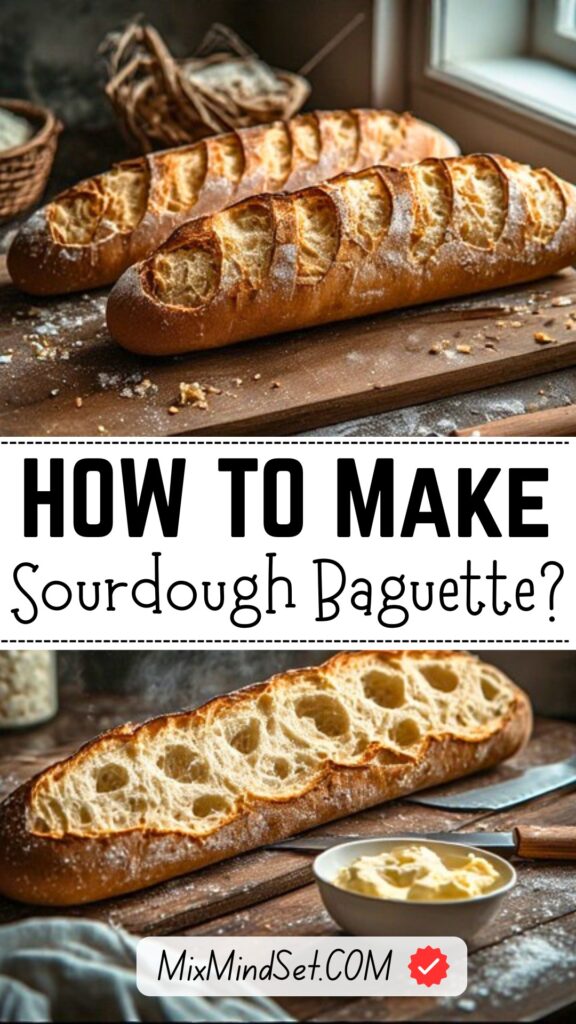
It’s the holy grail of home baking, but it doesn’t have to be intimidating. With a healthy sourdough starter, a little patience, and a few simple techniques, you can bake bakery‑quality baguettes in your own kitchen.
I’m Fatima, and this recipe breaks down the process into manageable steps. You don’t need a professional baguette pan or a steam‑injected oven. Just your hands, a baking stone (or steel), and a love for crusty bread. Let’s bake.
Why Sourdough Baguettes Are Worth the Effort?
Sourdough baguettes are more than just bread – they’re a craft. The long fermentation develops complex flavors and makes the bread easier to digest. The high hydration creates that irregular, holey crumb that holds butter, jam, or cheese beautifully.
- No commercial yeast – Just your starter, flour, water, and salt.
- Better flavor – The tangy, nutty notes come from natural fermentation.
- Crispy crust – The right technique gives you that audible crackle.
- Rewarding – Pulling a golden baguette from the oven is pure joy.
This recipe is for intermediate bakers – if you already maintain a sourdough starter, you’re ready. If not, I’ve included a quick starter guide in the FAQs.
Ingredients You’ll Need
| Ingredient | Quantity | Notes |
|---|---|---|
| Active sourdough starter (100% hydration) | 150 g (about ½ cup) | Fed and bubbly |
| Bread flour (high protein, 12‑14%) | 500 g (about 4 cups) | King Arthur or similar |
| Water (room temperature) | 350 g (1½ cups) | Filtered, no chlorine |
| Fine sea salt | 10 g (2 tsp) |
Pro tip: Weigh your ingredients with a kitchen scale. Flour volume can vary by 20% or more – grams are precise and repeatable.
How to Make Sourdough Baguettes? (Step‑by‑Step)
This recipe makes 3 medium baguettes (about 12 inches each). Plan for about 12‑14 hours from start to finish (mostly inactive time).
1. Autolyse (Mix Flour & Water)
- In a large bowl, combine 500g bread flour and 350g water. Mix with a dough whisk or your hand until no dry flour remains.
- Cover and let rest for 30‑60 minutes. This autolyse step allows the flour to fully hydrate and begins gluten development without salt or starter.
2. Add Starter and Salt
- Add 150g active starter and 10g salt to the dough.
- Pinch and squeeze with wet hands to incorporate. This takes about 2‑3 minutes. The dough will feel sticky and shaggy – that’s fine.
3. Bulk Fermentation (with Stretch & Folds)
- Cover the bowl and let the dough rest for 30 minutes.
- Perform a set of stretch and folds: Grab a section of dough, stretch it up, and fold it over the center. Rotate the bowl and repeat 4‑5 times.
- Repeat this process every 30 minutes for the first 2 hours (4 sets total).
- After the last fold, let the dough rest undisturbed for another 2‑4 hours at room temperature (around 70‑75°F). The dough should become puffy, jiggly, and increase in volume by about 50% (not doubled like regular bread).
4. Shape into Baguettes (Preshape)
- Turn the dough onto a lightly floured surface. Gently divide into 3 equal pieces (about 330g each).
- Preshape each piece into a loose round (boule) by folding edges into the center. Let them rest, uncovered, for 20‑30 minutes. This relaxes the gluten.
5. Final Shaping
- Flour your work surface lightly. Take one round and gently flatten it into a rectangle.
- Fold the top third down to the center, then the bottom third up to overlap (like a letter).
- Starting from one short end, roll the dough tightly into a 12‑15 inch log. Taper the ends by gently rolling them under your palms.
- Place each shaped baguette seam‑side down on a floured couche (or a floured kitchen towel) with folds between them to keep their shape.
6. Proof (Final Rise)
- Cover the baguettes with another towel or plastic wrap. Let them proof for 1‑2 hours at room temperature. They should be puffy and hold a gentle indentation when poked.
7. Preheat and Prepare for Baking
- Place a baking stone or steel on the middle rack. Place a shallow metal pan (like a broiler pan) on the bottom rack. Preheat oven to 475°F (245°C) for at least 45 minutes.
- Carefully transfer baguettes to a peel dusted with semolina or cornmeal. Score each baguette with a lame or sharp razor: 4‑5 diagonal slashes overlapping slightly.
8. Bake with Steam
- Slide the baguettes onto the hot stone. Quickly pour ½ cup of hot water into the bottom pan and close the oven door. The steam creates a crispy crust.
- Bake for 15 minutes with steam, then remove the water pan. Continue baking for 10‑15 minutes until deep golden brown and the internal temperature reaches 205‑210°F (96‑99°C).
- Cool on a wire rack for at least 1 hour before slicing. This allows the crumb to set.
Video Guide 📺
Pro Tips & Common Mistakes to Avoid
Do this ✅
- Use a kitchen scale – Volume measurements for sourdough are unreliable. Weigh everything.
- Keep your starter strong – Feed it 4‑6 hours before mixing so it’s at peak activity (bubbly, domed top).
- Create steam – The steam pan is non‑negotiable for a crispy crust. Don’t skip it.
- Cool completely – Cutting warm baguette releases steam and makes the crumb gummy. Wait an hour.
Avoid that ❌
- Over‑fermenting – If the dough becomes soupy and smells like vinegar, it’s over‑proofed. Stick to the timeline.
- Using too much flour when shaping – Excess flour prevents the dough from sealing, leading to misshapen baguettes.
- Opening the oven during the first 15 minutes – This releases steam and collapses the crust.
- Expecting perfect baguettes the first time – Sourdough takes practice. Every bake teaches you something.
Nutrition Facts (Per Baguette – ⅓ of recipe, about 330g)
| Nutrient | Amount |
|---|---|
| Calories | 850 kcal |
| Protein | 28 g |
| Fat | 2 g |
| Carbohydrates | 178 g |
| Fiber | 7 g |
| Sugar | 1 g |
| Sodium | 780 mg |
Frequently Asked Questions
Can I make sourdough baguettes without a baking stone?
Yes. Use a heavy baking sheet inverted (so the flat bottom faces up) or a cast‑iron skillet preheated in the oven. If using a baking sheet, add an extra 5 minutes of baking time.
How do I know when my starter is ready?
A mature starter should double in size within 4‑6 hours of feeding at room temperature. It should have a pleasant, slightly tangy smell and be full of bubbles. Do the float test: drop a teaspoon of starter into a glass of water – if it floats, it’s ready.
Why are my baguettes flat and dense?
Most likely under‑proofed or over‑shaped. If the dough doesn’t get enough final rise, it won’t spring in the oven. Also, handle the dough gently – too much deflating ruins the open crumb.
Can I use all‑purpose flour instead of bread flour?
You can, but the baguettes will be less chewy and the crust softer. Bread flour’s higher protein creates better gluten structure. If using AP flour, reduce water by 20g (to 330g) to avoid sticky dough.
How do I store leftover sourdough baguettes?
Store at room temperature cut‑side down on a cutting board for up to 1 day. Do not refrigerate – it accelerates staling. Freeze whole or sliced baguettes in a zip‑top bag for up to 3 months. Reheat frozen baguette directly in a 400°F oven for 5‑8 minutes.
Can I make the dough ahead and bake later?
Yes. After the final shaping, place the baguettes in the refrigerator (on a floured couche) for up to 12 hours. Bake them straight from the fridge – add 2‑3 minutes to the baking time. This cold proof enhances flavor.
My crust is too thick and hard. What went wrong?
Too much steam or over‑baking. Reduce the amount of water you pour into the steam pan (try ¼ cup next time). Also, bake until deep golden, not dark brown, and cool properly.
Troubleshooting Common Sourdough Baguette Problems
| Problem | Likely Cause | Solution |
|---|---|---|
| Dense, gummy crumb | Under‑proofed or weak starter | Let final proof go longer; strengthen starter with regular feeds |
| No ear (score doesn’t open) | Score too shallow or dough too dry | Score at a 30° angle, ½ inch deep; increase hydration slightly |
| Blisters on crust | Good fermentation | That’s actually a sign of success – enjoy! |
| Flat baguettes | Over‑proofed or too much handling | Reduce bulk fermentation time; shape gently |
| Pale, soft crust | Not enough steam | Add more water to steam pan; preheat longer |
Final Thoughts
Baking a sourdough baguette is a journey, not a sprint. The first few may be wonky – too flat, too dark, too dense. But each time, you learn something.
The moment you pull a perfectly golden, crackling baguette from the oven, you’ll understand why bakers are obsessed. Keep your starter happy, trust the process, and don’t be afraid of sticky dough.
And remember: even imperfect homemade baguettes taste better than anything from a supermarket.