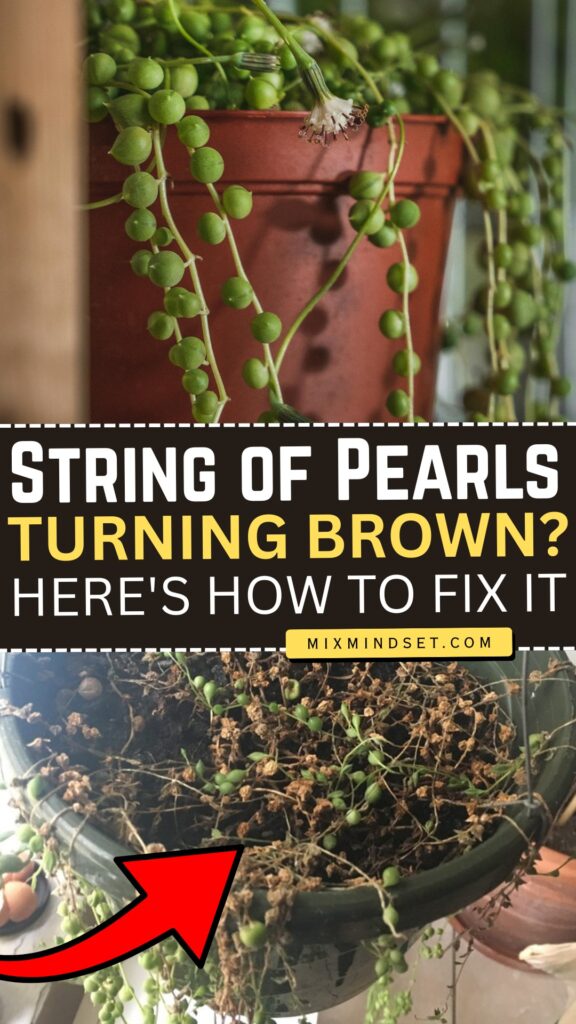
String of Pearls Turning Brown? Here’s How to Fix It
String of Pearls turning brown? Fix it fast with this simple guide. Learn why your succulent's beads are browning—overwatering, sunburn, or fungus—and get easy solutions to bring it back to life. #StringOfPearls #SucculentCare #HouseplantHelp #PlantParent #GardeningTips
I almost gave up on my String of Pearls. I brought it home, hung it in a bright window, and watered it like my other plants. Within a month, the beautiful green beads started turning brown and mushy. I was heartbroken.
Then I learned that this plant is different. It doesn’t like the same care as most houseplants. Once I figured out what was wrong, my plant came back to life. Let me save you from the same frustration.
🔍 First, Be a Plant Detective
Before you can fix the problem, you need to figure out what is causing it. The best way is to look closely at the brown pearls and touch them. This will tell you everything you need to know.
🌊 Problem 1: Overwatering (Mushy Brown Pearls)
This is the most common mistake I see people make with String of Pearls. Because they are succulents, they store water in their beads. Giving them too much water causes the cells to burst, turning them into a mushy, brown mess.
My Fix:
- Stop Watering Immediately: Let the soil dry out completely.
- Check for Root Rot: If the problem is bad, gently take the plant out of its pot. Healthy roots are firm and white. Rotten roots are brown, mushy, and may smell bad.
- Trim the Damage: Use clean, sharp scissors to cut away all the mushy, brown stems and rotten roots. The brown pearls won’t turn green again.
- Repot in Fresh Soil: Use a well-draining succulent or cactus potting mix. A pot with a drainage hole is a must.
- Hold Off on Watering: Wait at least 7 to 10 days after repotting before you water it again.
- Water Correctly Going Forward: Only water when the top 1 to 2 inches of soil are completely dry. Many people find bottom-watering works well for these plants. Place the pot in a tray of water and let it soak up moisture from the bottom until the top of the soil feels damp.
😓 Personal Experience: My first String of Pearls died from too much love. I watered it every few days because I thought it needed it. The pearls turned mushy and fell off. I didn’t know about root rot back then. Now I wait until the soil is completely dry before I even think about watering.
🏜️ Problem 2: Underwatering (Crispy Brown Pearls)
If your pearls are shriveled, wrinkled, and crispy, your plant is thirsty. While they are drought-tolerant, they cannot go completely without water for weeks on end.
My Fix:
- Gradually Reintroduce Water: Don’t flood the plant all at once. Give it small amounts of water over the first week.
- Water Thoroughly: When you do water, give it a good soak until water runs out of the drainage holes, then let the excess drain away.
- Establish a Routine: Aim to water every 2 to 3 weeks during the growing season, but always check the soil first.
- Pro Tip: A simple moisture meter can remove all the guesswork and help you know exactly when your plant needs a drink.
☀️ Problem 3: Too Much Direct Sunlight (Sunburn)
String of Pearls love bright, indirect light. Too much harsh, direct sun, especially during the hottest part of the day, can burn the pearls. This looks like brown, crispy patches.
My Fix:
- Move the Plant: Relocate it to a spot that gets bright, indirect light. An east-facing window or a spot a few feet away from a south or west-facing window is perfect. The light needs to hit the top of the plant (the crown) directly.
- Give It a Break: If it has been sunburned, give it a week or two in a shadier spot to recover.
☀️ My Personal Experience: I once put my String of Pearls on a south-facing windowsill in the middle of summer. Within days, the pearls turned brown and crispy. I moved it to a spot with a sheer curtain, and the new growth came back green and healthy.
🍄 Problem 4: Fungal Infections (Spotted Brown Pearls)
Fungal issues often arise as a secondary problem from overwatering and poor air circulation. They show up as brown spots with distinctive patterns, like a yellow halo or rings.
My Fix:
- Remove Affected Areas: Cut away any leaves or stems with fungal spots to stop the spread.
- Apply a Fungicide: A copper fungicide spray is very effective. Some people also use cinnamon powder on the cuts as a natural antifungal.
- Improve Air Circulation: Make sure the plant has good airflow around it.
- Address the Root Cause: Fungal infections are a sign the environment is too moist. Adjust your watering habits and make sure your soil drains well.
🐛 Problem 5: Pests
While less common for indoor plants, pests like mealybugs, spider mites, or scale can also cause browning.
My Fix:
- Inspect the Plant: Look for small bugs, white cottony masses (mealybugs), fine webbing (spider mites), or small brown bumps (scale).
- Give it a Shower: Wash the plant with a gentle stream of lukewarm water to knock off pests.
- Treat with Insecticide: Use an organic insecticide like neem oil.
- Isolate the Plant: Keep it away from your other houseplants to prevent the pests from spreading.
🩺 Quick Reference: Diagnosis and Treatment
| Symptom | Cause | Immediate Action | Prevention |
|---|---|---|---|
| Mushy, brown, translucent pearls | Overwatering | Stop watering. Check for root rot. Repot in dry soil. | Water only when top 1-2 inches of soil are dry. |
| Crispy, dry, brown pearls | Underwatering or Sunburn | Water thoroughly. Move to bright, indirect light. | Water every 2-3 weeks. Avoid harsh afternoon sun. |
| Brown spots with yellow halos | Fungal Infection | Remove affected areas. Apply fungicide. Improve airflow. | Avoid overwatering. Ensure good air circulation. |
| Shriveled, wrinkled pearls | Underwatering | Water thoroughly. Let soil absorb moisture. | Check soil regularly. Water when dry. |
| Sticky residue or webbing | Pests (mealybugs, spider mites) | Wash plant. Apply neem oil or insecticidal soap. | Isolate new plants. Inspect regularly. |
💡 My Final Tips for a Happy, Green String of Pearls
After killing one plant and successfully reviving another, here are the rules I live by now.
- Forget the watering schedule. Check the soil with your finger before you water. When the top 1-2 inches are dry, it is time to water.
- Use well-draining soil. Regular potting soil is too heavy. Use a cactus or succulent mix.
- Give it bright, indirect light. A few feet away from a sunny window is its happy place.
- Make sure the light hits the top of the plant. The crown needs direct light, not just the hanging strands.
- Don’t panic. A few brown pearls are a sign to pay attention, not to give up. Every plant parent goes through this. Learn from it, and your plant will be even stronger.
Your String of Pearls wants to live. You just need to listen to what it is telling you. With a little observation and these simple fixes, you will have those beautiful green beads back in no time.