15+ Whole Food Meals for Families
You want to feed your family healthy meals. But between school pickup, after‑school activities, and your own job, who has time to chop fifteen different vegetables and soak beans overnight? The good news is that whole food cooking doesn’t have to be complicated or time‑consuming.
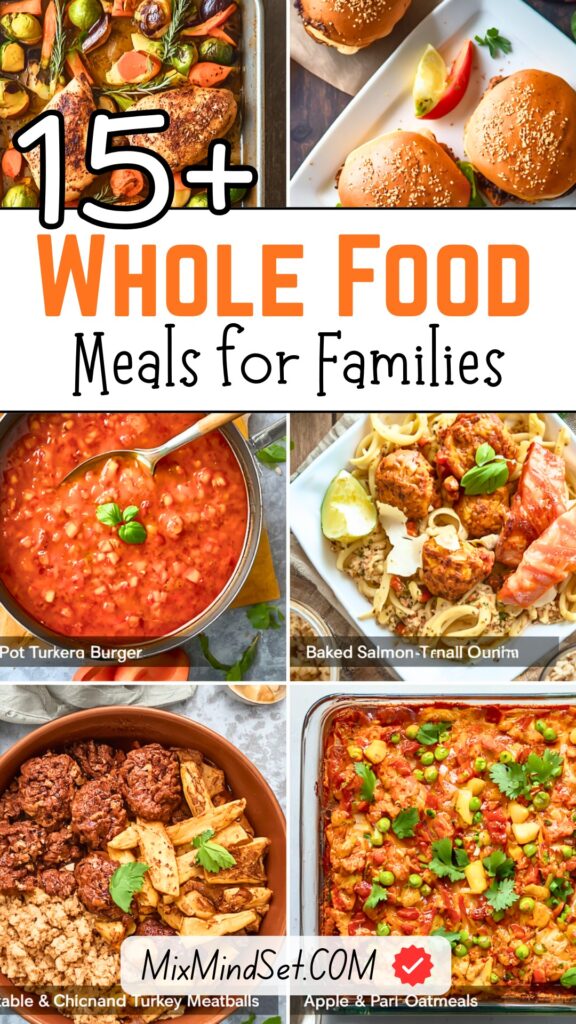
Whole foods are simply foods in their natural state (or very close to it). Think brown rice instead of white, chicken thighs instead of chicken nuggets, and apples instead of applesauce pouches with added sugar. You don’t need exotic ingredients or hours in the kitchen.
This guide gives you over 15 whole food meals that are family‑friendly, budget‑conscious, and simple enough for a busy weeknight. Each meal uses ingredients you can find at any grocery store, and most come together in 30‑45 minutes.
What Are Whole Food Meals? (A 30‑Second Explanation)
A whole food is minimally processed and free from artificial additives, refined sugars, or industrial oils. Whole food meals focus on:
- Vegetables and fruits – fresh or frozen, without sugary sauces
- Whole grains – oats, brown rice, quinoa, whole wheat pasta
- Quality proteins – chicken, turkey, fish, eggs, beans, lentils, tofu
- Healthy fats – olive oil, avocado, nuts, seeds
- Natural flavorings – herbs, spices, citrus, garlic (if your family tolerates it)
That doesn’t mean you can never use a can of beans or frozen vegetables. It means you read labels and choose options with short ingredient lists.
The 80/20 rule: Aim for 80% of your family’s meals to be whole food based. The other 20% can be for birthday parties, takeout nights, or the occasional boxed mac and cheese.
Why Whole Foods Matter for Your Family?
| Benefit | What It Means for Your Family |
|---|---|
| Better nutrition | Whole foods contain more fiber, vitamins, and minerals than processed foods. |
| Fewer additives | No artificial colors, preservatives, or high‑fructose corn syrup. |
| Stable energy | Whole grains and protein prevent the sugar crashes that lead to meltdowns. |
| Healthy habits | Kids who eat whole foods learn to enjoy real flavors, not just salt and sugar. |
| Budget friendly | Dried beans, rice, and seasonal vegetables cost far less than boxed convenience meals. |
Whole Food vs. Processed: Quick Comparison Table
| Instead of this processed option… | Try this whole food swap… |
|---|---|
| White bread | 100% whole wheat bread or sourdough |
| Sweetened yogurt | Plain Greek yogurt + fresh fruit + honey |
| Chicken nuggets | Baked chicken tenders (whole wheat breadcrumbs) |
| Boxed mac & cheese | Whole wheat pasta + homemade cheese sauce |
| Sugary cereal | Oatmeal with berries and a drizzle of maple syrup |
| Flavored instant oatmeal | Rolled oats with cinnamon and sliced banana |
| Vegetable oil | Olive oil or avocado oil |
| Canned soup (high sodium) | Homemade broth‑based soup with veggies and beans |
15+ Whole Food Meals for Families (Numbered)
Below are 15+ complete meal ideas. Each one is balanced, kid‑friendly, and uses whole food ingredients. The first three recipes include full ingredient tables and nutritional facts.
Recipe 1: One‑Pan Lemon Herb Chicken & Vegetables
Everything cooks on one sheet pan. Minimal cleanup, maximum flavor.
Ingredients:
| Ingredient | Amount |
|---|---|
| Boneless, skinless chicken thighs | 1.5 lbs (about 6 thighs) |
| Broccoli florets | 2 cups |
| Baby potatoes (halved) | 1 lb |
| Olive oil | 2 tbsp |
| Dried oregano | 1 tsp |
| Dried thyme | 1 tsp |
| Garlic powder | ½ tsp |
| Lemon juice | 2 tbsp |
| Salt & pepper | To taste |
Instructions:
- Preheat oven to 400°F (200°C). Line a large baking sheet with parchment paper.
- In a large bowl, toss chicken, broccoli, and potatoes with olive oil, oregano, thyme, garlic powder, salt, and pepper.
- Spread everything in a single layer on the baking sheet.
- Roast for 25‑30 minutes until chicken is cooked through (165°F) and potatoes are tender.
- Drizzle with lemon juice before serving.
Nutritional Facts (per serving – ¼ of recipe):
| Nutrient | Amount |
|---|---|
| Calories | 420 |
| Protein | 32g |
| Carbohydrates | 28g |
| Fiber | 5g |
| Total Fat | 20g |
| Saturated Fat | 4g |
Recipe 2: Lentil & Vegetable Shepherd’s Pie
A meatless, budget‑friendly dinner that even picky eaters love.
Ingredients (for filling & topping):
| Filling | Amount | Topping | Amount |
|---|---|---|---|
| Brown or green lentils (rinsed) | 1 cup | Potatoes (peeled, cubed) | 2 lbs |
| Low‑sodium vegetable broth | 3 cups | Skim milk | ½ cup |
| Carrots (diced) | 2 medium | Olive oil | 1 tbsp |
| Celery (diced) | 2 stalks | Salt | ½ tsp |
| Frozen peas | 1 cup | Nutmeg (optional) | Pinch |
| Tomato paste | 2 tbsp | ||
| Dried thyme | 1 tsp |
Instructions:
- Make the filling: In a large pot, combine lentils, broth, carrots, and celery. Bring to a boil, then simmer for 20 minutes until lentils are tender. Add peas, tomato paste, and thyme. Cook 5 more minutes.
- Make the topping: While filling cooks, boil potatoes in salted water until fork‑tender (about 15 minutes). Drain, then mash with skim milk, olive oil, salt, and nutmeg.
- Assemble: Pour filling into a 9×13 baking dish. Spread mashed potatoes evenly over the top.
- Bake at 375°F (190°C) for 20 minutes until bubbly. Let cool 5 minutes before serving.
Nutritional Facts (per serving – 1/6 of pie):
| Nutrient | Amount |
|---|---|
| Calories | 350 |
| Protein | 14g |
| Carbohydrates | 60g |
| Fiber | 13g |
| Total Fat | 6g |
| Saturated Fat | 1g |
Recipe 3: 20‑Minute Shrimp & Quinoa Bowl
Fast, fresh, and completely customizable. Kids can build their own bowls.
Ingredients:
| Ingredient | Amount |
|---|---|
| Large shrimp (peeled, deveined) | 1 lb |
| Cooked quinoa | 2 cups |
| Frozen corn (thawed) | ½ cup |
| Black beans (rinsed) | 1 can (15 oz) |
| Avocado (diced) | 1 |
| Fresh cilantro | ¼ cup |
| Lime juice | 2 tbsp |
| Chili powder | 1 tsp |
| Olive oil | 1 tbsp |
| Salt | ¼ tsp |
Instructions:
- Pat shrimp dry. Toss with chili powder and salt.
- Heat olive oil in a large skillet over medium‑high heat. Cook shrimp for 2‑3 minutes per side until pink and opaque.
- While shrimp cooks, divide quinoa among 4 bowls.
- Top with black beans, corn, avocado, and cooked shrimp.
- Drizzle with lime juice and sprinkle with cilantro.
Nutritional Facts (per serving):
| Nutrient | Amount |
|---|---|
| Calories | 480 |
| Protein | 34g |
| Carbohydrates | 48g |
| Fiber | 14g |
| Total Fat | 18g |
| Saturated Fat | 3g |
12 More Whole Food Family Meals (Brief Ideas)
Use the same balanced approach: lean protein + whole grain + vegetables + healthy fat.
4. Whole Wheat Spaghetti with Turkey Meatballs – Baked turkey meatballs (ground turkey, breadcrumbs, egg, parsley) served over whole wheat pasta with marinara (no sugar added). Side salad.
5. Sheet Pan Salmon & Asparagus – Salmon fillets, asparagus, lemon slices, olive oil, dill. Bake at 400°F for 12 minutes. Serve with brown rice.
6. Chicken & Vegetable Stir‑Fry – Chicken breast, broccoli, bell peppers, snap peas, ginger, low‑sodium tamari. Serve over brown rice.
7. Black Bean & Sweet Potato Tacos – Roasted sweet potato cubes, black beans, corn, and avocado in corn tortillas. Top with cilantro and lime.
8. Turkey & Zucchini Burgers – Ground turkey mixed with grated zucchini, formed into patties, grilled or pan‑seared. Serve on whole wheat buns with lettuce and tomato.
9. Beef & Broccoli (Lean) – Thinly sliced lean sirloin, broccoli florets, ginger, low‑sodium tamari. Serve over brown rice.
10. Coconut Lentil Curry – Red lentils cooked with light coconut milk, turmeric, ginger, spinach. Serve over brown rice or quinoa.
11. Baked Chicken Tenders & Sweet Potato Wedges – Chicken strips coated in whole wheat breadcrumbs, baked. Sweet potato wedges tossed in olive oil and paprika, baked alongside.
12. Minestrone Soup (No Pasta) – Kidney beans, cannellini beans, carrots, celery, zucchini, low‑sodium broth, herbs. Serve with whole grain bread.
13. Veggie & Tofu Skewers – Cubed tofu, bell peppers, zucchini, red onion, brushed with olive oil and herbs, grilled or baked. Serve with quinoa.
14. Breakfast for Dinner – Whole grain pancakes topped with berries and plain yogurt, side of scrambled eggs and turkey sausage.
15. Pulled Chicken Sandwiches – Slow‑cooker chicken breast with tomato paste, apple cider vinegar, and spices. Shred, serve on whole wheat buns with coleslaw.
16. Chickpea & Spinach Curry – Chickpeas, coconut milk, spinach, curry powder, ginger. Serve over brown rice.
5 Tips for Making Whole Food Meals Work for Busy Families
1. Prep once, eat twice.
Cook double the quinoa, roast double the vegetables, or make extra lentil shepherd’s pie on Sunday. Use leftovers for lunch or another dinner.
2. Embrace frozen and canned.
Frozen vegetables are just as nutritious as fresh and much faster. Canned beans (rinsed), canned tomatoes (no salt added), and frozen shrimp are whole‑food approved.
3. Let kids customize.
Build‑your‑own bowls (quinoa, beans, veggies, protein) or taco bars give children a sense of control. They’re more likely to eat what they assembled.
4. Keep whole food snacks visible.
A bowl of apples on the counter, baby carrots in the front of the fridge, and plain yogurt ready to top with berries make healthy choices the easy choices.
5. Don’t aim for perfection.
One meal of frozen pizza won’t undo weeks of whole food eating. Focus on progress, not perfection.
Frequently Asked Questions
Are whole food meals more expensive?
No. In fact, they’re often cheaper. Dried beans, rice, oats, and seasonal vegetables cost far less than boxed convenience foods. The biggest expense is usually quality protein, but you can stretch it with beans, lentils, and eggs. Buy cheaper cuts like chicken thighs instead of breasts.
My kids refuse to eat vegetables. What can I do?
Hide them at first. Grate zucchini into meatballs or pasta sauce. Blend spinach into smoothies. Roast vegetables until sweet and caramelized (most kids hate steamed but love roasted). Offer one “safe” food at every meal, like rice or bread. Don’t pressure or bribe. Exposure over time works.
Do I need to buy everything organic?
No. Prioritize organic for the “Dirty Dozen” (strawberries, spinach, kale, nectarines, apples, grapes, bell peppers, cherries, peaches, pears, celery, tomatoes). The rest, conventional is fine. Frozen produce is also excellent.
How do I handle picky eaters who only want chicken nuggets?
Start with a “bridge” food. Make baked chicken tenders with whole wheat breadcrumbs (Recipe 11). Serve them alongside their usual nuggets, then slowly phase out the processed version. Involve them in cooking — kids eat what they help make.
What about grains like white rice and white pasta?
Refined grains aren’t “bad,” but whole grains offer more fiber and nutrients. Start with half‑and‑half (half white rice + half brown rice). Over a few weeks, increase the whole grain ratio. Some families never fully switch, and that’s okay.
Can I still eat out with a whole food focus?
Yes. Choose grilled over fried, ask for sauces on the side, and look for rice bowls, salads, or vegetable sides. Many casual chains now offer brown rice or quinoa options.
Your Simple 7‑Day Whole Food Family Meal Plan (Sample)
| Day | Dinner |
|---|---|
| Monday | One‑pan lemon herb chicken & vegetables |
| Tuesday | Black bean & sweet potato tacos |
| Wednesday | Leftover chicken & veg over rice |
| Thursday | Shrimp & quinoa bowls |
| Friday | Turkey & zucchini burgers with sweet potato wedges |
| Saturday | Lentil shepherd’s pie |
| Sunday | Breakfast for dinner (pancakes + eggs + fruit) |
Final Thoughts
You don’t need to throw away every box in your pantry and start from scratch. Pick one new whole food meal to try this week. Maybe it’s the one‑pan chicken. Maybe it’s the lentil shepherd’s pie. Cook it together, eat together, and notice how you feel.
Over time, your family’s tastes will shift. Canned soup will taste too salty. Sugary yogurt will feel overly sweet. And you’ll have a toolbox of simple, delicious meals that don’t rely on processed shortcuts.
Feeding your family whole foods isn’t about perfection. It’s about showing up, one meal at a time.
Disclaimer: This article is for informational purposes only. For specific dietary needs (allergies, medical conditions), consult a pediatrician or registered dietitian.