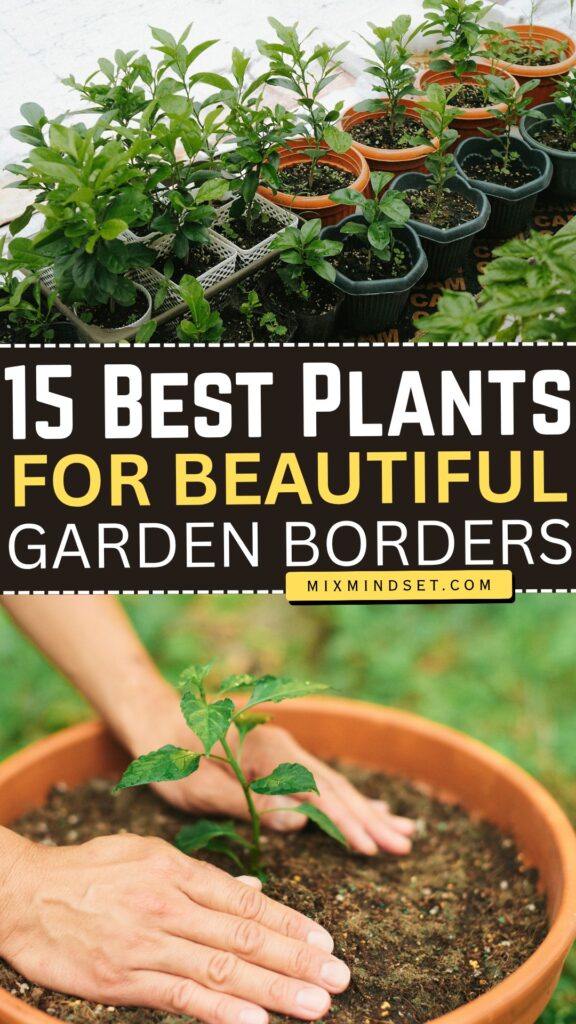
15 Best Plants for Beautiful Garden Borders
Transform your garden with stunning borders that add color, texture, and structure all year long. This guide covers 15 of the best border plants, from sun-loving lavender and low-maintenance sedum to shade-tolerant hostas, ensuring your garden edges look beautiful in every season. #GardenBorders #BorderPlants #GardeningTips #LandscapingIdeas #FlowerGarden
A well-defined border is like a beautiful frame around a painting—it ties everything together, adds structure, and elevates the entire look of your garden. When I first started gardening, I didn’t pay much attention to borders.
I focused on the showy flowers in the center of my beds and forgot about the edges. The result was a garden that always looked a bit unfinished, like a picture without a frame.
Over the years, I’ve discovered that the right border plants can transform a garden from good to great, providing a polished, professional look without a lot of extra work.
Border plants are typically low-growing varieties that soften hard edges, guide the eye along pathways, and create smooth transitions between beds and lawns. Here are 15 of the best plants to edge your garden beds and pathways.
For Sunny Borders
These sun-loving border plants thrive in full sun (at least 6 hours of direct sunlight) and often tolerate heat and drought once established.
1. Lavender
Lavender is the classic choice for a sunny border. Its silvery-green foliage and fragrant purple spikes add color, scent, and texture to any garden edge. It creates a neat, organized look that feels timeless and elegant.
It thrives in full sun and dry soil, and once established, it’s highly drought-tolerant. Its strong scent also helps keep some pests away. It also attracts bees and butterflies, bringing your border to life.
2. Catmint
Catmint is a hardworking perennial that produces clouds of lavender-blue blooms from late spring through fall.
Its soft, aromatic leaves and mounding habit create a flowing, cottage-style look that spills beautifully over pathways.
It’s also a magnet for bees and butterflies, and a quick trim after the first flush encourages a second bloom.
3. Creeping Phlox
For a carpet of color in spring, creeping phlox is hard to beat. This low-growing groundcover forms a dense mat of pink, purple, white, or blue flowers that spill over stones and edging.
It’s excellent for filling gaps along pathways and creating a colorful, weed-suppressing border.
4. Coreopsis (Tickseed)
Coreopsis offers cheerful, daisy-like blooms in shades of yellow, orange, and red from early summer well into fall.
It’s heat and drought-tolerant, thrives in poor soil, and requires minimal upkeep. It’s perfect for adding a long-lasting splash of sunny color to your borders.
5. Sedum
Sedums, or stonecrops, are among the easiest border plants to maintain. Low-growing varieties form colorful, succulent mats in shades of green, red, and purple that are heat-proof and foolproof. They’re perfect for dry borders, rock gardens, or lining pathways.
6. Marigolds
Marigolds are a favorite for borders because they provide vibrant color all summer long. Dwarf varieties are perfect for edging, growing under one foot tall. They also attract pollinators while deterring deer, making them a practical and beautiful choice.
7. Dianthus
Dianthus is an ideal edging plant with sturdy evergreen foliage and clove-scented blossoms that bloom from late spring through summer. Its frilly white petals with a dark red eye add a touch of elegance, and regular deadheading will keep the blooms coming.
8. Salvia
Salvia is a pollinator magnet that pumps out upright flower spikes from late spring into fall. It’s drought-tolerant, deer-resistant, and reblooms if deadheaded. With over 900 species, you have plenty of choice for flower color.
9. Yarrow
Yarrow bursts with clusters of flat-topped flowers in bright shades that last all summer. It loves heat, drought, and neglect, making it a perfect low-maintenance choice. Its feathery foliage also adds lovely texture to your garden edges.
10. Blanket Flower (Gaillardia)
Blanket flower offers fiery, daisy-like blooms in shades of red, yellow, and orange that look like miniature sunbursts. It thrives in poor soil, drought, and neglect, and with deadheading, it keeps blooming all season long.
For Shady Borders
These shade-tolerant border plants thrive in areas with limited direct sunlight, adding lush foliage and color to dark corners.
11. Hostas
Hostas are the quintessential shade plant. Their large, often variegated leaves in shades of green, blue, and yellow add texture and depth to shady borders. They form compact clumps, making them perfect for filling in edges under trees or along shaded walkways.
12. Heuchera (Coral Bells)
Heuchera is prized for its vibrant, long-lasting foliage in a stunning range of colors, from chartreuse to deep purple and red.
It’s a versatile low-growing perennial that works well in both sun and shade and is deer and rabbit resistant. It provides season-long interest even when not in bloom.
13. Heucherella
Heucherella is a hybrid of heuchera and tiarella, offering the best of both worlds: colorful, sculpted foliage and a compact, mounding habit. Varieties like ‘Alabama Sunrise’ bring bright chartreuse leaves with red centers to shade gardens, brightening walkways and borders.
14. Impatiens
If you don’t like to wait for blooms, impatiens are the answer. Their vibrant flowers appear almost as soon as you plant them and continue pretty much nonstop. They thrive in shade and with consistent watering, they will endure the heat.
15. Carex ‘Everillo’
Carex ‘Everillo’ is a stunning grass-like plant with radiant golden foliage that illuminates the shade garden. Its arching leaves grow in a tidy mound, perfect for edging paths or tucking into planters. It adds rich texture and vibrant color to woodland borders.
Quick Reference Table
| Plant | Sun Preference | Blooms/Foliage | Best For |
|---|---|---|---|
| Lavender | Full Sun | Purple blooms, silver-green foliage | Fragrance, pollinators, Mediterranean style |
| Catmint | Full Sun | Lavender-blue blooms | Continuous blooms, pollinators |
| Creeping Phlox | Full Sun to Part Shade | Pink, purple, white, blue blooms | Spring groundcover, weed suppression |
| Coreopsis | Full Sun | Yellow, orange, red daisy-like blooms | Long-lasting sunny color |
| Sedum | Full Sun | Succulent foliage in green, red, purple | Low-maintenance, dry borders |
| Marigolds | Full Sun | Yellow, orange, red blooms | Summer color, deer deterrent |
| Dianthus | Full Sun to Part Shade | White blooms, clove-scented | Fragrance, evergreen foliage |
| Salvia | Full Sun | Upright blue, pink, purple spikes | Pollinators, drought tolerance |
| Yarrow | Full Sun | Flat-topped yellow, pink, red blooms | Heat and drought tolerance |
| Blanket Flower | Full Sun | Red, yellow, orange daisy-like blooms | Poor soil, neglect, continuous color |
| Hostas | Shade to Part Shade | Lush green, blue, yellow foliage | Shade, texture, understory planting |
| Heuchera | Sun to Shade | Colorful foliage (chartreuse to purple) | Year-round interest, deer resistance |
| Heucherella | Part to Full Shade | Vibrant chartreuse foliage | Shade gardens, bright borders |
| Impatiens | Shade | Purple, pink, red, orange, yellow blooms | Quick, nonstop color in shade |
| Carex ‘Everillo’ | Part Shade to Shade | Radiant golden foliage | Texture, woodland borders |
My Personal Border Garden Story
The first time I planted a proper border, I used a mix of lavender and creeping phlox along my front walkway.
The lavender gave structure and fragrance, and the creeping phlox created a carpet of pink blooms in spring. The transformation was incredible. My garden suddenly looked polished and intentional.
Now I use a combination of low-growing perennials and colorful annuals to keep my borders looking fresh all season long. It’s one of the simplest ways to elevate your garden design.
Tips for Stunning Garden Borders
- Choose a mix of foliage and flowers. Foliage provides structure and interest even when plants aren’t in bloom.
- Repeat plants for a cohesive look. Use a handful of complementary varieties along borders and walkways.
- Consider the height. Place taller plants at the back and low-growing varieties at the front to create depth.
- Fill gaps to suppress weeds. Dense plantings help shade the soil and naturally block weeds.
- Mix sun and shade lovers. Choose plants that suit your garden’s light conditions.
The Bottom Line
Borders are the finishing touch that brings a garden together. Whether you have full sun or deep shade, there’s a perfect border plant for you. Lavender, catmint, creeping phlox, and coreopsis are excellent choices for sunny spots.
Hostas, heuchera, heucherella, and impatiens are ideal for shady areas. These plants add color, texture, and structure, giving your garden a polished, professional look.
I started with a few lavender plants along my walkway, and now my garden feels complete. Your borders can transform your garden too. Choose the right plants, give them a good spot, and enjoy the beauty they bring.