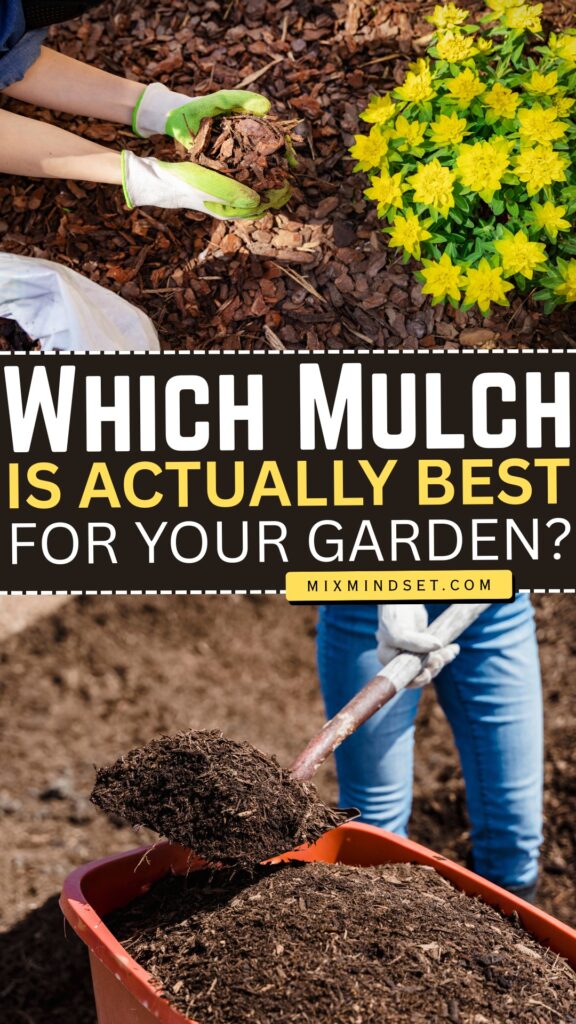
Which Mulch Is Actually Best for Your Garden?
Choose the best mulch for your garden with this complete guide to organic and inorganic options. From straw and wood chips to compost and landscape fabric, this covers which mulch works best for vegetables, flowers, shrubs, and pathways. #GardenMulch #SoilHealth #GardeningTips #DIYGarden #OrganicGardening
When I first started gardening, I thought mulch was just something you threw down to make the flower beds look tidy.
I had no idea that choosing the wrong one could actually harm my plants, or that the right one could be the secret to my best harvest yet.
After years of trial and error and a lot of research, I’ve learned that there is no single “best” mulch. The right choice depends entirely on what you’re growing and what you want the mulch to do.
Here’s a breakdown of the most common types, so you can pick the perfect one for your garden.
Organic vs. Inorganic: The Big Decision
First, you need to decide between organic and inorganic mulch. This is the most important choice you’ll make.
- Organic mulches are made from natural plant materials like wood chips, straw, or leaves. They break down over time, adding nutrients to your soil, improving its structure, and feeding beneficial microorganisms. The downside is they need to be replenished regularly.
- Inorganic mulches include materials like rocks, landscape fabric, and rubber. They are long-lasting and low-maintenance, but they don’t improve your soil and can even heat up and harm plant roots in some cases. They are best for pathways or decorative areas, not for planted garden beds.
For most vegetable and flower gardens, organic mulch is the superior choice because of its long-term soil benefits.
The Best Mulches for Vegetable Gardens
Vegetable gardens are all about soil health and productivity. You want a mulch that breaks down quickly to feed your plants and can be easily worked into the soil at the end of the season.
| Mulch Type | Best For | Pros | Cons |
|---|---|---|---|
| Straw | Vegetable beds, raised beds | Weed-free (if purchased), retains moisture, breaks down to feed soil, deters slugs | Can be blown away by wind, may contain seeds if not high-quality |
| Compost | Vegetable beds, raised beds | Feeds soil directly, improves structure, retains moisture | Can be expensive if bought in bulk, may need to be replenished more often |
| Shredded Leaves | Vegetable beds | Free (if you have trees), improves soil texture, breaks down quickly | Can mat down and block water if applied too thickly |
| Grass Clippings | Vegetable beds | Free, rich in nitrogen, breaks down quickly | Must be dried first or applied in thin layers to prevent matting and odor |
| Pine Needles | Acid-loving vegetables (like potatoes) | Good for slopes, doesn’t blow away, slightly acidic | Can be slow to break down; may lower soil pH |
My advice: For my raised vegetable beds, I use a combination of straw and compost. The straw is great for suppressing weeds and retaining moisture, while the compost gives my plants a steady supply of nutrients as it breaks down. If you have a good source of shredded leaves, they are an excellent, free alternative.
The Best Mulches for Flower Beds and Shrubs
For flower beds and perennial gardens, you want a mulch that looks good and lasts a long time. These areas are not worked annually, so a slower-decomposing wood-based mulch is ideal.
| Mulch Type | Best For | Pros | Cons |
|---|---|---|---|
| Shredded Hardwood / Bark | Flower beds, shrubs, trees | Long-lasting, attractive, breaks down slowly to improve soil | Can be expensive; fresh wood chips can temporarily tie up nitrogen |
| Wood Chips | Shrubs, trees, pathways | Long-lasting, allows water penetration, often available for free from arborists | Can attract termites if placed against the house |
| Cocoa Bean Hulls | Flower beds | Attractive, pleasant chocolate scent, adds organic matter | Can be toxic to dogs; expensive; can mold in wet conditions |
| Pine Needles (Pine Straw) | Flower beds (especially for acid-loving plants) | Attractive, stays in place, good for slopes | Can be acidic, may not be suitable for all plants |
My advice: I love the look of shredded hardwood mulch in my flower beds. It gives a clean, finished appearance and I only need to top it up once a year. However, I always make sure to keep it a few inches away from the stems of my plants to prevent rot.
Mulches to Avoid
Not all mulches are beneficial. Here are a few to steer clear of.
- Dyed Mulch: While visually appealing, the dyes used can be made from questionable sources, including toxic industrial waste.
- Rubber Mulch: Made from recycled tires, this is a poor choice for garden beds. It doesn’t add any nutrients, can leach chemicals, and may raise soil temperatures to harmful levels. It’s better suited for playgrounds or pathways.
- Landscape Fabric: It can be effective for weed control in pathways, but in garden beds it prevents organic matter from reaching the soil and can become a weedy mess as seeds germinate on top of it.
- Rock / Gravel: While low-maintenance, it offers no nutritional benefit to the soil and can make your garden much hotter. It’s best left for pathways and driveways.
Quick Reference Table: Which Mulch Should You Use?
| Your Goal | Best Mulch Choice |
|---|---|
| Feed the soil in a vegetable garden | Compost, straw, shredded leaves |
| Suppress weeds in a flower bed | Shredded hardwood or bark mulch (3-4 inch layer) |
| Retain moisture in any garden | Straw, wood chips, compost |
| Mulch on a slope | Pine needles, wood chips |
| Improve soil as it breaks down | Any organic mulch |
| A low-maintenance path | Gravel, wood chips, rubber mulch |
5 Essential Mulching Tips
1. Apply at the Right Depth. A 2-to-4-inch layer is generally ideal. Too little won’t suppress weeds, and too much can suffocate plant roots. Straw and hay can be applied a bit thicker as they will settle.
2. Keep It Away from Stems and Trunks. Piling mulch against the base of a plant, also known as a “mulch volcano,” invites pests and disease. Keep a “donut hole” of bare soil around the crown or trunk.
3. Use Composted Wood Chips. Fresh wood chips can temporarily rob nitrogen from the soil as they decompose. It’s best to use aged or composted wood chips, or at least rake them aside when planting new annuals.
4. Water Before You Mulch. Mulch is most effective when applied to moist soil. It locks in the moisture, preventing evaporation.
5. Don’t Forget to Replenish. Organic mulches break down over time. Top up your mulch layer annually in the spring or fall to maintain its effectiveness.
The Bottom Line
The “best” mulch is the one that fits your garden’s specific needs. By understanding the different types, you can choose the perfect mulch to keep your plants healthy and your garden looking great.