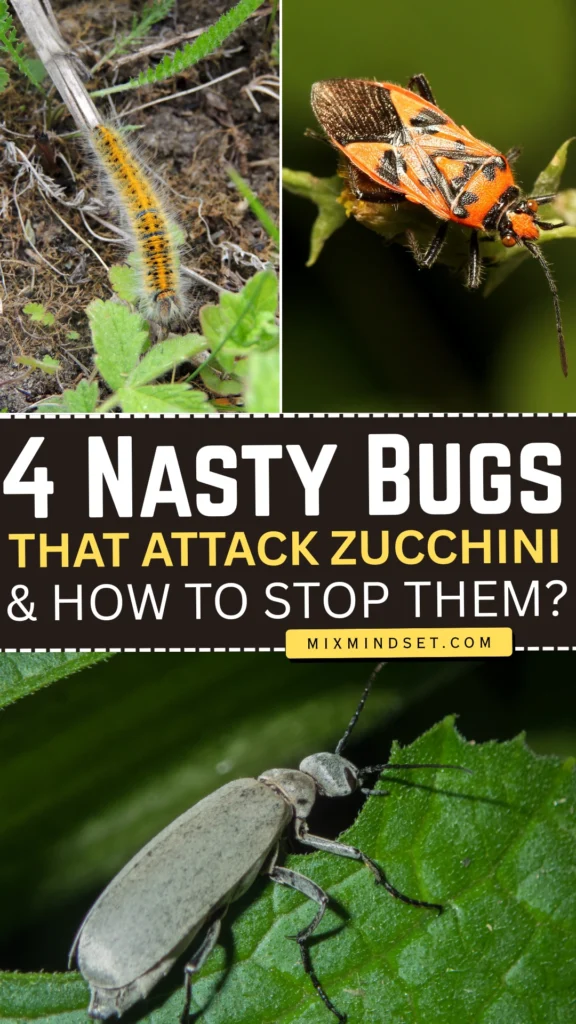
4 Nasty Bugs That Attack Zucchini and How to Stop Them
Squash bugs, vine borers, cucumber beetles, and aphids can destroy your zucchini plants fast. This guide covers how to spot each pest and stop them using simple, effective methods. #ZucchiniPests #GardeningTips #OrganicPestControl #VegetableGarden #DIYGarden
The first summer I grew zucchini, my plants were massive and healthy one day, and completely wilted the next. I had no idea what hit them. I learned the hard way that zucchini is a magnet for some seriously destructive pests.
After losing an entire crop to squash vine borers, I made it my mission to learn how to fight back. Now I know exactly what to look for and how to stop these bugs before they ruin my harvest. Here are the four worst offenders and exactly how to deal with them.
1. Squash Bugs
Squash bugs are one of the most common and frustrating pests for zucchini growers. They suck the sap right out of your plants, and their toxic saliva causes leaves to wilt and die.
How to Identify Them
Adult squash bugs are flat, oval-shaped insects about half an inch long. They are brown or grayish-black with orange-yellow markings on their legs and antennae. Some have an inverted V or diamond shape on their backs with white dots around the edges.
Their eggs are reddish-brown and oval-shaped, usually found in clusters on the underside of leaves. When they hatch, the nymphs are small, grayish-green, and often feed together in groups.
What to Look For
- Yellow stippling (tiny yellow spots) on leaves
- Leaves turning brown, wilting, and becoming crispy
- Plants that look like they are drying out even with plenty of water
- Clusters of bugs on the undersides of leaves and around the base of plants
How to Stop Them
Handpicking: This is the most effective organic method. Knock adult bugs and nymphs into a bucket of soapy water. You can also use a piece of duct tape to catch them. Look for egg clusters on the undersides of leaves and crush them or tear off that part of the leaf.
Row covers: Cover young plants with floating row covers early in the season to prevent squash bugs from reaching them. Remove the covers when plants start to flower so pollinators can do their job.
Companion planting: Plant nasturtiums, marigolds, catnip, or radishes near your zucchini. These plants help repel squash bugs.
Organic sprays: Neem oil and insecticidal soap are effective, especially on young nymphs. Apply them in the early morning or at dusk when pollinators are less active.
Crop rotation and cleanup: Remove old plant debris in the fall, as squash bugs overwinter in dead plant material. Rotate your crops each year to prevent them from building up in the soil.
2. Squash Vine Borers
Squash vine borers are the most destructive pest of zucchini. They can kill an entire plant in a matter of days. I learned this the hard way when my plants collapsed overnight. Once the borer is inside the stem, it is very hard to save the plant.
How to Identify Them
The adult is actually a moth that looks like a wasp, with a bright orange abdomen and a wingspan of about 1 to 1.5 inches. They fly during the daytime, which is unusual for moths.
The larvae are creamy white grubs with brown heads. They bore into the stems and feed on the inside.
What to Look For
- Plants that suddenly wilt and collapse, seemingly overnight
- Small holes near the base of the stem
- A wet, sawdust-like material called “frass” coming out of the holes
- Yellowing and wilting of individual leaves before the whole plant goes down
How to Stop Them
Monitor with yellow traps: Vine borers are attracted to yellow. Place yellow sticky cards near your plants to monitor their activity.
Row covers: Cover plants early in the season before the moths start laying eggs. Remove covers when flowers appear for pollination.
Hand removal: If you spot wilting and frass, you can try to save the plant by slitting the stem open lengthwise and removing the borer by hand. Then cover the wounded stem with moist soil to encourage new roots.
Insecticides: Once the borer is inside the stem, insecticides are useless. You must apply them before the eggs hatch. Apply sprays thoroughly along the stems, especially near the base. Organic options containing neem, spinosad, or pyrethrin are effective. Reapply every 3-5 days during the egg-laying period.
Fall cleanup: After harvest, destroy the vines to kill any larvae inside and prevent them from overwintering in the soil.
3. Cucumber Beetles
Cucumber beetles are a double threat. They not only chew holes in your zucchini, but they also spread bacterial wilt and cucumber mosaic virus, which can kill your plants.
How to Identify Them
There are three main species, all yellow to yellowish-green with distinct markings:
- Striped cucumber beetle: Yellow with three black stripes down its back
- Spotted cucumber beetle: Yellow with 12 black spots
- Banded cucumber beetle: Yellow with bands across its back
The larvae are white to yellow-white and live in the soil or bore into stems.
What to Look For
- Irregular, jagged holes in the leaves
- Chewed blossoms and damage to developing fruit
- Plants that suddenly wilt (a sign of bacterial wilt spread by the beetles)
- The beetles themselves, which are active and easy to spot
How to Stop Them
Yellow sticky traps: Cucumber beetles are attracted to yellow. Place yellow sticky traps near your plants to catch adults. Be aware that these traps can also catch pollinators.
Handpicking: Remove adults by hand and drop them into soapy water.
Row covers: Protect young plants with floating row covers. Remove at flowering for pollination.
Companion planting: Nasturtiums, radishes, marigolds, and catnip help deter cucumber beetles.
Organic sprays: Pyrethrin, spinosad, and neem oil are effective, especially with regular treatments on young plants. Apply in the early morning or evening to protect pollinators.
4. Aphids
Aphids are tiny sap-sucking insects that can weaken your zucchini plants and spread diseases. They reproduce quickly, so a small infestation can become a big problem fast.
How to Identify Them
Aphids are tiny, pear-shaped insects that come in many colors—green, yellow, black, or brown. They usually cluster on the undersides of leaves and on new growth. You may also notice a sticky substance called honeydew on the leaves, which can attract ants and lead to sooty mold.
What to Look For
- Stunted growth or curled, yellowing leaves
- Clusters of tiny insects on the undersides of leaves and stems
- Sticky residue (honeydew) on leaves
- Ants crawling on your plants (they farm aphids for honeydew)
How to Stop Them
Blast them off: A strong jet of water from your garden hose can knock aphids off your plants. This is the quickest and easiest method for minor outbreaks.
Insecticidal soap: Apply insecticidal soap to affected areas. Repeat applications may be needed. Avoid spraying in hot weather, as it can damage the plant.
Natural predators: Ladybugs, lacewings, and syrphid flies are voracious aphid eaters. Encourage them by planting a diversity of flowers near your zucchini. You can also buy ladybugs and release them in your garden.
Neem oil: Neem oil is effective against aphids and is safe for use in vegetable gardens.
Remove heavily infested leaves: If only a few leaves are covered, cut them off and compost them.
Quick Reference Table: 4 Zucchini Pests at a Glance
| Pest | What to Look For | Best Control Method |
|---|---|---|
| Squash Bugs | Yellow spots on leaves, wilting, clusters of bugs under leaves | Handpick, row covers, neem oil, crop rotation |
| Squash Vine Borers | Sudden wilting, holes in stem with sawdust-like frass | Row covers, apply insecticides before eggs hatch, hand-remove borers |
| Cucumber Beetles | Chewed leaves, yellow-green beetles on plants | Yellow sticky traps, handpick, row covers, pyrethrin/neem oil |
| Aphids | Curled yellow leaves, sticky residue, clusters of tiny insects | Blast with water, insecticidal soap, ladybugs, neem oil |
My Personal Pest Prevention Routine
Here is what I actually do to keep these bugs off my zucchini. You can copy this.
Before planting:
- I rotate my zucchini to a different part of the garden each year.
- I clear away all old plant debris from the previous season.
At planting:
- I cover my young plants with floating row covers right away.
- I plant marigolds and nasturtiums nearby as companions.
Every week:
- I inspect the undersides of leaves for eggs and bugs.
- I check the base of the stems for holes or frass.
- If I see aphids, I blast them off with the hose.
If I see trouble:
- For squash bugs, I handpick and drop into soapy water.
- For vine borers, I apply neem oil to the stems before eggs hatch.
- For cucumber beetles, I set out yellow sticky traps.
Since I started this routine, I have lost far fewer plants to pests. It takes a little effort, but it is worth it to have a healthy zucchini harvest.
The Bottom Line
Squash bugs, vine borers, cucumber beetles, and aphids are the four nastiest pests that attack zucchini. Squash bugs suck the sap and wilt your plants. Vine borers bore into stems and kill plants from the inside out. Cucumber beetles chew holes and spread disease. Aphids weaken plants and stunt growth.
The key to stopping them is early detection and quick action. Inspect your plants regularly. Use row covers to protect young plants. Handpick bugs when you see them. Apply organic sprays like neem oil and insecticidal soap when needed. And always clean up plant debris at the end of the season to prevent pests from overwintering.
I lost my first zucchini crop to vine borers. Now I know exactly what to look for and how to fight back. You can protect your zucchini too. Start with these methods and enjoy a healthy, productive harvest.