Flavorful Tomato Paste Recipe
There’s a jar of tomato paste sitting in almost every refrigerator door—a humble ingredient that acts as the secret backbone for stews, sauces, and braises.
But if you’ve ever tasted homemade tomato paste, you know there’s no comparison to the store-bought version. It’s deeper, sweeter, and packed with a concentrated tomato flavor that transforms everyday cooking.
Making tomato paste from scratch might sound like a project reserved for gardeners with bumper crops, but it’s simpler than you think.
Whether you have a basket of ripe summer tomatoes or just want to elevate your pantry staples, this recipe will walk you through everything you need to know.
Table of Contents
Why Make Tomato Paste at Home?
The reason is simple: flavor. Commercial tomato paste often contains citric acid, preservatives, and salt levels that mask the true taste of tomatoes. When you make it yourself, you control every element.
- Intensity: Slow cooking concentrates natural sugars, creating a paste that’s sweet, tangy, and deeply savory.
- Versatility: Use it as a base for pizza, a thickener for soups, or a flavor booster for braised meats.
- Preservation: It’s a fantastic way to use up a large harvest of tomatoes without canning whole jars.
How to Make a Flavorful Tomato Paste Recipe?
This method requires patience but rewards you with the most complex, caramelized flavor. You’ll need ripe tomatoes—Roma or San Marzano varieties are ideal because they have thick flesh, fewer seeds, and less water content.
Ingredients
| Ingredient | Quantity | Notes |
|---|---|---|
| Ripe tomatoes | 5 lbs (about 2.25 kg) | Roma or plum tomatoes preferred |
| Olive oil | 3 tbsp | Extra virgin for best flavor |
| Salt | 1 tsp | Sea salt or kosher |
| Optional: fresh basil | 2–3 sprigs | Adds subtle herbaceous notes |
Step-by-Step Instructions
1. Prepare the tomatoes.
Bring a large pot of water to a boil. Score a small “X” on the bottom of each tomato. Blanch them in batches for 30–60 seconds, then transfer to an ice bath. The skins will slip right off. Core the tomatoes, quarter them, and remove the seeds if you prefer a smoother paste.
2. Cook down the tomatoes.
Place the prepared tomatoes in a large, wide pot or Dutch oven. Cook over medium heat, stirring occasionally, until they break down completely—about 20 to 30 minutes.
3. Purée for smoothness.
Pass the cooked tomatoes through a food mill or blend them in a blender until smooth. Return the purée to the pot.
4. Slow concentration.
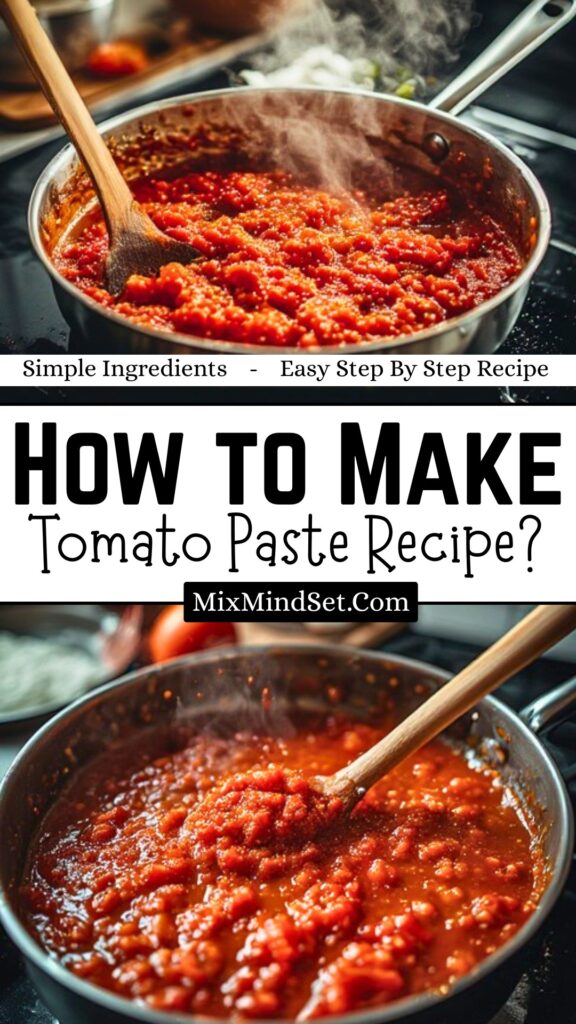
Reduce the heat to the lowest setting. Stir in the olive oil and salt. Let the purée simmer uncovered for 3 to 6 hours, stirring every 20–30 minutes to prevent scorching. The goal is to reduce the liquid until you have a thick, dark red paste that mounds on a spoon.
Pro tip: As the paste thickens, it becomes more prone to burning. Stir more frequently in the final hour.
5. Test for doneness.
Scoop a small amount onto a plate. If no liquid separates around the edges, your paste is ready.
Flavorful Tomato Paste Recipe: The Quick Oven Method
Short on time? The oven method is a fantastic alternative. It requires less hands-on stirring and evenly caramelizes the tomato purée.
Ingredients
| Ingredient | Quantity |
|---|---|
| Ripe tomatoes | 5 lbs |
| Olive oil | 3 tbsp |
| Salt | 1 tsp |
Instructions
1. Prepare the tomatoes using the same blanching and peeling method described above.
2. Purée and season.
Blend the tomatoes until smooth. Stir in the olive oil and salt.
3. Roast low and slow.
Preheat your oven to 300°F (150°C) . Pour the tomato purée into a large, shallow baking dish or rimmed baking sheet. A wider surface area speeds up evaporation.
4. Stir periodically.
Roast for 2.5 to 3.5 hours, stirring every 45 minutes. The paste is ready when it has reduced by about 90% and turns a deep, brick-red color. It should be thick enough to hold its shape when pushed aside with a spatula.
How to Store and Use Your Homemade Paste?
Homemade tomato paste lacks the preservatives found in commercial versions, so proper storage is key.
| Storage Method | Duration | Instructions |
|---|---|---|
| Refrigerator | Up to 1 week | Store in an airtight glass jar. Cover the top with a thin layer of olive oil to extend freshness. |
| Freezer | Up to 6 months | Spoon into ice cube trays. Once frozen, transfer cubes to a freezer bag. Each cube is roughly 1 tablespoon—perfect for recipes. |
| Canning (water bath) | Up to 1 year | Use sterilized jars and process according to safe canning guidelines. Add 1 tbsp lemon juice per pint to ensure acidity. |
Common Mistakes to Avoid:
Making tomato paste is straightforward, but a few pitfalls can affect the final result.
- Using watery tomatoes. Varieties like beefsteak contain too much water. Stick to Roma, San Marzano, or paste tomatoes.
- Skipping the skin removal. While technically optional, leaving the skins on creates bitter notes and a slightly gritty texture.
- Rushing the process. High heat burns the sugars before the water evaporates, resulting in a bitter, scorched flavor. Low and slow is non-negotiable.
- Not stirring enough. As the paste thickens, it can splatter and burn on the bottom. Stir frequently, especially during the last hour.
- Underseasoning. Salt isn’t just for flavor—it also helps draw out moisture and acts as a natural preservative.
Nutritional Information
Homemade tomato paste is nutrient-dense, especially compared to processed alternatives. Below is the approximate nutrition per 1 tablespoon (16g) serving.
| Nutrient | Amount |
|---|---|
| Calories | 15 |
| Total Fat | 1g |
| Sodium | 80mg |
| Total Carbohydrates | 2g |
| Dietary Fiber | 0.5g |
| Sugars | 1g |
| Protein | 0.5g |
| Vitamin C | 6% DV |
| Vitamin A | 4% DV |
| Lycopene | High |
Frequently Asked Questions
Can I make tomato paste without peeling the tomatoes?
Yes, but the texture will be slightly different. If you use a high-powered blender and strain the purée through a fine-mesh sieve afterward, you can eliminate most of the skin fragments. However, for the smoothest, most traditional paste, peeling is recommended.
How many tomatoes does it take to make one cup of paste?
On average, 5 pounds of fresh tomatoes yield about 1 cup of concentrated paste. This ratio can vary depending on the water content of your tomatoes.
Is it worth making tomato paste from canned tomatoes?
Absolutely. If fresh tomatoes aren’t in season, high-quality whole peeled San Marzano tomatoes work beautifully. Skip the blanching step—simply blend the canned tomatoes with their juices and proceed with the slow cooking method.
Why did my tomato paste turn bitter?
Bitter paste is usually the result of one of three things: scorching from heat that’s too high, over-reduction that burns the natural sugars, or leaving the tomato seeds in during cooking. Seeds release tannins that can turn bitter over long cooking times.
Can I add herbs or garlic to my tomato paste?
Yes, but with caution. Adding fresh garlic or delicate herbs early in the process can lead to bitterness as they overcook. If you want flavored paste, stir in roasted garlic or dried herbs like oregano during the final 30 minutes of cooking.
Conclusion
Making tomato paste at home is less about technical skill and more about time and attention. The process is meditative—watching fresh, bright tomatoes transform into a spoonful of pure, concentrated summer is deeply satisfying.
Once you’ve made your own, you’ll find yourself reaching for it constantly. Stir a spoonful into roasted vegetables. Brush it over chicken thighs before grilling. Whisk it into soups where you want depth without acidity. It becomes more than an ingredient; it becomes your secret weapon.
Start with good tomatoes, keep your heat low, and trust the process. Your future self—pulling a rich, red cube from the freezer on a busy weeknight—will thank you.