How to Make Olive Oil?
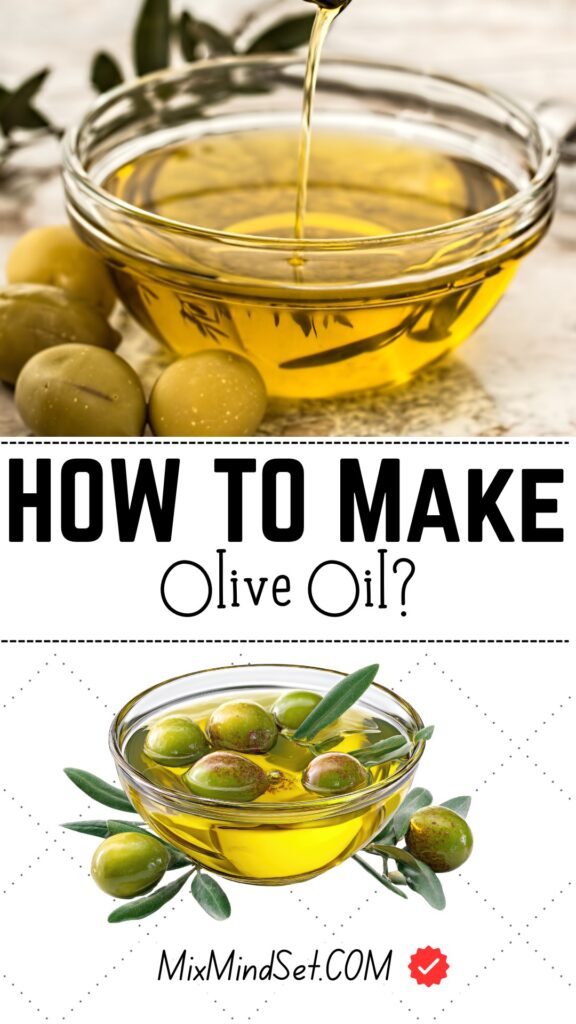
Making your own olive oil at home is a rewarding project. It is not quick, and it takes a lot of olives, but the taste of fresh, unfiltered oil is amazing. You do not need a big factory. You can make a small batch with kitchen tools.
I’m Fatima. I tried this at home with olives from a friend’s tree. It took a full day, but the oil was so fruity and peppery. Let me walk you through the process.
A quick reality check: You need about 5 kg (11 lbs) of fresh olives to make just 1 liter (about 4 cups) of oil. This is a labor of love. Do not expect gallons.
What You Need
Tools
| Tool | Why You Need It |
|---|---|
| Food processor (or heavy blender) | To crush the olives into a paste |
| Cheesecloth (or nut milk bag, or fine mesh strainer) | To strain the paste |
| Large bowls | For collecting liquid |
| Heavy weight (a pot full of water, or bricks) | To press the paste |
| Tall glass jar | For separating oil from water |
| Dark glass bottle | For storing the finished oil |
Ingredients
| Ingredient | Amount | Notes |
|---|---|---|
| Fresh olives | At least 5 kg (11 lbs) | Ripe, but not overripe. Green or purple both work |
| Warm water | A few tablespoons | Helps the paste form |
Pro tip: Do not use table olives (the ones in brine from a jar). They are cured and will not give good oil. You need raw, fresh olives straight from the tree or a grower.
Step‑by‑Step Instructions (Small Batch)
Step 1: Harvest and Clean
- Pick the olives when they are turning from green to purple or black. That is when the oil is best.
- Remove any leaves, twigs, or dirt.
- Wash the olives well in cold water. Drain.
Step 2: Crush into a Paste
- Work in small batches. Put a handful of olives into the food processor.
- Add 1 tablespoon of warm water to help it blend.
- Pulse until you get a chunky, thick paste. Do not over‑blend into a smooth puree. Small pieces are good.
- Empty the paste into a large bowl. Repeat with all olives.
Step 3: Knead the Paste (Malaxation)
- Let the paste sit at room temperature for 30 to 60 minutes.
- Stir it every 15 minutes with a wooden spoon.
- This step helps the tiny oil droplets join together. It increases your oil yield. Do not skip it.
Step 4: Press the Paste
- Line a large bowl with several layers of cheesecloth.
- Scoop the paste onto the cheesecloth.
- Gather the corners of the cloth and twist into a tight bundle.
- Place the bundle on a wire rack over another bowl (to catch liquid), or put it directly in a colander over a bowl.
- Put a heavy weight on top (a pot filled with water, or a few bricks).
- Let it press for 30‑45 minutes. The liquid will drip out.
Step 5: Squeeze (Optional)
- After pressing, you can squeeze the bundle with your hands to get the last drops. Wear gloves – the liquid can stain.
Step 6: Separate Oil from Water
- Pour the collected liquid into a tall glass jar.
- Let it sit undisturbed for a few hours (or overnight).
- The oil will float to the top. The water will sink to the bottom.
- Use a turkey baster or carefully pour off the top layer of oil into a clean, dark glass bottle.
Step 7: Store and Use
- Seal the bottle tightly.
- Store in a cool, dark cupboard (not the fridge).
- Use within 3‑6 months. Homemade oil is unfiltered and spoils faster than store‑bought.
Pro tip: For a slightly higher yield, you can repeat the pressing step. Add a little warm water to the pressed paste, mix, and press again.
Video Guide 📺
How to Make Olive Oil Without a Press (Very Small Batch)
If you have only a few cups of olives, try this method:
- Crush the olives with a heavy mortar and pestle or a clean hammer (put olives in a thick plastic bag first).
- Mix the crushed paste with a little warm water.
- Let it sit for 1 hour, stirring occasionally.
- Pour into a jar and let the oil rise to the top.
- Skim off the oil with a spoon.
This gives very little oil, but it is fun to try.
Pro Tips & Common Mistakes to Avoid
Do this ✅
- Use fresh olives – Within 24‑48 hours of picking is best.
- Work at room temperature – Heat can damage the oil’s flavor.
- Be patient – The kneading (malaxation) step is very important.
- Store in dark glass – Light destroys olive oil fast.
Avoid that ❌
- Using overripe or rotten olives – They will ruin the taste.
- Using metal containers – Olive oil can react with some metals. Use glass or stainless steel.
- Forgetting to separate the water – Water makes the oil spoil faster.
- Using plastic for long‑term storage – Plastic can leach into the oil. Use glass.
Why Is My Homemade Olive Oil Bitter or Peppery? That is a good sign. Fresh, high‑quality olive oil is often bitter and peppery (it makes your throat tickle). That comes from natural antioxidants. Store‑bought oil is often processed to remove those flavors. Enjoy the fresh taste.
How to Store Homemade Olive Oil?
| Storage Method | How Long It Lasts | Notes |
|---|---|---|
| Dark glass bottle, cool cupboard | 3‑6 months | Best quality |
| Refrigerator | 6‑8 months | Becomes cloudy and thick. That is normal – it clears at room temperature. |
| Plastic bottle | Not recommended | Plastic can affect taste. |
Pro tip: After opening, use within 3 months. Homemade oil has no preservatives.
Nutrition Facts (Per 1 tablespoon of olive oil)
| Nutrient | Amount |
|---|---|
| Calories | 120 kcal |
| Total fat | 14 g |
| Saturated fat | 2 g |
| Monounsaturated fat | 10 g |
| Polyunsaturated fat | 1.5 g |
| Vitamin E | 10% DV |
| Vitamin K | 8% DV |
Frequently Asked Questions (FAQs)
Can I make olive oil from store‑bought olives (like Kalamata)?
No. Table olives are cured in salt water or brine. The curing process changes their chemistry. They will not release good oil. You need raw, fresh olives from a grower or your own tree.
How many olives does it take to make 1 cup of oil?
About 2.5 to 3 kg (5.5 to 6.5 lbs) of fresh olives make roughly 1 cup (240 ml) of oil. The yield depends on the olive variety and ripeness.
Why did I get so little oil?
Olives naturally contain only 15‑25% oil. The rest is water and solids. Also, home pressing is less efficient than factory pressing. Do not expect a large yield.
Can I use a juicer to make olive oil?
No. Juicers grind too fast and create heat, which damages the oil. They also mix everything together. The traditional method (crush, knead, press) is best.
How do I know if my homemade oil has gone bad?
Smell it. If it smells like wet cardboard, old nuts, or crayons, it is rancid. Do not eat it. Texture changes (cloudiness) is normal – bad smell is the sign.
Can I flavor my homemade olive oil?
Yes. After making the oil, add fresh garlic, rosemary, chili peppers, or lemon peel to the bottle. Let it sit for 1‑2 weeks. Keep flavored oil in the fridge and use within 1 month to avoid botulism risk (garlic and herbs can grow bacteria in oil at room temperature).
Is it worth making olive oil at home?
For the experience, yes. You will appreciate olive oil more. But for the cost and time, store‑bought is cheaper. Homemade is about the joy of making something yourself.
Final Thoughts
Making your own olive oil is a slow, hands‑on process. It takes many olives, a whole day, and a lot of patience. But the first time you taste that fresh, peppery, unfiltered oil on a piece of bread, you will understand why people have done this for thousands of years.
The most important steps: use fresh olives, knead the paste well, and separate the oil from water completely. Do not expect a huge yield. Enjoy the small bottle you make, and share it with friends.
Now go find some olives.