Easy Homemade Aioli Recipe
If you’ve only ever had store-bought aioli, you’re missing out. Real homemade aioli is a revelation—rich, silky, punchy with garlic, and nothing like the mayo-based dips sold in jars. The best part? It takes less than five minutes, uses simple ingredients, and costs a fraction of fancy grocery store versions.
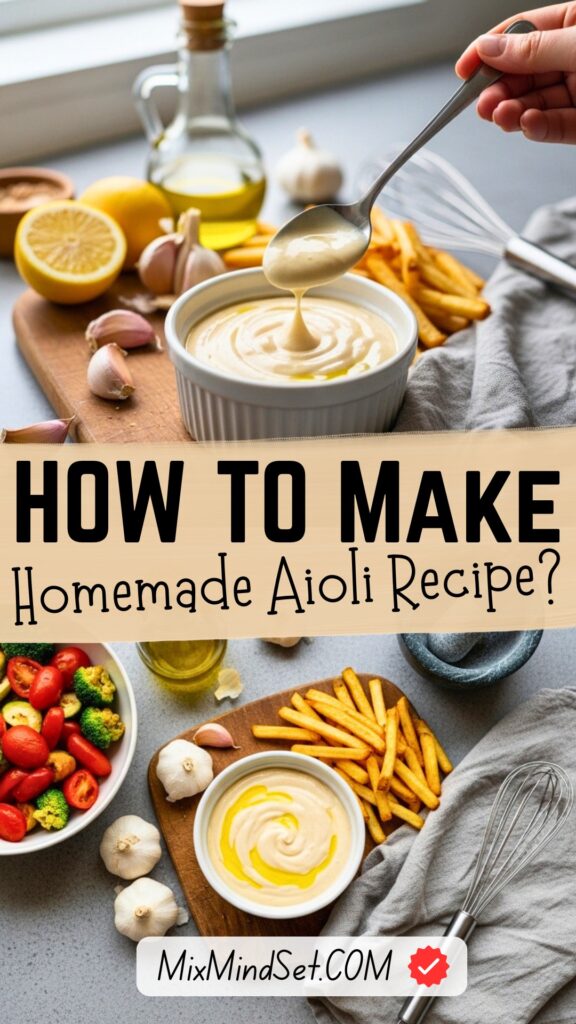
Traditional aioli is an emulsion of garlic, olive oil, and egg (or just egg yolk). It’s the ultimate condiment for fries, burgers, roasted vegetables, seafood, or even slathered on a warm baguette. Once you make it yourself, you’ll never buy the shelf-stable stuff again.
Let me show you how to make foolproof aioli—no special equipment required, just a whisk and a little patience.
What Is Aioli (And How Is It Different from Mayo)?
Many people use “aioli” and “mayonnaise” interchangeably, but there’s a subtle difference:
- Traditional aioli comes from Provence, France, and the Mediterranean. It’s made with just garlic, olive oil, and salt, pounded in a mortar and pestle. No egg. It’s intense, garlicky, and thinner than mayo.
- Modern aioli (what most of us make at home) includes an egg yolk or a whole egg as an emulsifier. This makes it thicker, more stable, and closer to flavored mayonnaise.
This recipe is the modern, easy version—it tastes like the real thing, comes together in minutes, and works every time. You get the bold garlic flavor without the risk of a broken emulsion.
Ingredient Table
| Ingredient | Amount | Notes |
|---|---|---|
| Garlic cloves | 2–3 large | Roasted garlic works for a milder flavor |
| Egg yolk | 1 large | Use pasteurized eggs if concerned about raw |
| Lemon juice | 1 tablespoon | Fresh is best; adds brightness and stability |
| Dijon mustard | ½ teaspoon | Optional but helps emulsify and adds tang |
| Olive oil | ½ cup | Use mild extra virgin or a blend with neutral oil |
| Neutral oil (sunflower, canola, avocado) | ½ cup | Prevents bitterness from pure olive oil |
| Salt | ¼ teaspoon | Fine sea salt |
| Cold water | 1 teaspoon | Helps loosen if too thick |
Nutritional Facts (per 1 tablespoon)
| Nutrient | Amount |
|---|---|
| Calories | 98 kcal |
| Fat | 11g |
| Saturated Fat | 1.5g |
| Carbohydrates | 0.3g |
| Protein | 0.2g |
| Sodium | 35mg |
| Vitamin C | 1% DV |
Step-by-Step: The Foolproof Aioli Method
You can make aioli with a whisk and bowl, a food processor, or even a jar with a tight lid (shake method). I’ll give you the whisk method because it builds the best texture, but I’ll also include shortcuts.
Classic Whisk Method (5 minutes)
- Crush the garlic into a paste. On a cutting board, sprinkle salt over the garlic cloves and smash them with the flat side of your knife. Scrape and chop until you have a fine paste. This step is non-negotiable—it distributes garlic flavor evenly without chunks.
- Whisk the base. In a medium bowl, combine the garlic paste, egg yolk, lemon juice, mustard, and salt. Whisk until pale and slightly thickened, about 30 seconds.
- Add oil drop by drop. While whisking constantly, add the first ¼ cup of oil (use neutral oil first) in a very slow, thin stream—literally drop by drop. This is the most critical step. The mixture will start to thicken and emulsify.
- Increase to a slow drizzle. Once the emulsion looks stable (thick and glossy), you can add the remaining oil in a thin, steady stream, alternating between neutral and olive oil. Keep whisking continuously.
- Adjust consistency. If the aioli becomes too thick, whisk in 1 teaspoon of cold water or extra lemon juice. Taste and add more salt or garlic if needed.
Food Processor Method (2 minutes)
Combine all ingredients except the oils in the food processor. Pulse to blend. With the machine running, slowly pour the oils through the feed tube in a thin stream. Stop as soon as all oil is incorporated. Be careful not to over-process, or the emulsion can break.
Video Guide 📺
5 Common Mistakes (And How to Fix a Broken Aioli)
Aioli can be temperamental, but almost every problem has a simple fix.
| Mistake | Why It Happens | Quick Fix |
|---|---|---|
| Aioli is thin and runny | Oil added too fast or at wrong temperature | Start over with a fresh egg yolk, then whisk in the broken aioli drop by drop as if it were oil. |
| Bitter taste | Using all extra virgin olive oil (too strong) | Blend in more neutral oil or add a pinch of sugar. Next time, use half neutral oil. |
| Lumpy or grainy | Garlic not crushed into a paste | Press through a fine sieve or re-whisk vigorously. For future batches, grate garlic on a microplane. |
| Splits after sitting | Emulsion wasn’t stable (lack of mustard or lemon) | Whisk in 1 teaspoon of hot water or a fresh yolk. Store properly and use within 3 days. |
| Too garlicky | Very large or old garlic cloves | Balance with extra lemon juice and a drop of honey. Next time, use roasted garlic. |
Flavor Variations (Endless Possibilities)
Once you master the basic aioli, try these easy twists. Just stir in the extra ingredients after the emulsion is complete.
- Lemon-Dill Aioli – Add 1 tablespoon fresh dill and 1 teaspoon lemon zest. Perfect with salmon or roasted potatoes.
- Smoky Paprika Aioli – Stir in 1 teaspoon smoked paprika and a pinch of cayenne. Ideal for sweet potato fries.
- Chipotle Lime Aioli – Add 1 tablespoon adobo sauce (from chipotle peppers) and 1 teaspoon lime juice. Great for tacos.
- Roasted Garlic Aioli – Replace raw garlic with 1 head of roasted garlic (squeezed out of the skins). Much milder and sweeter.
- Herbed Aioli – Mix in 2 tablespoons of finely chopped chives, parsley, or basil. Lovely on grilled vegetables.
Pro Tips for Perfect Aioli Every Time
- Use room temperature ingredients – Cold eggs and oil make emulsification harder. Let your egg sit out for 20 minutes, or place it in a bowl of warm water for 5 minutes.
- Measure your oil – Eyeballing often leads to too much oil. Use a liquid measuring cup so you can pour slowly.
- Keep a safety yolk – If you’re nervous, start with a second egg yolk in a separate bowl. If your main batch breaks, you can rescue it immediately.
- Store correctly – Homemade aioli lasts 3–4 days in an airtight container in the refrigerator. It will thicken when cold; let it sit at room temperature for 10 minutes and whisk before serving.
- Don’t freeze – The emulsion will break completely upon thawing. Make small batches instead.
Frequently Asked Questions
Can I make aioli without egg?
Yes. For a vegan or egg-free version, use aquafaba (the liquid from a can of chickpeas). Replace 1 egg yolk with 2 tablespoons of aquafaba. Follow the same whisking method. The texture is slightly lighter but still creamy. Another option: use ¼ cup of plain unsweetened yogurt blended with garlic and oil.
Is it safe to eat raw egg in aioli?
The risk is very low if you use pasteurized eggs (sold in many grocery stores) or fresh, high-quality eggs from a reliable source. If you’re pregnant, elderly, or immunocompromised, use pasteurized eggs or the aquafaba method. Commercial shelf-stable aioli often contains no egg at all—just modified starch and preservatives.
Why is my aioli too thick?
That’s actually a good sign—it means your emulsion worked perfectly. Thin it by whisking in cold water, lemon juice, or even a splash of milk, 1 teaspoon at a time, until it reaches a dipping consistency.
Can I use a blender or immersion blender?
Yes, and it’s even easier. Use a tall, narrow jar with an immersion blender. Put all ingredients (except oil) in the jar, pour the oil on top, then place the blender at the bottom. Turn it on and slowly pull up—the aioli emulsifies in seconds. This method rarely fails.
How do I fix aioli that tastes too much like olive oil?
Some olive oils are peppery or bitter when raw. Balance by adding a little lemon juice, honey, or a pinch of sugar. Next time, use a “light” or “mild” olive oil blended with a neutral oil like grapeseed or avocado.
What’s the best way to serve aioli?
Aioli is incredibly versatile. Try it as:
- A dip for french fries, sweet potato fries, or raw vegetables
- A spread for burgers, sandwiches, or wraps
- A sauce for grilled fish, shrimp, or crab cakes
- A topping for roasted vegetables, baked potatoes, or grain bowls
- A dressing (thinned with a little water) for potato salad or coleslaw
Conclusion
Homemade aioli is one of those small kitchen luxuries that takes almost no time but elevates everything it touches. Once you learn the simple technique—slow oil, steady whisk, and fresh garlic—you’ll have a go-to condiment that impresses guests and saves you money.
Start with the classic recipe, then experiment with flavors. Keep a jar in your fridge (just remember it only lasts a few days, so make small batches). And the next time someone reaches for bottled mayonnaise? Hand them a spoonful of your homemade aioli instead. They’ll never go back.