Pad See Ew Recipe
There’s a reason Pad See Ew is a staple of Thai street food—chewy, caramelized rice noodles, tender bites of protein, perfectly scrambled egg, and fresh Chinese broccoli, all coated in a rich, smoky soy sauce. The name literally translates to “fried with soy sauce”, and that simplicity is exactly what makes it so brilliant.
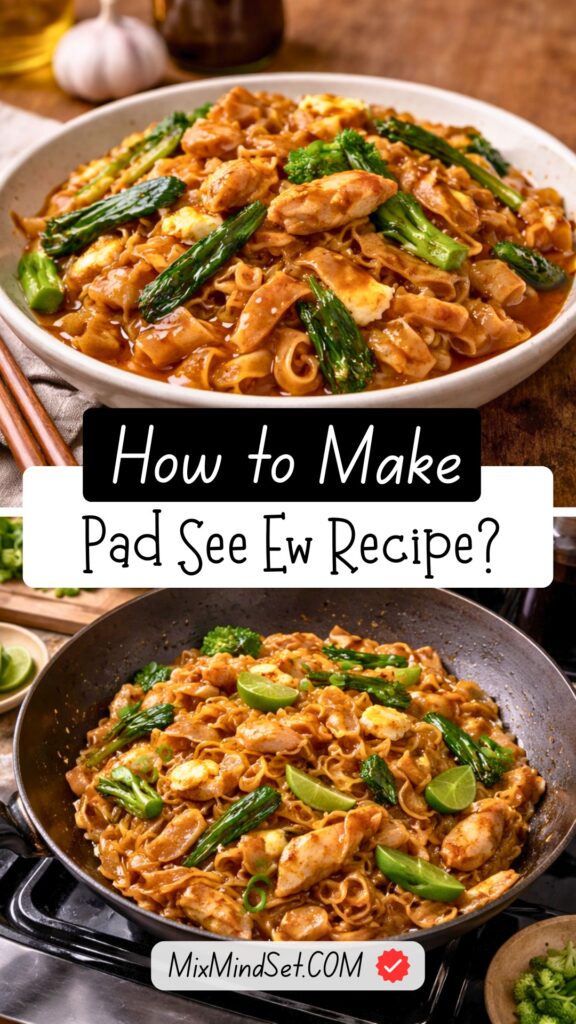
But here’s the thing: most home cooks assume you need a jet-engine wok and years of training to pull it off. Not true. With the right techniques—and a little patience—you can capture that signature “wok hei” (the breath of the wok) right on your stovetop .
This recipe breaks down everything you need to know: the exact sauce blend that mimics your favorite Thai spot, how to prep fresh or dried noodles so they don’t turn into mush, and the all-important order of operations that gives you that slightly charred, deeply savory finish.
Let’s get that wok hot.
What Is Pad See Ew?
Pad See Ew (ผัดซีอิ๊ว) is a Chinese-influenced Thai noodle dish that’s become a global comfort food favorite . It’s often compared to Char Kway Teow (Malaysia/Singapore) or Cantonese Chow Fun, but with a distinctly Thai flavor profile—sweeter, saltier, and built around a blend of three essential soy sauces .
The magic happens when those wide, flat rice noodles hit a screaming-hot pan and the dark soy sauce caramelizes, creating sticky, slightly charred edges. That’s not burning—that’s flavor. And once you learn to recreate it at home, you’ll never order delivery again.
Ingredients & Why Each One Matters
Authentic Pad See Ew relies on a few specialty ingredients, but most are easy to find at Asian grocery stores or online. Don’t skip the dark soy sauce—it’s the heart of the dish.
Ingredient Table
| Ingredient | Amount | Notes |
|---|---|---|
| For the Noodles | ||
| Wide flat rice noodles (sen yai) | 8 oz (225g) | Fresh preferred; dried works with proper prep |
| For the Sauce | ||
| Oyster sauce | 3 tbsp | The savory backbone—use Thai brand like Healthy Boy |
| Dark soy sauce (see ew dam) | 2 tbsp | Thick, syrupy, sweet—NOT the same as regular soy sauce |
| Light soy sauce | 1 tbsp | For saltiness without dark color |
| Sugar | 1 tbsp | Palm sugar is traditional; brown sugar works |
| White vinegar or rice vinegar | 1 tsp | Optional but balances richness |
| For the Stir-Fry | ||
| Protein (chicken, beef, pork, tofu, or shrimp) | 6-8 oz | Thinly sliced against the grain |
| Garlic | 3-4 cloves | Finely minced |
| Chinese broccoli (gai lan) | 2 cups | Stems sliced diagonally, leaves left whole |
| Eggs | 2 large | Lightly beaten |
| Neutral oil | 3-4 tbsp | Avocado, canola, or vegetable—high smoke point needed |
| Ground white pepper | ¼ tsp | For finishing |
Nutritional Facts (per serving, approx. 2 cups)
| Nutrient | Amount |
|---|---|
| Calories | 550-650 kcal |
| Protein | 25-30g |
| Carbohydrates | 70-80g |
| Fat | 18-22g |
| Fiber | 3-4g |
| Sodium | 1200-1500mg |
Step-by-Step: How to Make Pad See Ew
The key to success is prep first, cook fast. Have everything measured, chopped, and within arm’s reach before you turn on the heat. This is not a dish where you can pause to mince garlic.
Part 1: Prepare Your Noodles (Crucial Step!)
If using fresh rice noodles (recommended):
- Fresh noodles often come folded or stacked. Gently separate the ribbons.
- Place them in a colander and pour hot (not boiling) water over them to loosen. Drain well.
- Toss with 1 teaspoon of oil to prevent sticking.
If using dried rice noodles:
- Place noodles in a large bowl and cover with warm water. Soak for 20-30 minutes until pliable but still firm .
- Drain and set aside. Do not boil them—they’ll finish cooking in the wok.
Pro tip: Some Thai cooks undercook dried noodles slightly, knowing they’ll soften during stir-frying . This prevents that sad, mushy texture.
Part 2: Make the Sauce
In a small bowl, whisk together:
- 3 tbsp oyster sauce
- 2 tbsp dark soy sauce
- 1 tbsp light soy sauce
- 1 tbsp sugar
- 1 tsp vinegar (optional)
Set aside. This sauce is intensely flavored, so a little goes a long way.
Part 3: The Stir-Fry (Work Fast!)
You’ll need your largest skillet or wok. A stainless steel or carbon steel pan works better than non-stick here—you want some sticking and charring .
Step 1 – Sear the protein:
Heat 1 tbsp oil over high heat until shimmering. Add your protein in a single layer. Let it sear undisturbed for 45 seconds, then stir-fry until just cooked through (about 2 minutes total). Remove to a plate.
Step 2 – Cook the egg and aromatics:
Add another 1 tbsp oil to the same pan. Add minced garlic and stir for 10 seconds until fragrant. Push garlic to one side and pour in beaten eggs. Let them set for 10-15 seconds, then scramble lightly. Don’t fully cook them—they’ll get more heat later.
Step 3 – Add the noodles:
Add the prepared noodles to the pan. Pour half the sauce over them. Here’s the secret: Let the noodles sit undisturbed for 30-45 seconds. Don’t stir. This creates that caramelized, slightly charred texture that defines Pad See Ew .
Step 4 – Toss and combine:
After the noodles have charred, toss to flip them. Add the remaining sauce, cooked protein, and Chinese broccoli. Stir-fry for 60-90 seconds until the broccoli is bright green and the noodles are evenly coated.
Step 5 – Finish:
Sprinkle with ground white pepper. Serve immediately—Pad See Ew waits for no one.
Video Guide 📺
Common Mistakes & How to Fix Them
| Mistake | Why It Happens | Quick Fix |
|---|---|---|
| Mushy, broken noodles | Over-soaked or boiled instead of just soaked | Soak dried noodles for less time; they should still be firm. If using fresh, don’t overcook. |
| No smoky flavor (wok hei) | Pan wasn’t hot enough or you stirred constantly | Crank the heat to maximum and let noodles sit undisturbed for 30+ seconds. |
| Bland, one-note taste | Skimped on dark soy sauce or used wrong type | Dark soy sauce is non-negotiable—it adds sweetness and color. Regular soy sauce alone won’t work. |
| Watery, saucy finish | Too much sauce or vegetables released water | Reduce sauce slightly. If broccoli releases water, crank heat higher to evaporate. |
| Egg is dry and rubbery | Cooked egg too long before adding noodles | Cook egg just until barely set, then incorporate quickly. |
| Tofu fell apart | Used soft tofu or didn’t press/drain it | Use extra-firm tofu, press for 20 minutes, and pan-fry separately before adding. |
Pro Tips for Restaurant-Quality Results
- Fresh noodles are worth the hunt. Most Asian grocery stores sell them refrigerated. They’re often labeled “fresh rice noodles,” “ho fun,” or “shahe fen.” They make a dramatic difference .
- Dark soy sauce is not optional. It’s thicker, sweeter, and less salty than regular soy sauce. Look for “Thai black soy sauce” (si-io dam) or “sweet soy sauce” (kecap manis in a pinch) . The dish will be pale and flat without it.
- Use chicken thighs, not breasts. If you’re making chicken Pad See Ew, thighs stay juicy under high heat. Breasts dry out quickly .
- Prep everything before you start. Once that wok is hot, you have about 3 minutes total cooking time. There’s no pause button.
- For extra tenderness (beef version): Marinate beef slices with ½ teaspoon baking soda for 15 minutes before cooking. This is the “restaurant secret” for silky, tender beef .
- Don’t overcrowd the pan. If you’re cooking for more than two people, work in batches. Overcrowding drops the pan temperature and you’ll steam instead of sear.
Frequently Asked Questions
What’s the difference between Pad See Ew and Drunken Noodles (Pad Kee Mao)?
They’re cousins, not twins. Pad See Ew is sweeter and more savory, with a thick, caramelized soy sauce base. Pad Kee Mao (Drunken Noodles) is spicier, uses more fresh herbs (Thai basil, kaffir lime), and has a thinner, punchier sauce with chilies and garlic. Both use wide rice noodles, but the flavor profiles are completely different.
Can I use regular broccoli instead of Chinese broccoli (gai lan)?
Yes, but adjust your expectations. Regular broccoli has thicker stems and a milder flavor. Slice the stems thinly and blanch them for 60 seconds before stir-frying. Baby broccoli or broccolini is a closer substitute . Gai lan has a slightly bitter, mustard-like taste that balances the sweet sauce beautifully.
Why do restaurant noodles have that slightly burnt taste?
That’s wok hei (pronounced “wok hay”)—the “breath of the wok.” It’s the smoky, charred flavor that comes from cooking at extremely high heat with a seasoned wok . At home, you can mimic it by:
- Using a stainless steel or carbon steel pan (non-stick won’t char)
- Cranking your burner to maximum
- Letting noodles sit untouched to caramelize
- Working in small batches
Can I make Pad See Ew gluten-free?
Yes, with modifications. Use tamari instead of light soy sauce. Find a gluten-free dark soy sauce (some brands contain wheat) or substitute with coconut aminos mixed with a touch of molasses for color. Use rice noodles (naturally gluten-free) and check that your oyster sauce is gluten-free—many are not. Lee Kum Kee makes a gluten-free version.
How do I store and reheat leftovers?
Pad See Ew is best fresh, but leftovers keep for 2-3 days in the fridge. To reheat: Use a hot skillet with a splash of water or soy sauce—microwaving makes noodles rubbery. Reheat over high heat, tossing constantly, until hot and slightly re-charred. Don’t expect the same texture as fresh.
What protein works best?
All of them, honestly. Here’s the shortlist:
- Chicken thighs – Juiciest option
- Beef sirloin or flank – Slice thin against the grain
- Pork shoulder – Fatty and flavorful
- Shrimp – Cooks in 90 seconds, add at the very end
- Tofu (extra-firm) – Press and pan-fry separately first
- Plant-based mince – A great vegan option
Conclusion
Pad See Ew looks deceptively simple, but it’s a dish that rewards technique and respect for the ingredients. The first time you nail that caramelized, smoky noodle—slightly charred at the edges, impossibly chewy in the center—you’ll understand why it’s a Thai street food icon.
Don’t be discouraged if your first attempt isn’t perfect. Even imperfect Pad See Ew is delicious. And with practice, you’ll develop a feel for the heat, the timing, and that glorious moment when the dark soy sauce hits the pan and fills your kitchen with the scent of Bangkok night markets.
Now go heat up that wok. Dinner’s waiting.