Sourdough Pancakes Recipe
There’s something quietly satisfying about making pancakes from a sourdough starter. What begins as a way to use up discard turns into a stack of fluffy, golden pancakes with a gentle tang and a tender crumb that boxed mixes simply can’t match.
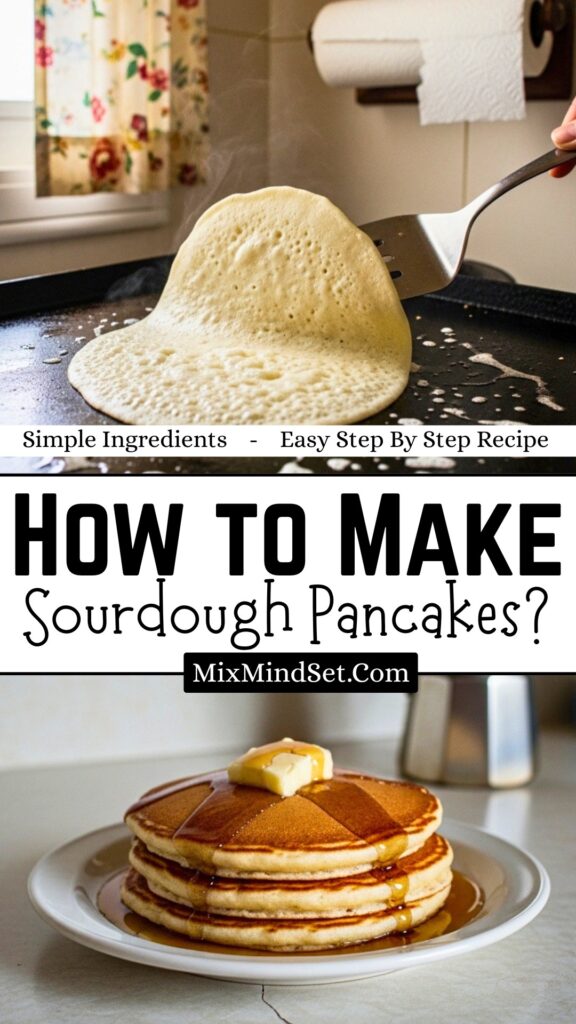
These pancakes are flexible—you can make them with unfed discard straight from the fridge or with an active, bubbly starter for an even lighter texture.
If you’ve been maintaining a sourdough starter, this recipe gives you a delicious, no-waste solution for the excess. And if you don’t have a starter yet, this might be the reason to finally start one.
I’m Fatima, and I’ll walk you through everything you need to know to make sourdough pancakes that become a regular part of your breakfast rotation.
Why Sourdough Pancakes Deserve a Spot at Your Table?
Sourdough pancakes aren’t just a gimmick. The fermentation process brings real benefits to the table.
- Better digestibility: The long fermentation (even overnight) breaks down some of the gluten and phytic acid, making the pancakes easier on the stomach.
- Complex flavor: You get a subtle tanginess that balances beautifully with maple syrup, fruit, or a pat of butter.
- Perfect for discard: Instead of throwing away sourdough discard, you turn it into something everyone looks forward to.
- Flexible timing: You can mix the batter the night before and cook in the morning, or whip them up immediately if you’re in a hurry.
How to Make Sourdough Pancakes?
The ingredient list is short and uses pantry staples. The key is the sourdough starter—either discard or active works, though the texture will vary slightly.
| Ingredient | Quantity | Notes |
|---|---|---|
| All-purpose flour | 1 ½ cups (180g) | Can substitute up to 50% whole wheat |
| Sourdough starter (discard or active) | 1 cup (240g) | 100% hydration starter preferred |
| Milk (or buttermilk) | 1 cup (240ml) | Buttermilk adds extra tang |
| Large egg | 1 | Room temperature |
| Granulated sugar or maple syrup | 2 tbsp | Optional; enhances browning |
| Butter (melted) or oil | 2 tbsp | For richness |
| Baking soda | 1 tsp | For lift (add just before cooking) |
| Salt | ½ tsp | |
| Optional add-ins | Vanilla extract, cinnamon, blueberries |
Two Ways to Make Sourdough Pancakes
You can approach this recipe in two ways, depending on how much time you have and what texture you prefer.
Method 1: Overnight Fermentation (for deeper flavor and fluffier texture)
This method allows the sourdown to work slowly, developing flavor and breaking down the flour.
- Combine flour, starter, milk, and sugar in a large bowl. Stir until just combined—it will look like a thick batter. Cover and let sit at room temperature for 8–12 hours (or overnight).
- In the morning, stir in the egg, melted butter, salt, and baking soda. The batter will bubble slightly when the baking soda reacts with the acidity.
- Cook immediately on a hot griddle.
Method 2: Quick Version (using discard, no waiting)
If you forgot to prep the night before, you can still enjoy sourdough pancakes.
- Whisk together the flour, starter, milk, egg, melted butter, sugar, and salt in a bowl.
- Let the batter rest for 10–15 minutes while you heat your pan. This brief rest allows the gluten to relax slightly.
- Stir in the baking soda just before cooking.
Step-by-Step Cooking Instructions:
1. Prepare Your Griddle or Skillet
Heat a cast-iron skillet or non-stick griddle over medium heat. A properly heated surface ensures even browning. To test, sprinkle a few drops of water—they should sizzle and dance.
2. Adjust Batter Consistency
After fermentation, the batter may thicken. If it seems too stiff, add a tablespoon of milk at a time until it reaches a slow-pouring consistency. It should spread slightly when ladled onto the pan but not run thin.
3. Cook the Pancakes
- Lightly grease the pan with butter or oil.
- Pour about ¼ cup of batter for each pancake.
- Cook until bubbles form on the surface and the edges look set, about 2–3 minutes.
- Flip carefully and cook another 1–2 minutes until golden brown on the other side.
4. Keep Warm
Place finished pancakes on a baking sheet in a 200°F oven while you cook the remaining batter. This keeps them warm without drying out.
Video Guide 📺
Common Mistakes to Avoid:
Even a simple pancake recipe can go sideways. Here’s how to stay on track.
- Skipping the baking soda: The sourdough starter is acidic. Baking soda neutralizes some of that acid and creates carbon dioxide bubbles for lift. Without it, pancakes may be dense and flat.
- Overmixing the batter: Stir just until combined. A few small lumps are fine. Overmixing develops gluten, leading to tough, rubbery pancakes.
- Using a cold pan: If the pan isn’t hot enough, pancakes will spread too much and absorb excess grease. Medium heat is your friend.
- Flipping too early: Wait until bubbles appear across the surface and the edges look dry. Flipping prematurely leads to pale, undercooked pancakes.
- Adding baking soda too early: If you add it hours before cooking, the reaction will fizzle out. Always add it right before you start cooking.
Flavor Variations to Try:
Once you’ve mastered the basic recipe, experiment with these twists:
- Blueberry Lemon: Fold in 1 cup fresh or frozen blueberries and add 1 teaspoon lemon zest to the batter.
- Cinnamon Roll: Mix 1 teaspoon cinnamon into the batter. Swirl a mixture of brown sugar and cinnamon on top after pouring onto the griddle.
- Savory Sourdough Pancakes: Omit the sugar, add ½ cup shredded cheddar and chopped scallions. Serve with sour cream or a fried egg.
- Whole Grain: Replace half the all-purpose flour with whole wheat or spelt flour. Increase milk by 1–2 tablespoons to adjust consistency.
Nutritional Information
The values below are estimated for one pancake (using the basic recipe with all-purpose flour, whole milk, and butter). A typical recipe makes about 10–12 pancakes.
| Nutrient | Amount Per Pancake |
|---|---|
| Calories | 120–140 |
| Protein | 4g |
| Carbohydrates | 18g |
| Fat | 4g |
| Saturated Fat | 2g |
| Fiber | 1g |
| Sodium | 180mg |
Frequently Asked Questions
Can I use sourdough discard straight from the fridge?
Absolutely. Discard works perfectly. If it has been refrigerated for a while, let it come to room temperature for about 30 minutes before mixing for easier incorporation.
Why do I need to add baking soda? Can I skip it?
Baking soda reacts with the acidity of the starter to create lift. Skipping it results in dense, thin pancakes. If you prefer a very tangy, thinner pancake (like a sourdough crepe), you can leave it out, but the texture will be different.
Can I make these pancakes gluten-free?
Yes, but you’ll need a gluten-free sourdough starter and a gluten-free all-purpose flour blend that includes xanthan gum. The liquid ratio may need slight adjustment; add milk slowly until the batter reaches the right consistency.
How do I store and reheat leftovers?
Let pancakes cool completely, then stack with parchment paper between them. Store in an airtight container in the refrigerator for up to 3 days or freeze for up to 3 months. Reheat in a toaster, microwave, or skillet.
My pancakes turned out too tangy. How can I mellow the flavor?
Tanginess increases with longer fermentation. For a milder flavor, use the quick method, or shorten the overnight fermentation to 6–8 hours. Adding a little extra sugar or serving with sweet toppings also balances the tang.
Conclusion
Sourdough pancakes are a perfect example of how a simple technique can transform humble ingredients into something memorable. Whether you use unfed discard to reduce waste or let the batter ferment overnight for complex flavor, the result is a breakfast that feels both wholesome and indulgent.
Once you try them, you may find yourself planning your sourdough feedings around pancake mornings. Keep a jar of starter in the fridge, and you’re never more than a few minutes away from a stack of these golden, tangy pancakes.