Pizza Sauce Recipe
Store‑bought pizza sauce is convenient, but it often tastes like sweetened tomato paste with little soul.
Homemade pizza sauce is a revelation: bright, garlicky, herbal, and perfectly balanced. Best of all, it takes 10 minutes with no cooking required. You just stir, season, and spread.
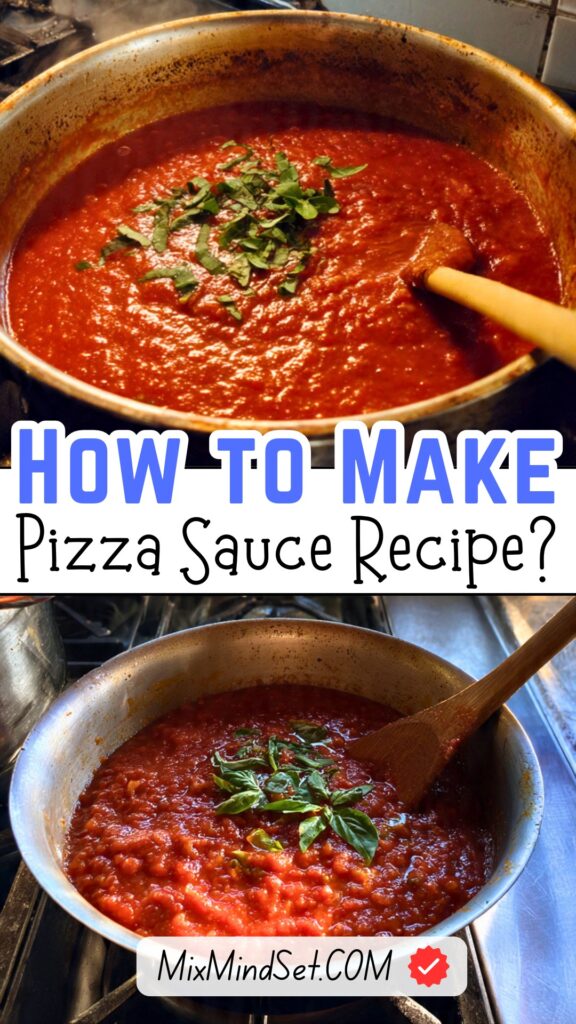
I’m Fatima, and this recipe gives you a no‑cook pizza sauce that beats any jar. It’s thick enough to not make your crust soggy, bold enough to stand up to cheese and toppings, and customizable to your taste.
Keep a batch in your fridge for pizza nights, calzones, or even dipping breadsticks.
Why Make Your Own Pizza Sauce?
Canned pizza sauce is often overly sweet, too thin, or loaded with preservatives. Homemade gives you control and freshness.
- No cooking required – Just mix and use. Raw tomatoes retain a bright, fresh flavor.
- Adjustable consistency – Make it as thick or thin as you like.
- Budget‑friendly – Canned crushed tomatoes are cheap and last in your pantry.
- Endlessly customizable – More oregano? Less sugar? Extra garlic? You decide.
This recipe uses crushed tomatoes as the base – they have the perfect texture without needing to blend. No simmering means you save time and keep that vibrant tomato taste.
Ingredients You’ll Need
| Ingredient | Quantity | Notes |
|---|---|---|
| Canned crushed tomatoes | 1 (15 oz) can | San Marzano or good quality brand |
| Tomato paste | 1 tbsp | Adds richness and thickness |
| Extra virgin olive oil | 2 tbsp | Use a good one for flavor |
| Garlic | 2 cloves | Minced (or 1 tsp garlic powder) |
| Dried oregano | 1 tsp | Essential for pizza flavor |
| Dried basil | 1 tsp | Or 1 tbsp fresh, finely chopped |
| Sugar | 1 tsp | Balances acidity (optional) |
| Salt | ½ tsp | Adjust to taste |
| Red pepper flakes | ¼ tsp | Optional, for heat |
| Black pepper | ¼ tsp | Freshly ground |
Pro tip: Look for crushed tomatoes (not tomato sauce or whole peeled). If you only have whole peeled, pulse them in a food processor a few times until chunky but not puréed.
How to Make Pizza Sauce (No‑Cook Method)
1. Combine Ingredients
- In a medium bowl, add crushed tomatoes, tomato paste, olive oil, minced garlic, oregano, basil, sugar, salt, red pepper flakes, and black pepper.
2. Stir and Taste
- Whisk or stir until everything is evenly combined.
- Taste immediately – this is the most important step. Need more salt? Add a pinch. Want more herb flavor? Add another ½ tsp oregano. Like it sweeter? A little more sugar.
3. Adjust Consistency (If Needed)
- The sauce should be thick but spreadable – it should hold its shape on a spoon but not be pasty.
- Too thick? Stir in 1–2 tbsp water.
- Too thin? Add another tablespoon of tomato paste.
4. Use Immediately or Store
- Spread directly onto pizza dough. No cooking or simmering required – it will cook perfectly in the hot oven.
- Or refrigerate in an airtight container for up to 1 week, or freeze for 3 months.
Video Guide 🎥
Pro Tips & Common Mistakes to Avoid
Do this ✅
- Use crushed tomatoes – They give the perfect chunky‑yet‑smooth texture without blending.
- Don’t skip the tomato paste – It adds depth and body that crushed tomatoes alone lack.
- Let the sauce rest for 30 minutes – If you have time, let it sit at room temperature to allow the dried herbs to rehydrate and bloom.
- Spread sparingly – Too much sauce makes pizza soggy. A thin, even layer is all you need.
Avoid that ❌
- Using tomato sauce or purée – They’re too thin and watery. Your pizza will be a mess.
- Adding raw onion or bell pepper – Those go on top of the pizza, not in the sauce.
- Over‑processing – If you blend, do it briefly. You want some texture, not a smooth marinara.
- Simmering the sauce – This is a no‑cook sauce. Cooking it breaks the bright, fresh flavor and reduces volume unnecessarily.
3 Flavor Variations
| Variation | Add‑Ins / Swaps |
|---|---|
| Spicy Arrabbiata | Add 1 tsp red pepper flakes + 1 tbsp fresh parsley |
| Garlic Lover’s | Double the garlic to 4 cloves + ¼ tsp garlic powder |
| Herby Mediterranean | Add 1 tsp dried thyme + ½ tsp dried marjoram + 1 tbsp fresh chopped basil |
How to Use This Sauce? (Beyond Pizza)
- Calzones – Spread on half the dough, add cheese and toppings, fold and bake.
- Breadsticks dipper – Warm slightly and serve alongside garlic bread.
- Chicken parmesan – Spoon over breaded chicken breasts, top with cheese, and bake.
- Eggplant rollatini – Use as the base sauce for rolling stuffed eggplant slices.
Nutrition Facts (Per ¼ cup serving – enough for one 12‑inch pizza)
| Nutrient | Amount |
|---|---|
| Calories | 45 kcal |
| Protein | 1.5 g |
| Fat | 2.5 g |
| Saturated Fat | 0.4 g |
| Carbohydrates | 5 g |
| Fiber | 1 g |
| Sugar | 3 g |
| Sodium | 210 mg |
Frequently Asked Questions
Do I need to cook pizza sauce before putting it on pizza?
No. This is a no‑cook sauce. The high heat of the oven (usually 450–500°F) cooks the sauce perfectly while the pizza bakes. Cooking it beforehand would make it too thick and concentrated.
Can I use fresh tomatoes instead of canned?
Yes, but it requires more work. Use 2 cups of very ripe fresh tomatoes, cored and roughly chopped. Simmer them in a pan with a little olive oil for 10–15 minutes until broken down, then cool and use. Canned tomatoes are actually better for pizza because they’re consistently flavorful and thick.
How do I make pizza sauce spicier?
Add ¼ to ½ teaspoon of red pepper flakes or a teaspoon of calabrian chili paste. You can also use a pinch of cayenne pepper.
How long does homemade pizza sauce last in the fridge?
Store in an airtight container for up to 1 week. The flavors actually improve after a day or two. For longer storage, freeze in small portions (ice cube trays work well) for up to 3 months.
Can I use this sauce for pasta or dipping?
Absolutely. It makes a wonderful quick marinara for pasta – just simmer it for 5 minutes with a splash of water. For dipping breadsticks or mozzarella sticks, serve it as is or warm slightly.
Why is my pizza sauce watery?
Two possibilities: you used tomato sauce or purée instead of crushed tomatoes, or you didn’t add tomato paste. Fix by stirring in an extra tablespoon of tomato paste or simmering the sauce in a pan for 5 minutes to reduce.
What’s the best cheese to pair with this sauce?
Low‑moisture mozzarella is classic. The sauce’s bright, herby flavor also works beautifully with provolone, fontina, or a sprinkle of Parmesan on top.
Final Thoughts
Homemade pizza sauce is one of those small upgrades that makes a huge difference in your cooking.
With just a can of crushed tomatoes and a few pantry staples, you can create a sauce that’s fresher, more flavorful, and more authentic than anything from a jar.
Keep this recipe in your back pocket for pizza night, and don’t be afraid to tweak the herbs and spices until it tastes exactly like your favorite pizzeria’s.
And remember: spread it thin, taste as you go, and never cook it before it hits the dough.