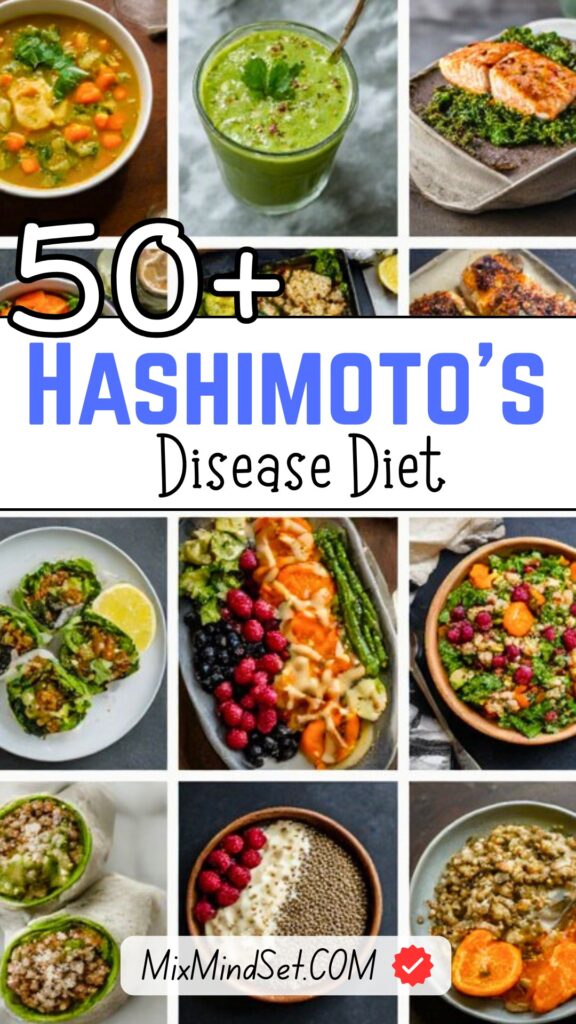
50+ Hashimoto’s Disease Diet
If you have Hashimoto’s disease, you know the feeling. Fatigue that doesn’t lift after a full night’s sleep. Brain fog that makes simple tasks feel impossible. Unexplained weight gain. Hair thinning. Constipation. Depression that seems to come out of nowhere.
Hashimoto’s thyroiditis is an autoimmune condition where your immune system mistakenly attacks your thyroid gland, leading to chronic inflammation and eventually hypothyroidism (an underactive thyroid).
While thyroid medication (like levothyroxine) is essential for replacing missing hormones, it doesn’t always address the root driver of your symptoms — the ongoing autoimmune attack.
That’s where diet comes in.
The right foods can lower inflammation, reduce thyroid antibodies, heal your gut, and help you feel dramatically better — even if your lab numbers are technically “normal.”
This guide gives you over 50 practical meal ideas, three complete recipes, and a clear, compassionate roadmap to start eating for your thyroid today.
What Is the Hashimoto’s Diet? (No, It’s Not One Size Fits All)
There is no single “Hashimoto’s diet” that works for everyone. But there is a powerful nutritional philosophy backed by research: focus on anti-inflammatory, nutrient-dense whole foods while eliminating foods that trigger immune reactions and gut inflammation.
The 5 Core Principles of a Hashimoto’s Diet
- Reduce inflammation – Chronic inflammation drives autoimmune activity. An anti-inflammatory diet rich in vegetables, fruits, lean proteins, and healthy fats is the foundation.
- Heal your gut – About 70-75% of your immune system lives in your gut. A leaky gut allows food particles to enter your bloodstream, triggering immune attacks. Diet is your most powerful tool for gut repair.
- Support nutrient deficiencies – Hashimoto’s is strongly linked to low levels of selenium, vitamin D, magnesium, iron, and vitamin B12. Food can help fill these gaps.
- Identify your personal triggers – Gluten is the most common trigger, but dairy, soy, eggs, nightshades, and others may also be problematic for you. An elimination diet helps you discover your unique sensitivities.
- Stabilize blood sugar – Blood sugar spikes and crashes stress your adrenal glands and fuel inflammation. Eating balanced meals with protein, fat, and fiber is key.
Key research fact: A 2019 clinical trial found that women with Hashimoto’s who followed an Autoimmune Protocol (AIP) diet experienced a 44% reduction in TPO antibodies (the antibodies that attack your thyroid) in just 10 weeks.
Key Nutrients Your Thyroid Needs (Quick Reference Table)
Your thyroid cannot function properly without specific micronutrients. Here’s what to prioritize.
Foods to Eat Freely and Foods to Avoid
Use this table as your daily reference. Remember: this is a starting point. Your personal triggers may differ.
Best Foods for Hashimoto’s (Enjoy Freely)
Foods to Limit or Avoid (Common Triggers)
Important nuance: Iodine is essential for thyroid function, and deficiency is dangerous. The problem is excess iodine from supplements or seaweed. The safe daily intake is around 150 mcg — easily obtained from iodized salt and a varied diet.
50+ Hashimoto’s Diet Meal Ideas (By Meal)
Here are over 50 practical, delicious meal ideas designed to be anti-inflammatory, nutrient-dense, and satisfying. Mix and match based on your personal tolerances.
Breakfast Ideas (10 Ideas)
Start your day with protein and healthy fats to stabilize blood sugar.
- Berry & Flaxseed Smoothie – 1 cup spinach, ½ cup frozen berries, 1 tbsp ground flaxseed, 1 scoop collagen or pea protein, unsweetened coconut milk.
- Sweet Potato & Egg Hash – Diced sweet potatoes sautéed with spinach and onions, topped with 2 fried eggs.
- Coconut Yogurt Parfait – Unsweetened coconut yogurt, ½ cup berries, 1 tbsp pumpkin seeds.
- Savory Oatmeal – Oats cooked with bone broth, topped with a poached egg and avocado slices.
- Turkey & Spinach Breakfast Sausage Patties – Ground turkey mixed with spinach, sage, and garlic, pan-fried.
- Chia Seed Pudding – 3 tbsp chia seeds + 1 cup coconut milk, refrigerated overnight. Top with sliced kiwi.
- Veggie & Tofu Scramble – Crumbled tofu sautéed with zucchini, bell peppers, and turmeric.
- Baked Egg in Avocado – Halved avocado with an egg baked in the center at 425°F for 15 minutes.
- Leftover Salmon & Roasted Veggies – Don’t overthink breakfast. Last night’s dinner works perfectly.
- Apple Cinnamon Breakfast Bowl – Diced apple cooked with cinnamon, topped with walnuts and coconut yogurt.
Lunch Ideas (12 Ideas)
Keep lunches balanced with protein, healthy fats, and colorful vegetables.
- Mediterranean Chickpea Salad – Chickpeas, cucumber, tomatoes, red onion (small), parsley, olive oil, lemon juice.
- Leftover Salmon & Mixed Greens – Flaked wild salmon over arugula with lemon vinaigrette.
- Turkey & Avocado Lettuce Wraps – Butter lettuce leaves filled with sliced turkey, avocado, cucumber, and mustard.
- Hearty Lentil Soup – Homemade lentil soup with carrots, celery, and low-sodium vegetable broth.
- Tuna Salad Stuffed Sweet Potato – Canned tuna mixed with olive oil and herbs, scooped into a baked sweet potato.
- Quinoa & Roasted Vegetable Bowl – Quinoa topped with roasted zucchini, bell peppers, and a drizzle of tahini.
- Chicken & Kale Soup – Shredded chicken, kale, carrots, celery, and turmeric in bone broth.
- Egg Salad Collard Wraps – Mashed hard-boiled eggs with avocado and mustard, rolled in collard leaves.
- Beet & Goat Cheese Salad – Roasted beets, arugula, goat cheese (if tolerated), walnuts, balsamic vinaigrette.
- Sardine Toast on Sweet Potato Rounds – Mashed sardines with lemon and dill on roasted sweet potato slices.
- Zucchini Noodles with Pesto – Spiralized zucchini tossed with basil pesto (dairy-free) and cherry tomatoes.
- Leftover Turkey Meatballs – With a side of roasted Brussels sprouts.
Dinner Ideas (12 Ideas)
Dinner is your chance to load up on cooked vegetables and high-quality protein.
- Baked Salmon with Roasted Brussels Sprouts – 5 oz salmon, 1 cup halved Brussels sprouts, olive oil, lemon, dill.
- Turkey & Kale Meatballs with Zucchini Noodles – Baked turkey meatballs over spiralized zucchini with marinara.
- Chicken & Vegetable Stir-Fry – Chicken breast, broccoli, snap peas, carrots, ginger, coconut aminos. Serve over cauliflower rice.
- Lentil Shepherd’s Pie – Lentil-mushroom filling topped with mashed cauliflower and sweet potato.
- Grilled Shrimp Skewers – 5 large shrimp, grilled asparagus, ½ cup cooked quinoa.
- Hearty White Bean & Kale Soup – Cannellini beans, kale, carrots, celery, low-sodium broth, rosemary.
- Beef & Broccoli (Low Inflammation) – Grass-fed beef strips, broccoli florets, ginger, garlic, coconut aminos.
- Stuffed Bell Peppers – Bell peppers filled with ground turkey, quinoa, and diced tomatoes, baked.
- Cod with Lemon & Roasted Asparagus – 5 oz cod, lemon slices, fresh dill, roasted asparagus, side of brown rice.
- Vegetable Curry with Chickpeas – Light coconut milk, curry paste, chickpeas, cauliflower, spinach. Serve with brown rice.
- Sheet Pan Chicken Thighs & Root Vegetables – Chicken thighs, sweet potatoes, carrots, onions, rosemary, olive oil.
- Salmon Cakes with Avocado Mash – Canned salmon mixed with almond flour, egg, dill, pan-fried. Serve with mashed avocado.
Snack Ideas (10 Ideas)
Smart snacks prevent blood sugar crashes and keep energy steady.
- Apple slices (½ medium) with 1 tbsp almond butter
- Handful of walnuts + 5 strawberries
- Hard-boiled egg sprinkled with paprika
- Coconut yogurt (½ cup) with 1 tbsp pumpkin seeds
- Carrot sticks with 2 tbsp guacamole
- Roasted chickpeas – Toss canned chickpeas with olive oil and rosemary, bake at 400°F for 20 minutes.
- Turkey roll-ups – Sliced turkey rolled around cucumber spears.
- Dark chocolate (1 square, 70%+) + 5 almonds
- Celery sticks with almond butter
- Bone broth (1 cup, warmed)
Drinks & Tonics (6 Ideas)
What you drink matters as much as what you eat.
- Golden Milk – Warm coconut milk, 1 tsp turmeric, pinch black pepper, 1 tsp coconut oil, dash cinnamon.
- Ginger Lemon Tonic – Warm water, juice of ½ lemon, 1 inch grated ginger.
- Peppermint Tea – Calms digestion and reduces bloating.
- Bone Broth – Sipped warm for gut-healing gelatin and collagen.
- Cucumber Mint Water – Slices of cucumber and fresh mint in a pitcher of water.
- Decaf Green Tea – Rich in antioxidants (limit caffeine if sensitive).
3 Complete Hashimoto’s Diet Recipes (Numbered)
Recipe 1: Golden Milk Turmeric Latte (Anti-Inflammatory & Gut-Healing)
This warming drink is packed with curcumin (from turmeric) and healthy fats to reduce systemic inflammation. Black pepper increases curcumin absorption by 2000%.
Ingredients:
| Ingredient | Amount |
|---|---|
| Unsweetened coconut milk (full-fat, from carton) | 1 cup |
| Ground turmeric | 1 tsp |
| Ground ginger (or ½ inch fresh) | ½ tsp |
| Cinnamon | ¼ tsp |
| Black pepper (critical for absorption) | A pinch |
| Coconut oil or MCT oil | 1 tsp |
| Raw honey or maple syrup (optional) | 1 tsp |
Instructions:
- In a small saucepan, warm coconut milk over medium-low heat (do not boil).
- Whisk in turmeric, ginger, cinnamon, black pepper, and coconut oil until fully combined and frothy.
- Add sweetener if desired. Pour into a mug and enjoy warm, ideally 30 minutes before bed.
Nutritional Facts (per serving, without sweetener):
| Nutrient | Amount |
|---|---|
| Calories | 150 |
| Protein | 1g |
| Carbohydrates | 4g |
| Fiber | 1g |
| Fat | 15g |
| Curcumin (from turmeric) | ~100 mg |
Recipe 2: Sheet Pan Salmon & Roasted Brussels Sprouts (Rich in Omega-3s & Selenium)
Wild salmon provides anti-inflammatory omega-3s. Brussels sprouts deliver fiber, vitamin C, and sulforaphane. A 20-minute meal perfect for busy nights.
Ingredients:
| Ingredient | Amount |
|---|---|
| Wild salmon fillet | 5 oz |
| Brussels sprouts (halved) | 1 cup |
| Olive oil | 1 tbsp |
| Lemon juice | 2 tbsp |
| Fresh dill (or 1 tsp dried) | 1 tbsp |
| Garlic powder | ¼ tsp |
| Black pepper | To taste |
| Quinoa (cooked) | ½ cup |
Instructions:
- Preheat oven to 400°F (200°C). Line a baking sheet with parchment paper.
- Place salmon and Brussels sprouts on the sheet. Drizzle with olive oil and lemon juice.
- Sprinkle salmon with dill, garlic powder, and pepper. Toss Brussels sprouts to coat.
- Bake for 12-15 minutes until salmon flakes easily and Brussels sprouts are tender-crisp.
- Serve with ½ cup cooked quinoa.
Nutritional Facts (per serving):
| Nutrient | Amount |
|---|---|
| Calories | 490 |
| Protein | 36g |
| Carbohydrates | 28g |
| Fiber | 7g |
| Fat | 26g (mostly unsaturated) |
| Omega-3 fatty acids | ~2.2g |
| Selenium | ~45 mcg |
Recipe 3: Anti-Inflammatory Lentil & Kale Soup (High Fiber & Plant Protein)
This one-pot soup is rich in fiber, plant protein, and magnesium. Make a big batch for easy leftovers.
Ingredients (makes 4 servings):
| Ingredient | Amount |
|---|---|
| Brown or green lentils (rinsed) | 1 cup |
| Low-sodium vegetable broth | 6 cups |
| Kale (stems removed, chopped) | 3 cups |
| Carrots (diced) | 2 medium |
| Celery stalks (diced) | 2 |
| Yellow onion (diced) | ½ medium |
| Garlic cloves (minced) | 2 |
| Dried thyme | 1 tsp |
| Turmeric | ½ tsp |
| Olive oil | 1 tbsp |
| Lemon juice | 1 tbsp |
Instructions:
- In a large pot, heat olive oil over medium heat. Sauté onion, carrots, and celery for 5 minutes.
- Add garlic and cook 1 minute more.
- Add lentils, vegetable broth, thyme, and turmeric. Bring to a boil.
- Reduce heat and simmer for 25 minutes until lentils are tender.
- Stir in kale and cook 5 more minutes until wilted.
- Remove from heat. Stir in lemon juice before serving.
Nutritional Facts (per serving – 1.5 cups):
| Nutrient | Amount |
|---|---|
| Calories | 280 |
| Protein | 15g |
| Carbohydrates | 42g |
| Fiber | 16g |
| Fat | 6g |
| Sodium | 180mg |
| Magnesium | 75mg |
5 Common Mistakes on a Hashimoto’s Diet (And How to Avoid Them)
1. Going gluten-free but eating tons of processed gluten-free foods.
Gluten-free cookies, crackers, and breads are often made with refined starches, sugar, and inflammatory oils. Solution: Focus on naturally gluten-free whole foods: vegetables, fruits, meat, fish, eggs, nuts, seeds, and gluten-free grains like rice and quinoa.
2. Avoiding all cruciferous vegetables out of fear.
Yes, raw cruciferous vegetables contain goitrogens. But cooking neutralizes about 60% of their goitrogenic effect. Solution: Steam, roast, or sauté your broccoli, kale, and cauliflower. They remain highly nutritious and anti-inflammatory.
3. Cutting out all carbohydrates.
Your brain and thyroid need carbohydrates. Very low-carb diets can increase cortisol (stress hormone) and worsen fatigue. Solution: Choose complex carbs like sweet potatoes, quinoa, oats, and beans. Pair them with protein and fat.
4. Starting with the strictest elimination diet immediately.
The full Autoimmune Protocol (AIP) removes grains, dairy, eggs, nuts, seeds, nightshades, legumes, coffee, alcohol, and more. Jumping in all at once is overwhelming and hard to sustain. Solution: Start with a gluten-free trial for 4 weeks. Then consider eliminating dairy or soy. Use AIP only if symptoms persist.
5. Expecting medication to fix everything while ignoring diet.
Thyroid medication replaces missing hormones, but it does not stop the autoimmune attack. You can have “normal” lab numbers and still feel terrible because inflammation is driving your symptoms. Solution: Use diet to lower inflammation and antibodies alongside your medication. Both are essential.
Frequently Asked Questions
Do I really need to give up gluten if I don’t have celiac disease?
Many people with Hashimoto’s benefit from a gluten-free diet even without celiac disease. This is due to molecular mimicry — gluten’s protein structure is similar to thyroid tissue.
In susceptible individuals, consuming gluten can trigger the immune system to attack the thyroid. One study found that more than 40% of Hashimoto’s patients who went strictly gluten-free saw a drop in TPO antibodies within six months.
However, some people tolerate gluten fine. Try 4 weeks completely gluten-free and track your symptoms.
Can I eat soy?
In moderation. Unfermented soy (tofu, soy milk, edamame) in large amounts can inhibit thyroid peroxidase and reduce levothyroxine absorption.
Solution: Limit to 1 serving per day and take it at least 4 hours apart from thyroid medication. Fermented soy (tempeh, miso) is generally better tolerated.
What about dairy?
About 50-70% of adults are lactose intolerant to some degree. Lactose intolerance is even more common in Hashimoto’s. Dairy can also be a source of inflammation for some.
Solution: Try 2-4 weeks completely dairy-free. Notice if bloating, fatigue, or joint pain improves. If not, you may tolerate dairy well — choose fermented options (yogurt, kefir, hard cheese).
How long until I see results from diet changes?
Some people notice improved energy and reduced bloating within 2-3 weeks. Antibody reductions typically take 3-6 months of consistent dietary changes. Be patient and keep a symptom journal.
Do I need to take supplements?
Food first, but supplements can help address specific deficiencies. The most common deficiencies in Hashimoto’s are: selenium (1-2 Brazil nuts daily or 200 mcg supplement), vitamin D (1,000-4,000 IU daily depending on blood levels), magnesium (300-400 mg), and B12 (1,000 mcg sublingual). Always test before supplementing, especially for vitamin D, iron, and B12.
Can I follow a vegetarian or vegan diet with Hashimoto’s?
Yes, but you must be intentional. Plant-based diets can be lower in selenium, zinc, iron, B12, and omega-3s — all critical for thyroid health.
Solution: Include Brazil nuts (selenium), pumpkin seeds (zinc), lentils and spinach (iron), nutritional yeast (B12), and algae oil (omega-3s). Consider working with a dietitian.
What’s the best overall diet pattern for Hashimoto’s?
Research suggests the Mediterranean diet is one of the best-studied and most sustainable approaches. It emphasizes vegetables, fruits, whole grains, legumes, nuts, olive oil, and moderate fish — all anti-inflammatory and nutrient-dense.
For those with persistent symptoms, the Autoimmune Protocol (AIP) (a short-term elimination diet) may be more effective.
Your Simple 1-Day Hashimoto’s Friendly Meal Plan
| Meal | Food |
|---|---|
| Breakfast | Coconut yogurt parfait with berries and pumpkin seeds + Golden Milk |
| Morning snack | Apple slices with almond butter |
| Lunch | Lentil & kale soup + side salad with olive oil dressing |
| Afternoon snack | Handful of walnuts + 1 hard-boiled egg |
| Dinner | Baked salmon with roasted Brussels sprouts and quinoa |
| Evening drink | Peppermint tea |
Final Thoughts
Living with Hashimoto’s can feel like a never-ending battle against your own body. But here’s the truth: your body is not your enemy. It’s simply overwhelmed, inflamed, and in need of support.
The right diet won’t cure Hashimoto’s. But it can dramatically lower inflammation, reduce thyroid antibodies, restore your energy, clear your brain fog, and help you feel like yourself again — all while taking your medication as prescribed.
Start with one change this week. Maybe it’s swapping your morning latte for Golden Milk. Maybe it’s trying a gluten-free week. Maybe it’s adding a serving of salmon or lentils. Small steps, repeated daily, create profound shifts.
Your thyroid has been quietly working for you every moment of your life. It’s time to give it the nourishment it deserves.
Disclaimer: This article is for informational purposes only and does not constitute medical advice. Hashimoto’s disease is a complex autoimmune condition. Always consult your endocrinologist or primary care provider before making significant dietary changes, starting supplements, or adjusting thyroid medication. Do not stop or change your medication without medical supervision.