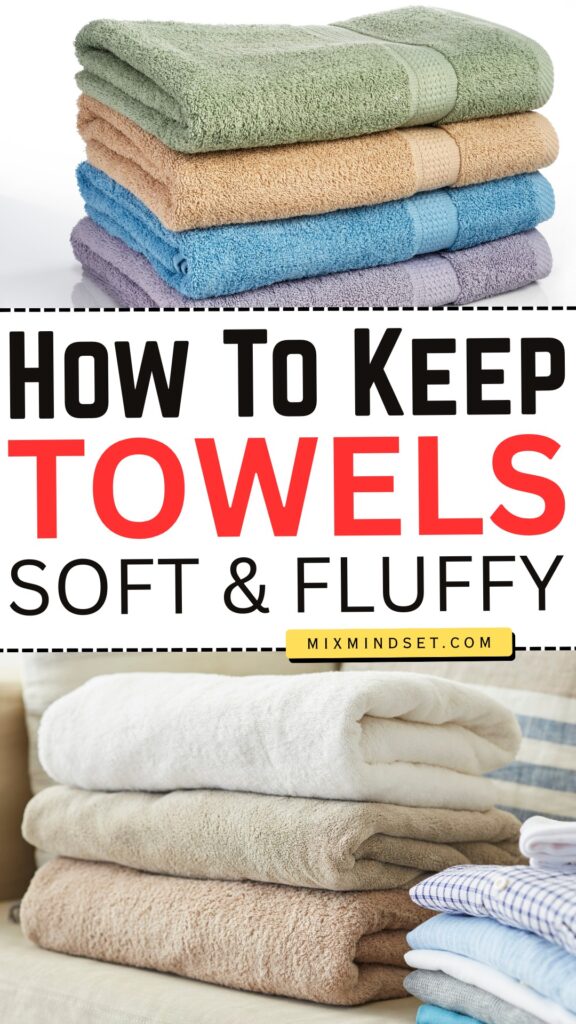
How To Keep Towels Soft & Fluffy
Stop using fabric softener—it coats fibers and kills absorbency. Instead, wash towels with white vinegar in the rinse cycle to remove soap residue. Tumble dry on low heat with wool dryer balls, which fluff the fibers naturally. Your towels will stay soft, fluffy, and super absorbent. #softtowels #fluffytowels #laundrytips #vinegar #dryerballs
There is nothing better than grabbing a towel from the shelf and feeling it soft on your skin.
But after a few months, many towels start to feel like sandpaper. They get stiff. They get scratchy. I have thrown away so many towels because I thought they were just old. But I was wrong.
Turns out, I was making a few simple mistakes in how I washed and dried them. Once I fixed those mistakes, my old towels felt new again. No special machines. No expensive products. Just a few changes.
I will show you exactly what I learned. This guide uses very simple words. A 10-year-old could read this and know how to keep towels soft.
Why Do Towels Get Hard and Scratchy?
Before you fix a problem, you need to know what caused it. Towels do not just get old and hard. They get hard because of things we do to them.
Here are the real reasons your towels feel like sandpaper:
My mistake: For years, I used a full cap of laundry detergent and a big glug of fabric softener for every towel wash. I thought more soap meant cleaner towels. I was so wrong. My towels felt okay when wet, but once they dried, they were stiff as cardboard. I was basically coating my towels in wax and soap.
My Four‑Step Plan to Soft, Fluffy Towels
I broke this down into four simple steps. Follow these steps, and your towels will feel like hotel towels.
Step 1: Strip All the Old Gunk Out (The Deep Clean)
If your towels are already hard, you need to do a “strip wash” first. This cleans all the old soap, softener, and minerals out of the fibers.
You will need two things from your kitchen: white vinegar and baking soda.
Important: Do not put vinegar and baking soda in the machine at the same time. They cancel each other out. You will do two separate washes.
Here is what I do:
Wash #1: The Vinegar Wash (120 ml or ½ cup)
- Put your dry towels in the washing machine. Do not stuff it full.
- Pour 120 ml (about ½ cup) of white vinegar into the detergent drawer.
- Do not add any laundry detergent or fabric softener.
- Wash on the hottest water setting your towels can take. Check the label first.
- Let the cycle finish.
Wash #2: The Baking Soda Wash (120 g or ½ cup)
- Keep the same towels in the machine.
- Pour 120 g (about ½ cup) of baking soda into the drum or detergent drawer.
- Wash again on a hot cycle. Still no detergent or softener.
- Let the cycle finish.
After these two washes, your towels will feel much softer. The vinegar dissolved the waxy soap buildup. The baking soda lifted out the rest of the gunk and removed any bad smells.
How often to do this: I do this deep clean once every 3 to 4 months, or whenever my towels start feeling stiff again.
Step 2: Wash Towels the Right Way (Every Time)
After you strip the old gunk out, you need to wash your towels correctly every time. Here is my routine.
What about hot vs. cold water? I use warm water for colored towels and hot water for white towels once in a while to kill germs. But most of the time, warm water is fine.
Step 3: Dry the Right Way (This Is a Big One)
Drying is where most people ruin their towels without knowing it. Over‑drying makes towels stiff and scratchy.
Here is what the science says: Cotton fibers need a tiny bit of moisture to stay soft and elastic. When you dry towels until they are bone‑dry and hot, all that moisture is gone. The fibers tighten up and feel like sandpaper.
My Drying Rules:
The 10‑Minute Rule: I set my dryer timer for 10 minutes less than the “dry” cycle. Then I check the towels. If they feel mostly dry but still a little cool and soft, I take them out. I shake them one more time and fold them. They finish drying on the shelf.
What I used to do wrong: I would set my dryer to “extra dry” or “high heat” and walk away. Then I would come back to towels that were hot, stiff, and hard. I thought that meant they were really clean. Nope. I was cooking my towels.
Step 4: Store Towels So They Stay Fluffy
How you store towels matters more than you think.
Do not stack them too tight. When you pack towels into a tiny shelf or closet, you press all the air out of the fibers. They get flat and hard.
Here is what I do:
- Fold towels loosely. Do not press down hard on the folds.
- Leave a little space between stacks so air can move around.
- Store them in a dry place. A damp bathroom closet will make towels smell musty.
What Kind of Towels Should You Buy? (A Quick Guide)
Not all towels are the same. I learned this after buying cheap towels that fell apart after three washes.
Here is a simple guide to help you pick good towels:
My personal pick: I buy 100% cotton towels with a grams per square meter (GSM) between 500 and 700. Towels under 500 GSM are too thin. Towels over 700 GSM feel great at first, but they take forever to dry and can get musty. Five to seven hundred is the sweet spot.
What If Your Towels Already Smell Musty?
Sometimes towels get a bad smell even after washing. That smell is mold or mildew hiding deep inside the fibers.
Here is how I fix smelly towels:
- Wash them with ½ cup of white vinegar on a hot cycle. No detergent.
- Wash them again with ½ cup of baking soda on a hot cycle. Still no detergent.
- Dry them in the sun if possible. Sunlight kills mold and makes towels smell fresh.
Do not use bleach as your first choice. Bleach can break down cotton fibers over time. Save bleach for when nothing else works.
Quick Reference Table: Towel Care at a Glance
| Problem | What to Do | How Often |
|---|---|---|
| Towels are stiff and hard | Deep clean with vinegar + baking soda (two separate hot washes) | Once every 3‑4 months |
| Towels smell musty | Vinegar wash, then baking soda wash | As soon as you notice the smell |
| Everyday washing | Half‑cup of detergent. No softener. Warm water. | Every time |
| Towels feel flat | Shake them hard before putting in washer and before drying | Every time |
| Towels in dryer | Use low/medium heat. Take out at 90% dry. Use wool dryer balls. | Every time |
My Weekly Towel Checklist
I put this checklist on my laundry room wall. You can copy it.
Every time I wash towels:
- Shake each towel before putting it in.
- Use only half the detergent I used to use.
- Skip fabric softener completely.
- Do not overload the machine.
- Wash towels alone, not with other clothes.
Once a month:
- Add ½ cup vinegar to the rinse cycle for all towels.
- Clean the washing machine itself (run an empty hot cycle with 2 cups vinegar).
Every 3‑4 months:
- Deep clean towels with vinegar wash + baking soda wash.
When drying:
- Never use high heat.
- Take towels out while they are still slightly cool and damp.
- Shake them again before folding.
A Few More Tips from My Laundry Room
🧴 Use less detergent than the bottle says. Detergent companies want you to use more so you buy more. I cut my detergent use in half, and my towels are actually cleaner now.
🌞 Sun is free and works great. On sunny days, I hang my towels outside. The sun bleaches white towels naturally and kills bacteria. Just bring them in before they get bone‑dry and crispy.
⚽ Tennis balls work too. If you do not have wool dryer balls, throw two clean tennis balls in the dryer. They bounce around and beat the towels soft.
📏 Measure your vinegar. I keep a measuring cup in my laundry room labeled “TOWELS.” That way I always use the right amount.
🚫 Never wash towels with new jeans or dark sweaters. New jeans can bleed blue dye onto your white towels. I learned this when my best towels turned light blue.
When to Just Buy New Towels
Even with perfect care, towels do not last forever.
Get new towels when:
- You see holes or thin spots.
- Towels still feel hard and rough after two deep clean washes.
- Towels smell bad no matter how many times you wash them.
- The edges are fraying and falling apart.
Good towels usually last two to three years if you take care of them. Cheap towels might only last one year.
The Bottom Line
You do not need fancy products to keep towels soft and fluffy. You just need to stop doing the three things that ruin them:
- Stop using too much detergent.
- Stop using fabric softener on towels.
- Stop over‑drying them on high heat.
Instead, use less soap, add vinegar once in a while, use wool dryer balls, and take towels out of the dryer while they are still a little cool and soft.
I have been doing this for two years now. My towels feel brand new. My family asks me why our towels are so soft. Now you know the secret too.
Try these steps on your hardest, scratchiest towel. Wash it once with vinegar, then once with baking soda. Then follow the rules above. You will feel the difference the very first time.