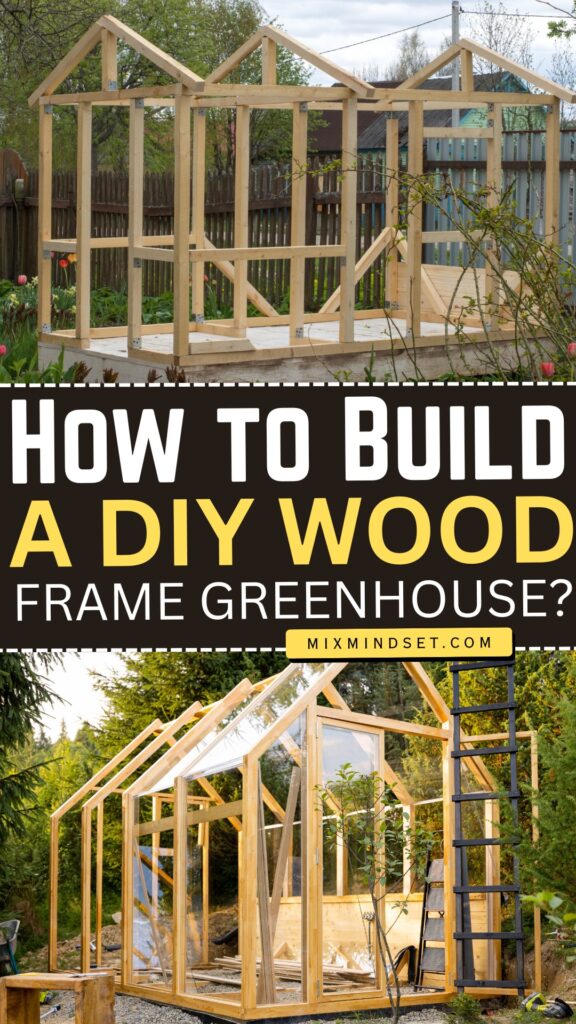
How to Build a DIY Wood Frame Greenhouse?
Build a sturdy DIY wood frame greenhouse with basic tools and common lumber. This step‑by‑step guide covers planning, framing, covering, and ventilation—everything you need for a budget‑friendly backyard greenhouse. #DIYGreenhouse #Woodworking #BackyardGardening #GreenhousePlans #GrowYourOwnFood
I remember the day I decided to build my own greenhouse. I had priced the pre‑made kits, and they were way out of my budget. So I grabbed a pencil, some scrap paper, and started sketching.
I had never built anything this big before. But I took it one step at a time, and in a few weekends, I had a beautiful wooden greenhouse in my backyard. That structure changed my gardening life.
I could start seeds in February, grow tomatoes into November, and protect my plants from harsh weather.
If I can do it, you can too. Let me walk you through exactly how I built my wood frame greenhouse.
Planning Your Greenhouse
Before you buy any wood, you need a plan. A good plan saves you money and frustration.
Choose a Location
The right spot makes a huge difference. Here is what I looked for:
| Factor | Why It Matters |
|---|---|
| South‑facing | Gets the most sun throughout the day |
| Level ground | Easier to build a stable foundation |
| Good drainage | Prevents water from pooling around the base |
| Near water source | Makes watering easier |
| Sheltered from wind | Reduces heat loss and storm damage |
I chose a spot in my backyard that got sun from morning until late afternoon. I also made sure it was close to my garden hose.
Decide on Size
Start with a size that fits your space and your needs. My first greenhouse was 6 feet wide by 8 feet long. That was plenty of room for seedlings, herbs, and a few tomato plants.
| Size | Best For |
|---|---|
| 4′ x 6′ | Small patios, starter gardens |
| 6′ x 8′ | Most backyard gardeners |
| 8′ x 10′ | Serious growers, more plants |
| 10′ x 12′ | Year‑round growing |
Remember, a larger greenhouse costs more to build and heat. Start small if you are a beginner.
Draw a Simple Plan
You do not need fancy blueprints. I drew a simple sketch showing:
- The size of the base
- The height of the walls (I used 6 feet)
- The roof pitch (I used a simple peaked roof)
- Where the door would go
- Where the shelves would be
Many free greenhouse plans are available online. I used a free plan as a guide and adjusted it to fit my space.
Materials and Tools
Here is what I used for my 6′ x 8′ greenhouse.
Wood for the Frame
Choose your wood carefully. It needs to withstand moisture and weather.
| Wood Type | Pros | Cons |
|---|---|---|
| Pressure‑treated pine | Affordable, rot‑resistant | Contains chemicals, needs careful sealing |
| Cedar | Naturally rot‑resistant, beautiful | More expensive |
| Douglas fir | Strong, relatively affordable | Needs sealing and regular maintenance |
| Redwood | Very durable, resists decay | Expensive |
I used pressure‑treated 2x4s for the base and frame because they were affordable and durable. For the parts that touch the ground, I used cedar.
My Materials List (6′ x 8′ Greenhouse)
Tools You Will Need
Step‑by‑Step Construction
I built my greenhouse over three weekends. Here is the process I followed.
Step 1: Prepare the Site
First, I cleared the area of grass and rocks. I leveled the ground as much as possible. For a more permanent build, you can lay concrete blocks or a gravel base.
I laid down a weed barrier fabric to prevent weeds from growing through the floor. Then I placed pressure‑treated 4×4 skids on the ground as a base. These skids keep the wood frame off the damp soil.
Step 2: Build the Floor Frame
The floor frame is the foundation of your greenhouse. A solid base keeps everything level and stable.
What I did:
- I cut two 8‑foot pieces and two 6‑foot pieces of 2×6 lumber.
- I laid them out in a rectangle, making sure the corners were square.
- I pre‑drilled holes and screwed the corners together with 3‑inch screws.
- I added two floor joists across the middle for extra support.
- I placed the floor frame on top of the 4×4 skids and screwed it down.
🪚 My Personal Experience: I did not level my site properly the first time. The floor frame wobbled. I had to lift it up and add shims under the low corners. Now I always spend extra time leveling the ground before I start building.
Step 3: Frame the Walls
Now it is time to build the wall frames. I built each wall flat on the ground, then stood them up.
For each wall:
- I cut top and bottom plates to the right length.
- I cut studs to the wall height (I used 6 feet).
- I spaced the studs 24 inches apart (16 inches if you want it stronger).
- I laid out the top plate, bottom plate, and studs on the ground.
- I clamped everything together to make sure it was even.
- I pre‑drilled and screwed through the plates into each stud.
Front wall (with door opening):
- I left a 32‑inch opening for the door.
- I added extra studs on each side of the door opening.
- I added a header across the top of the door opening.
Back and side walls:
- These were solid walls with studs spaced evenly.
Assembling the walls:
- I lifted each wall frame onto the floor frame.
- I made sure each wall was plumb (straight up and down) using a level.
- I screwed the bottom plate of each wall into the floor frame.
- I screwed the corners of the walls together.
Step 4: Build the Roof
The roof is the trickiest part. I used a simple peaked (gable) roof.
What I did:
- I calculated the roof pitch. I wanted a 4‑inch rise for every 12 inches of run.
- I cut the rafters from 2×4 lumber. I cut the top ends at a 45‑degree angle so they would meet at the peak.
- I built a triangle frame (truss) for each end of the greenhouse.
- I attached the trusses to the top plates of the walls.
- I ran a ridge board along the peak from one end to the other.
- I installed rafters every 24 inches, connecting the walls to the ridge board.
🪚 My Personal Experience: Cutting the angled roof pieces was the hardest part for me. I had to measure carefully and make test cuts on scrap wood first. Once I got the angle right, the rest went smoothly.
Step 5: Install the Covering
You have two main options for covering your greenhouse: greenhouse plastic or polycarbonate panels.
Option 1: Greenhouse Plastic (Cheaper)
I used 6‑mil greenhouse plastic on my first build. It is affordable and lets in plenty of light.
How to attach it:
- I draped the plastic over the frame, making sure it covered all sides.
- I started at one wall, pulled the plastic tight, and stapled it to the frame.
- I moved to the opposite wall and pulled the plastic tight before stapling.
- I worked my way around, pulling and stapling as I went.
- I trimmed the excess plastic with a utility knife.
- For extra hold, I added wood strips (lath) over the stapled edges.
Tip: Do this on a warm, sunny day. The plastic stretches better when it is warm.
Option 2: Polycarbonate Panels (More Durable)
Polycarbonate panels last longer and insulate better than plastic. They cost more but are worth it if you plan to keep your greenhouse for years.
How to attach them:
- I cut the panels to fit each wall section.
- I screwed them directly to the frame using screws with rubber washers.
- I sealed the edges with greenhouse tape to keep out moisture.
Step 6: Build and Install the Door
A simple door keeps heat in and pests out.
What I did:
- I built a door frame using 2×4 lumber. I made it 32 inches wide and 6 feet tall.
- I added diagonal bracing to keep the door from sagging.
- I attached hinges to the door and to the front wall frame.
- I hung the door and adjusted it so it swung freely.
- I added a handle and a latch.
- I installed weather stripping around the door frame to seal gaps.
Step 7: Add Shelves and Ventilation
Shelves:
I built simple shelves along the side walls. I used 2x4s for supports and plywood for the shelf surface. This gave me plenty of space for seed trays and potted plants.
Ventilation:
A greenhouse without ventilation gets too hot. On a sunny day, temperatures can soar above 100°F. I added two types of ventilation.
| Ventilation Type | How I Did It |
|---|---|
| Roof vent | I built a small opening in the roof that I could prop open with a stick |
| Side vent | I rolled up the plastic on one side and tied it open |
You can also buy automatic vent openers that open when it gets hot.
Tips for Success
Here are the lessons I learned the hard way.
Use Pressure‑Treated Wood for Ground Contact
Any wood that touches the ground should be pressure‑treated or naturally rot‑resistant like cedar. Regular pine will rot within a few years.
Seal All Cut Ends
When you cut pressure‑treated wood, the exposed end is no longer protected. I applied wood preservative to every cut end to prevent rot.
Anchor Your Greenhouse
Wind can lift a greenhouse. I anchored mine by screwing the base frame into the ground with metal stakes. You can also use concrete footings.
Add a Baseboard
I added a low wall (about 1 foot high) around the bottom of my greenhouse. This protects the plastic from being damaged by garden tools or animals.
Use Greenhouse‑Grade Plastic
Regular plastic sheeting will break down quickly in the sun. Buy greenhouse‑grade plastic that is UV‑stabilized. It costs a little more but lasts much longer.
Maintenance
A wood greenhouse needs regular care to last.
| Task | How Often | Why |
|---|---|---|
| Check for rot | Every spring | Catch problems early |
| Reseal wood | Every 1‑2 years | Protects from moisture |
| Inspect plastic | Before winter and after storms | Fix tears before they get worse |
| Clean the covering | Spring and fall | Lets in more light |
| Check ventilation | Before summer | Make sure vents open freely |
My Personal Greenhouse Story
I built my first greenhouse when I was tired of losing seedlings to late frosts. I spent about $300 on materials. It took me three weekends. I made plenty of mistakes along the way, but I learned from every one of them.
The first spring after I built it, I started my tomatoes in February instead of April. By May, I had plants that were already flowering while my neighbors were just planting their seeds. That summer, I harvested tomatoes two months earlier than usual.
Now my greenhouse is the heart of my garden. I start seeds in late winter, grow heat‑loving peppers in summer, and keep leafy greens growing into December. It has paid for itself many times over in fresh food.
If you are thinking about building one, go for it. Start with a simple design. Use basic materials. Take your time. You will be amazed at what you can grow.
Quick Reference: Building a Wood Frame Greenhouse
| Stage | Key Steps | Time Estimate |
|---|---|---|
| Planning | Choose site, draw plan, gather materials | 1 day |
| Foundation | Level ground, build floor frame | 1 day |
| Walls | Frame walls, stand them up, attach to floor | 1‑2 days |
| Roof | Build trusses, install rafters and ridge board | 1 day |
| Covering | Attach plastic or polycarbonate panels | 1 day |
| Door and shelves | Build and install door, add shelves | 1 day |
| Ventilation | Add roof vent and side vents | Half day |
The Bottom Line
Building a wood frame greenhouse is a project that any determined beginner can handle. You do not need advanced carpentry skills. You just need a plan, basic tools, and a willingness to learn.
Start small. Use affordable materials like pressure‑treated 2x4s and greenhouse plastic. Take your time and build it right. Before you know it, you will have a sturdy structure that extends your growing season and protects your plants.
I built mine with my own hands, and it is one of the best projects I have ever done. Your greenhouse is waiting. Go build it.