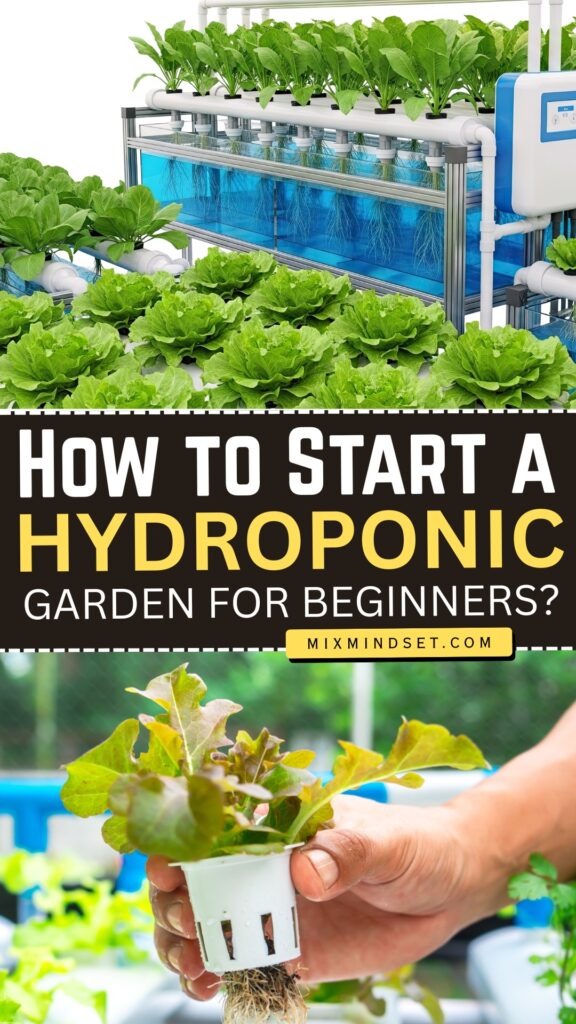
How to Start a Hydroponic Garden for Beginners?
The Kratky method is the simplest hydroponic system for beginners. You need a jar, a net pot, clay pebbles, and nutrient solution. Place your plant (lettuce or herbs work great) in the net pot, suspend it above the nutrient water, and the roots will grow down to drink. No pumps, no electricity—just passive growing. #hydroponics #kratkymethod #soillessgardening #beginnergarden #indoorfarming
I remember my first hydroponic garden. I was skeptical. Growing plants in just water, with no soil, seemed almost like magic. But after losing my basil plants outside to hungry bugs one too many times, I decided to give it a try. I was amazed at how simple it was. My little lettuce plant grew faster and crisper than any I had ever grown outside.
You can do this too. It doesn’t require a science degree or a big wallet. This guide will show you exactly how to start, using plain words that are easy to understand.
🌿 What is Hydroponic Gardening? (Explained Like You’re 10)
Hydroponics is just a fancy word for growing plants without any dirt. Instead of soil, you put the plant’s roots directly into water that has special food mixed in. That’s it.
Think of it like this: in soil, the plant has to work hard to spread its roots and find its food. In a hydroponic system, you bring the food and water right to the roots. This means the plant can spend all its energy on growing up and making leaves, which is exactly what you want.
Why Grow This Way?
I switched to hydroponics for a few simple reasons, and once you try it, you might too.
| Good Thing | What It Means For You |
|---|---|
| Faster Growth | Plants grow up to 30-50% faster because they don’t have to search for food. |
| Grow Anywhere | You can grow fresh herbs and veggies on a small kitchen counter, a sunny balcony, or even in a dark basement with a grow light. |
| No Weeds | Since there’s no soil, there are also no annoying weeds to pull out. |
| Very Few Pests | Most soil bugs won’t come near your water garden. I almost never see bugs on my indoor plants anymore. |
| Saves Water | This is a big one. Hydroponic systems use up to 90% less water than a traditional garden because the water just gets recycled. |
⚙️ What You’ll Need: The Basic Supplies
You don’t need to buy a lot of expensive stuff to start. Here is the simple shopping list I used for my first system.
- A Container: This holds the water and food. You can use a large mason jar, a big plastic bin, or an old bucket.
- Net Pots: These are small, plastic, basket-like cups that hold your plant. They have holes in the sides so the roots can grow through and reach the water.
- Growing Medium: This is not dirt. It is a soilless material that holds your plant in place inside the net pot. It gives the stem something to grab onto while the roots are small. Here are a few common and cheap options:
- Rockwool Cubes: These are little blocks of spun rock that hold water really well. They are great for starting seeds.
- Clay Pebbles: These look like little clay marbles. They are easy to use and can be washed and used again for many years.
- Coco Coir: Made from ground-up coconut shells, this feels a bit like soft dirt but is actually completely inert.
- Nutrients: This is the “plant food” powder or liquid that you mix into the water. It has all the good stuff that plants normally pull from the soil.
- A pH Test Kit: This is a simple liquid or test strip that tells you if your water is too acidic or too base.
- Air Pump and Air Stone (for some systems): This is the exact same kind of bubbler you see in a fish tank. It pumps tiny bubbles into the water to give the roots oxygen.
- Light Source: If you don’t have a very sunny window, you can get an inexpensive LED grow light to help your plants grow big and strong.
My Personal Tip: When I first started, I spent way too much money on a big, fancy system. Don’t do that. Start small. A simple jar on a sunny windowsill is the perfect first step to see if you like it.
💧 The “Magic Water”: Understanding Nutrients and pH
This is the one part that sounds complicated, but I promise it’s very easy once you do it once. The water is where all the magic happens.
Plant Food (Nutrients)
Plants need 16 different elements to live and grow. In a garden, they get most of these from healthy soil. In a hydroponic system, you mix them yourself. You will buy a hydroponic nutrient solution that comes in a bottle. It has all 16 things in one mix.
The Simple Rule: Always follow the directions on the bottle. Do not guess. Do not add “just a little extra” thinking it will help. Giving a plant too much food is called nutrient burn, and it will make the leaves turn brown and crispy, which is the opposite of what you want.
The pH Balance
This is very important. The number on the pH scale tells you how acidic or sweet your water is. It goes from 0 to 14, with 7 being neutral. Most hydroponic plants like their water to be slightly acidic, with a pH between 5.5 and 6.5.
If the pH is wrong (say, above 7.5), the plant can’t eat its food. It’s like locking the fridge. The food is right there, but the plant can’t get to it, and it will starve.
Here’s what you do:
- Mix your nutrients into your water.
- Dip your pH test strip into the water.
- Compare the color to the chart that came with your kit.
- If it’s too high, add a few drops of pH Down solution. If it’s too low, add pH Up.
- Wait 15 minutes, then test again. It’s that simple.
🧑🌾 Which System is Best for You? (The 3 Beginner Options)
There are many different hydroponic systems, but for a beginner, you only need to know about three.
1. The Kratky Method (Simplest & Cheapest)
This is the system I started with. It uses no pumps, no electricity, and no moving parts at all. You just fill a jar, put your plant in the lid, and let it sit. As the plant drinks, the water level goes down. This exposes the upper roots to air so the plant can breathe.
Best for: One or two small plants like lettuce or basil on a sunny windowsill.
2. Deep Water Culture (DWC) (Fast Growth)
This system is very similar to Kratky, but it adds a small air pump and air stone. The bubbles from the pump give the roots constant oxygen, which makes the plants grow much faster. I use this for my bigger plants now.
Best for: When you want faster growth and are ready to plug in one small pump.
3. Wick System (Super Simple)
This is the most low-tech of all. You don’t even put the roots directly into the water. The plant sits in a tray above the water reservoir. A special “wick” (like a thick piece of rope) pulls the nutrient water up into the tray to feed the plant. This is great for small herb gardens.
Best for: Herbs and smaller plants if you want an extremely simple setup.
Here is a simple table to help you choose:
| System | What It Does | How Hard? | Electricity? | Best Plant |
|---|---|---|---|---|
| Kratky Method | Sits in water, air gap forms naturally. | Very Easy | No | Lettuce, Basil |
| Deep Water Culture | Pumps oxygen bubbles into the water. | Easy | Yes (small pump) | Greens, Herbs |
| Wick System | Uses a rope to pull water up to the plant. | Very Easy | No | Herbs |
🌱 A Step-by-Step Guide: Build Your First Mason Jar Kratky Garden
Let’s build one right now. This was my very first project, and it only took me 15 minutes.
What You’ll Need
- One wide-mouth mason jar (or a clean pasta sauce jar).
- One net pot that fits snugly on top of the jar.
- Your growing medium (I recommend clay pebbles for this).
- Hydroponic nutrients.
- Water (tap water is fine, but let it sit out overnight so the chlorine evaporates).
- A pH test kit.
- A lettuce or basil seed.
Step 1: Prepare Your Jar
Wash your jar very well. Fill it almost to the top with your pH-balanced nutrient water. You want the water level to be about 1 inch below the rim.
Step 2: Prepare Your Net Pot
Fill your net pot with your growing medium (clay pebbles). If you are using a rockwool cube, you would place the cube in the center.
Step 3: Plant Your Seed
If using rockwool, push your seed into the little hole on top. If using clay pebbles, just sprinkle a few seeds on top of the pebbles.
Step 4: Put It All Together
Gently place the net pot inside the mason jar’s rim. The bottom of the net pot should just barely touch the water.
Step 5: Place and Wait
Put your jar on a sunny windowsill that gets at least 4-6 hours of light a day. In a few days, you will see a tiny sprout pop up. In 3-4 weeks, you will be eating a salad from a jar on your counter. It feels incredible.
💡 Lighting: Do You Need a Special Light?
If you have a very sunny window that faces south, you might not need anything else. I grew my first lettuce plant on a sunny kitchen window.
But if you live in a darker house or want to grow in a closet or basement, you will need a grow light. You don’t need a big, expensive one. A simple LED grow light from Amazon for $20-$30 works perfectly. Look for one that says “Full Spectrum” and keep it about 6-12 inches above the tops of your plants. I run my lights for about 12-16 hours a day.
🥬 What Can You Grow? (The Best Plants for Beginners)
Start with plants that are easy to grow. They will give you success fast and keep you motivated.
| Plant | Why It’s Easy |
|---|---|
| Lettuce | This is the #1 beginner plant. It grows super fast and has a shallow root system. I can harvest my lettuce in as little as 30 days. |
| Basil | Basil loves water. It grows fast and smells incredible. Once you have fresh basil, you will never go back to the store-bought stuff. |
| Spinach | Just like lettuce, spinach is a fast grower and perfect for your first Kratky jar. |
| Mint | Mint grows like a weed even in a water system. It is almost impossible to fail with this plant. |
| Kale | This is a very healthy green that does great in a slightly larger DWC system. |
A word of caution: Wait to try tomatoes, peppers, or cucumbers. They are big plants that need a lot of space, strong lights, and more experience. Start with the greens, then work your way up.
📋 A Simple Weekly Maintenance Routine
This is not a set-it-and-forget-it hobby, but it’s close. You will need to do just a few things every week, which takes about 5 minutes.
- Check the Water Level: Is the water getting low? If so, top it off with plain water (not nutrient water). You only add more nutrients every 1-2 weeks.
- Check the Roots: Look at the roots. They should be pearly white or creamy white. If you see brown, slimy roots, you have root rot, which is a common problem.
- Check the pH: Test your water’s pH. It will change over time as the plants eat. Adjust it back to 5.5-6.5.
- Clean the Reservoir: Every 2-3 weeks, completely dump the old water, rinse the jar, and mix a fresh batch of nutrient water. This prevents bad bacteria from growing.
❌ 5 Common Beginner Mistakes (And How to Avoid Them)
I made all of these mistakes, so you don’t have to.
Mistake 1: Giving Too Much Food
I thought, “More food = bigger plant.” Wrong. The plant got “nutrient burn.” The tips of the leaves turned brown and crispy. The fix: Always follow the directions on the nutrient bottle.
Mistake 2: Letting Algae Grow
Algae is that green, slimy stuff that shows up when light hits your nutrient water. It’s ugly, but it also steals food from your plants. The fix: Keep your water reservoir in the dark. I wrap my mason jars in aluminum foil or just paint them black.
Mistake 3: Ignoring the pH
If your plant looks sad but you can’t figure out why, check the pH. I once stared at a wilted plant for a week before I realized my pH was way too high. The fix: Buy a pH test kit on day one and use it every week.
Mistake 4: Overcrowding Your Plants
One mason jar is for one plant. One 5-gallon bucket can fit maybe two small lettuce plants. Cramming plants together blocks light and air. The fix: Give each plant its own space. They are like people; they don’t like being crowded.
Mistake 5: Not Changing the Water
Topping off the water is not enough. After a few weeks, the water gets stale and the balance of nutrients gets all out of whack. The fix: Do a full water change every 2-3 weeks.
🧪 Troubleshooting Quick Guide
Use this table to figure out what might be wrong.
| Problem | What You See | Most Likely Fix |
|---|---|---|
| Nutrient Burn | Brown, crispy leaf tips. | You used too much food. Dump the water and mix a weaker batch. |
| Nutrient Lockout | Yellow leaves, but the plant looks hungry. | Your pH is wrong. Test it and adjust it back to 5.5-6.5. |
| Root Rot | Roots are brown, slimy, and smell bad. | Your water is too warm or has bad germs. Clean the jar and use an air pump for oxygen. |
| Algae | Green film on the inside of your jar. | Too much light is getting to the water. Wrap your jar in foil or paint it black. |
| No Growth | Your seed sprouted, but then stopped growing. | Not enough light. Get a grow light or move your jar to a sunnier spot. |
🏠 My Personal Story: The Lettuce That Changed Everything
I want to be honest with you. My first hydroponic attempt was a total failure. I used a big, fancy bucket system. I mixed the nutrients wrong. I didn’t check the pH. Within a week, my plants were dead, and I was frustrated. I put the bucket in the garage and gave up for a month.
Then, I saw a video of someone growing a head of lettuce in an old pickle jar. I thought, “That is so simple. Even I can do that.”
I bought a packet of seeds for $3. I used an old jar from my recycling bin. I followed the simple Kratky method exactly. I put the jar on my kitchen window. Within 10 days, I had little green sprouts. Within a month, I had a full, beautiful head of lettuce. I made a BLT sandwich with lettuce I grew myself, indoors, with no dirt. I was hooked.
The lesson is: Don’t overcomplicate it. Start with the smallest, simplest thing you can. Build one mason jar. Once you see that first sprout, you will understand the magic, and you will want to build a bigger one.
🏁 The Bottom Line
Starting a hydroponic garden is not hard. You just need a jar, some water, plant food, and a seed. You can build your first system in the time it takes to watch a TV show.
- For your very first step: Build one Kratky mason jar and grow a head of lettuce.
- If you want a bit more speed: Use a small air pump to make a Deep Water Culture system.
- Remember the big three: Give them light, give them the right pH, and don’t overfeed them.
I started with that one sad, dead bucket, and now I have a shelf full of thriving herbs and greens in my kitchen. It feels amazing to walk over and snip fresh basil for my pasta. You can feel that way too.
So go find an old jar. You are about to grow something incredible.