11 Smart Grocery Hacks to Cut Your Food Bill
Save money on groceries with these 11 smart hacks. From meal planning and bulk buying to using cashback apps and shopping sales, this guide helps you cut your food bill without cutting your favorite meals. #GroceryHacks #SaveMoney #BudgetMeals #SmartShopping #FrugalLiving
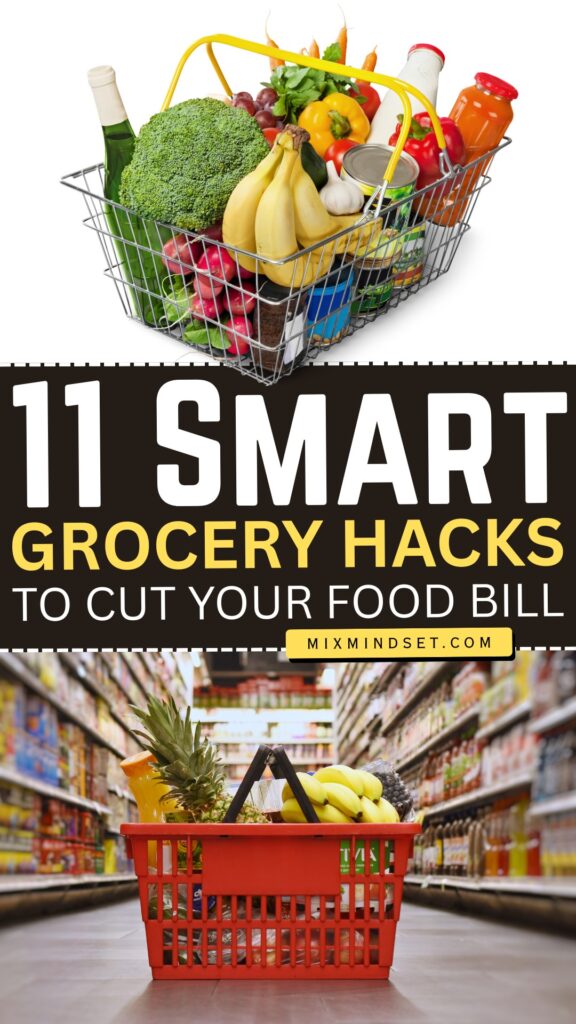
I remember standing in the checkout line, watching the total on the screen climb higher and higher. I had only bought a few bags of groceries, but the bill was over $100. I felt sick. I knew I had to change something.
That was the year I started paying attention to how I shopped. I tried different tricks. Some worked. Some did not. But over time, I found a system that cut my grocery bill by nearly 30%. I am going to share those 11 smart hacks with you. They are simple, practical, and they really work.
Hack 1: Plan Your Meals Around What Is on Sale
This is the most important thing I do. Instead of deciding what to cook and then going to the store, I do it the other way around.
How it works:
- Check the weekly ad for your grocery store. Look at what is on sale.
- Plan your meals around those sale items.
- Make a list and stick to it.
If chicken is on sale, I plan several chicken meals for the week. If canned tomatoes are cheap, I make pasta sauce or chili. This simple switch saved me more money than anything else.
🛒 My Personal Experience: I used to go to the store with a list of meals I wanted to cook. I would buy whatever ingredients I needed, regardless of the price. Now I check the sales first. I save at least $20 to $30 every week just by doing this.
Hack 2: Always Use a Shopping List (And Stick to It)
Walking into a store without a list is like walking into a casino. You are going to lose money. Stores are designed to make you buy things you do not need.
My simple list rule:
- Write down exactly what you need before you leave home
- Organize your list by aisle (produce, dairy, meat, etc.)
- Do not buy anything that is not on the list
People who shop with a list spend less and buy fewer impulse items.
Pro tip: Keep a running list on your phone. Whenever you run out of something, add it right away. That way you never forget what you need.
Hack 3: Never Shop When You Are Hungry
This sounds like a joke, but it is not. When you are hungry, everything looks good. You buy more snacks, more junk food, and more expensive items.
The fix:
- Eat a meal or a snack before you go shopping
- Drink a glass of water before you leave
- If you must shop hungry, chew gum. It helps control cravings.
Studies show that shopping while hungry leads to more impulse purchases and higher bills. I learned this the hard way after buying an entire cake I did not need.
Hack 4: Buy Store Brands Instead of Name Brands
Here is a secret. Most store-brand products are made in the same factories as name-brand products. The only difference is the label. Store brands are often 20% to 40% cheaper.
| Item | Name Brand | Store Brand | Savings |
|---|---|---|---|
| Canned tomatoes | $2.50 | $1.50 | $1.00 |
| Pasta | $2.00 | $1.00 | $1.00 |
| Cereal | $5.00 | $3.00 | $2.00 |
| Milk | $4.50 | $3.50 | $1.00 |
| Flour | $3.00 | $2.00 | $1.00 |
I switched to store brands for most of my shopping. I could not tell the difference in taste. But I could see the difference in my bank account.
Hack 5: Buy in Bulk, but Only for the Right Items
Buying in bulk can save you money, but only if you buy things you actually use. Do not buy a giant jar of pickles if you only eat pickles once a month.
Good items to buy in bulk:
- Rice, pasta, oats, and other dry goods
- Canned goods (tomatoes, beans, tuna)
- Meat (buy a whole chicken instead of pieces)
- Frozen vegetables
- Cooking oil
- Spices
Items to avoid buying in bulk:
- Fresh produce (it goes bad before you can eat it)
- Dairy products (they expire quickly)
- Items you have never tried before
When you buy in bulk, check the unit price. The unit price tells you how much you are paying per ounce or per pound. Bigger packages often have lower unit prices.
🛒 My Personal Experience: I buy a 25-pound bag of rice every few months. It costs about $20. That is less than $1 per pound. The small bags at the store cost $3 per pound. I save over $50 a year just on rice.
Hack 6: Use Cashback and Coupon Apps
There are apps that give you money back on your grocery purchases. They are free to use, and the savings add up.
Popular apps to try:
- Ibotta: Gives you cashback on specific items
- Fetch Rewards: Scan your receipt and earn points
- Rakuten: Cashback on online grocery orders
- Store apps: Many stores have their own apps with digital coupons
One friend of mine got over $200 back in a year just from scanning her receipts.
My routine: I check my store’s app before I go shopping. I clip any digital coupons for items I was already going to buy. Then I scan my receipt after I get home. It takes two minutes and saves me $5 to $10 per trip.
Hack 7: Shop the Middle of the Week
Grocery stores often run their biggest sales from Wednesday to Friday. Shopping on Tuesday, Wednesday, or Thursday can help you find more discounts.
Why it works:
- Stores restock and mark down items midweek
- Weekends are busier, and stores are less likely to have markdowns
- You avoid the weekend crowds
I switched my shopping day from Saturday to Wednesday. I found more markdowns, shorter lines, and less stress. My bill went down by about 10%.
Hack 8: Check the Bottom and Top Shelves
Grocery stores put the most expensive items at eye level. That is where you look first. The cheaper items are often on the bottom or top shelves.
What to do:
- Bend down and look at the bottom shelves
- Look up at the top shelves
- Compare prices before you grab the item at eye level
I started doing this, and I found the same products for $1 or $2 less just by looking a little higher or lower.
Hack 9: Use the 6‑to‑1 Grocery Shopping Method
This is a popular hack that helps you stay organized and save money. The 6‑to‑1 method is simple.
| Category | Number to Buy |
|---|---|
| Vegetables | 6 items |
| Fruits | 5 items |
| Protein (meat, eggs, beans) | 4 items |
| Grains (rice, pasta, bread) | 3 items |
| Dairy or alternatives | 2 items |
| Treats or snacks | 1 item |
This structure limits impulse buying and helps you plan balanced meals. I tried it for a month, and my grocery bill dropped by about $15 per week.
Hack 10: Cook Once, Eat Twice (Batch Cooking)
Cooking in bulk saves time and money. When you make a big pot of chili, soup, or pasta sauce, you can eat it for several meals.
How to do it:
- Pick one day a week to cook a large batch of food
- Portion it into containers
- Freeze the extra portions for later
- Use leftovers for lunches instead of buying takeout
Batch cooking reduces food waste and saves you from buying expensive convenience meals.
🛒 My Personal Experience: Every Sunday, I make a big pot of something. Sometimes it is chili. Sometimes it is a curry or a soup. I freeze half of it. On busy nights, I just reheat a container. I save at least $50 a month by not ordering takeout.
Hack 11: Use What You Already Have
Before you go shopping, check your pantry, fridge, and freezer. You probably have food you forgot about.
What to look for:
- Canned goods hiding in the back of the pantry
- Frozen meat or vegetables
- Half‑used jars of sauce or spices
- Leftover grains or pasta
Planning meals around what you already have is one of the easiest ways to save money.
My rule: I do a “pantry challenge” once a month. I try to cook for a whole week using only what I already have at home. I only buy fresh produce and milk. This saves me an extra $50 that week.
Quick Reference Table: 11 Hacks at a Glance
| Hack | What to Do | Potential Savings |
|---|---|---|
| 1. Plan around sales | Check weekly ads, plan meals around sale items | $20‑$30/week |
| 2. Use a list | Write a list and stick to it | $10‑$20/week |
| 3. Don’t shop hungry | Eat before you go | $5‑$15/week |
| 4. Buy store brands | Choose generic over name brand | 20‑40% off |
| 5. Buy bulk wisely | Stock up on staples you use often | Varies |
| 6. Use cashback apps | Scan receipts, clip digital coupons | $5‑$10/week |
| 7. Shop midweek | Go on Tuesday, Wednesday, or Thursday | 10% off |
| 8. Check bottom/top shelves | Look for cheaper items at eye‑level | $1‑$3/item |
| 9. 6‑to‑1 method | Limit items per category | $15/week |
| 10. Batch cook | Cook large batches, freeze extras | $50/month |
| 11. Use what you have | Check pantry before shopping | $50/month |
My Personal Grocery Routine
Here is what I actually do every week. You can copy this plan.
Saturday:
- Check the weekly ad for my grocery store
- Plan my meals for the week based on what is on sale
- Make a shopping list organized by aisle
Sunday:
- Eat a meal before I go shopping
- Go to the store (I go in the morning when it is quiet)
- Stick to my list. I do not buy anything extra.
- Use my store app for digital coupons
- Scan my receipt with a cashback app when I get home
- Cook a big batch meal for the week
Monday to Friday:
- Eat the leftovers from my batch cook for lunch
- Cook simple meals from my weekly plan
- Add anything I run out of to my running list on my phone
This routine has cut my grocery bill from about $150 a week to under $100. That is over $200 a month in savings.
The Bottom Line
You do not need to change everything at once. Pick one or two hacks from this list and try them this week. See how much you save. Then add another hack next week.
I started with just meal planning and a shopping list. Over time, I added more tricks. Now my grocery bill is much lower, and I eat better than ever. You can do this too. Your wallet will thank you.