Build a Compost Bin with Free Pallets
Build a sturdy, free compost bin using reclaimed wooden pallets. This guide covers how to choose safe pallets, step‑by‑step assembly for a 3‑bin or single‑bin system, and tips for making great compost. #DIYCompostBin #PalletProjects #Composting #FreeGardenDIY #SustainableLiving
I remember the first time I thought about building a compost bin. I looked at the price tags on the fancy plastic ones at the garden center and walked away. I could not afford that.
Then a neighbor told me about using old pallets. He showed me his three‑bin system made from free pallets, and I was amazed. It looked great and worked perfectly.
I went out, found some pallets, and built my own that very weekend. Now I want to show you how easy it is.
Why Use Pallets for a Compost Bin?
Pallets are one of the best materials for building a compost bin, and here is why.
Choosing Safe Pallets: The First and Most Important Step
Not all pallets are safe for a garden. Some are treated with toxic chemicals that can leach into your compost. Here is what to look for.
Check the Stamp
Every pallet has a stamp with a code that tells you how it was treated.
If a pallet has no stamp, or if you are not sure, it is better to skip it.
Look for Other Warning Signs
- Chemical spills or oily stains – Reject these pallets.
- Strong chemical smell – Do not use it.
- Heavy paint – Avoid painted pallets, especially if they are brightly colored.
- Pressure‑treated wood – It often has a greenish tint or markings like “ACQ” or “CCA.” Do not use it.
- Mold or rot – Reject pallets with visible rot.
My advice: Always ask before taking pallets from a business. Most places are happy to give them away, but it is polite to check first.
What You Will Need
This project requires very few tools and materials.
Step‑by‑Step: Build a Simple 3‑Pallet Compost Bin
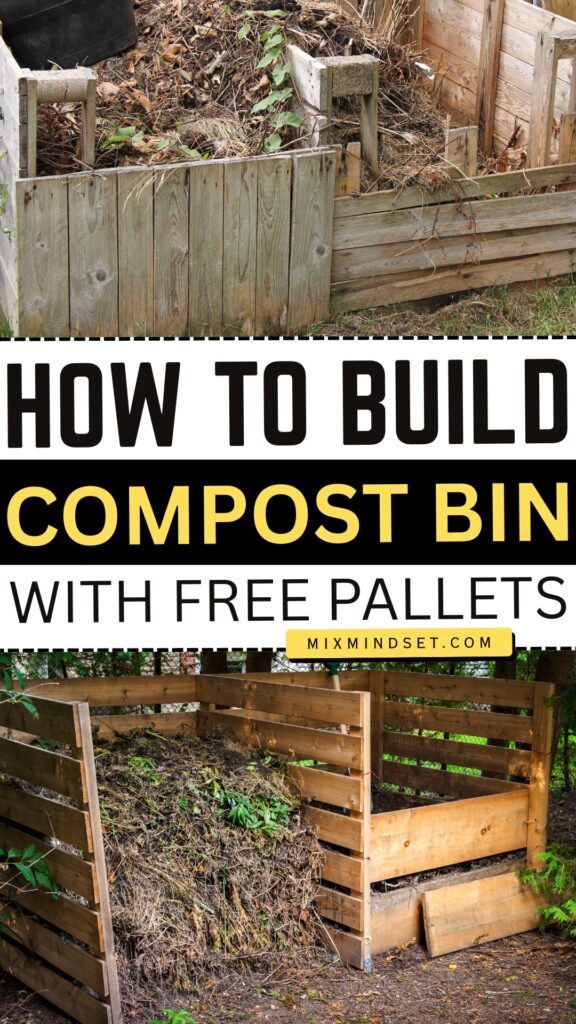
This is the most common and easiest design. It creates a U‑shaped bin with an open front.
Step 1: Find a Good Spot
Choose a level spot in your yard.
- Sunny – Sun helps heat the pile and speed up composting.
- Good drainage – Place it on bare soil so worms and microorganisms can get in.
- Convenient – Pick a spot that is easy to reach with your kitchen scraps and garden waste.
Step 2: Prepare Your Pallets
- Air them out – If your pallets have been sitting outside, let them dry for 48‑72 hours.
- Remove loose nails – Pry out any nails or staples that could cause injury.
- Check for rot – Make sure the boards are solid.
Step 3: Set Up the Pallets
Stand three pallets upright in a U‑shape – one for the back and one for each side.
Make sure the corners are square. The open front is where you will add and turn your compost.
Step 4: Secure the Pallets Together
Fasten the pallets at the corners using one of these methods.
- Screws or nails: Drive screws or nails directly through the overlapping edges of the pallets. A corner bracket at the top and bottom of each corner adds extra strength.
- Carriage bolts: For a stronger connection, drill through the pallet frames and bolt them together with carriage bolts or lag screws.
- Heavy‑duty zip ties: If you want a temporary bin or do not have tools, wrap strong zip ties around the corners.
Step 5: Add a Front Panel (Optional)
You can leave the front open for easy access. But a removable or hinged front helps keep pests out and looks tidier.
- Removable front: Set a fourth pallet in front and secure it with hooks or drop‑in brackets so you can lift it off when needed.
- Hinged front: Attach a fourth pallet to one side with hinges to create a door that swings open.
Optional Upgrades
Add a Lid
A lid helps retain heat and keeps rain from soaking your compost. You can simply lay a fourth pallet on top.
Line the Inside with Hardware Cloth
If you have problems with rats or mice, line the inside of your bin with ¼‑inch hardware cloth (wire mesh). Attach it with staples. This keeps rodents out while still allowing airflow.
Add a Second or Third Bay
For serious composters, a three‑bay system is the gold standard. You build three bins side by side. This lets you manage the three stages of composting.
| Bay | What It Is For |
|---|---|
| Bay 1 (Active) | Where you add fresh kitchen scraps and yard waste. |
| Bay 2 (Curing) | Full and left to rot down. |
| Bay 3 (Ready) | Contains mature, finished compost that is ready to use. |
When Bay 3 is empty, you move the compost from Bay 2 into Bay 3, and Bay 1 becomes the new curing bay. It is a continuous system that gives you a steady supply of finished compost.
Quick Reference Table: Pallet Compost Bin Designs
My Personal Compost Bin Story
I built my first pallet compost bin in one afternoon. I used three pallets I found behind a local furniture store. I asked the manager first, and he was happy to let me take them. I set them up in a U‑shape in the sunniest corner of my yard, screwed them together at the corners, and started filling it with kitchen scraps and leaves.
That first batch of compost took about six months, but it was the richest, darkest soil I had ever seen. I used it in my vegetable beds, and my tomatoes grew like crazy. Now I have a three‑bay system that gives me a steady supply of compost all year round.
The best part is the whole thing cost me nothing but a few screws and an afternoon of work.
Important Tips to Remember
- Always check for the HT stamp. This is the most important rule for safety.
- Leave gaps between slats. Do not seal the gaps. Airflow is essential for composting.
- Aim for at least 3 feet x 3 feet x 3 feet. This size holds enough mass to heat up properly.
- Do not overload the bin. If the pallets start to bulge, you have too much weight inside.
- Turn your compost regularly. Use a pitchfork to mix the pile every few weeks to speed up the process.
- Protect the wood. You can apply an eco‑friendly stain or sealant to help the pallets last longer.
The Bottom Line
Building a compost bin from free pallets is one of the easiest and most rewarding DIY projects you can do. It costs almost nothing, takes just a few hours, and gives you a steady supply of rich, homemade compost for your garden.
Start with a simple three‑pallet U‑shape. Make sure your pallets are heat‑treated (HT) and free of chemicals. Secure them at the corners with screws or brackets. Then start filling it with your kitchen scraps and yard waste.
I built my first bin in an afternoon, and it is still standing years later. You can do this too. Your garden will thank you.