How to Start a 5-Gallon Bucket Garden?
Start a thriving garden in the smallest of spaces with just a simple 5-gallon bucket. This beginner-friendly guide covers everything from choosing the right bucket and soil to planting, watering, and harvesting your own fresh vegetables and herbs. #BucketGarden #ContainerGardening #SmallSpaceGarden #GrowYourOwnFood #UrbanGardening
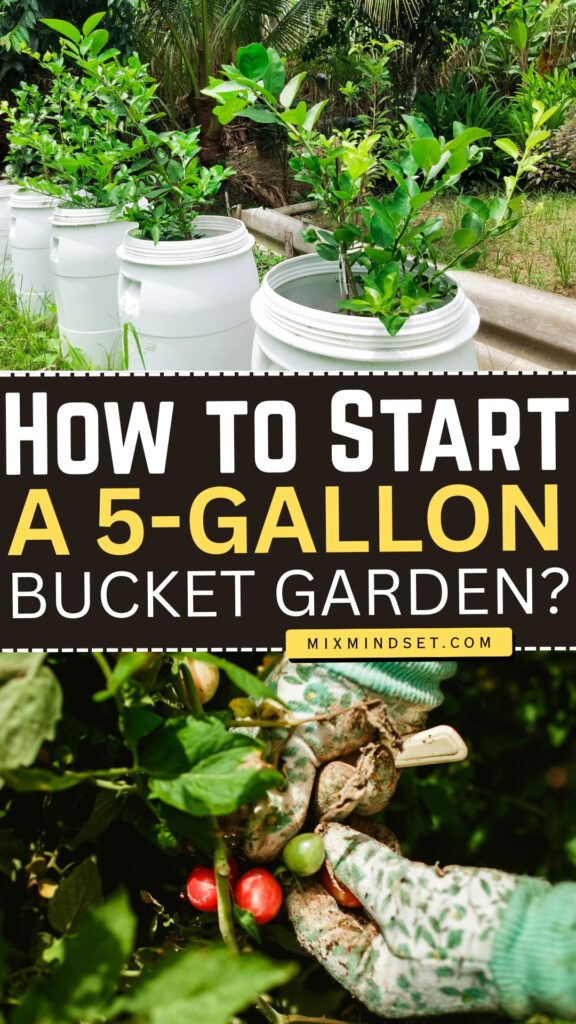
A few years ago, I was living in an apartment with nothing but a small, sunny balcony. I wanted to grow my own food, but I had no yard and no space for raised beds.
Then I discovered the 5-gallon bucket garden. I picked up a few food-grade buckets from a local bakery, drilled some holes in the bottom, and filled them with potting mix.
That summer, I harvested cherry tomatoes, peppers, and fresh basil from my tiny balcony. It was one of the most satisfying things I have ever done. If you have limited space, a 5-gallon bucket garden is the perfect solution.
Why a 5-Gallon Bucket Garden Works So Well
A 5-gallon bucket is the perfect size for container gardening. It holds enough soil for many vegetables and herbs while still being light enough to move around. Here is why I love this method so much.
What You Will Need
Gather these supplies before you start. Having everything ready makes the process much smoother.
Step 1: Choose the Right Bucket
Not all buckets are safe for growing food. Here is what I look for.
What to look for:
- Food-grade plastic. If you are growing edibles, use buckets that previously held food items like pickles, frosting, or bulk ingredients.
- Recycling codes. Look for codes 2 (HDPE), 4 (LDPE), or 5 (PP) on the bottom. These are safe for food crops. Skip buckets with codes 3, 6, and 7.
- Clean and odor-free. Wash used buckets with hot, soapy water and let them dry in the sun. If a smell lingers, do not use it for edible plants.
- Light-colored buckets. Light-colored plastic reflects sunlight and keeps roots cooler, while dark buckets trap heat.
Where to find buckets: Ask local bakeries, restaurants, or grocery stores if they have empty food-grade buckets they are throwing away. Hardware stores also sell new 5-gallon buckets.
Step 2: Drill Drainage Holes
This is the most important step. Without proper drainage, your plants will develop root rot.
The simple rule: Water must leave the bucket quickly every time you water.
Step-by-step:
- Flip the bucket upside down.
- Drill 6 to 8 holes in the bottom using a 1/4-inch bit. Space them evenly across the base.
- For extra drainage, drill 4 to 6 holes around the lower side wall, about 1 inch up from the bottom. This allows water to escape even if the bucket sits on a flat surface.
My personal experience: I once forgot to drill enough holes in a bucket, and my tomato plant turned yellow and wilted within a week. The roots were sitting in soggy soil. Now I always drill at least 8 holes, and I have never had that problem again.
Step 3: Raise the Bucket So Water Can Drain
Drainage holes only work if water has somewhere to go.
What to do: Set the bucket on two narrow bricks, a small plant stand, or a rack. Even a thin gap under the base helps. If you use a saucer, empty it after heavy watering or rain.
Step 4: Add a Drainage Layer (Optional)
A thin layer of coarse material at the bottom helps keep drainage holes from clogging.
What to do: Pour a thin layer of small stones, broken terracotta pieces, or gravel into the bottom of the bucket. This keeps the holes clear and still leaves most of the depth for roots.
Important: Some experts say gravel layers are not necessary. I have tried it both ways, and I find that a thin layer of stones helps prevent soil from washing out through the holes.
Step 5: Fill with the Right Potting Mix
Container crops rely entirely on the mix you give them. Never use garden soil in buckets—it is too dense and drains poorly.
What to use: A high-quality potting mix labeled for containers. It stays lighter, drains better, and resists compaction.
How to enrich the mix:
- Mix in compost or aged manure to add nutrients.
- Consider adding peat moss or coco coir for better moisture retention.
- For even better results, you can mix potting soil, compost, and perlite in a 2:1:1 ratio.
Step 6: Plant Your Crops
A 5-gallon bucket holds enough soil for one large plant or several smaller ones. Here is a quick guide to how many plants per bucket.
How to plant:
- Fill the bucket with potting mix, leaving about an inch of space at the top.
- Dig a hole large enough for the root ball.
- Place the plant in the hole and backfill with soil.
- Press down gently and water thoroughly.
Step 7: Water and Feed Your Plants
Container plants need more attention than in-ground plants.
Watering
The simple rule: Container plants dry out faster than in-ground plants. Water when the top inch of soil feels dry. Water thoroughly until it runs out of the drainage holes. In hot weather, you may need to water every day.
Fertilizing
The simple rule: Nutrients rinse out of containers faster, so you need to feed more often.
- At planting: Mix a slow-release granular fertilizer into the soil.
- During the season: Feed with a balanced liquid fertilizer every 2 to 3 weeks.
Step 8: Add Mulch and Support
- Mulch: Add a thin layer of straw, shredded leaves, or fine bark on top of the soil. This helps retain moisture and keeps roots cool.
- Support: For tomatoes, peppers, and cucumbers, add stakes, cages, or trellises early. It is much easier to add support before the plant gets too big.
Quick Reference Table: Bucket Garden Care
| Task | What to Do | When |
|---|---|---|
| Drill holes | 6-8 holes in bottom, 4-6 on lower sides | Before planting |
| Raise bucket | Set on bricks or a stand | Before planting |
| Add drainage layer | Thin layer of stones or gravel | Before planting |
| Fill with potting mix | Use high-quality container mix | Before planting |
| Plant | 1 large plant or several small ones | After frost |
| Water | When top inch of soil is dry | As needed |
| Fertilize | Slow-release at planting; liquid every 2-3 weeks | Throughout season |
| Mulch | Add thin layer on top | After planting |
| Support | Add stakes or cages | Early in the season |
My Personal Bucket Garden Routine
Here is what I actually do. You can copy this.
Before planting:
- I clean my buckets with hot soapy water and let them dry.
- I drill 8 holes in the bottom and 4 holes around the lower sides.
- I set the buckets on bricks so water can drain.
At planting:
- I fill the buckets with potting mix mixed with compost.
- I add a slow-release fertilizer.
- I plant one tomato or pepper per bucket.
- I add a cage or stake right away.
- I water thoroughly.
Every week:
- I check the soil moisture. If the top inch is dry, I water.
- I check for pests on the undersides of leaves.
- I snip off any yellow or damaged leaves.
Every 2-3 weeks:
- I feed with a liquid fertilizer.
At harvest:
- I pick tomatoes and peppers when they are ripe.
- I snip herbs as needed for cooking.
Since I started this routine, my bucket garden has been productive and easy to manage. It takes a few minutes a day, but the payoff is fresh, homegrown food from a tiny space.
The Bottom Line
A 5-gallon bucket garden is one of the easiest and most rewarding ways to grow your own food in a small space. Choose food-grade buckets, drill plenty of drainage holes, fill with quality potting mix, and plant vegetables and herbs suited to containers. Water when the soil is dry, feed regularly, and add support for climbing plants.
I started with a few buckets on a tiny balcony. Now I grow fresh vegetables and herbs every summer, even in a small space. You can do this too. Grab a bucket, some soil, and a few seeds, and enjoy the satisfaction of growing your own food.