How to Grow Pear Trees That Actually Fruit?
Grow your own juicy, homegrown pears with this complete, beginner-friendly guide. From choosing the right varieties and ensuring proper pollination to pruning and troubleshooting, this covers everything you need for a fruitful harvest. #GrowPears #FruitTree #BackyardOrchard #GardeningTips #HomegrownFruit
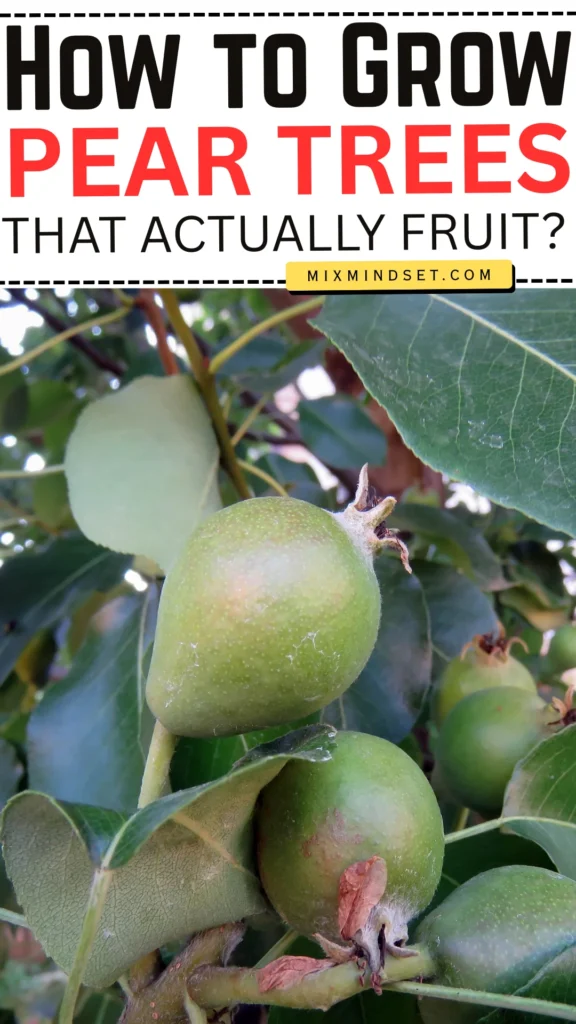
The first time I tried growing pears, I did everything wrong. I planted a single tree in a frost pocket, never pruned it, and wondered why I got nothing but leaves for years. I was so frustrated. Then I learned that pear trees have very specific needs.
They need a pollination partner, the right pruning, and protection from spring frosts. Once I figured out those key pieces, my tree started producing more pears than I could eat. Now I want to share what I learned so you can skip the frustration and grow a tree that actually fruits.
Step 1: Choose the Right Variety
Not all pear trees are the same. Some need a partner to produce fruit, while others are self-fertile. Some are vulnerable to diseases, while others are tough.
The most important rule for beginners: Always check if your chosen variety needs a pollination partner. Most pear trees need another variety flowering at the same time to produce a good crop. If you only have space for one tree, choose a self-fertile variety.
Best varieties for home gardens:
For a single tree in a small garden, Concorde is your best bet. For larger gardens, plant two compatible varieties for the best crops.
Rootstocks matter too: Pear trees are grafted onto quince rootstocks. Choose ‘Quince A’ for a semi-vigorous tree (10-15ft tall). Choose ‘Quince C’ for a dwarf tree (8-10ft tall) suitable for containers and smaller gardens.
Step 2: Ensure Proper Pollination
This is the number one reason pear trees fail to fruit. Most pear trees need cross-pollination with another variety that flowers at the same time.
The simple rule: Plant two different pear varieties that bloom in the same “pollination group”. A tree in group B can pollinate trees in groups A, B, and C.
If you only have space for one tree:
- Choose a self-fertile variety like Concorde.
- Or choose a partially self-fertile variety like Conference or Louise Bonne of Jersey. They will bear some fruit by themselves but produce better with a partner.
If you have room for two trees: Plant two compatible varieties from the same pollination group. Even self-fertile varieties produce better crops with a pollination partner.
What if your neighbor has a pear tree? Pear trees can be pollinated by trees in nearby gardens. If there is a pear tree within about 100 feet, it may serve as your pollination partner.
Weather matters too: Cold, wet, or windy weather during flowering can reduce bee activity and lead to poor pollination.
Step 3: Plant It the Right Way
When to plant: Plant bare-root trees during their dormant phase, from November to March. Container-grown trees can be planted all year round.
Where to plant: Pears thrive in a sunny, sheltered spot with fertile, well-drained soil. A spot against a south-facing wall is ideal.
What to avoid: Frost pockets where cold air settles. Pears blossom early, and frost can kill the flowers. Avoid low-lying areas.
How to plant:
- Dig a wide hole. Dig a hole as deep as the roots but three times their circumference. A square hole encourages roots to spread out.
- Spread the roots. Gently spread the roots out in the hole.
- Backfill. Carefully fill the hole, packing soil between the roots to remove air pockets.
- Tamp down. Firm the soil down and water well.
- Apply mulch. Add a mulch of well-rotted manure or compost. Mulch annually in spring to retain moisture and suppress weeds.
Spacing:
- Standard trees: 15-20 feet apart.
- Dwarf trees: 8-10 feet apart.
- Bush trees: 10-12 feet apart.
- Cordon trees: 2.5-3 feet apart.
Step 4: Water and Feed
Watering: Water new trees regularly in dry spells. Established trees need water during dry periods, especially when fruit is swelling.
Fertilizing: Do not over-fertilize with nitrogen-rich fertilizer. Too much nitrogen encourages leafy growth at the expense of fruit. Apply a balanced fertilizer in early spring.
Step 5: Prune for Fruit Production
Pruning is essential for fruit production. The goal is to let light into the canopy, remove dead wood, and encourage fruiting spurs.
Winter Pruning (November to March)
Winter pruning is done when the tree is dormant. It shapes the tree and encourages new fruiting wood.
The simple rules:
- Remove the three Ds. Remove any dead, diseased, or dying branches first.
- Open up the center. Prune out strong shoots growing towards the center of the tree. An open center lets in light and air.
- Remove crossing branches. Cut branches that are rubbing together.
- Reduce main branches. For a young tree, cut back the main branches by about a third to an outward-facing bud.
- Do not over-prune. Aim to take off 10-20% of the canopy in any one winter. Over-pruning stimulates vigorous, non-fruiting growth called water shoots. Too much pruning is a common cause of poor fruiting.
- Leave fruiting spurs. Shorter, weaker shoots are likely to carry fruiting spurs. Do not prune them.
Summer Pruning (August)
Summer pruning slows down growth and directs energy into the fruit.
The simple rule: Shorten side shoots that are longer than 8 inches (20cm) back to three leaves from the base. This lets sun reach the fruit and encourages more fruit buds for next year.
If you have a fan- or espalier-trained pear tree: Prune these in summer.
Step 6: Protect from Frost
Pears blossom early, and a late spring frost can kill the flowers.
What to do:
- Avoid frost pockets when planting.
- Cover the tree with fleece when frost is forecast. Use canes to keep the fleece off the flowers and remove it during the day so pollinators can reach the flowers.
Step 7: Troubleshooting
Quick Reference Table: Pear Care at a Glance
| Task | What to Do | When |
|---|---|---|
| Plant | Dig wide hole, spread roots, backfill | November to March (bare-root) |
| Water | Water new trees regularly | During dry spells |
| Feed | Balanced fertilizer in early spring | Spring |
| Winter prune | Remove dead, diseased, crossing branches. Open center. | November to March |
| Summer prune | Shorten side shoots over 8 inches to 3 leaves | August |
| Protect from frost | Cover with fleece during cold snaps | Spring, during flowering |
| Harvest | Pick when firm, ripen indoors | Late August onwards |
My Personal Pear Journey
I started with a single Conference pear tree in a frost pocket. For years, it gave me nothing but leaves. I was ready to chop it down. Then I learned about pollination partners. I planted a Concorde nearby, pruned properly, and protected it from frost. The next year, I had more pears than I could eat. The lesson is simple: pear trees are generous if you give them what they need. Take the time to choose the right varieties, plant them well, and care for them properly. They will reward you for years.
The Bottom Line
Growing pear trees that actually fruit is not complicated, but it does require attention to a few key details. Most pear trees need a pollination partner, so plant two compatible varieties if you have the space. Prune in winter to open up the canopy and remove dead wood, and summer prune to direct energy into the fruit. Protect the blossom from late frosts. Avoid over-fertilizing with nitrogen, which encourages leaves instead of fruit. With the right care, your pear tree will reward you with buckets of sweet, juicy fruit for years to come.
I went from zero fruit to more pears than I could use. You can do this too. Start with the right tree, give it a pollination partner, and enjoy the harvest.